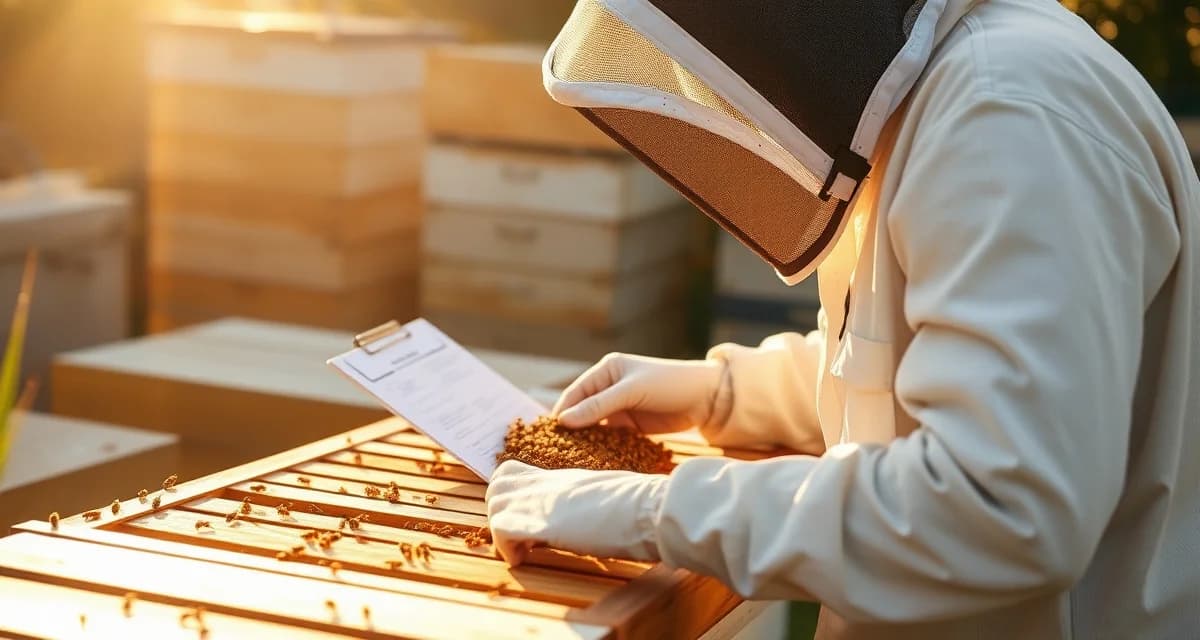
USDA Compliance Records for Beekeepers: What You Must Document
Most beekeepers think about record keeping only when a state inspector shows up or when they need to file an insurance claim. By then it is too late to reconstruct months of treatment history from memory. USDA compliance is not optional for commercial operations, and the documentation standards are more specific than many beekeepers realize.
What Federal Programs Require
The USDA's Emergency Assistance for Livestock, Honey Bees, and Farm-Raised Fish Program (ELAP) provides disaster assistance for honeybee colony losses. To qualify, you must document your colony inventory, the losses that occurred, and the management practices you used prior to and during the loss event. Operations that cannot produce records of Varroa treatment history, inspection dates, and mite monitoring data routinely fail to qualify.
The USDA National Apiculture Research Laboratory and various cooperative extension programs also require documented treatment records when beekeepers participate in research trials or cost-share programs. Even state-level programs that provide financial assistance for Varroa management require documentation before funds are released.
State Apiarist Inspection Requirements
Every US state with a state apiarist requires commercial beekeepers to maintain certain records. While specific requirements vary, the common elements are: registration numbers for all hives and yards, treatment records showing product, dates applied and removed, and compliance with pre-harvest intervals, and disease inspection records. Some states, including California, Florida, and Texas, have particularly rigorous requirements tied to commercial pollination contracts.
When a state inspector visits your yard, they may ask to see treatment records going back 12 to 24 months. A beekeeper who hands over a clean digital log passes in two minutes. A beekeeper who says the records are in a notebook in a truck somewhere does not pass.
Treatment Record Essentials
Every treatment event should document the product name, EPA registration number, active ingredient, date applied, date removed, the specific hive or yard treated, the mite count that triggered the decision, post-treatment mite count, and the name of the person who applied the treatment. This creates an evidence-based record showing that treatments were applied according to label directions, that monitoring guided the treatment decision, and that pre-harvest intervals were observed.
Pre-harvest interval (PHI) compliance is particularly important for beekeepers selling honey. Apivar has a 56-day PHI before honey can be harvested from treated hives. Formic Pro requires supers to be off during treatment. Oxalic acid applied by vaporization has specific timing restrictions. Documenting PHI compliance is your defense if a honey buyer tests for residues and finds nothing, and it is your liability protection if something goes wrong.
Mite Monitoring Logs
A mite monitoring log should include the date, yard, hive ID, testing method (alcohol wash, sugar roll, or sticky board), number of bees sampled, mite count, calculated infestation percentage, and the person who conducted the test. This record serves two purposes: it demonstrates active management, and it provides the longitudinal data needed to spot trends and make better decisions.
USDA programs and some state apiarist offices specifically ask whether you conduct regular mite monitoring as part of a compliance questionnaire. The answer needs to be backed up by records.
Digital vs Paper Records
Paper records are legally acceptable but are fragile, hard to share with inspectors, and essentially impossible to analyze for trends. Digital records kept in a system like VarroaVault are cloud-backed, instantly searchable by date or hive, and can be exported as a PDF for an inspector in under a minute. The operational benefit of digital records goes far beyond compliance: you can pull up any hive's full treatment history before you open it, which changes how you manage.
Building Your Record System
Start with the basics: every yard has a unique identifier, every hive has a unique identifier within that yard, and every action taken is logged with a timestamp. For treatment records, use the product label as your guide for what to document. If the label says to record the batch number, record it. If it specifies the number of strips used per colony, log that number.
The Varroa treatment record-keeping template and commercial beekeeping compliance guide on VarroaVault provide a structured starting framework you can adapt for your operation.
FAQ
What is USDA Compliance Records for Beekeepers: What You Must Document?
USDA compliance records for beekeepers are the documentation standards required to participate in federal and state assistance programs. This includes colony inventory logs, Varroa mite monitoring data, treatment history, and inspection dates. These records are most critical for qualifying for ELAP disaster assistance after colony losses, participating in USDA research trials, or receiving cost-share funding for Varroa management programs. Without them, claims are routinely denied.
How much does USDA Compliance Records for Beekeepers: What You Must Document cost?
Maintaining USDA compliance records costs nothing beyond your time and a basic record-keeping system. Free templates are available through cooperative extension programs, and dedicated beekeeping apps range from free to around $10–$20 per month. The real cost of not keeping records is far higher — failed ELAP claims after a major loss event can mean thousands of dollars in unrecovered losses for commercial operations.
How does USDA Compliance Records for Beekeepers: What You Must Document work?
Compliance recordkeeping works by logging key hive management activities as they happen: colony counts, mite wash or sticky board results, treatment product names and application dates, and inspection outcomes. Records are stored either in paper logs or digital platforms. When an inspector visits or a disaster assistance claim is filed, you produce these records as evidence that your management practices met program requirements before and during the loss event.
What are the benefits of USDA Compliance Records for Beekeepers: What You Must Document?
Proper compliance records unlock access to ELAP disaster payments, state cost-share programs, and USDA research trial participation. They also protect you during state apiarist inspections, support insurance claims, and help you spot treatment failures early by tracking mite load trends over time. For commercial beekeepers managing hundreds of colonies, documented records are the difference between a recoverable loss year and a financially catastrophic one.
Who needs USDA Compliance Records for Beekeepers: What You Must Document?
Any beekeeper operating commercially or participating in federal and state assistance programs needs compliance records. This includes migratory beekeepers, honey producers, and pollination service operators. Hobbyists are generally not subject to the same requirements, but beekeepers with more than a handful of hives who want access to ELAP, cost-share funding, or research programs should treat documentation as a baseline operational requirement, not an optional extra.
How long does USDA Compliance Records for Beekeepers: What You Must Document take?
Setting up a compliance recordkeeping system takes a few hours initially to establish your colony inventory baseline and choose a logging format. After that, active record maintenance takes 10–20 minutes per apiary visit. The discipline is in doing it consistently. Most beekeepers who fail ELAP claims did not lack the time — they skipped logging during busy seasons and could not reconstruct treatment history retroactively when it mattered.
What should I look for when choosing USDA Compliance Records for Beekeepers: What You Must Document?
Look for a system that captures the four core data types: colony inventory, mite monitoring results, treatment records (product, dose, date, duration), and inspection outcomes. It should be easy to use in the field, searchable when you need to pull historical data quickly, and exportable in a format you can share with an inspector or claims adjuster. Whether paper or digital, consistency matters more than sophistication.
Is USDA Compliance Records for Beekeepers: What You Must Document worth it?
Yes — for any commercial beekeeper, maintaining USDA compliance records is absolutely worth the effort. ELAP payments can offset significant losses from Varroa-related die-offs, but only if you can document your management history. Beyond disaster assistance, the discipline of regular mite monitoring and treatment logging improves hive health outcomes directly. Beekeepers who track data make better treatment timing decisions, which reduces colony losses in the first place.
Related Articles
- Beekeeping Software for California Beekeepers: Almond Pollination and Varroa Compliance
- Beekeeping Software for Massachusetts Beekeepers: Northeast Compliance and Varroa Tracking
- Beekeeping Software for New Hampshire Beekeepers: Northern New England Compliance
- Beekeeping Software for Pennsylvania Beekeepers: Mid-Atlantic Varroa Compliance