How to reduce mite load before your winter cluster forms
TL;DR
- Treat for varroa in late summer or early fall, before your queen slows brood production, so the bees that form your winter cluster emerge into low-mite conditions.
- A mite count above 2 per 100 bees at that window means treat now, not next week.
- Oxalic acid (brood-free), Apivar, and formic acid are the main tools.
- Timing decides the outcome.
Why does mite load matter specifically before winter cluster forms?
The bees that carry your colony through winter are not ordinary summer bees. They're a physiologically distinct cohort called winter bees, or diutinus bees, and they live four to six months rather than the usual four to six weeks. What sets them apart is fat body development and vitellogenin reserves, both of which varroa feeding degrades directly. A mite feeding on a developing pupa doesn't just wound it. It strips out the fat body tissue the adult bee needs to survive January.
The Honey Bee Health Coalition's Varroa Management Guide states directly that "mites that reproduce in the last brood cycle of the season produce the most damage to the colony because those bees must survive winter." [1] That one sentence is the whole case for fall treatment. Mites reproducing in August and September do their worst work exactly when you can least afford it.
Treat in October, after the cluster has already formed around mite-exposed winter bees, and you've closed the barn door after the horses left. The bees are already compromised. You might still save the colony from outright mite collapse, but you won't undo fat body damage those bees already carry. Treatment before brood winds down gives the last generation a chance to develop in a low-mite hive.
Fall is also when deformed wing virus (DWV), vectored by varroa, spikes hardest. Studies using RT-PCR have found DWV titers tracking mite loads in fall, and high DWV expression in fall bees predicts winter mortality. [2] Fewer mites means less virus pressure. That's the actual mechanism, not a slogan.
When exactly should you check and treat before winter?
The window depends on your local climate, not a date on the calendar. The event that matters is when your queen starts cutting back egg-laying, which usually happens four to six weeks before your first hard frost. In Minnesota or Montana, that might be late August. In North Carolina, it might be late September or early October. Know your first hard frost date for your specific location.
Count backward six weeks from that frost date. That's the latest point at which your pre-winter treatment should be finished. Why six weeks? The last round of brood needs time to emerge, and newly emerged bees need roughly three weeks to fully develop their fat bodies. Treat on the last possible day, and if capped brood keeps hatching over the next 12 days, you want those bees spending their early adult life in a low-mite hive, not a rebounding one.
The Honey Bee Health Coalition recommends treating when alcohol wash results exceed 2 mites per 100 bees (2%) during the pre-winter window. [1] Some university extensions, including Penn State Extension, set the economic threshold at 2% during this period specifically because the stakes run higher than midsummer. [3] At 2%, don't wait for next week's check. Treat now.
Here's a schedule that works for most northern-tier beekeepers:
- Mid-July: First alcohol wash count of the season
- Early August: Second count; treat immediately if at or above 2%
- Late August to early September: Confirm infestation is down; apply treatment if not already done
- Mid-October onward: Oxalic acid dribble or vaporization if colony is brood-free
If you're in the south with a longer brood season, shift everything four to six weeks later. The logic doesn't change.
How do you accurately count mite loads in late summer?
You can't manage what you don't measure. Two methods count as reliable: the alcohol wash and the sugar roll. The alcohol wash is more accurate. [1] Sugar rolls undercount by a meaningful margin in some studies and should be treated as a rough screen, not a definitive number.
For an alcohol wash, collect about 300 bees (roughly half a cup) from a brood frame, not the queen, into a jar with a mesh lid. Add isopropyl alcohol or windshield washer fluid, shake for 30 to 60 seconds, and count the mites in the liquid. Divide mites by bees and multiply by 100 to get your percentage. [3] Seven mites from 300 bees is 2.3%. That means treat immediately under any threshold guidance.
Some beekeepers use sticky boards, which count mite drop over 24 or 72 hours. This method is less precise because natural drop rates vary by colony condition and season. The Honey Bee Health Coalition does not recommend sticky board counts as your primary diagnostic tool. [1]
Sample from the right frame. Pull a capped brood frame with nurse bees clustered on it. Those nurse bees are most likely to carry phoretic mites, so they give you the most representative count. Bees from a honey super or a peripheral frame will underestimate your real infestation.
Run this count at every inspection from July through September. A colony can climb from 1% to 4% in four to six weeks during peak mite reproduction. Monthly checks are the floor, not the goal.
Which treatments actually work in the fall pre-winter window?
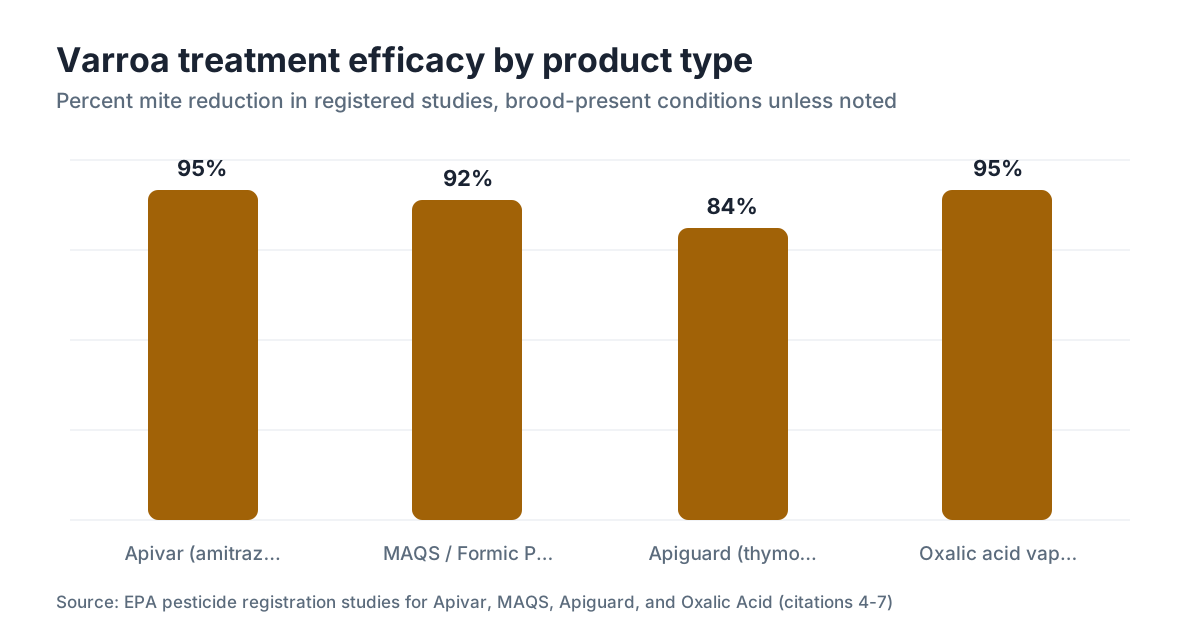
Four treatments have EPA registration and field-validated efficacy for this window. They are not interchangeable. Temperature, brood presence, and honey super status each decide which one fits your situation.
| Treatment | Active Ingredient | Temp Range | Brood-Free? | Honey Super OK? | Typical Efficacy |
|---|---|---|---|---|---|
| Apivar strips | Amitraz | 50-105°F | No | No | 90-99% in studies [4] |
| Apiguard / Api Life Var | Thymol | 60-105°F | Not required, but aids efficacy | No | 74-95% depending on temp [5] |
| MAQS (Mite Away Quick Strips) | Formic acid | 50-85°F | No | Yes (per label) | 87-97% [6] |
| Oxalic acid (vaporized or dribble) | Oxalic acid dihydrate | 40°F+ (vapor) | Yes, brood-free only | No | 90-99% brood-free [7] |
Apivar strips work across a wide temperature range and tolerate some brood presence, which makes them the default for beekeepers treating in late August with brood still in the hive. You leave them in for 42 to 56 days per the EPA label. The catch is amitraz resistance, now showing up in some U.S. mite populations, especially where commercial beekeeping runs dense. [4] Rotate active ingredients across seasons.
Thymol products (Apiguard, Api Life Var) do their job when nighttime temperatures stay above 60°F. Below that, thymol vaporizes too slowly to reach effective concentrations in the brood nest. If your nights are already cooling in late August, thymol is marginal. It's a solid choice in the mid-Atlantic or Southeast in September.
Formic acid (MAQS or Formic Pro) is the only treatment here that penetrates capped brood and kills mites inside cells. That matters during the late-brood window when you want to hit mites you otherwise can't reach. The 85°F upper limit is a real constraint. Above that, formic acid can kill brood and stress queens. Read the label.
Oxalic acid in a brood-free hive is extremely effective and carries essentially zero residue concern for honey. The problem: in late summer, most colonies still have brood. You either wait until the colony is truly brood-free (often November), or you run extended-release oxalic acid, applied per the current label. The EPA registered extended-release oxalic acid formulations for use in hives with brood starting in 2015. [7]
For most northern beekeepers treating a colony with active brood in late August or early September, Apivar or MAQS is the practical answer. Follow it with oxalic acid in October or November once brood is absent or minimal.
What's the right treatment sequence for fall varroa control?
A single treatment rarely gets you to zero, and you don't need zero. You need to drop below the threshold that damages winter bees. The most common effective plan is a summer treatment followed by a brood-free fall treatment.
Sequence A (the one I'd run in zone 5 or colder):
- Treat with Apivar or MAQS in late August, with brood present.
- Remove treatment after the labeled duration (42 days for Apivar).
- Recount mites in mid to late October.
- If brood-free or near it, treat with vaporized oxalic acid. Do three treatments at five-day intervals for better coverage if any residual brood remains.
- Close out the season.
Sequence B (for beekeepers who missed the summer window):
- Treat with vaporized oxalic acid in November through January, when the colony is genuinely brood-free.
- Efficacy above 93% is achievable in a brood-free hive with a single OAV treatment per the studies supporting the EPA registration. [7]
The trouble with Sequence B is that the winter bees have already formed. You're cutting mite load on an already-compromised cohort. They may survive, especially if the count wasn't catastrophic, but this is a fallback, not a plan.
Never stack treatments back-to-back without a count in between. If Apivar dropped your mites from 4% to 0.5%, you're done for that round. A redundant treatment wastes money and builds resistance pressure. If it only dropped to 2%, something went wrong. Check for queen cells or missed strips, and ask whether you're dealing with a resistant mite population.
Does the treatment method change if you have a small colony or a nuc?
Yes. Small colonies and nucs need scaled-down applications. Apivar strips are labeled at one strip per five frames of bees, so a small colony on three frames gets one strip placed in the brood nest, not two. Overdosing doesn't help and can stress the queen.
Formic acid products carry minimum colony size requirements on their labels because small clusters can't tolerate the vapor load. MAQS labels specify a minimum colony size, so check the current EPA-approved label before applying to anything smaller than a five-frame colony. [6]
Oxalic acid dribble is often the better call for small colonies and nucs. The Honey Bee Health Coalition recommends 5 mL of 3.2% solution per seam of bees (a seam is one space between two frames covered with bees). A three-seam nuc gets 15 mL. More is not better. Excess oxalic acid kills bees. [1]
Vaporization in a nuc box works well if you can seal the entrance. Use the same dosing as a full colony (1 gram per box, per the product label) but confirm that label, because dosing varies by product.
What about treatment-free or organic approaches for fall?
Oxalic acid is certified organic under the National Organic Program. So is formic acid. If you keep certified organic bees or just prefer to skip synthetic miticides, you have real options that aren't wishful thinking.
Oxalic acid vaporization in a brood-free fall hive genuinely works. The University of Florida's entomology extension reports efficacy above 90% for OAV in brood-free conditions. [8] That's not meaningfully worse than Apivar.
Thymol products (Apiguard, Api Life Var) are low-residue and are approved in some organic systems internationally, though their USDA NOP status in the U.S. is less clear. Check with your certifier.
Pure treatment-free beekeeping, meaning no miticide at all, is a separate question. The data on treatment-free survival in high-mite-pressure North America is not encouraging for most beekeepers. Some operations running locally-adapted, VSH-trait bees (Varroa Sensitive Hygiene) report acceptable survival, but that takes years of selection work. If you haven't done that breeding, treating is the responsible choice for your bees.
Drone brood removal and brood breaks reduce mite reproduction rather than kill mites directly. A brood break in late July or early August, followed by oxalic acid during the brood-free gap, is a combination some beekeepers use well. [1] It demands good timing and a willingness to requeen or use a caged queen to force the pause.
You can track your counts and treatment outcomes with tools like the VarroaVault protocol tracker, which lets you log counts by date and see whether your fall sequence is actually moving the number the right way.
How do you know if your fall treatment worked?
You check your mite count after treatment. This is not optional. A post-treatment count is the only way to know whether you've reached a safe level for winter.
Wait at least 72 hours after removing Apivar strips, or 48 hours after the last oxalic acid application, before counting. Count too soon and dead mites still falling will inflate your result. [1]
The post-treatment target is below 1% (fewer than 1 mite per 100 bees) going into winter. Some researchers argue for below 0.5% as the safer line given how vulnerable winter bees are. Above 1% after a full treatment course means something went wrong, and you decide whether to retreat or accept a harder winter.
Common reasons a fall treatment doesn't bring counts low enough:
- Mite-resistant varroa population (increasingly common where beekeeping runs dense)
- Strips not placed in the brood nest
- Treatment removed too early
- Robbing bees reintroducing mites from a collapsing neighbor colony
- A second brood cycle that kept reproducing during treatment
Robbing is underrated as a fall mite source. When a mite-bomb colony collapses, bees from healthy hives rob out the honey and carry phoretic mites home. If you treated successfully but the count rebounds fast, look for robbing. Reduce entrances in September and October.
What happens if you don't treat in time?
The winter bees develop with damaged fat bodies and high virus loads. They age faster, lose their ability to make royal jelly and wax, and often can't raise brood well in early spring even if the cluster survives. The colony might reach February and then collapse, which beekeepers call spring dwindle or spring collapse. It's one of the most demoralizing things in beekeeping, because you think you made it through winter and lose the hive anyway.
The mortality numbers are sobering. The USDA's colony data has shown U.S. losses in the 40-45% range in recent years. [9] Varroa and its associated viruses get cited as the primary driver in most survey reports. Untreated or under-treated colonies going into winter are the single largest contributor to that number.
Miss the fall window entirely and treating in November with oxalic acid (brood-free) is still worth doing. You won't fix the fat body damage already done, but you can stop further mite reproduction on whatever bees hatch from late brood, and you cut the phoretic mite burden on the bees already alive. A late treatment beats none.
Some cold-climate beekeepers find that treating during a brief January warm spell (above 40°F, colony brood-free in midwinter) with vaporized oxalic acid is their best shot to knock mites before spring buildup. This works. It's not ideal, but it works.
Are there any risks or common mistakes with fall varroa treatments?
Several. And they're worth knowing before you crack the lid.
Leaving Apivar strips in too long promotes resistance. The labeled duration is 42 to 56 days. Beekeepers who forget strips over winter and pull them in March are selecting hard for amitraz-tolerant mites. Set a calendar reminder.
Applying formic acid above 85°F causes queen loss. Even a few hours above that threshold during a heat spike can affect queens. Watch the forecast before applying MAQS in early September in warm climates. [6]
Using oxalic acid in a hive with substantial capped brood is a waste. Oxalic acid does not penetrate cappings. Run OAV on a hive with a big brood nest and you kill phoretic mites while the mites in cells emerge untouched. Your count rebounds as brood hatches. [7]
Doubling up products at the same time doesn't double your efficacy and can stress bees. There's no EPA label for simultaneous dual-miticide application. Use products in sequence.
Not reading the current label. Miticide labels change. Dosing for formic acid products shifted between product versions. The label is the law, and the EPA requires beekeepers to follow the most current registered label. Download the current label from the EPA's pesticide registration database or the manufacturer's site before you apply anything. [10]
Where can you find reliable protocols and supplies for fall mite management?
The Honey Bee Health Coalition's Varroa Management Guide is the best single free resource for this, full stop. It's a PDF produced with USDA, university researchers, and industry groups, and it covers thresholds, efficacy tables, and timing in real depth. [1] Download it before fall and keep it handy.
Your state's department of agriculture often has region-specific guidance and sometimes runs subsidized or low-cost oxalic acid vaporizer loan programs. Worth a call.
For supplies, most treatments are available through dedicated beekeeping supply companies, and some offer bulk pricing that makes fall stockpiling cheaper per dose. The varroa mite resource here on VarroaVault covers mite biology, which helps you understand why timing works the way it does.
Penn State Extension's Honey Bee Lab publishes updated treatment guides specific to northeastern U.S. conditions, worth bookmarking for any beekeeper in that region. [3] The University of Minnesota's Bee Lab has similar resources for north-central beekeepers. [11]
At VarroaVault, the free mite count logger and treatment calendar lets you log alcohol wash results next to your treatment dates and flags when you're closing on the threshold. That kind of record-keeping makes your spring post-mortem useful if something goes sideways.
Frequently asked questions
What mite level is considered dangerous going into winter?
The Honey Bee Health Coalition sets 2 mites per 100 bees (2%) as the treatment threshold during the late-summer pre-winter window. Some researchers argue for treating at 1% during this period given how sensitive winter bees are to varroa damage. At 3% or above in September, colony winter survival drops sharply in most studies. Treat as early as you can once you hit 2%.
Can I use oxalic acid when the colony still has brood in the fall?
Standard oxalic acid (dribble or vapor) does not kill mites inside capped cells, so treating a hive with significant brood gives partial efficacy only. EPA-registered extended-release oxalic acid formulations are designed for use with brood present, since the active ingredient releases slowly over weeks. For a hive with active brood in late summer, Apivar strips or formic acid (MAQS) fit better.
How long before winter should I start my fall varroa treatment?
Start at least six weeks before your first hard frost, which is roughly six to eight weeks before your winter cluster fully forms. That leaves time for a full treatment cycle and gives the last emerging bees two to three weeks to develop in a low-mite environment before cold sets in. In the northern U.S., that usually means treating by early to mid-September.
Does treating for varroa in fall harm my honey crop?
If honey supers are still on, only formic acid (MAQS and Formic Pro) is labeled for use with supers in place, and even then check the current label carefully. Apivar, Apiguard, and oxalic acid require supers off. Plan your final honey harvest before treating. Most fall honey supers should come off before the pre-winter treatment window anyway.
What's the best varroa treatment for a first-year beekeeper doing fall management?
Apivar strips are the most forgiving option for beginners: wide temperature range, simple placement, long efficacy window. They work with brood present, which almost all fall colonies have. Follow with an oxalic acid vapor treatment in October or November when brood is minimal. The Honey Bee Health Coalition's free Varroa Management Guide walks through the whole process step by step.
Can varroa mites reinfest my hive after a fall treatment?
Yes. Robbing behavior in fall is a major reinfestation route. When a collapsing high-mite colony gets robbed by healthy bees, those bees carry phoretic mites back home. Drift from neighboring colonies adds mites too. Reduce entrances in September and October, avoid placing hives close to suspected struggling colonies, and run a post-treatment count to catch rebounds early.
How many oxalic acid vaporizer treatments do I need in a brood-free fall hive?
For a truly brood-free hive, a single oxalic acid vapor treatment reaches above 90% efficacy in controlled studies. If any residual capped brood remains, most beekeepers do three treatments at five-day intervals to catch bees hatching from the last cells. The five-day interval is shorter than the mite's reproductive cycle inside a cell, so each round catches newly emerged phoretic mites.
Is there a way to speed up getting a colony brood-free in fall to use oxalic acid?
Yes. Caging the queen for 24 days forces a brood break. All capped brood hatches within about 12 days of the last egg; the remaining 12 days is a safety margin. Once brood-free, apply oxalic acid for maximum effect. This method works well but risks queen loss if the cage is disturbed or the queen fails during confinement. Some beekeepers pair it with requeening using a mite-resistant queen.
Do mite-resistant bee genetics replace the need for fall treatment?
Varroa Sensitive Hygiene (VSH) and hygienic-trait queens genuinely reduce mite reproduction rates and can lower how often you treat. They don't eliminate varroa in most North American settings, and they don't stop reinfestation from neighboring colonies. Most extension services recommend that even VSH colonies get monitored and treated when thresholds are exceeded. Genetics are a tool, not a substitute for monitoring.
How do I read an alcohol wash result, and what equipment do I need?
You need a mason jar with a mesh or screen lid, 70% isopropyl alcohol or windshield washer fluid, and a measuring cup. Collect about 300 bees from a brood frame into the jar, add enough alcohol to cover, and shake for 60 seconds. Strain the liquid through the screen and count mites. Divide mites by bee count (estimate or count to 300) and multiply by 100. Penn State Extension has a free step-by-step guide with photos.
What temperature is too cold for fall varroa treatments to work?
Thymol-based products (Apiguard) stop working reliably below about 60°F at night. Formic acid (MAQS) has a lower range of 50°F but shouldn't be applied above 85°F. Apivar strips work down to about 50°F. Oxalic acid vapor is effective above 40°F and is the go-to for late-fall or early-winter treatment in cold climates. Always check the current product label for exact temperature ranges.
Should I treat all hives in my apiary at the same time?
Treating all hives at once beats a rolling schedule. Mites spread between colonies through robbing and drift, so treating one hive while a neighbor stays untreated just invites reinfestation. If you have strong and weak hives side by side, the weak one with a high mite load becomes a mite reservoir. Synchronizing treatment across the apiary gives the whole operation the best result.
Is it too late to treat if I find a high mite count in October?
It's not too late, but your options narrow. Apivar still works if temperatures stay above 50°F and brood is present. Oxalic acid vapor is excellent if the colony is or can be made brood-free. The winter bees may already carry some fat body damage from earlier mite feeding, but cutting phoretic mite load in October still matters: it reduces virus transmission and gives late-hatching bees a better start. Treat even when the timing is imperfect.
Sources
- Honey Bee Health Coalition, Varroa Management Guide: Mites reproducing in the last brood cycle do the most damage because those bees must survive winter; 2% threshold for pre-winter treatment; alcohol wash preferred over sugar roll; oxalic acid dosing 5 mL per seam for dribble method
- PLOS ONE, 'Deformed Wing Virus is a recent global epidemic in honeybees driven by Varroa mites' (Wilfert et al., 2016): DWV titers correlate directly with varroa mite loads; high DWV expression in fall bees linked to winter mortality
- Penn State Extension, Honey Bee Lab: 2% mite infestation threshold during late summer/fall pre-winter window; alcohol wash step-by-step guidance
- EPA, Apivar (amitraz) pesticide registration: Apivar strips efficacy 90-99% in registered studies; labeled at one strip per five frames of bees; 42-56 day treatment duration
- EPA, Apiguard (thymol) pesticide registration: Thymol product efficacy 74-95% depending on temperature; requires temperatures above 60°F for reliable vaporization
- EPA, MAQS / Formic Pro (formic acid) pesticide registration: MAQS efficacy 87-97%; temperature range 50-85°F; approved for use with honey supers; minimum colony size requirements on label
- EPA, Oxalic Acid pesticide registration and extended-release product labels: Oxalic acid vaporization 90-99% efficacy in brood-free hives; EPA registered extended-release oxalic acid formulations for hives with brood; OAV effective above 40°F
- University of Florida, Department of Entomology and Nematology, Honey Bee Research and Extension Lab: Oxalic acid vaporization efficacy above 90% in brood-free colonies confirmed in UF extension guidance
- USDA, National Agricultural Statistics Service, Honey Bee Colony data: U.S. colony losses have measured in the 40-45% range in recent years; varroa and associated viruses cited as primary driver
- EPA, Federal Insecticide, Fungicide, and Rodenticide Act (FIFRA) label compliance requirements: EPA requires beekeepers to follow the most current registered label; labels are legally binding
- University of Minnesota, Bee Lab: University of Minnesota Bee Lab publishes region-specific varroa management guidance for north-central U.S. beekeepers
Last updated 2026-07-09