How to reduce robbing and protect mite-treated hives

TL;DR
- Robbing spreads mites between hives and collapses weak colonies mid-treatment.
- Reduce entrances to 1-2 inches right before any treatment, treat in the evening, keep every hive above 4-5 frames of bees, and never open a hive under active robbing pressure.
- Those four moves cover most situations you'll face during fall treatment season.
Why does robbing matter so much when you're treating for varroa?
Robbing can wreck a varroa treatment in a single afternoon, and the treatment window itself is one of the riskiest periods for robbing all year. Most beekeepers know robbing is bad. Fewer connect it to why their fall treatment failed.
Here's the problem. A colony weakened by varroa has fewer guard bees, lower alarm pheromone output, and a thinned-out adult population. That makes it an easy mark. Robber bees from a stronger neighbor pour in, strip the honey, and leave a dispersed, dying cluster behind. Your oxalic acid dose or Apivar strip does nothing for a colony that's being torn apart while it's supposed to be recovering.
Robbing is also one of the fastest ways mites jump between hives. Drifting robber bees carry phoretic mites on their bodies back to their home colony [1]. A 2017 PLOS ONE study found that robbing behavior was significantly associated with mite spread between colonies in the same apiary, and that apiaries with some high-mite colonies showed accelerated infestation of previously clean colonies within weeks [1]. So the strong colony you just treated can pick up a fresh mite load almost overnight if it robs out a collapsing neighbor.
The treatment window sharpens this for a mechanical reason. Many of the treatments that work best, including oxalic acid and formic acid products, get applied when colonies are broodless or near it. A broodless colony has fewer nurse bees holding it together if robbing starts. It's a fragile moment, and it's exactly the moment you've chosen to open the hive.
When is robbing most likely to happen to a hive you're treating?
Robbing pressure spikes when nectar flow drops, and that's the same stretch most beekeepers pick for fall varroa treatment. Late summer and early fall are peak robbing season and peak treatment season at once. That overlap isn't luck. It means you have to be doubly careful during the exact weeks you're most likely to be in the hive.
Specific triggers include:
- Opening a hive during the day when foragers from neighboring colonies are out in force
- Spilling honey, syrup, or oxalic acid solution on the outside of equipment
- Cutting a colony's population with a split right before a dearth
- Leaving a hive open more than a few minutes during inspection or treatment
- Running entrance feeders during a dearth, which advertise food to scouts from a half-mile off
Africanized honey bees, where they occur in southern states, rob harder than European subspecies and can overwhelm a guard response much faster [2]. If you keep bees near Africanized populations, our varroa mite coverage explains how AHB presence changes your treatment math. The steps below apply everywhere, but entrance defense is even more time-sensitive in those regions.
Early fall dearths across the central and southeastern US often land in August and September, right as mite counts peak from the summer brood build-up. That's precisely when you want a treatment going in. Plan for cooler evening hours and shut the entrances down before the treatment itself.
What entrance size actually prevents robbing on a treated hive?
Smaller than you think. During treatment season, reduce a full colony's entrance to 1 to 2 inches, and drop a nuc or weak hive down to a single bee-width, roughly 3/8 inch. Guard bees can physically plug a narrow gap. They cannot cover a full-width slot with half their normal population.
A standard Langstroth bottom board entrance runs about 15 inches wide and 3/8 inch tall. That's a barn door for a colony with a reduced guard force. The Honey Bee Health Coalition's Varroa management guide recommends reducing entrances to a small opening, roughly one to two finger-widths, during treatment and during any dearth [3]. On most commercial entrance reducers, that's the 1 to 2 inch setting.
The logic is plain. A single robber scout that slips through a wide-open entrance can recruit hundreds of workers inside 30 minutes through waggle dance recruitment. Close the door and the math changes.
For nucs or recently split hives under treatment, go smaller still. A single bee-width opening (about 3/8 inch, or 1 cm) fits a 3-frame nuc getting an oxalic acid dribble. Drill a 3/4-inch hole in a wooden entrance block as a backup. It gives the colony ventilation while staying defensible.
Screen or mesh reducers beat solid wood during warm-weather treatments because they move air. Formic acid products like Mite-Away Quick Strips lean on vapor dispersion, and choking off airflow with a solid reducer can cut efficacy and cook the cluster [4]. Read the label. The MAQS label from NOD Apiary Products tells beekeepers to provide adequate ventilation and to open the upper entrance or screened bottom board during treatment [4].
For oxalic acid vaporization, a reduced entrance plus a sealed screened bottom board is standard. You want the vapor held inside the brood box for 10 minutes or more while robbers stay locked out [5].
Should you treat in the morning or evening to avoid triggering robbing?
Evening, almost always. Apply any treatment, and close up after any inspection, in the last 90 minutes of daylight. By then most foragers from neighboring colonies are home and scout activity has dropped off hard. You get in, treat, and close up before a robbing frenzy can organize.
Morning is riskier because you're working at the front of the active foraging day. A hive opened at 9 a.m. during an August dearth can be under attack by 9:20. That's not a figure of speech. Scout bees from strong colonies patrol weak neighbors starting at first light.
Oxalic acid vaporization gets a second reason to go late. Vaporizing at cooler evening temps means less vapor escapes through cracks before the bees have taken their dose. The University of Florida IFAS Extension notes that oxalic acid treatments work best when bees are clustered and, for broodless treatments, when temperatures sit between 40 and 59 degrees F, or at least cool enough that bees aren't actively fanning [5]. Early-fall evenings hit that range more reliably than midday.
Apivar strips are a hang-the-strips job rather than a vapor application. Do it at dusk anyway. Opening the hive during a dearth is the disturbance, and the faint amitraz scent on your hands and hive tool can pull scouts in.
How weak is too weak? What colony strength is safe during treatment?
A colony covering fewer than 4 full frames of bees is at high risk of collapsing under robbing during treatment season, especially in a dearth. Most experienced beekeepers use 5 frames of coverage as the floor before applying anything heavier than an oxalic acid dribble or vaporization on a broodless nuc.
This is where a lot of beekeeping advice goes soft, so here's the honest version.
The Honey Bee Health Coalition's guide frames it as colonies that are "queenright with sufficient population to defend themselves" being suitable treatment candidates [3]. That language is vague, but their colony management sections point at 5-plus frames as the working baseline.
Below that threshold, your options are:
- Combine it with a stronger colony using the newspaper method, treat the combined unit, then re-split after treatment.
- Apply an oxalic acid dribble (not strips, not formic) as a stopgap to buy time, then combine anyway.
- Accept that the colony probably won't make the season regardless, and spend your robbing-defense effort on the healthy hives nearby.
Option 3 is blunt but sometimes right. A 2-frame colony collapsing from varroa in August is a mite bomb aimed at your other hives. Combining it, or euthanizing and freezing the frames, protects your apiary better than nursing it along with strips that never reach effective concentration at low bee density.
You can track colony strength alongside mite counts with tools like the ones at VarroaVault, so you can spot which colonies are sliding toward the danger zone before the dearth arrives.
Does feeding during treatment make robbing worse?
Yes, usually, and it's one of the most common mistakes beekeepers make. Entrance feeders are robbing invitations. They put food at the most vulnerable point of the hive, where scouts from other colonies detect it fast. Skip entrance feeders entirely during treatment season.
Top feeders (division board or hive-top feeders) are meaningfully safer because the food sits inside the hive. Robbers can't smell an internal feeder from outside nearly as easily as an entrance feeder. If you have to feed during treatment, use a top feeder or a frame feeder [11].
Feeding during an active robbing event is a bad idea even with internal feeders. If robbers are already inside, more syrup just raises the payoff. Stop feeding, reduce the entrance, and give it 48 hours for pressure to ease before you resume.
Syrup type matters a little. Sugar syrup smells less like natural honey than actual honey or diluted honey, so it draws slightly less robbing pressure. Never feed honey unless it's tested disease-free from a certified source. American foulbrood spores survive in raw honey, and honey is a stronger robbing attractant than syrup [6].
On timing: a broodless fall cluster getting an oxalic acid treatment often benefits from feeding 2 to 3 weeks ahead to build winter stores. Do that feeding early, then stop cold when the treatment cycle starts. Pulling the feeder before treatment strips the attractant load out at the worst possible moment.
What are the physical signs that a treated hive is being robbed?
Catch it early. A robbing event that runs more than a couple of hours can kill a weak colony the same day. The tell is bees fighting at the entrance instead of passing each other, plus a pile of dead and dismembered bees on the landing board.
Signs of active robbing:
- Bees biting and grappling each other at the entrance rather than filing in and out
- Dead bees stacking up on the landing board, many missing legs or wings from the fight
- Frantic, darting flight near the entrance instead of the usual smooth landing arcs
- Bees probing cracks and seams, trying to sneak in anywhere but the guarded entrance
- A strong honey smell near the hive even though nothing's been spilled
- Bits of wax and propolis being hauled out (robbers tear comb apart fast)
Early robbing, before the full frenzy, often looks like 5 to 10 bees milling nervously at the entrance and getting blocked by guards. Step in now, not after it snowballs.
What to do this minute: reduce the entrance to the smallest opening you can, drape a wet towel or burlap sack over the front (the smell confuses scouts and the barrier slows entry), and back away so your own scent stops adding to the chaos. Do not open the hive to inspect during an active robbing event. You'll only make it worse.
Do robbing screens actually work, and are they worth buying?
They work well. Whether they're worth the money depends on how many hives you run and where. A robbing screen sits over the existing entrance and forces bees to enter from the side or top instead of straight in. Robbers, unfamiliar with the hive, can't work out the alternate path quickly and give up. Resident bees learn it within a few hours.
University of Florida IFAS material and commercial beekeeper reports both back this mechanism, though controlled trial data is thin. Nobody has published a clean field trial with big numbers; the support is mechanism plus consistent practitioner experience.
Screens run roughly $8 to $18 each for standard Langstroth sizes as of 2025, depending on supplier [7]. For a hobbyist with 3 to 5 hives, buying screens for your weakest colonies during treatment season is worth it. For a sideliner with 30-plus hives, screens on every box add up quickly, and you'll get maybe 80 percent of the protection from putting wooden entrance reducers on every hive at once.
A free version: a strip of hardware cloth bent and stapled over the entrance. Ugly, but functionally the same. In a crisis you can also stuff grass loosely into the entrance for a 48-hour barrier. The grass slows entry, resident bees push through it, and scouts lose interest in the spot.
If you buy one thing for robbing defense during treatment season, put a robbing screen on your weakest hive. Nothing else gives you more protection per dollar. Watch beekeeping supplies sources that carry them in multipacks if you're outfitting a bigger yard.
Does hive placement in the apiary affect robbing risk during treatment?
Yes, though it's harder to change than entrance settings. Hives set within 3 feet of each other drift and rob more than hives spaced 6 feet or more apart [8]. Part of that is distance. Part is that bees returning fast from foraging sometimes barge into the wrong hive, which can tip into opportunistic robbing.
Facing hives in different directions within a tight yard cuts accidental drift. If you have 8 hives packed into a 20-by-20 space, pointing some entrances east and some south reduces the disoriented drift that starts robbing chains.
During treatment, if you can shift a weak hive to the edge of the apiary and away from your strongest colony, do it. Moving it 20 to 30 feet changes the proximity dynamic in a real way. If it's too heavy to move, rotate the entrance 90 degrees for a few days to throw off scouts that have memorized the approach line.
Apiary-level thinking matters here too. Treat 4 of 6 hives and leave 2 untreated and collapsing, and those 2 become mite sources and robbing victims at the same time. Treating the whole yard inside one 2-week window flattens the mite gradient that turns some colonies into targets and others into robbers [3].
How do you restart a mite treatment after a robbing event disrupts it?
First, find out what survived. Open the hive at dusk the day after the robbing stops and read it: is the queen present, how many frames of bees are left, and did robbers clean out the stored honey? A colony robbed down to 2 frames with a queen cell or no queen has a poor prognosis and usually needs combining rather than a second solo treatment.
If the colony still has a laying queen and 4 or more frames of coverage, you can restart. Wait 48 hours after all robbing activity has stopped before you reopen. Then pick the treatment based on current population and brood status, not on where you were in the original schedule.
Apivar strips deployed partway through a robbing event: if they were in place under 2 weeks and weren't damaged or dragged out by robbers (which happens when they tear up comb), leave them and run the treatment out to the full manufacturer window. If they were removed or disrupted, replace them and start the count over. The Apivar label requires a minimum of 6 weeks and a maximum of 8 weeks of strip contact time [9].
Oxalic acid treatments: if you vaporized or dribbled and the colony got robbed inside 24 hours, the dose probably worked on the bees present when you applied it. But robbing can import mite-laden bees from the robbing colony and reset your infestation. Do a mite wash 3 to 4 weeks after the robbing subsides to see where you actually stand before you decide to re-treat.
What treatment methods are least likely to trigger robbing?
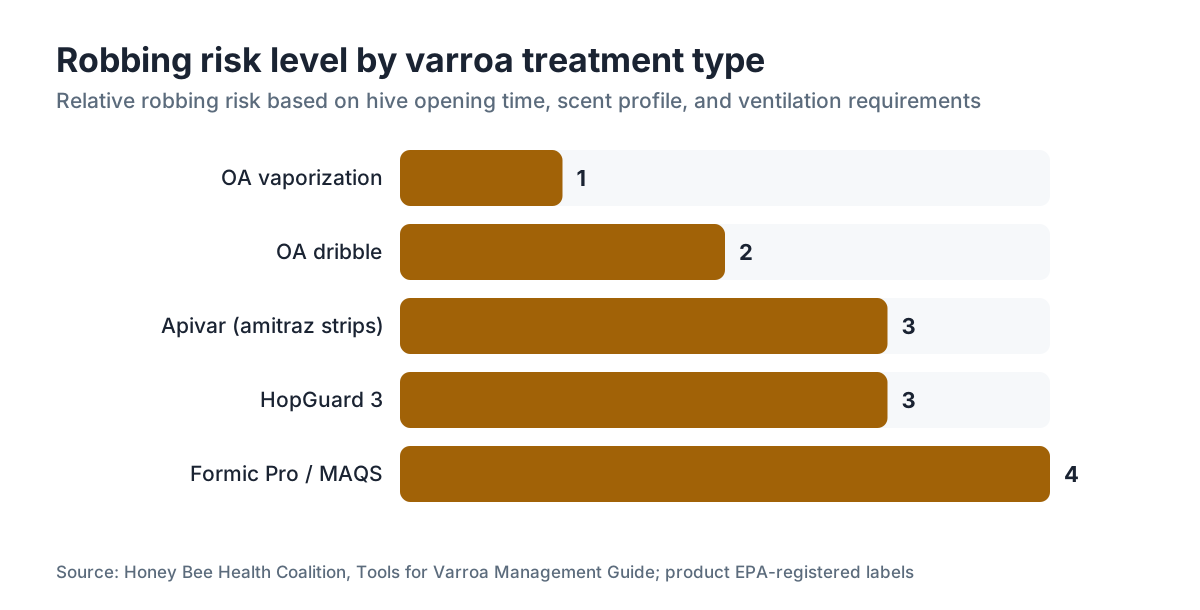
Oxalic acid vaporization, applied at dusk with a reduced entrance, is the lowest robbing-risk treatment in common use. You seal the entrance for 10 minutes, the vapor does its work, and you reopen to the reduced setting. Total disturbance runs under 15 minutes, no honey or feed spills, and no strong attractant scent goes out the door [5]. This is an underrated reason to reach for vaporization during high-pressure weeks.
Oxalic acid dribble is nearly as clean if you're careful. The usual mistake is slopping solution on the outside of the hive, which leaves both a wet attractant and a chemical stress signal. Mix ahead of time, use a syringe, and wipe spills with a dry cloth before you close up.
Apivar strips mean opening the hive and hanging strips between frames. The amitraz scent is mild and not much of an attractant for most colonies, but opening the hive during a dearth is the risk. Do it at dusk, fast, and close up right away.
Formic acid products like MAQS and Formic Pro carry the highest robbing risk in this group, for two reasons: the sharp formic smell reaches neighboring bees, and the treatment needs ventilation, meaning an open entrance, to work [4]. Run robbing screens and entrance reducers together during formic treatment. In a high-pressure yard, consider timing formic for a spell of even modest nectar flow rather than a full dearth.
HopGuard 3 (hop beta acids) has a fairly neutral scent and goes in on strips like Apivar, so its robbing profile lands around Apivar's [10].
| Treatment | Robbing risk level | Notes |
|---|---|---|
| OA vaporization | Low | Minimal opening time, no food residue |
| OA dribble | Low-medium | Risk from spilled solution |
| Apivar (amitraz) | Medium | Hive opening during dearth is main risk |
| HopGuard 3 | Medium | Similar to Apivar profile |
| Formic Pro / MAQS | Medium-high | Requires open ventilation; strong scent |
How does this connect to overall mite management planning?
Robbing defense isn't a side task. It's part of the same seasonal protocol as the treatment itself. The beekeeper who treats early, treats the whole yard, and keeps entrances small through the dearth will lose fewer colonies than the one who runs the fanciest treatment but ignores robbing pressure at the apiary level.
The sequence that works: monitor mite levels in late July and August, treat every colony in the yard inside the same 2-week window before the dearth peaks, reduce all entrances when treatment starts, apply at dusk, and keep feeding separate from treatment timing. That's not complicated. It just takes thinking about robbing and mites together instead of firefighting them as two separate emergencies.
The Honey Bee Health Coalition's "Tools for Varroa Management" guide is the best free reference for tying these steps together. It covers treatment timing, colony strength thresholds, and apiary-level thinking in one place [3]. The guide is updated regularly and tracks current label requirements for EPA-registered products.
To track mite counts and colony strength across a treatment cycle, VarroaVault's free tools let you log inspections and flag colonies drifting toward the danger threshold before they turn into robbing victims.
Say it plainly: the treatment is only as good as the colony left alive to benefit from it. See the varroa mite reference on this site for the full biology of how mites spread through robbing at the colony level.
Frequently asked questions
How small should I make the entrance when treating with oxalic acid?
Reduce to 1 to 2 inches for a full-strength colony, and to a single bee-width (about 3/8 inch) for a nuc or any colony under 5 frames of bees. For vaporization, seal the entrance completely for the 10-minute treatment window, then reopen to the reduced setting. This lets guards control access and keeps vapor concentration high while the treatment works.
Can robbing spread varroa mites between hives?
Yes. Robber bees carry phoretic mites on their bodies and drop them into their home colony when they return. A 2017 PLOS ONE study found robbing was significantly associated with accelerated mite spread between colonies in the same apiary. This is why treating the whole apiary at once, instead of only the high-count hives, is consistently recommended by the Honey Bee Health Coalition.
Is it safe to use an entrance feeder while Apivar strips are in the hive?
No. Entrance feeders pull robber scouts from other colonies and put food at the most defensible point of the hive, splitting the guards' attention. Use only top feeders or frame feeders when a treatment is active. Better yet, finish feeding 2 to 3 weeks before you begin a treatment cycle and don't feed again until the strips come out.
What do I do if my hive is being robbed right now during a treatment?
Reduce the entrance immediately to the smallest opening possible. Drape a wet burlap sack or towel over the front for several hours to confuse incoming scouts. Do not open the hive. Stop any feeding. If you have a robbing screen, install it now over the reduced entrance. Check back at dusk to assess the colony once forager activity from other colonies has died down.
Should I combine a weak, mite-treated colony with a stronger one?
If the weak colony has fewer than 4 frames of bees and you're in a dearth, combining is usually the right call. A colony that small can't defend itself, and Apivar strips at low bee density never reach effective concentration anyway. Use the newspaper method, combine at dusk, treat the combined unit if it hasn't finished the treatment period, then re-split in spring if you want the original count back.
Do robbing screens interfere with formic acid treatments that require ventilation?
They can, if they block too much air. The MAQS and Formic Pro labels both require adequate ventilation, usually an open upper entrance or a screened bottom board. Use a robbing screen on the lower entrance but keep the upper entrance or screened bottom board open during formic treatment. Check the specific product label before combining a robbing screen with any formic acid product.
How long after a robbing event before I can do a reliable mite wash?
Wait at least 3 to 4 weeks. Robbing brings in bees from other colonies carrying mites that aren't part of your colony's established population yet. A wash taken right after a robbing event can overcount or undercount depending on which bees you scoop. Waiting lets the colony population settle and the infestation level reflect the true current state.
What time of year has the highest robbing risk for treated hives?
Late summer and early fall, roughly August through October across most of the US, depending on your local nectar flow. That's when flows dry up and strong colonies switch from foraging to raiding, and it overlaps directly with peak fall varroa treatment. Some regions get a spring dearth too, but fall is consistently the highest-risk stretch, since colonies are already mite-stressed from summer.
Can I move a hive being robbed to a new location to stop the attack?
Moving it at least 2 miles away breaks the robbing cycle completely, because robber bees return to the old spot and can't find the hive. Moving it within the same apiary, even 20 to 30 feet, eases pressure but doesn't stop it, since scouts will search the area. If a 2-mile move isn't practical, combine the hive with a stronger one at the same location instead.
Why do my treated hives seem to attract more robbers than untreated ones?
Varroa-damaged colonies have fewer guard bees, lower alarm pheromone output, and sometimes weaker propolis sealing, all of which make them easier targets. The treatment isn't drawing attention. Varroa already cut the colony's defensive capacity before you got there. That's the argument for treating before a colony weakens rather than after it's a visibly easy mark.
Does the type of hive body affect robbing risk during treatment?
Somewhat. Top-bar and Warré hives usually have smaller entrances by design, which gives them a structural edge against robbing. Standard Langstroth equipment with a full-width bottom board entrance is the most exposed configuration. Adding an entrance reducer to any Langstroth hive during treatment season is the single fastest equipment fix you can make, and it costs nothing if you already own the reducer.
Should all hives in an apiary be treated at the same time to reduce robbing risk?
Yes. Treating the whole apiary inside a 2-week window flattens the mite-count gradient that drives robbing. When some colonies are high-count and collapsing while others are treated and defended, you've built both victims and vectors in the same yard. The Honey Bee Health Coalition explicitly recommends synchronized apiary-level treatment for this reason. Staggered treatment saves time now and costs colonies in the fall.
Can I use a Boardman feeder during oxalic acid dribble treatment?
No. A Boardman (entrance) feeder during an oxalic acid dribble stacks two of the worst robbing triggers together: an entrance feeder advertising food and a freshly opened, disturbed colony. Feed with a top feeder only, and ideally not during the treatment window at all. If the colony needs emergency feed, do it in the evening after the dribble is applied and the hive is closed.
Sources
- PLOS ONE, Peck & Seeley (2019), 'Mite bombs or robber lures? The roles of drifting and robbing in Varroa destructor transmission from collapsing honey bee colonies to their neighbors': Robbing behavior was significantly associated with mite spread between colonies in the same apiary, with high-mite apiaries showing accelerated infestation of previously clean colonies within weeks.
- USDA Agricultural Marketing Service, Africanized honey bee information: Africanized honey bees are more aggressive foragers and robbers than European subspecies and can overwhelm hive entrance defenses more rapidly.
- Honey Bee Health Coalition, Tools for Varroa Management Guide (current edition): Entrances should be reduced to a small opening during dearth and treatment; apiary-level synchronized treatment reduces mite spread via robbing; colonies must be queenright with sufficient population to defend themselves before treatment.
- NOD Apiary Products, Mite-Away Quick Strips (MAQS) EPA-registered label: MAQS label requires adequate ventilation and an open upper entrance or screened bottom board during formic acid treatment to ensure efficacy and prevent heat stress.
- University of Florida IFAS Extension (EDIS), oxalic acid for varroa mite control: Oxalic acid vaporization works best when bees are clustered; broodless treatments are most effective between 40 and 59 degrees F; evening application reduces robbing risk and improves vapor retention.
- USDA Agricultural Marketing Service, National Honey Board honey and disease guidance: Raw honey should not be fed to bees unless tested disease-free because American foulbrood spores survive in honey, and honey is a stronger robbing attractant than sugar syrup.
- Penn State Extension, beekeeping equipment and costs reference: Robbing screens for standard Langstroth hives cost approximately $8 to $18 per unit as of current market pricing.
- Cornell University Department of Entomology, honey bee research and apiary management resources: Hives placed within 3 feet of each other show higher rates of drifting and robbing than hives spaced 6 feet apart or more.
- Veto-pharma, Apivar (amitraz) EPA-registered label: Apivar label requires a minimum of 6 weeks and a maximum of 8 weeks strip contact time for full efficacy.
- BetaTec Hop Products, HopGuard 3 EPA-registered label: HopGuard 3 uses hop beta acids on cardboard strips applied between frames; scent profile is relatively neutral compared to formic acid products.
- North Carolina State University Extension, robbing behavior and prevention: Entrance feeders placed during dearth periods are a primary trigger for robbing attacks on weak colonies; top feeders and frame feeders significantly reduce robbing pressure.
Last updated 2026-07-09