Varroa mite drift between hives and how to reduce it

TL;DR
- Drifting bees and robbing are the main ways varroa mites move between hives in your apiary and from neighbors' colonies up to a mile or two away.
- Distinct hive colors, staggered entrances, robbing controls, and tight mite monitoring cut drift-based reinfestation a lot.
- No single fix works alone.
What is varroa mite drift and why does it matter?
Varroa destructor doesn't walk from hive to hive on its own. It hitchhikes. Worker bees carrying phoretic mites drift into the wrong colony, robber bees loot a collapsing hive and bring mites home, and drones wander freely through dozens of colonies in a flight season. Every one of those movements can seed a new infestation.
Drift matters because it makes your treatment program leaky. You can drive mites below a 2 percent infestation rate in August, and three weeks later the count is back above the treatment threshold because a dying neighbor colony just sent its last thousand foragers, loaded with mites, straight into your hives. [1] The Honey Bee Health Coalition calls this "reinfestation from outside sources" one of the primary reasons colonies that received adequate treatment still collapse in late summer and fall. [2]
Understanding the mechanism is step one. Bees drift for several reasons: disorientation during orientation flights, wind pushing them off course, visually identical hive fronts lined up in a row, high colony density in an apiary, and the sheer chaos of a robbing frenzy. Each pathway needs a somewhat different fix.
How far can mites spread through bee drift?
Short answer: farther than most beekeepers expect.
A 2011 study by Frey and colleagues tracked phoretic mites moving between apiaries and found detectable spread up to roughly 1.5 km (about 1 mile) through drifting and robbing alone. [3] Drone flight extends that range further, since drones from a mite-heavy colony can fly 5 km or more to reach drone congregation areas and mating sites before visiting other colonies. [4]
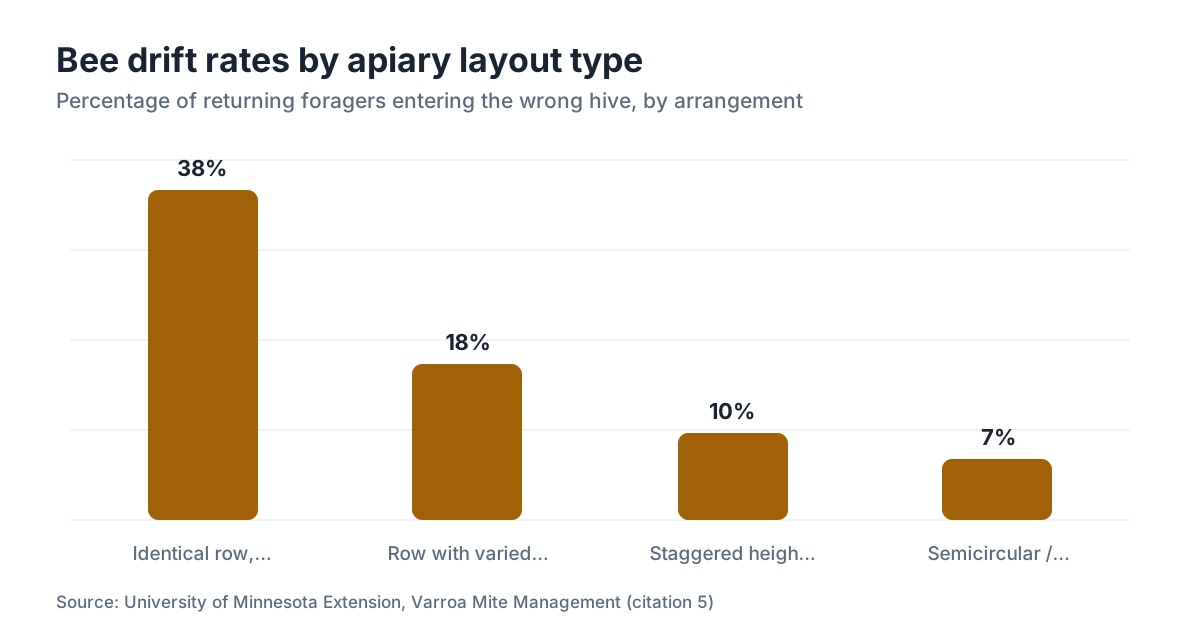
Within a single apiary, the numbers are more striking. Research cited by the University of Minnesota Extension shows that in a row of identically painted, identically positioned hives, drift can reach 30 to 40 percent of a colony's returning foragers ending up in the wrong box. [5] If even a fraction of those bees carry mites, the math gets ugly fast.
Here's the practical takeaway. You can't fully protect a weak or recently treated colony from its neighbors by treating it alone. Neighborhood mite loads matter. That's why coordinated treatment among nearby beekeepers, painful as it is to organize, is the most effective long-term tool in dense beekeeping areas.
For a broader look at the biology of varroa mite and its reproductive cycle, that background helps frame why even small reinfestation events compound quickly.
What's the difference between drift reinfestation and robbing reinfestation?
They look similar in the outcome, but the mechanism and timing differ enough that the fixes aren't identical.
Drift is largely accidental. A forager or nurse bee gets confused and walks into the neighboring hive. The receiving colony's guard bees may or may not reject her, but in most cases they accept nestmates-by-mistake. Mites riding her body are now inside the new colony. Drift is constant and low-level throughout the active season.
Robbing is purposeful and violent. A collapsing, mite-infested colony reaches the point where it can no longer defend its entrance. Neighboring bees detect the weak defense and strip the honey stores. They also pick up hundreds of phoretic mites in the process and carry them straight back to healthy hives. [2] Robbing events are seasonal (heaviest in late summer through fall when nectar dearth hits) and can transfer a massive mite bolus in a matter of days.
The Honey Bee Health Coalition's Varroa Management Guide notes, "Robbing of collapsing colonies is one of the fastest and most significant routes of varroa reinfestation." [2]
From a management standpoint: reduce drift year-round with hive placement and visual differentiation; reduce robbing reinfestation by monitoring mite levels so you catch and treat or remove collapsing colonies before the robbing cascade begins.
Which hive placement mistakes make drift worse?
Row configurations are the single biggest layout mistake. Set eight Langstroths in a straight line with all entrances facing the same direction, and returning foragers have almost no visual cue to tell their box from the neighbor's. Studies of drift in linear apiaries consistently show the highest drift into the end hives, which collect confused bees from the whole row. [5]
Other placement problems that increase drift:
- Hives too close together (less than 3 feet between boxes in a row)
- All hives at the same height on identical stands
- No visual variation: same-colored boxes, no trees, no fence posts, nothing to break up the flight path
- High-density yards with more than 10 to 15 colonies in a tight cluster
- Hives facing into prevailing wind, which physically pushes returning foragers sideways
The fix doesn't need a full rebuild of your yard. Staggering heights with cinder blocks, pointing alternate entrances at slight angles (even 30 degrees off from the neighbor), and placing a distinctive marker near each hive front cut drift measurably. Virginia Cooperative Extension recommends a semicircular or back-to-back arrangement over rows wherever the yard has room. [6]
How do you use hive appearance to reduce bee drift?
Honey bees navigate using color, pattern, and spatial cues. You can exploit this.
Painting hive fronts in distinct colors and patterns is the most-cited intervention. Bees distinguish yellow, blue, and white well. They have limited red perception, so red reads as near-black to a bee. The standard advice is to vary both color and geometric pattern on the hive entrance face or landing board. A yellow box with a horizontal stripe reads differently to a returning forager than a white box with a circle, even if they're two feet apart. [5]
You don't need to repaint every box. Painting just the front of the bottom board, or tacking colored shapes near the entrance, is enough to give bees a reliable home beacon. Some beekeepers use differently shaped entrance reducers (square hole vs. round hole vs. open slot) as a low-effort supplement.
Natural markers help too. Planting a shrub or driving a stake in front of a specific hive gives orientation-flight bees an anchor point they'll remember. Bees learn their home location mostly during orientation flights in the first week of adult life. The more distinct that location looks, the less they drift later.
One honest caveat: color differentiation helps most with drift from orientation confusion. It does much less for robbing-driven mite spread, because robber bees deliberately target weak hives regardless of paint color.
Does reducing robbing actually cut mite reinfestation?
Yes, and the effect can be dramatic. The Honey Bee Health Coalition documents cases where apiaries with well-managed robbing kept post-treatment mite counts far more stable through fall than yards where collapsing colonies were left to fend for themselves. [2]
Practical robbing-reduction tactics:
Entrance reducers. Use them during nectar dearths, especially late summer. A small colony defending a 4-inch entrance will fail; the same colony can hold a 1-inch opening. Most commercial reducers come with two settings; use the smallest one from roughly August through October in temperate climates.
Remove or treat collapsing colonies fast. This is the hard one. A colony above 10 to 15 percent mite infestation with a declining population is a mite bomb. Treat it aggressively and close the entrance during treatment, or combine it with a healthy colony, or pull it from the yard. Leaving it to die on your stand is generous to varroa and cruel to your other colonies.
Don't feed at the wrong time. Open feeding of sugar syrup or spilled honey during dearth triggers robbing. Feed inside the hive with frame feeders or division board feeders, not in open trays in the yard.
Avoid inspections during peak robbing season. Even opening a hive briefly can pull scouts in. Inspect early in the morning or on cool days when foragers are less active if you're in a dearth period.
For entrance reducers and feeders, see our list of beekeeping supply companies.
What mite monitoring schedule catches drift-based reinfestation in time?
Monitor every hive every 4 weeks during the active season, and more often in late summer. [2] EPA-registered treatment thresholds generally sit at 2 to 3 mites per 100 bees (2 to 3 percent) as the trigger point during brood-rearing season. [7]
The problem with drift reinfestation is that it can spike a colony's mite load fast enough to outrun a monthly schedule. A colony robbing a dying neighbor for three days in August can absorb hundreds of phoretic mites and blow past the treatment threshold before your next scheduled wash.
Practical adjustments:
- During late summer nectar dearth (roughly July through September in most of the continental US), bump monitoring to every 2 to 3 weeks
- If you see robbing activity in the yard, check all colonies within the week, not on schedule
- Use alcohol wash or sugar roll with a consistent 300-bee sample for reliable counts [12]
- Keep a written log by colony so you can spot a sudden jump that looks like reinfestation rather than a gradual rise
| Monitoring frequency | Season | Reason |
|---|---|---|
| Every 4 weeks | Spring / early summer | Baseline growth tracking |
| Every 2-3 weeks | Late summer (dearth) | High robbing/drift risk |
| Within 7 days of robbing event | Any time | Confirm reinfestation hasn't occurred |
| Post-treatment at 42 days | Any time | Verify treatment efficacy |
VarroaVault's free mite monitoring log tracks these counts across multiple hives and flags when a single colony jumps outside its normal trend, which is usually the first sign of drift-based reinfestation.
For a detailed breakdown of the varroa mite lifecycle and why mite counts jump faster than they seem like they should, that background is worth having before you design a monitoring schedule.
Does apiary location relative to neighboring beekeepers affect your drift risk?
Yes, a lot. You can do everything right in your own yard and still face heavy reinfestation if there are untreated colonies within a kilometer or two.
A 2019 analysis published in PLOS ONE found that varroa infestation levels in managed colonies correlated with the density of apiaries within 1.5 km, more than with the management practices in the focal apiary. [8] Feral colonies in hollow trees add to this background pressure in ways that are almost impossible to control directly.
Your practical options when neighbors are part of the problem:
Talk to other beekeepers. It's awkward, but local bee clubs often have protocols for coordinated treatment windows. The Honey Bee Health Coalition explicitly recommends regional coordination as a best practice. [2] If everyone in a 2 km radius treats in August, the regional mite pool drops.
Buffer with a physical barrier. A treeline, building, or tall hedge that forces bees to fly up before they can orient toward your yard reduces incidental drift from passing foragers, though it doesn't stop determined robbers.
Relocate vulnerable colonies. A nuc or newly treated colony is especially exposed to reinfestation. Moving it at least 3 miles away (far enough that bees reorient from scratch) during the high-risk period is a real option if you have an out-yard.
Accept the limits. Nobody has perfect data on exactly how much a single beekeeper can reduce neighborhood drift exposure alone. The honest answer is that it helps but doesn't eliminate the risk. Frequent monitoring is the safety net that catches what prevention misses.
Are there any hive products or equipment choices that reduce mite drift?
A few, though none are magic.
Screened bottom boards get mentioned in this context, but their main benefit is ventilation and sticky board monitoring, not drift prevention. They don't stop bees from walking in with mites.
Entrance traps and robbing screens are more useful. A robbing screen (a screened entrance guard that forces bees to enter from the side) throws off robber bees, which rely on entering exactly where the scent is strongest, while resident bees learn the new route within a day or two. The University of Florida IFAS Extension notes that robbing screens reduce robbing attempts effectively during nectar dearth. [9]
Drone trapping (using a drone-foundation frame that you freeze before capping) pulls mite reproduction out of the brood and also physically removes mite-carrying drones before they drift to other colonies. It's labor-intensive and works best as a supplement to chemical treatment rather than a standalone tool. [2]
Formic acid-based treatments (Formic Pro, Mite Away Quick Strips) are worth mentioning here because they kill phoretic mites, the ones that travel. Treat proactively before a dearth period and you reduce the number of phoretic mites in your apiary available to drift. EPA-registered formic acid products are legal in the US and have no honey residue concerns when used per label. [10]
For a full inventory of tools and where to source them, our guide to beekeeping supplies covers the options.
What's the best overall strategy to minimize drift-based varroa reinfestation?
No single tactic carries the load. The beekeepers who hold mite levels stable through the fall are doing four or five things at once.
The stack that actually works, in rough order of impact:
- Treat before peak drift season. Get mite loads low by late July or early August, before nectar dearth triggers mass robbing. A colony at 1 percent mite load handles drift reinfestation much better than one already at 3 percent. [2]
- Fix your layout. Differentiate hive fronts visually. Stagger heights. Avoid straight-line rows with identical entrances. This is free and permanent.
- Monitor frequently during dearth. Every 2 to 3 weeks from late July through October. Act on what you find.
- Don't leave collapsing colonies in the yard. Treat, combine, or remove. This is the hardest one emotionally but probably the highest-leverage move for reducing mite spread in your own apiary.
- Reduce entrance size during dearth. Entrance reducers are a dollar of plastic or wood. Use them.
- Talk to your neighbors. If you know other beekeepers within a mile, coordinate treatment timing. One untreated apiary can undo everyone nearby.
VarroaVault's protocol builder walks through timing these steps against your local nectar flow calendar, which varies enough by region that generic month-based advice often misses the real risk window.
Perfection isn't on the table here. Feral colonies, migratory apiaries passing through, and beekeeper neighbors who don't treat mean there's always some background drift pressure. The goal is to knock it down enough that your monitoring catches spikes before they become collapse events.
Does coordinated neighborhood treatment actually reduce varroa spread?
The evidence says yes, though the studies are mostly from Europe where beekeeper density and regulatory conditions differ from the US.
A widely cited Swiss study (Straub et al., 2019, PLOS ONE) found that colonies in coordinated area-wide mite treatments kept mite levels significantly lower over multiple years than colonies treated in isolation, even when individual treatment quality was held constant. [8] The mechanism is straightforward: when everyone in the neighborhood reduces their phoretic mite population at the same time, there are far fewer mites available to drift.
The Honey Bee Health Coalition's Varroa Management Guide states, "Collaboration among beekeepers in a region to reduce mite levels simultaneously can help minimize reinfestation from neighboring apiaries." [2]
In the US, local bee clubs and state apiculturists are the practical entry point for coordinating these efforts. Many states have extension apiculturists who can run neighborhood treatment campaigns, particularly after varroa-related winter losses draw attention. The USDA's National Institute of Food and Agriculture has funded several such regional projects. [11]
The honest challenge is that coordination needs trust, communication, and a willingness to commit to a specific treatment window, all of which fall apart for beekeepers managing hives as a side hobby around unpredictable schedules. It works when it happens. It's just hard to make happen.
Frequently asked questions
How do varroa mites actually get from one hive to another?
Phoretic varroa mites (the ones not inside capped brood) cling to adult bees. When those bees drift into a neighboring colony, enter a hive during robbing, or are male drones visiting multiple colonies, the mites detach and start reproducing in the new host colony. Mites can't survive long without a bee host, so they depend entirely on bee movement to spread between hives.
How far away do I need to move a hive to prevent drift reinfestation?
At least 3 miles (roughly 5 km) is the standard recommendation for forcing bees to fully reorient. Moving a hive 50 feet within the same yard doesn't help for drift purposes because foragers from the original location will return to the old spot and drift into neighboring hives. Three miles is the practical cutoff where almost all bees reorient from scratch.
When is the highest risk period for varroa mite drift between hives?
Late summer through early fall, roughly August through October in most temperate US climates. That's when nectar dearth peaks, robbing activity spikes, and colonies weakened by summer mite loads start collapsing. A collapsing colony can transfer hundreds of phoretic mites to neighbors through robbing in just a few days. This window is when monitoring frequency should roughly double compared to spring.
Can feral honey bee colonies spread varroa mites to my hives?
Yes. Feral colonies living in tree hollows or structures within a kilometer or two are legitimate mite reservoirs. They usually go untreated, often carry high mite loads, and send foragers and drones through the same territory as your managed colonies. You can't treat feral colonies directly. Your best defense is keeping your own hive mite levels low and monitoring frequently enough to catch any reinfestation spikes early.
Do entrance reducers actually help with varroa drift from robbing?
Yes, indirectly but meaningfully. An entrance reducer doesn't stop mite-carrying bees from drifting in, but it lets a colony defend its entrance effectively even when the population is reduced. That prevents robbing events, which are the fastest route for mass mite transfer. Use the smallest opening during late-summer dearth, particularly for smaller colonies or recently treated hives that haven't yet rebuilt their guard bee population.
How do I tell if my hive got reinfested from drift versus mites that survived treatment?
Timing and pattern are the main clues. If mite counts drop to near zero after treatment then spike sharply 3 to 6 weeks later (faster than normal reproduction would explain), reinfestation from outside is the likely cause, especially if you're in dearth season or had visible robbing activity. If counts never dropped much after treatment, surviving mites or a treatment failure is more likely. Monitoring every 2 to 3 weeks after treatment is the only way to tell.
Is there a mite threshold that means my hive is a risk to its neighbors?
There's no formally established "danger to neighbors" threshold in US guidelines. The Honey Bee Health Coalition uses 2 percent (2 mites per 100 bees) as the general treatment trigger during brood season. A colony above 5 to 8 percent in late summer is likely shedding large numbers of phoretic mites through drift and is at serious collapse risk. Treating at or below the 2 percent threshold keeps your colony from becoming a neighborhood mite source.
Does painting hive boxes different colors actually reduce varroa transmission?
Color differentiation reduces the drift that comes from bees failing to identify their home hive, which is one route for mite spread. It won't stop mite transfer via robbing or drone movement. Studies on drift in identically colored apiaries show drift rates of 30 to 40 percent of returning foragers. Distinct colors and patterns on hive fronts measurably reduce this, though no published trial has directly measured the downstream effect on mite infestation rates specifically.
Can I use a robbing screen to protect a recently treated colony from reinfestation?
Yes, and it's one of the more underused tools. A robbing screen physically confuses robber bees by forcing entry from the side of the entrance rather than straight on. Resident bees learn the new route within a day or two. Robbing screens are particularly useful for smaller colonies during dearth and for colonies you've just treated that have a temporarily reduced guard bee workforce. They're inexpensive and reusable.
What do I do if a neighbor's hive collapses and I think it's spreading mites to my yard?
Act fast. Close down your entrances to the smallest setting immediately. Check mite levels in all your colonies within the week, not on your normal schedule. If counts are above the treatment threshold, treat. If the collapsing hive is accessible and the owner is willing, help them remove or combine it before robbing escalates. If mites are already spiking in your hives, treat regardless of what happens to the source colony.
How does coordinated treatment with neighboring beekeepers work in practice?
Local bee clubs are usually the organizing body. The idea is for all beekeepers within a few kilometers to treat in the same 2 to 4 week window, ideally in late July or early August before the main nectar dearth. When everyone reduces phoretic mite loads simultaneously, there are far fewer mites available to drift. It requires agreement on a treatment window but not on which specific product each beekeeper uses. State extension apiculturists can help facilitate these efforts.
Should I worry about varroa drift from migratory beekeepers moving hives through my area?
It's a real risk worth being aware of. Commercial migratory apiaries can carry high mite loads and may be positioned within foraging range of your yard during pollination contracts. You can't control their movement, but you can monitor more frequently if you know a large migratory apiary is nearby. State departments of agriculture track permitted migratory operations in most states, so you can sometimes get advance notice through your local bee inspector.
Are there any varroa-resistant bee stocks that are less affected by drift reinfestation?
Varroa-resistant stocks like VSH (Varroa Sensitive Hygiene) and Pol-line bees suppress mite reproduction but don't prevent phoretic mites from arriving via drift. A resistant colony that receives a bolus of phoretic mites through robbing is still exposed. The advantage is that mite populations grow more slowly afterward, giving you more time to detect and respond. Resistant stock is a useful layer but not a substitute for layout improvements and monitoring.
Sources
- USDA ARS, Varroa Mite Biology and Management: Phoretic varroa mites spread primarily through drifting bees and robbing events between colonies
- Honey Bee Health Coalition, Varroa Management Guide (2023): Robbing of collapsing colonies is one of the fastest and most significant routes of varroa reinfestation; collaboration among regional beekeepers to treat simultaneously reduces reinfestation
- Frey E et al. (2011), Apidologie: Varroa spread between apiaries: Phoretic mite spread detectable between apiaries up to approximately 1.5 km apart via drifting and robbing
- Ruttner F and Ruttner H (1966), Bayerische Landwirtschaftliche Jahrbuch: Drone flight range: Honey bee drones fly up to 5 km or more to drone congregation areas, enabling mite spread over longer distances
- University of Minnesota Extension, Varroa Mite Management: In identically colored and positioned row apiaries, drift rates of 30 to 40 percent of returning foragers have been observed; visual differentiation reduces this
- Virginia Cooperative Extension, Honey Bee Apiary Management: Semicircular or back-to-back hive arrangements reduce drift compared to linear rows
- EPA, Pesticide Product Labels: Varroa Mite Treatments: EPA-registered varroa treatments reference a 2 to 3 percent infestation threshold (2-3 mites per 100 bees) as a treatment trigger
- Straub L et al. (2019), PLOS ONE: Area-wide varroa management reduces infestation: Colonies in coordinated area-wide treatment programs maintained significantly lower mite levels than isolated-treatment colonies; infestation correlated with apiary density within 1.5 km
- University of Florida IFAS Extension, Honey Bee Robbing Behavior: Robbing screens effectively reduce robbing attempts during nectar dearth by disorienting robber bees while resident bees quickly learn the new entrance route
- EPA, Formic Pro and Mite Away Quick Strips Product Labels: Formic acid-based treatments (Formic Pro, MAQS) are EPA-registered, kill phoretic varroa mites, and have no honey residue concerns when used per label
- Honey Bee Health Coalition, Varroa Management Guide: Monitoring methods: Alcohol wash or sugar roll using a 300-bee sample is recommended for reliable mite count; monitoring every 4 weeks during active season with increased frequency during late-summer dearth
Last updated 2026-07-10