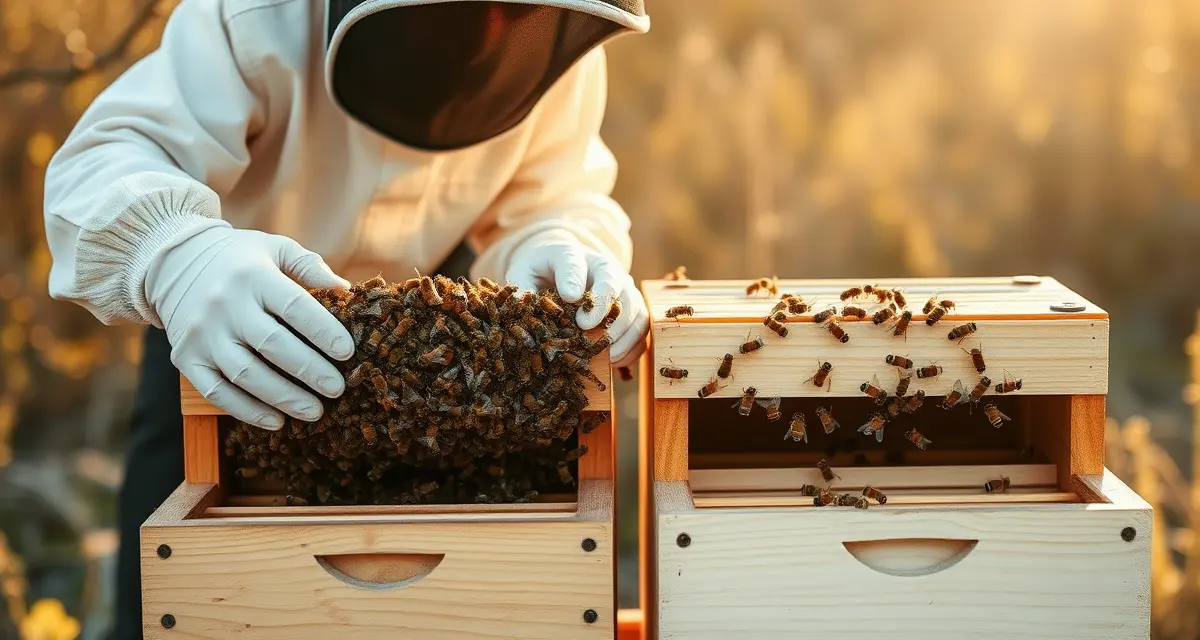
Using Hive Splits as a Varroa Management Tool: Timing and Method
A well-timed spring split can reduce the parent colony mite load by 25-40% without any chemical input. That's not a small effect. It's the difference between a colony that needs treatment and one that doesn't, at least for a few months. Splits are underused as a varroa management strategy because most beekeepers think about them purely in terms of swarm control or honey production. But when you understand why they work against varroa, you can time them to maximize that benefit.
This guide covers the mechanics of how splits suppress mite populations, which timing approaches are most effective, and how to track the impact in VarroaVault so you can see whether the strategy is working across your apiary.
TL;DR
- This guide covers key aspects of using hive splits as a varroa management tool: timing and me
- Mite monitoring should happen at minimum every 3-4 weeks during active season
- The 2% threshold in spring/summer and 1% in fall are standard action points based on HBHC guidelines
- Always run a pre-treatment and post-treatment mite count to calculate efficacy
- Treatment records including product name, EPA number, dates, and counts are required for state inspection compliance
- VarroaVault stores all monitoring and treatment data with automatic threshold comparison and state export formatting
Why Splits Suppress Varroa Mite Populations
Varroa mites reproduce exclusively in capped brood cells. The mite enters a cell just before it's capped, lays eggs alongside the developing bee, and the offspring mature before the bee emerges. Without capped brood, mites can't reproduce.
When you make a split, you create a queenless portion of the colony. That queenless half raises a new queen, which takes 21-28 days. During that period, no new worker brood is being capped in the queenless half. Mites that would otherwise be reproducing in new brood cells are instead stuck in phoretic phase on adult bees.
In the parent (queenright) portion, the remaining queen is still laying, but the colony population is reduced. The ratio of mites to bees may actually increase temporarily in the parent, but the queenless half sees a genuine interruption in reproduction.
The full suppression effect comes from two things happening simultaneously: the brood break in the queenless portion slows mite reproduction there, and the total colony population is split in two, preventing the exponential mite growth that a single large colony enables.
How Much Can Splits Actually Reduce Mite Loads?
The 25-40% reduction in parent colony mite load is a documented range from well-controlled studies. The variance depends on:
Timing of the split. Splits made in early spring when mite populations are still low have a bigger proportional impact. Splits made in late summer when mites are already high have less relative effect.
What you do with the queenless half. If you treat the queenless half with OA dribble during its broodless period, you can achieve 90%+ efficacy in that portion while also slowing reproduction in the parent. The combined apiary-level reduction can approach 50-60%.
Colony composition. The more brood you move to the queenless half, the longer the broodless window in that half while cells emerge without new ones being capped.
Splits alone are rarely sufficient as a standalone varroa control strategy for the whole season. But as one component of an integrated approach, the mite reduction they provide is real and meaningful.
Timing Approaches for Maximum Mite Impact
Spring Splits (April-May)
Spring splits are primarily valued for swarm prevention, but they're also the optimal time for mite suppression through splitting. Mite populations are at their seasonal low in spring. A split now creates a brood break in the queenless half during a period when mites are not yet building toward summer pressure.
If you combine a spring split with an OA dribble on the queenless half 7-10 days after splitting, you can start the new colony's life with a genuinely low mite load. The parent colony also sees reduced mite growth rates because its population is smaller.
Use VarroaVault's hive split management guide to plan the split event and log the expected OA dribble window.
Summer Splits (June-July)
Summer splits are more aggressive management. The colony is at peak strength and mite populations are climbing. Splitting a strong June colony creates a brood break in the queenless portion during the peak of the warm season.
The mite suppression effect is meaningful but the stakes are also higher. The queenless portion needs to raise a new queen successfully in warm weather, and you're splitting a colony that might otherwise be making honey. Time this with your production goals in mind.
Pre-Fall Splits (Early August)
An early August split is a high-value management move because it creates the broodless window right at the point when winter bees are about to be raised. If you can get a broodless period and an OA dribble in the queenless portion during August, you're raising winter bees in a very low-mite environment in that half.
This is the most aggressive use of splits for varroa management, and it requires careful planning. An August split needs to successfully raise a new queen before the season becomes too cold for mating flights. In most temperate US zones, this means completing the split no later than August 10-15 to allow mating to complete by September.
Splits Combined With Chemical Treatment
The most powerful use of splits is to pair the brood break with an OA treatment. Here's the protocol:
- Make the split. Move frames with capped brood and nurse bees to the queenless portion.
- Wait 7-10 days until most of the transferred brood has emerged.
- Apply OA dribble to the queenless portion during the broodless window.
- Monitor the queenless portion for queen success 21-28 days from split.
- Do a mite count on both parent and child colony at 30 days post-split.
This approach can reduce mite loads in the child colony by 90%+ through the OA treatment, while the parent colony benefits from both the smaller population and any mites transferred to the child colony along with the brood frames.
Tracking Split Mite Impact in VarroaVault
VarroaVault's split planner calculates the mite load reduction expected from a split based on the timing and colony composition. When you log a split event, the system asks for:
- Parent colony current mite count
- Estimated brood percentage moved to child colony
- Split date
- Planned treatment for child colony (if any)
From those inputs, VarroaVault projects the expected mite reduction in both colonies and schedules count reminders at the optimal post-split monitoring dates.
After 30 days, when you log the actual post-split counts, VarroaVault compares the projected reduction to the actual result. Over time, this builds a personalized efficacy dataset for your operation. You'll know whether your splitting approach is delivering the expected mite suppression or whether you need to adjust timing or combine with chemical treatment.
Use VarroaVault's broodless treatment period tracker to identify the optimal OA treatment window after each split.
Practical Limitations of Splits as Varroa Control
They don't eliminate mites. Even a perfect split with OA treatment reduces mite loads substantially but doesn't eradicate them. Any surviving mites in the parent colony will resume reproduction once the colony returns to full strength.
New colony vulnerability. The queenless half is vulnerable during queen-raising. If queen-raising fails, you've created an additional problem alongside the varroa challenge.
Production trade-offs. Every split reduces honey production from the parent colony for the remainder of the season. In a production operation, splits need to be justified economically.
Reinfestation. If neighboring colonies in your apiary or nearby apiaries have high mite loads, your freshly treated split can be reinfested through drifting and robbing within weeks. Splits work best as part of coordinated apiary-wide management.
Not a replacement for monitoring. Mite counts before and after splits are essential to confirm the strategy is delivering the expected benefit.
Building Splits Into Your Annual Management Plan
The most effective beekeepers use splits as a scheduled management tool, not just a reactive response to swarm cells. Here's how to build them into your annual plan:
April-May: One or two splits per colony for swarm prevention. Combine with OA dribble on queenless portions during brood break.
July (optional): Splits from any colony showing upward mite trend before the treatment threshold is reached.
August (selective): Pre-fall split on any colony above 1.5% with adequate strength to split without compromising winter preparation.
Track every split event in VarroaVault with corresponding mite counts. At the end of the season, run the Hive History Report to see which splitting decisions produced measurable mite suppression and which didn't. This data drives better decisions next year.
Frequently Asked Questions
When is the best time to split for varroa management?
The best timing depends on your goal. For maximum mite suppression combined with spring management, early splits in April-May pair swarm prevention with mite load reduction in both colonies. For production operations that want a balance between mite management and honey yield, June splits are effective with acceptable trade-offs. For the most impactful pre-winter varroa control, early August splits create a broodless window right before winter bee production, allowing an OA dribble that raises winter bees in low-mite conditions. August splits require careful timing to ensure successful queen mating before cool weather limits mating flights. Always count mites before and after splits to confirm the strategy is delivering the expected reduction.
How effective is splitting as a standalone varroa control method?
Splitting alone reduces parent colony mite loads by 25-40% in well-timed applications, which is a meaningful but incomplete intervention. Splitting is most effective as one component of an integrated management program rather than as a standalone strategy. The brood break created in the queenless portion provides an excellent opportunity for OA treatment, which can achieve 90%+ efficacy when applied during the broodless window. Combined, a well-executed split with OA treatment can reduce mite loads more effectively than most single chemical applications. Without the OA treatment, the mite suppression from the brood break alone is temporary, and populations typically rebound within 6-8 weeks as both colonies return to full brood production.
Does VarroaVault track the mite impact of hive splits?
Yes. VarroaVault's split planner calculates the expected mite load reduction in both parent and child colonies based on split timing, brood transfer percentage, and any planned OA treatment during the broodless window. When you log a split event, the system schedules count reminders at 30 days for both colonies. After you log the actual post-split counts, VarroaVault compares the projected and actual results and shows the efficacy of the split on both colony records. Over multiple splits and seasons, this builds a dataset showing how well your splitting approach is controlling mite loads in your specific apiary conditions.
How do I know if my varroa treatment is working?
Run a mite count 2-4 weeks after the treatment ends and compare it to your pre-treatment count. The efficacy formula is: ((pre-count - post-count) / pre-count) x 100. A result above 90% indicates effective treatment. Results below 80% should trigger investigation for possible resistance, application error, or reinfestation. Log both counts in VarroaVault to track efficacy trends across treatment cycles.
How often should I check mite levels in my hives?
At minimum, once per month (every 3-4 weeks) during the active season. Increase to every 2 weeks when counts are near threshold or after a treatment to verify it worked. In fall, monitoring frequency matters most because the window to treat before winter bees are raised is narrow. VarroaVault's monitoring reminders can be set to your preferred interval for each apiary.
What records should I keep for varroa management?
Each record should include: date of count or treatment, hive identifier, monitoring method used, number of bees sampled, mites counted, infestation percentage, treatment product name and EPA registration number, dose applied, treatment start and end dates, and PHI end date. State apiarists typically expect this level of detail during inspections. VarroaVault captures all of these fields in a single log entry.
What is Using Hive Splits as a Varroa Management Tool: Timing and Method?
Hive splitting as a varroa management tool involves deliberately dividing a colony to disrupt the mite reproduction cycle. When a split is made, one half loses its queen and enters a brood break — a period with no capped brood. Since varroa mites reproduce inside capped brood cells, this break halts mite reproduction and makes mites more vulnerable to treatments. A well-timed split can reduce the parent colony's mite load by 25–40% without any chemical input.
How much does Using Hive Splits as a Varroa Management Tool: Timing and Method cost?
Hive splitting itself costs nothing beyond basic beekeeping equipment you likely already own — a spare hive body, frames, and protective gear. The real investment is time and planning. If you purchase a new queen to introduce to the split rather than letting the colony raise one naturally, expect to spend $30–$60 depending on your region and queen source. The strategy is one of the most cost-effective varroa management approaches available to any beekeeper.
How does Using Hive Splits as a Varroa Management Tool: Timing and Method work?
When you split a hive, you divide the brood, bees, and resources between two units. The queenless half must raise a new queen, creating a natural brood break of 3–4 weeks. During this window, mites in that half cannot reproduce because there are no capped brood cells to enter. Mites remaining in the hive become phoretic — riding adult bees — which makes them significantly more susceptible to treatments like oxalic acid if you choose to apply one during the break.
What are the benefits of Using Hive Splits as a Varroa Management Tool: Timing and Method?
The primary benefit is a significant, chemical-free reduction in mite load — typically 25–40% in the parent colony. Splits also reset the mite-to-bee ratio in both resulting colonies, buying time before action thresholds are reached. Beyond mite management, splits reduce swarming pressure, allow you to grow your apiary, and give you the option to requeen with locally adapted genetics. When tracked in a tool like VarroaVault, splits become a measurable, repeatable strategy rather than a one-off management decision.
Who needs Using Hive Splits as a Varroa Management Tool: Timing and Method?
Any beekeeper managing colonies through spring and summer buildup can benefit from this strategy, but it's especially valuable for those trying to reduce chemical inputs or rotate treatment methods to avoid resistance. Hobbyists with two or more hives, small-scale commercial operations, and treatment-free beekeepers all use splits as a core varroa tool. Beekeepers in states with strict inspection and record-keeping requirements will also find that documenting split timing alongside mite counts in VarroaVault helps demonstrate proactive, evidence-based colony management.
Sources
- American Beekeeping Federation (ABF)
- USDA ARS Bee Research Laboratory
- Honey Bee Health Coalition
- Penn State Extension Apiculture Program
- Project Apis m.
Get Started with VarroaVault
The information in this guide is most useful when you have your own mite count data to apply it to. VarroaVault stores every count, flags threshold crossings automatically, and builds the treatment history you need for state inspections and effective management decisions. See pricing and free tools at varroavault.com.