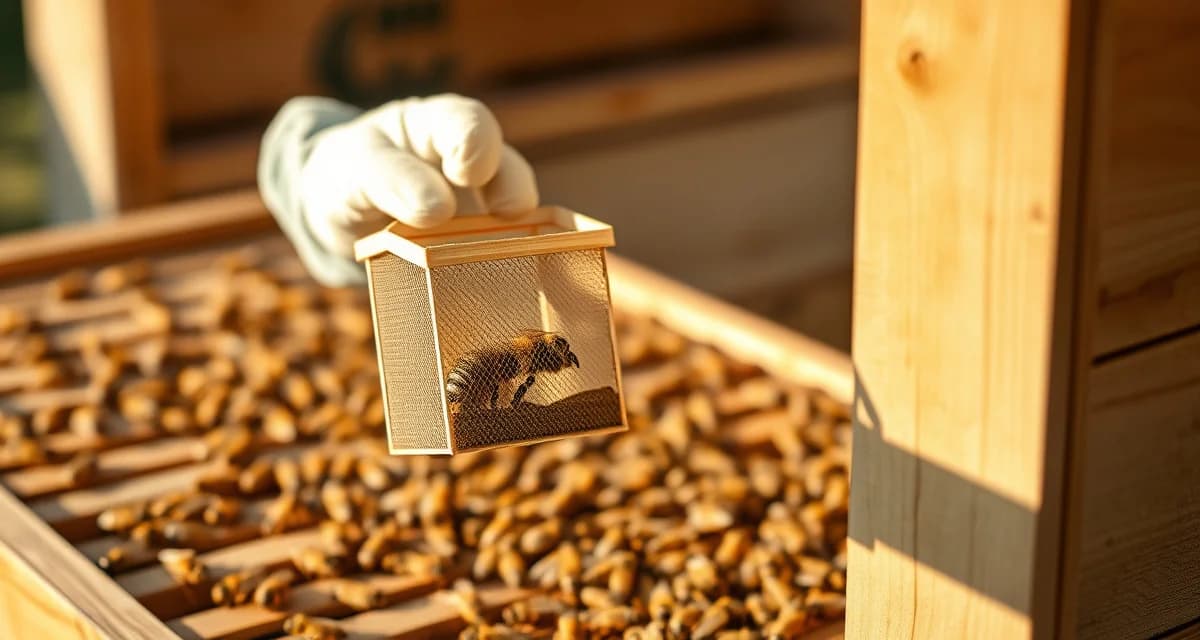
Artificial Brood Breaks for Varroa Control: Caging the Queen
Combining a 25-day queen cage with an OA dribble can achieve near 100% mite kill in a single intervention. That's the most effective varroa treatment available to a beekeeper who isn't using a registered synthetic acaricide, and it's accessible to anyone who's comfortable locating their queen.
The principle is simple: remove the queen from the brood-rearing cycle for long enough to let all currently capped brood hatch out. Once there's no capped brood, there's nowhere for mites to hide. A single oxalic acid dribble applied at peak broodlessness reaches every phoretic mite in the colony.
TL;DR
- A brood break (queenless or caged queen period) stops mite reproduction by eliminating capped brood
- All mites become phoretic during a brood break, making oxalic acid treatment maximally effective
- An artificial brood break of 21-24 days allows all capped brood to emerge before treating
- Efficacy of oxalic acid dribble during a true broodless period can reach 95%, versus 50-70% with brood present
- Combine a brood break with an oxalic acid treatment for the most effective low-chemical approach
- Log brood break dates and subsequent mite counts in VarroaVault to confirm effectiveness
Why 25-28 Days?
Worker brood takes 21 days from egg to emergence. When you cage the queen, any eggs she laid before caging will be capped within about 9 days and emerge about 12 days later. The last brood to hatch out emerges at day 21 from when those eggs were laid, which may be a few days before you caged the queen.
To ensure complete broodlessness, you want to account for the oldest current brood when you remove the queen. If the colony had fresh eggs on day zero (caging day), those will be the last to hatch, completing around day 21 from that point. The extra 4-7 days past day 21 ensures any stragglers have emerged and the mites from those last cells have moved onto adult bees.
Cage the queen for at least 25 days to be confident the colony is broodless on inspection day. Day 28 is safer. Opening at day 21 often reveals a small amount of capped brood still remaining.
Step-by-Step: Queen Caging for OA Treatment
Step 1: Locate the Queen
You'll need to find and physically cage the queen. This requires a hive inspection when conditions are suitable for full manipulation. A sunny, warm, calm day with a well-established colony makes queen finding much easier.
Move methodically through the frames starting from one side. Look for the longest bee on each frame (queens are longer than workers), look for the characteristic moving-of-workers-out-of-her-path behavior, and look for a pattern of fresh eggs or young larvae that indicates she's been on that frame recently.
Mark your queen with a paint pen if you haven't already. This makes finding her dramatically faster in future inspections. Marking is also one of the most worthwhile 5-minute investments in ongoing hive management.
Step 2: Cage the Queen
Queen cages for brood-break purposes are different from introduction cages. You want a cage large enough to hold the queen and 4-5 attendant workers for the duration, with access to food. Options:
Push-in cages: A wire mesh cage pressed over a small comb area where the queen is. Workers move freely in and out but the queen is confined. She continues to attempt laying but in a restricted area only.
JzBz or similar plastic cages: Direct containment cages where you can place the queen and attendants with fondant for nutrition.
Modified introduction cages with fondant-filled candy hole: The queen and attendants consume the fondant over time; you replace it every 10-14 days.
Confirm the cage is secure and the queen is inside with adequate attendants before closing the hive.
VarroaVault's queen cage event log triggers a 25-day countdown to the recommended OA dribble treatment window. When you log the caging date, the platform schedules the treatment reminder automatically.
Step 3: Leave the Colony for 25-28 Days
This is the hard part for attentive beekeepers who like to check their hives frequently. Resist the urge to open the hive before day 25. Every time you open the hive, you risk losing the caged queen (she can escape during inspection), stressing the colony, and potentially allowing emergency queen rearing that restarts the brood cycle.
If you must open the hive mid-cage period, check the queen cage briefly and close quickly without frame-by-frame inspection.
Step 4: Confirm Broodlessness on Day 25-28
Open the hive on day 25-28 and inspect every frame in the brood nest area. Look for capped brood. There should be none.
If you find any capped brood, wait another 3-5 days and check again. Some colonies are slower to hatch. A small patch of late-hatching drone brood is the most common reason for finding brood at day 25.
Log the broodless confirmation inspection in VarroaVault before proceeding to treatment.
Step 5: Apply OA Dribble
With a confirmed broodless colony, apply 5mL of 3.2% oxalic acid solution per seam of bees, up to 10 seams (50mL maximum per colony). Cover every seam where bees are clustered.
The oxalic acid dribble calculator calculates the correct dose based on your colony's current seam count. Log the treatment in VarroaVault, which will auto-calculate efficacy when you do your follow-up count.
Step 6: Release the Queen
After treatment, release the queen from her cage. In most cases, the colony accepts her readily after a 25-day absence, since there's been no time for a new queen to be raised and accepted. Worker behavior toward the released queen will tell you quickly whether acceptance is normal.
Step 7: Follow-Up Count at 5-7 Days
Count mites 5-7 days after treatment. You should see near-complete mite elimination. VarroaVault pairs this count to your treatment record and calculates efficacy.
If efficacy is below 90%, investigate: Was the broodless confirmation accurate? Was the OA dose sufficient for the colony's seam count? Was the solution concentration correct?
Is Queen Caging Harmful?
A well-implemented brood break is not significantly harmful to the colony. The concerns people raise:
Population dip. Yes, a 25-day queen absence means 25 fewer days of egg-laying, which means a population dip 3 weeks after release when those unmade bees would have emerged. In most cases, this dip is manageable and temporary. Time the brood break so the population dip doesn't coincide with a major nectar flow you're targeting.
Colony stress. Colonies can become somewhat restless or defensive during an extended broodless period. Some colonies attempt to raise emergency queens from worker larvae if available. Keep the colony closed and undisturbed as much as possible.
Poor timing in extreme conditions. A brood break in summer heat with a large colony requires adequate ventilation. A brood break in fall needs to complete with enough time for winter bee rearing to resume. Time the release to ensure 6-8 weeks of quality brood rearing before your expected cold weather.
Connect your brood break strategy to VarroaVault's broodless period treatment guide for the complete picture on OA efficacy during broodless treatment windows.
Frequently Asked Questions
How long must a queen be caged to create a broodless period?
Cage the queen for at least 25 days, preferably 28 days. Worker brood takes 21 days from egg to adult emergence, so caging must account for any larvae present on caging day that will still be capped for another 9-12 days. The 4-7 extra days past 21 ensures the very last brood has hatched and mites have moved from emerged brood onto adult bees where OA can reach them. Inspecting at day 25 and waiting for any remaining capped cells to hatch before treating is safer than assuming 21 days is sufficient.
Is queen caging harmful to the colony?
Properly executed queen caging for 25-28 days is manageable for most colonies in good condition. The main effects are a temporary population dip 3 weeks after queen release (representing the gap in brood rearing during the cage period) and some colony restlessness during the broodless period. To minimize negative effects: time the brood break outside of your main honey flow, ensure the caged queen has adequate attendants and food, disturb the colony as little as possible during the cage period, and release the queen promptly after the OA treatment is applied.
How do I log a queen cage event and treatment in VarroaVault?
In VarroaVault's hive events log, add a queen cage entry with the caging date. The platform starts a 25-day countdown to your recommended OA dribble treatment window and schedules a reminder notification. When day 25 arrives, VarroaVault prompts you to do a broodless inspection, then log the treatment once confirmed. After treatment, you log the queen release and schedule the 5-7 day follow-up count. The entire sequence, caging, broodless confirmation, treatment, release, and post-treatment count, is tracked in a single connected workflow in your hive record.
How do I know if my varroa treatment is working?
Run a mite count 2-4 weeks after the treatment ends and compare it to your pre-treatment count. The efficacy formula is: ((pre-count - post-count) / pre-count) x 100. A result above 90% indicates effective treatment. Results below 80% should trigger investigation for possible resistance, application error, or reinfestation. Log both counts in VarroaVault to track efficacy trends across treatment cycles.
How often should I check mite levels in my hives?
At minimum, once per month (every 3-4 weeks) during the active season. Increase to every 2 weeks when counts are near threshold or after a treatment to verify it worked. In fall, monitoring frequency matters most because the window to treat before winter bees are raised is narrow. VarroaVault's monitoring reminders can be set to your preferred interval for each apiary.
What records should I keep for varroa management?
Each record should include: date of count or treatment, hive identifier, monitoring method used, number of bees sampled, mites counted, infestation percentage, treatment product name and EPA registration number, dose applied, treatment start and end dates, and PHI end date. State apiarists typically expect this level of detail during inspections. VarroaVault captures all of these fields in a single log entry.
What is Artificial Brood Breaks for Varroa Control: Caging the Queen?
An artificial brood break for varroa control involves caging the queen for 25-28 days to stop egg-laying and eliminate capped brood from the hive. Once all brood has hatched, every varroa mite in the colony becomes phoretic — exposed on adult bees — making a single oxalic acid dribble treatment maximally effective. Combined, this method can achieve near 100% mite kill without synthetic acaricides.
How much does Artificial Brood Breaks for Varroa Control: Caging the Queen cost?
Caging the queen costs nothing beyond a queen cage (typically $3-10) and a bottle of oxalic acid solution, which is inexpensive and widely available. The real investment is time: you'll need to locate your queen, check the colony once or twice during the brood break, and apply the OA dribble at peak broodlessness. It's one of the most cost-effective varroa interventions available.
How does Artificial Brood Breaks for Varroa Control: Caging the Queen work?
You locate and cage the queen inside the hive, preventing her from laying eggs. Over 21-24 days, all existing capped brood hatches out naturally. With no capped brood remaining, varroa mites have nowhere to reproduce and become fully phoretic on adult bees. At that point, an oxalic acid dribble reaches every mite in the colony, achieving efficacy of up to 95% — far higher than the 50-70% typical when brood is present.
What are the benefits of Artificial Brood Breaks for Varroa Control: Caging the Queen?
The key benefit is dramatically increased treatment efficacy. Oxalic acid only kills phoretic mites, so treating during a true broodless period means every mite is exposed simultaneously. This eliminates the need for repeated treatments and avoids the residue and resistance risks associated with synthetic acaricides. It's a low-chemical, high-impact intervention that resets mite levels when timed correctly — especially effective before a honey flow or heading into winter.
Who needs Artificial Brood Breaks for Varroa Control: Caging the Queen?
Any beekeeper managing varroa who is comfortable locating their queen can use this method. It's particularly valuable for those who prefer organic or low-chemical approaches, beekeepers in areas where synthetic acaricide resistance is a concern, and anyone managing colonies heading into winter or a critical production period. It's also ideal when mite counts are elevated and a single decisive intervention is needed rather than a prolonged treatment course.
Related Articles
Sources
- American Beekeeping Federation (ABF)
- USDA ARS Bee Research Laboratory
- Honey Bee Health Coalition
- Penn State Extension Apiculture Program
- Project Apis m.
Get Started with VarroaVault
The information in this guide is most useful when you have your own mite count data to apply it to. VarroaVault stores every count, flags threshold crossings automatically, and builds the treatment history you need for state inspections and effective management decisions. See pricing and free tools at varroavault.com.