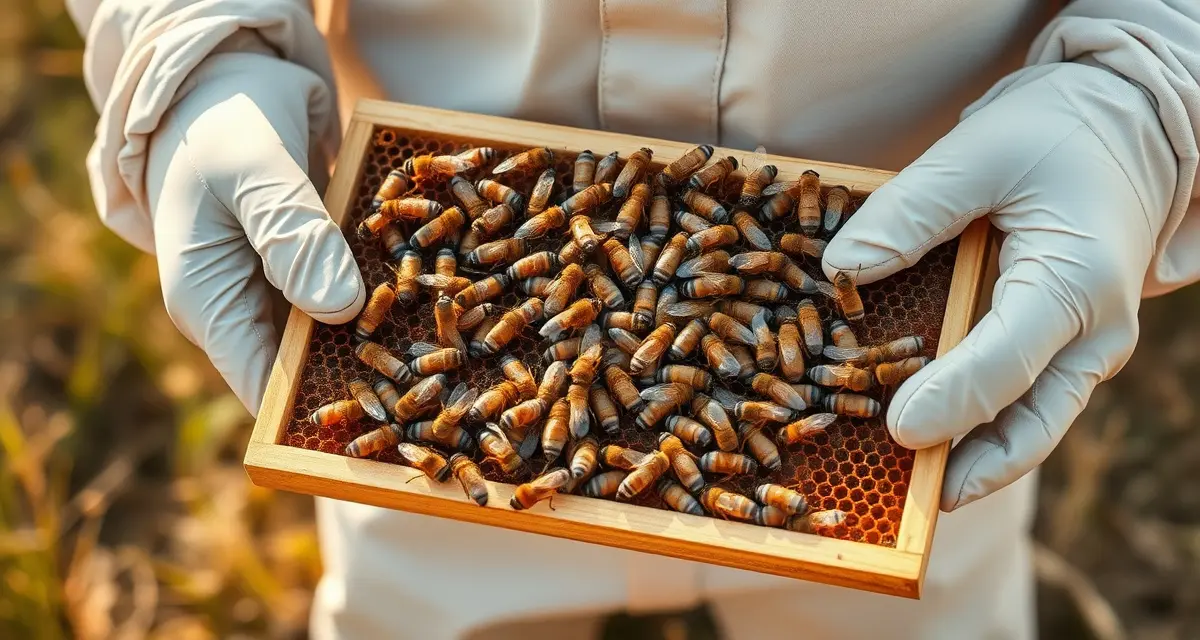
Swarm Season Varroa Management: Use Natural Brood Breaks
A swarm event reduces the parent colony mite load by up to 35% due to loss of capped brood. Most beekeepers know that swarms are a nuisance to manage. Fewer realize they're also a varroa management opportunity hiding inside a beekeeping inconvenience.
Swarm season, typically April through June depending on your region, creates natural broodless or near-broodless periods in parent colonies that are perfect for oxalic acid dribble treatments. This guide covers how to identify and use those windows, how swarms and splits affect mite levels, and how to track the whole process in VarroaVault.
TL;DR
- Natural swarms carry mites with them but typically have lower initial mite loads than the parent colony
- The swarm cluster has no capped brood for 3-5 weeks after departure, creating a natural broodless period ideal for treatment
- Parent colonies lose about 30-40% of their bee population to swarming, which can cause a temporary mite level spike
- Test parent and swarm colonies separately within 2 weeks of swarm departure
- Swarm season (April-June in most regions) coincides with rapid mite population growth in strong colonies
- Log swarm events and post-swarm mite counts in VarroaVault to track how swarming affects mite dynamics
What Happens to Mites When a Colony Swarms
When a swarm leaves a hive, it takes the old queen and roughly half the adult bee population. It also takes all the foragers. What it doesn't take is capped brood.
The capped brood stays in the parent hive along with the nurse bees, the remaining food stores, and the queen cells. Those nurse bees have mites on them, but the proportion of mites shifts considerably.
A normal healthy colony has mites distributed roughly 70% in capped brood, 30% on adult bees. When the swarm leaves and takes half the adults, the remaining adult bee population carries far fewer mites. And for a period of days (sometimes 10-14 days or longer), there may be little or no actively capped worker brood. The queen cells are capped drone or queen cells, not worker brood.
This creates a near-broodless window in the parent colony. Not a complete brood break, since queen cells are still present, but worker brood production is minimal or paused. If you apply oxalic acid dribble during this window, you'll contact a much higher proportion of the total mite population than you would under normal brood-present conditions.
That's the opportunity.
Induced Splits: Manufacturing Your Own Brood Break
You don't have to wait for a swarm to create this opportunity. A managed split accomplishes the same thing more predictably.
When you make a split by removing frames of capped brood and nurse bees to form a new colony, the parent colony's ratio of mites to adult bees shifts. If you remove most or all of the capped brood into the split, you've left the parent colony with primarily mite-exposed adult bees and little brood for mites to hide in.
This is the basis of a "split and treat" varroa management technique:
- Make a strong split, removing most capped brood frames to the new colony
- Leave the parent colony queenless for 7-10 days (or introduce a new queen)
- During the broodless window, treat the parent with OA dribble
- The split can also be treated once its own brood rearing begins (with the extended OA vaporization protocol as brood is present)
This approach uses the split as both a colony management tool and a varroa management step. You get the new colony you wanted, and you get a more effective treatment window in the parent.
Treating Parent Colonies During the Swarm Brood Break
Here's exactly when to apply the OA dribble after a swarm event:
Day 0: Swarm departs (or split is made)
Day 1-3: Inspect the parent colony. Are there capped queen cells? Is there any open worker brood? A few days after a natural swarm, you'll typically see capped queen cells and notably reduced or absent worker brood.
Day 3-7: If worker brood is absent or minimal, this is your treatment window. Apply OA dribble at 5mL per occupied frame seam.
Day 14-21: New queen should be laying. Begin planning post-treatment mite count once capped brood is present.
For a split you induced yourself, you have more control. You can treat the parent colony on the same day as the split or within 24 hours, then verify after 3 weeks.
Using the Oxalic Acid Dribble Calculator
The dribble calculator takes the guesswork out of dose calculation. Enter the number of occupied frame seams in the colony (count during your post-swarm inspection), and it gives you the exact volume of Api-Bioxal solution to apply.
Don't overdose. More OA doesn't mean better kill rates. It means stressed or dead bees. The maximum is 50mL per colony regardless of size.
Tracking Splits in VarroaVault
When you make a split, you create a new colony that needs its own records. VarroaVault's split tracking feature automatically creates a new hive record for the split, linked to the parent colony's treatment history.
The new hive record carries forward the parent's treatment log, so you can see at a glance what the split colony's mite history is and when the parent was last treated. This is especially useful if you're making multiple splits from the same parent over the course of swarm season, since you'll want to know whether each split needs its own post-establishment mite count.
The spring mite management guide covers monitoring new splits and packages through their first season. New colonies, whether from splits, swarms, or packages, need a mite count 30 days after establishment, before the mite population has time to build on new brood.
Can You Treat the Swarm Itself?
Yes. A natural swarm is broodless by definition. The bees have left all capped brood behind. If you catch a swarm and hive it, you have a broodless colony with 100% of its mite population on adult bees. A single OA dribble applied within the first 48-72 hours of housing the swarm will achieve 90%+ mite kill.
This is one of the best opportunities for a highly effective, single-application treatment. Don't let it pass because you're focused on getting the swarm settled.
After the swarm starts raising brood (worker brood typically appears 7-10 days after hiving), standard brood-present monitoring resumes.
Swarm Management and Varroa: The Integrated Approach
The most sophisticated varroa managers integrate swarm control with their mite management calendar. Instead of viewing swarms as pure problems to be managed, they plan for the brood breaks swarms create. Sometimes they induce splits specifically to manufacture treatment windows.
This works best when you're tracking mite levels closely enough to know when a treatment opportunity makes a real difference. A colony at 0.3% mite infestation in May doesn't need an emergency dribble during the swarm window. A colony at 1.8% in May absolutely does.
Log your pre-swarm counts, your treatment during the brood break, and your post-treatment counts in VarroaVault. Over multiple seasons, you'll build a picture of how your colonies respond to swarm-season management and which ones consistently benefit most from the spring brood break opportunity.
Related Articles
- Varroa Management in Alaska: Short Season and Focused Treatment Windows
- Varroa Management in Georgia: Managing Without a Natural Broodless Period
FAQ
Can I treat with oxalic acid during a swarm brood break?
Yes, and this is one of the best opportunities to do so. The near-broodless period after a natural swarm or induced split allows OA dribble to contact mites that would normally be protected in capped cells. A colony during the swarm brood break has a much higher proportion of its total mite population exposed on adult bees. Applying OA dribble during this window consistently achieves better efficacy than the same treatment applied to a normal brood-present colony.
How does a swarm affect mite levels in the parent colony?
A natural swarm reduces the parent colony's mite load by approximately 35% through two mechanisms: the adult bees that leave with the swarm carry some proportion of adult-phase mites, and the subsequent loss of capped worker brood removes mites from their reproductive shelter. The net effect is a colony with fewer mites distributed across fewer frames, creating a favorable ratio for an OA dribble treatment. This mite load reduction is temporary. Brood rearing resumes under the new queen, and mite reproduction restarts.
How do I track a split in VarroaVault?
Use the split tracking feature in the hive management section. Select the parent hive, tap "Create Split," and enter the new hive details: location, number of frames transferred, and whether a queen was included. VarroaVault automatically creates a new hive record for the split with a linked parent record. The new hive inherits the parent's treatment history, and the system schedules a first-count reminder 30 days after split creation. Any treatments you log for the parent during the split window are recorded in the parent's history, not automatically applied to the split.
How do I know if my varroa treatment is working?
Run a mite count 2-4 weeks after the treatment ends and compare it to your pre-treatment count. The efficacy formula is: ((pre-count - post-count) / pre-count) x 100. A result above 90% indicates effective treatment. Results below 80% should trigger investigation for possible resistance, application error, or reinfestation. Log both counts in VarroaVault to track efficacy trends across treatment cycles.
How often should I check mite levels in my hives?
At minimum, once per month (every 3-4 weeks) during the active season. Increase to every 2 weeks when counts are near threshold or after a treatment to verify it worked. In fall, monitoring frequency matters most because the window to treat before winter bees are raised is narrow. VarroaVault's monitoring reminders can be set to your preferred interval for each apiary.
What records should I keep for varroa management?
Each record should include: date of count or treatment, hive identifier, monitoring method used, number of bees sampled, mites counted, infestation percentage, treatment product name and EPA registration number, dose applied, treatment start and end dates, and PHI end date. State apiarists typically expect this level of detail during inspections. VarroaVault captures all of these fields in a single log entry.
What is Swarm Season Varroa Management: Use Natural Brood Breaks?
Swarm Season Varroa Management: Use Natural Brood Breaks is a beekeeping strategy that leverages the broodless or near-broodless windows created by swarm events to treat varroa mite infestations. When a colony swarms, the parent colony temporarily loses capped brood, reducing mite levels by up to 35%. This guide explains how to identify those treatment windows, apply oxalic acid dribble treatments effectively, and track mite dynamics across both parent and swarm colonies using VarroaVault.
How much does Swarm Season Varroa Management: Use Natural Brood Breaks cost?
Using natural brood breaks for varroa management during swarm season costs nothing beyond your existing beekeeping supplies. Oxalic acid treatments are inexpensive, and the broodless windows are created naturally by the bees themselves. Tracking swarm events and mite counts in VarroaVault helps you maximize these free opportunities. The main investment is timing and attention — testing colonies within two weeks of swarm departure and logging results so you can refine your approach each season.
Sources
- American Beekeeping Federation (ABF)
- USDA ARS Bee Research Laboratory
- Honey Bee Health Coalition
- Penn State Extension Apiculture Program
- Project Apis m.
Making Swarm Season Work for You
Swarm season is usually a stressful time for beekeepers, with more frequent inspections, more logistics, and the real risk of losing colonies to unmanaged swarming. But it's also a window of opportunity for varroa management that most beekeepers don't use deliberately.
The next time you find a swarm cell cluster or make a split, stop before you put the split in its new box. Count the mites in the parent colony first. If you're at or near threshold, plan your OA dribble for the brood break window. Then hive the split, log both records in VarroaVault, and check both colonies' mite levels 30 days later.
Two management actions from one swarm event. That's the integrated approach.
Get Started with VarroaVault
The information in this guide is most useful when you have your own mite count data to apply it to. VarroaVault stores every count, flags threshold crossings automatically, and builds the treatment history you need for state inspections and effective management decisions. See pricing and free tools at varroavault.com.