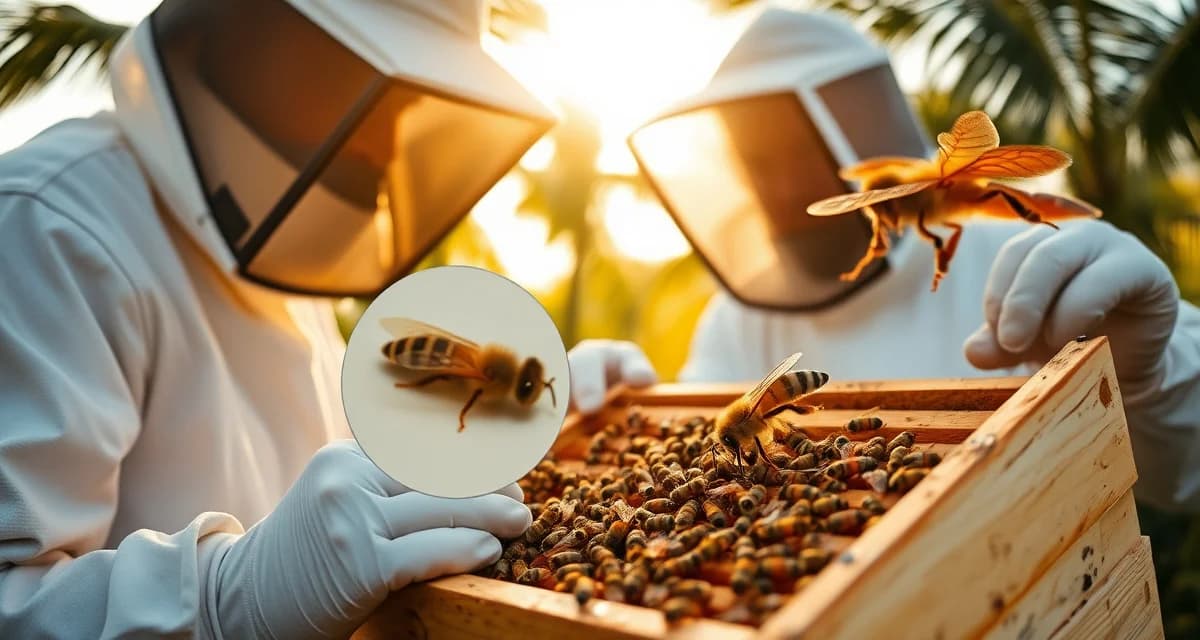
Beekeeping Software for Florida Beekeepers: Year-Round Brood and Varroa Management
Florida colonies with year-round brood can reach 5% mite infestation in as little as 6 weeks without intervention. That's the pace of varroa population growth when there's no winter break in brood rearing and mite reproduction runs continuously. Florida beekeeping is different from most of the country, and your varroa management needs to match.
VarroaVault's continuous monitoring mode sends monthly mite check reminders year-round for Florida users, because there is no off-season when it comes to varroa in Florida.
TL;DR
- Florida's climate means requires year-round varroa management with essentially no broodless period, necessitating 6+ treatment cycles
- Summer temperatures regularly exceed safe formic acid application ranges
- All EPA-registered varroa treatments are available in Florida; check with your state apiarist for local restrictions
- Monthly mite monitoring (every 30 days) is recommended year-round to catch pressure spikes early
- PHI management is important around Florida's nectar flows to avoid contaminating honey
- VarroaVault exports treatment records formatted for Florida state inspection requirements
The Florida Beekeeping Context
Florida is one of only a few US states where colonies can maintain year-round brood production. In south Florida especially, colonies may never experience the truly broodless period that allows northern beekeepers to do a single highly-effective OA dribble in winter. This fundamentally changes the varroa management calendar.
Florida also has multiple honey flows across the year: citrus (February-March in Central/South Florida), tupelo (April-May in the Panhandle), summer flows from Brazilian pepper and melaleuca in South Florida, and fall goldenrod. Managing PHI across multiple flows requires a systematic approach that paper records can't easily provide.
The Florida Department of Agriculture and Consumer Services (DACS) manages apiary registration and inspection. Commercial operations face additional compliance requirements around movement records and colony certificates.
3 Key Points for Florida Varroa Management
1. Monthly monitoring is mandatory, not optional. With year-round brood, varroa populations never get a natural reset. A Florida colony that's not tested for 60 days during summer can go from manageable to crisis-level infestation in that window. Set your monitoring reminders for every 30 days and keep them.
2. Summer treatments require heat-appropriate products. South and Central Florida summers routinely exceed 90°F, eliminating formic acid from the toolkit from May through September. oxalic acid vaporization and HopGuard III are the primary summer options. The summer varroa pressure guide covers flow-compatible treatments in detail.
3. The "fall treatment window" for Florida is different. Because colonies don't go broodless in winter, the northern concept of a single fall OA dribble on a broodless colony doesn't apply in most of Florida. Instead, use oxalic acid vaporization with an extended protocol (3-5 treatments) year-round when counts cross threshold, and plan Apivar cycles for fall when supers are off and temperatures allow.
Using VarroaVault in Florida
Configure VarroaVault for Florida's year-round brood cycle by setting continuous monitoring reminders with no winter break. The app's flow calendar handles Florida's multiple annual flows, set each flow window, and PHI calculations will account for all of them.
VarroaVault's state inspection requirements export generates treatment history records compatible with Florida DACS inspection documentation, including hive identifiers, treatment products, dates, and applicant information.
Related Articles
FAQ
How often should Florida beekeepers test for varroa?
Every 30 days, year-round. Florida's year-round brood cycle means varroa populations never slow down, and the 6-week window between tests that might be acceptable in northern states during slow brood periods doesn't apply in Florida. Monthly testing is the minimum for responsible Florida varroa management. During late summer when varroa populations grow fastest relative to colony size, consider testing every 3 weeks if your last count was approaching threshold.
Which treatments are best for Florida's heat and humidity?
During summer (May-September), oxalic acid vaporization is the primary option for Florida beekeepers, no upper temperature limit, zero PHI, effective at any time of year. Hopguard III is heat-safe and labeled for use with supers on. Avoid formic acid during summer months when temperatures regularly exceed 85-90°F. In cooler months (November-March in most of Florida, essentially year-round in the Panhandle), formic acid becomes viable again and provides the advantage of brood penetration. Apivar strips work at any temperature and are useful for fall treatment cycles when supers are off.
Does VarroaVault support Florida DACS inspection records?
Yes. VarroaVault's export function generates treatment history records formatted for Florida DACS inspection requirements, including all required fields: hive/apiary identifier, treatment product name and EPA registration number, active ingredient, application dates, and applicant information. For commercial operations with colony movement requirements, the movement record module tracks hive transfers between locations with timestamps. Export your full treatment history for any apiary in seconds from your account settings.
Is VarroaVault available to beekeepers in Florida?
Yes. VarroaVault is available to beekeepers across all 50 states including Florida. The app supports state-specific PHI calendars, monitoring reminders calibrated to your region's nectar flow and temperature patterns, and export formats suitable for Florida apiary inspection requirements.
What records does the Florida state apiarist expect during an apiary inspection?
While requirements vary and you should confirm with your state apiarist, most states expect treatment records that include the product name, EPA registration number, application dates, hive identifiers, and applicant name. Beekeepers in Florida should also be prepared to document mite count results from the monitoring periods before and after each treatment. VarroaVault's export function generates this information in a formatted PDF.
Does VarroaVault support tracking multiple apiaries in Florida?
Yes. VarroaVault supports unlimited apiary locations within a single account. Each apiary can have its own set of hives with individual treatment and mite count records. For Florida beekeepers managing multiple yards across different counties or climate zones, yard-level reporting allows you to compare mite pressure and treatment efficacy between locations.
What is Beekeeping Software for Florida Beekeepers: Year-Round Brood and Varroa Management?
Beekeeping Software for Florida Beekeepers: Year-Round Brood and Varroa Management is a guide covering how Florida's subtropical climate creates unique varroa mite challenges, including continuous brood production that allows mite populations to reach dangerous 5% infestation levels in as little as 6 weeks. It explains how VarroaVault helps Florida beekeepers manage these challenges through continuous monitoring mode, monthly mite check reminders, treatment scheduling around honey flows, and state inspection-ready record exports.
How much does Beekeeping Software for Florida Beekeepers: Year-Round Brood and Varroa Management cost?
VarroaVault offers subscription plans designed to fit hobbyist and commercial beekeepers alike. Pricing varies by plan tier and number of hives managed. Because Florida beekeepers require year-round monitoring with no off-season breaks, a VarroaVault subscription pays for itself quickly by helping you catch mite pressure spikes early and avoid costly colony losses. Visit VarroaVault.com for current pricing details and to start a free trial.
Sources
- American Beekeeping Federation (ABF)
- USDA ARS Bee Research Laboratory
- Honey Bee Health Coalition
- Penn State Extension Apiculture Program
- Project Apis m.
Florida Varroa: Never Off the Clock
Florida beekeeping doesn't give you an off-season for varroa management. The calendar that works in Ohio or Michigan will leave your Florida colonies over-infested within weeks of being applied. Set up continuous monitoring, plan heat-appropriate treatments, and keep your DACS records current. VarroaVault is built to keep you on schedule year-round, because in Florida, that's what it takes.
Get Started with VarroaVault
Florida beekeepers face specific varroa management challenges that generic beekeeping apps are not designed around. VarroaVault handles monitoring reminders, PHI tracking, treatment efficacy scoring, and state inspection export in a single tool built specifically for varroa management. See pricing and free tools at varroavault.com.