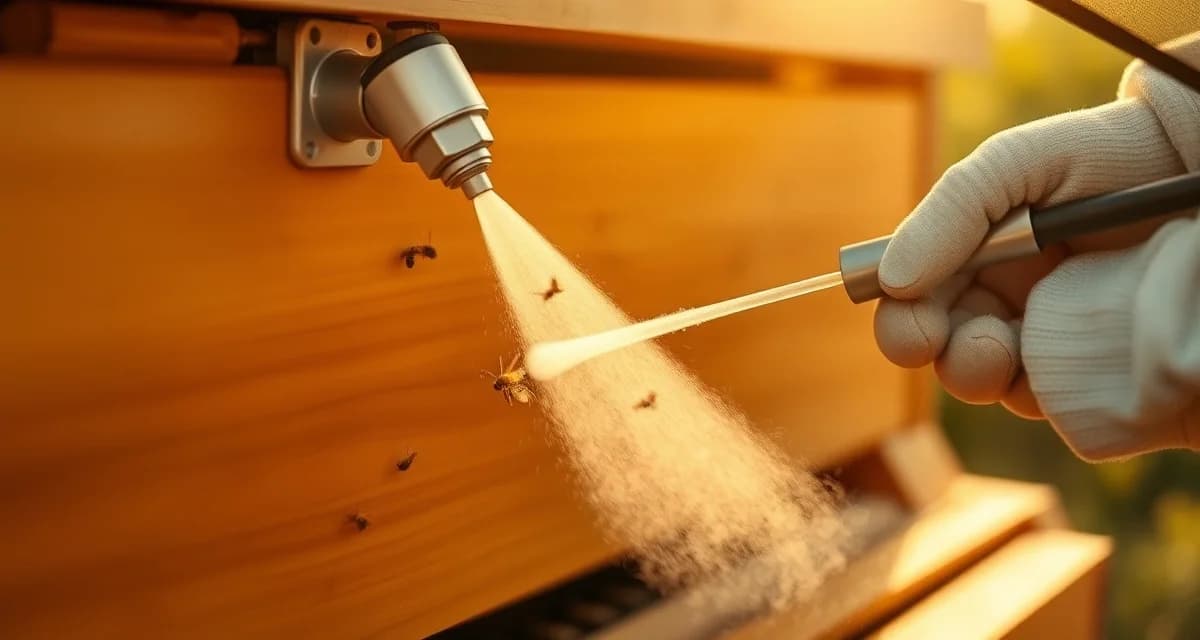
Oxalic Acid Vaporization for Varroa: Complete Beekeeper Guide
OA vaporization achieves 90-99% efficacy during broodless periods. That's the best single-treatment kill rate of any approved varroa control method in the right conditions.
I've run OA vaporization through three winters now. The first year I did it wrong, I treated once, assumed I was done, and went back to find hives that bounced back to 2% mite load before the cluster formed. The second year I understood the broodless-period timing. My winter losses dropped from four colonies out of twelve to one.
Here's what you need to know to use oxalic acid vaporization correctly.
TL;DR
- Oxalic acid (Api-Bioxal) is approved for dribble and vaporization methods; both kill only phoretic mites on adult bees
- Vaporization is more effective than dribble when brood is present because bees can contact vaporized acid across the colony
- The extended vaporization protocol (every 5 days for 3 applications) compensates for mites in capped brood
- Oxalic acid has no PHI restriction for honey supers when used according to the Api-Bioxal label
- Efficacy during true broodless periods can reach 95%; with brood present, efficacy drops to 50-70%
- Always wear a respirator and eye protection during vaporization; oxalic acid vapor causes lung damage
Why OA Vaporization Works (And When It Doesn't)
Oxalic acid kills varroa mites on phoretic bees, mites that are riding on adult bees rather than hiding in capped cells. When you vaporize OA in a hive, the acid vapors contact adult bees and the mites on them. The mites die. The bees, in properly dosed treatment, are largely unharmed.
The limitation: OA has essentially no effect on mites under capped brood. A mite tucked into a capped cell is protected from the vapor.
This is why timing matters so much. During a broodless period, in winter or after an artificial brood break, virtually all mites (up to 95-99%) are phoretic on adult bees. One or two OA vaporization treatments during this window can deliver a devastating knock to the mite population.
During active brood-rearing season, you need multiple treatments spaced to catch mites as they emerge from cells. Protocols typically call for 3-5 vaporizations spaced 5-7 days apart. This is more labor-intensive but can still be effective in combination with other management.
Step 1: Choose Your Timing
Broodless Period (Recommended for Maximum Efficacy)
The natural broodless period occurs when the queen stops laying due to cold temperatures or shortened day length. In most of the US, this happens from late November through January, though timing varies by climate zone.
When to treat:
- Northern zones (5-6): Late November through January, when temps have been consistently below 50°F
- Mid zones (7): December through February
- Southern zones (8-9): January, and only if the colony goes broodless (may require monitoring to confirm)
Confirm broodlessness before treating. A quick inspection or a check of the brood frames on a mild day tells you whether the queen is still laying. If you see open eggs and young larvae, you have brood, and you're looking at a lower-efficacy treatment.
Extended Vaporization Protocol (During Brood Season)
If you need to treat when brood is present, high mite load in September, or managing a heavily infested colony in summer, use an extended protocol:
- 3-5 treatments spaced 5-7 days apart
- This catches mites as they emerge from each new cycle of capped brood
- Efficacy is lower than broodless-period treatment (typically 60-80% depending on brood levels) but better than doing nothing
Step 2: Set Up Your Vaporizer
Commercial OA vaporizers heat the acid to sublimation. The most common styles:
Pan/cup vaporizers (e.g., Varrox, Sublimox clone): You load the measured dose into a metal cup, insert through the entrance, close the entrance, and heat with a propane torch or integrated heating element. The acid sublimates and fills the hive space.
Wand vaporizers (e.g., ProVap, OAV gun): Pre-measured acid dose loads into a heated chamber. Some models use a battery-powered heater.
Battery-powered all-in-one units: Increasingly popular for large operations. No torch required.
Whichever vaporizer you use, follow the manufacturer's specifications for dose and heating time. Undertreating (too little acid, insufficient heat) gives you poor results. Overtreatment risks harming bees.
Step 3: Dose Correctly
The FDA-approved dose for OA vaporization in the US is 1 gram of oxalic acid dihydrate per hive body (not per box, per hive).
This is the same dose for a single story hive and a double-deep hive. The vapors distribute through the colony regardless of how many boxes are in the stack.
Don't double-dose a single hive thinking you'll get better results. The extra acid doesn't improve efficacy and can harm brood and bees.
Step 4: Seal the Hive and Wait
Before vaporizing:
- Block the entrance so vapors can't escape quickly. Many beekeepers use a foam plug or folded towel.
- Make sure there are no gaps in the hive stack large enough for vapors to dissipate immediately.
Apply the treatment following your vaporizer's protocol. Most require 2-3 minutes of heating/sublimation time.
After application, leave the entrance sealed for approximately 10 minutes. This gives the vapors time to contact bees throughout the hive.
After 10 minutes, open the entrance to allow ventilation.
Step 5: Protect Yourself
Oxalic acid vapor is a respiratory irritant and can damage eyes and skin. This is non-negotiable personal protective equipment:
- P100 respirator (half-face) or equivalent. Not a dust mask, you want vapor protection.
- Safety glasses or goggles
- Gloves
Work upwind of the hive when possible. Don't lean over the entrance when removing the vaporizer. Let the equipment cool before transporting.
The acid itself is relatively benign, it occurs naturally in many plants. But the heated vapor is concentrated and inhaling it repeatedly without protection isn't worth the risk.
Step 6: Repeat If Needed and Verify
For broodless-period treatment, two treatments spaced 7 days apart catches any mites that were in the late stage of capped cells during the first treatment and emerged before the second.
For extended vaporization during brood season, follow your 3-5 treatment protocol.
After your final treatment, wait 7-10 days and do a post-treatment alcohol wash. Calculate your efficacy score.
- 90%+ efficacy: Treatment was successful
- Below 90%: Check whether brood was present, whether your dose was correct, and whether reinfestation may have occurred from neighboring colonies
BeeScanning can detect whether mites are present, but it can't tell you whether your treatment reduced them. VarroaVault logs your pre and post counts, calculates the efficacy score, and saves it to the hive record so you have a documented treatment history.
OA Dribble vs. Vaporization: When to Use Which
| Factor | OA Dribble | OA Vaporization |
|--------|-----------|----------------|
| Broodless efficacy | 90-99% | 90-99% |
| Brood-present efficacy | Poor | Better with extended protocol |
| Applications per year | 1 (per label) | Multiple (per label) |
| Equipment cost | None (syringe) | $50-300+ for vaporizer |
| Winter ease | Need to break cluster | Can treat through entrance |
| Large operation speed | Slow | Faster |
For small hobbyist operations in winter, dribble is inexpensive and effective. For commercial operations with many hives to treat quickly, vaporization is standard practice. For extended brood-season protocols, vaporization is the only practical option because dribble is limited to one application per year.
Related Articles
FAQ
How many oxalic acid treatments are needed?
For a broodless-period treatment, 1-2 vaporizations (spaced 7 days apart) is sufficient. For extended treatment during brood season, 3-5 vaporizations spaced 5-7 days apart. Always verify with a post-treatment count rather than assuming a set number of applications is enough.
When is the best time for oxalic acid vaporization?
The best time is the natural winter broodless period, typically late November through January in northern zones, slightly later in southern ones. When the queen has stopped laying and all brood has emerged, virtually all mites are phoretic on adult bees. This is when OA vaporization achieves its highest efficacy. Second best timing is an induced brood break in late summer before the critical fall colony buildup.
Is oxalic acid vaporization safe for bees?
At the approved dose (1g per hive), OA vaporization has minimal effect on adult bees and no significant impact on the colony's long-term health when applied correctly. Treatment during broodless periods avoids any exposure of developing larvae. Do not overdose, more acid does not mean better mite control, and excessive exposure can harm bees. Always follow label directions and use the approved equipment.
How many oxalic acid vaporizations can I do per year?
The Api-Bioxal label allows up to three vaporization treatments per year per hive. Under the extended protocol for colonies with brood present, three applications spaced 5 days apart count as one treatment event. Always follow current label instructions as registration requirements can be updated.
Can I use oxalic acid from the grocery store instead of Api-Bioxal?
No. In the United States, only EPA-registered Api-Bioxal is legal for treating honey bees. Industrial or food-grade oxalic acid is not registered for bee use and cannot be used legally. Using unregistered products violates federal pesticide law and may affect honey marketability. Api-Bioxal is widely available from beekeeping suppliers.
Is oxalic acid safe to use on brood?
Oxalic acid in dribble form is damaging to brood when applied directly; the label specifies use on broodless colonies for dribble application. Vaporized oxalic acid is less directly damaging to brood than dribble and is approved for use with brood present, though efficacy on mites in capped brood is limited. Always follow the label for the application method you are using.
What is Oxalic Acid Vaporization for Varroa: Complete Beekeeper Guide?
Oxalic Acid Vaporization for Varroa: Complete Beekeeper Guide is a practical beekeeping reference on VarroaVault covering how to use oxalic acid (Api-Bioxal) vaporization to control varroa mites. It explains treatment timing, broodless-period strategy, the extended 3-application protocol, safety requirements, and realistic efficacy expectations — including why a single treatment is often insufficient and how proper timing can reduce winter colony losses significantly.
How much does Oxalic Acid Vaporization for Varroa: Complete Beekeeper Guide cost?
The Oxalic Acid Vaporization for Varroa: Complete Beekeeper Guide is free to read on VarroaVault. There is no cost to access the article. If you plan to treat your hives, you will need to purchase Api-Bioxal (the EPA-approved oxalic acid product) and appropriate safety equipment including a respirator and eye protection, but the guide itself is available at no charge.
Sources
- American Beekeeping Federation (ABF)
- USDA ARS Bee Research Laboratory
- Honey Bee Health Coalition
- Penn State Extension Apiculture Program
- Project Apis m.
Log Your Treatments, Measure Your Results
OA vaporization is one of the most effective tools in the varroa toolbox, when it's timed right and followed up with a count.
VarroaVault schedules your OA treatments based on your brood cycle data, tracks the treatment window, and prompts your post-count so you know your efficacy. Get started with a free trial and stop guessing about whether your treatment worked.
Get Started with VarroaVault
Oxalic acid is one of the most effective and accessible varroa treatments available, but timing and application method determine whether you get 95% efficacy or 50%. VarroaVault tracks your broodless window, application method, and pre/post mite counts so you can see what's actually working in your operation. See pricing and free tools at varroavault.com.