Oxalic Acid Dribble vs Vaporization: Which Method Should You Use?
OA vaporization typically achieves higher efficacy than dribble because of better hive penetration. That's the headline, but the full picture is more nuanced, and choosing the wrong method for your conditions can cost you half your mite kill.
oxalic acid dribble vs vaporization is not a question of which is better in the abstract. It's a question of which is appropriate for your colony's current brood state and your available equipment. Both methods are EPA-registered. Both kill varroa on contact. But they behave very differently inside the hive.
BeeKeepPal recommends OA without specifying method, leaving beekeepers guessing in the field. VarroaVault records your OA method alongside efficacy scores so you can see which works better for your operation across your actual data.
TL;DR
- Oxalic acid (Api-Bioxal) is approved for dribble and vaporization methods; both kill only phoretic mites on adult bees
- Vaporization is more effective than dribble when brood is present because bees can contact vaporized acid across the colony
- The extended vaporization protocol (every 5 days for 3 applications) compensates for mites in capped brood
- Oxalic acid has no PHI restriction for honey supers when used according to the Api-Bioxal label
- Efficacy during true broodless periods can reach 95%; with brood present, efficacy drops to 50-70%
- Always wear a respirator and eye protection during vaporization; oxalic acid vapor causes lung damage
How Oxalic Acid Kills Varroa
Oxalic acid is a naturally occurring organic acid found in many plants and present in honey at background levels. When bees contact OA (either by walking through vaporized crystals or having solution applied directly to their bodies), the acid is toxic to varroa mites at the concentrations used in treatment.
The critical point: OA kills only phoretic mites (mites riding on adult bees). It does not penetrate capped brood cells. A mite safely inside a capped cell is completely protected from OA regardless of which method you use.
This is the single most important fact determining which method to use and when.
OA Dribble: Method Overview
What It Is
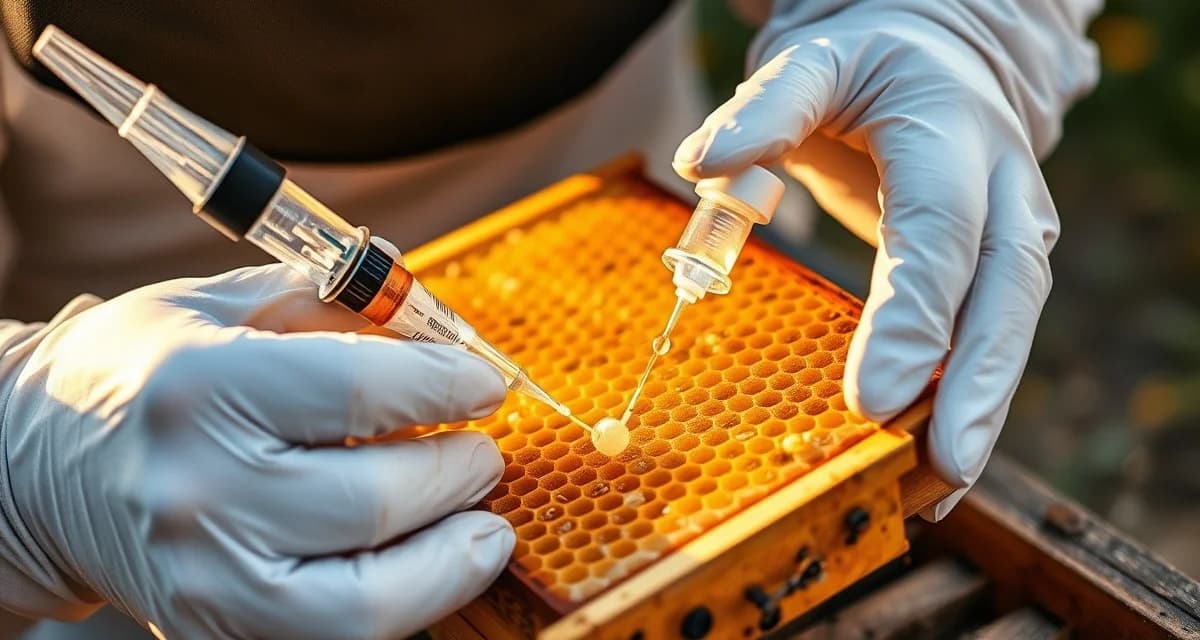
OA dribble involves applying a 3.5% OA solution (1 liter of water, 35g oxalic acid dihydrate, mixed with equal volume sugar for a 1:1 solution) directly onto the bee clusters in each inter-frame space. The bees contact the solution directly and distribute it through the cluster through contact.
When It Works Best
OA dribble achieves near-100% efficacy only on broodless colonies. With no capped brood, 100% of mites are phoretic on adult bees. A properly applied dribble reaches essentially every mite in the colony.
With brood present, efficacy drops dramatically, to 40-70% depending on the amount of capped brood. Mites in cells are protected. You're treating only the phoretic fraction.
Ideal for:
- Late fall or winter broodless colonies
- Post-winter cluster before brood rearing resumes
- Colonies confirmed broodless after a split or treatment-induced broodlessness
Application Details
- Apply approximately 5ml per inter-frame space
- Target all bee-covered spaces, don't skip frames
- Maximum recommended single application: 50ml per colony
- Do not dribble at temperatures below 5°C (40°F), bees need to be mobile for distribution
- Apply once per broodless period, multiple applications during the same broodless window cause bee toxicity without improving efficacy
Equipment
A standard garden syringe or a dedicated OA dribble applicator. Simple, inexpensive, no electricity required.
OA Vaporization: Method Overview
What It Is
OA vaporization (sublimation) heats oxalic acid crystals on a metal pan or coil until they sublimate directly into vapor without liquid phase. The vapor fills the hive and condenses on all surfaces, including bees, comb, and hive walls. Mites on bees contact the vapor-deposited crystals and die.
When It Works Better
Vaporization penetrates the hive more thoroughly than dribble in colonies with brood. The vapor deposits on all surfaces, reaching bees in areas a liquid dribble might not contact as completely.
However, the same fundamental limitation applies: OA vapor does not penetrate capped brood. Mites inside cells survive vaporization just as they survive dribble.
Where vaporization outperforms dribble:
- Colonies with brood where a single treatment is applied (higher surface coverage)
- Larger colonies where dribble volume becomes unwieldy
- Extended protocols targeting emerging mites over multiple treatments
Where dribble and vaporization are equivalent:
- Confirmed broodless colonies, both achieve near-100% efficacy
The Extended Vaporization Protocol
Because a single OA vaporization only reaches phoretic mites, the extended protocol uses repeat treatments to catch mites as they emerge from brood cells:
- Treatment 1, Day 0
- Treatment 2, Day 5
- Treatment 3, Day 10
- Optional Treatment 4, Day 15
Mites emerging from cells between treatments are hit by the next application. Studies show 3 OA vaporizations at 5-day intervals achieve 90-95% mite reduction compared to approximately 60% for a single vaporization on a colony with brood.
Equipment
An OA vaporizer, an electrical device (battery or AC powered) that heats OA crystals. Entry-level vaporizers start around $80-100. You also need appropriate PPE: a respirator rated for OA vapor (not just a dust mask), eye protection, and gloves.
Safety Considerations
OA vapor is harmful to respiratory mucous membranes. Always use an appropriate respirator when vaporizing. Seal the hive entrance during treatment and for a few minutes after. Do not remain in the vapor stream.
Side-by-Side Comparison
| Factor | OA Dribble | OA Vaporization |
|--------|-----------|-----------------|
| Efficacy on broodless colony | ~95-100% | ~95-100% |
| Efficacy on colony with brood | 40-70% | 50-70% (single application) |
| Extended protocol option | Not recommended | Yes, 3 applications at 5-day intervals |
| Equipment required | Syringe, solution | Vaporizer, PPE |
| Equipment cost | ~$10-20 | $80-200+ |
| Time per hive | ~2 minutes | ~3-5 minutes (including sealing) |
| PHI for honey | 0 days | 0 days |
| Super restriction | Must be removed | Must be removed |
| Min. temperature | 40°F (bees must be mobile) | No lower limit for bee safety |
| Best application | Winter broodless | Extended protocol for year-round |
Choosing Between the Methods
Choose OA dribble when:
- Your colony is confirmed broodless (fall, winter, or after a split)
- You don't have a vaporizer
- You're treating a small number of colonies where dribble is practical
Choose OA vaporization when:
- Your colony has active brood
- You're planning an extended protocol
- You're treating a larger number of colonies where vaporizer efficiency helps
- You need the better hive penetration on a larger colony
Choose either method when:
- Colony is broodless, results are equivalent
Related Articles
FAQ
Is oxalic acid dribble or vaporization more effective?
On broodless colonies, both methods achieve equivalent near-100% efficacy. On colonies with brood, vaporization with an extended 3-treatment protocol achieves considerably higher total mite kill than a single dribble application. Dribble on a colony with brood achieves only 40-70% efficacy and is generally not recommended unless broodlessness is confirmed.
When should I use OA dribble vs vaporizer for varroa?
Use dribble when your colony is confirmed broodless, typically in late fall or winter, and when you don't have a vaporizer. Use vaporization when brood is present (especially with the extended 3-treatment protocol), when treating larger colonies, or when you need the better surface coverage that vapor distribution provides. For year-round management, a vaporizer offers more flexibility.
Do I need a vaporizer or can I just dribble for varroa?
If you only treat during confirmed broodless periods (true in many northern climates), dribble alone is a practical and effective approach. If you need to treat when brood is present, which includes almost any treatment window other than midwinter, a vaporizer and extended protocol is considerably more effective. For hobbyists treating only in winter, dribble is a reasonable starting point. For more year-round management, a vaporizer is worth the investment.
How many oxalic acid vaporizations can I do per year?
The Api-Bioxal label allows up to three vaporization treatments per year per hive. Under the extended protocol for colonies with brood present, three applications spaced 5 days apart count as one treatment event. Always follow current label instructions as registration requirements can be updated.
Can I use oxalic acid from the grocery store instead of Api-Bioxal?
No. In the United States, only EPA-registered Api-Bioxal is legal for treating honey bees. Industrial or food-grade oxalic acid is not registered for bee use and cannot be used legally. Using unregistered products violates federal pesticide law and may affect honey marketability. Api-Bioxal is widely available from beekeeping suppliers.
Is oxalic acid safe to use on brood?
Oxalic acid in dribble form is damaging to brood when applied directly; the label specifies use on broodless colonies for dribble application. Vaporized oxalic acid is less directly damaging to brood than dribble and is approved for use with brood present, though efficacy on mites in capped brood is limited. Always follow the label for the application method you are using.
What is Oxalic Acid Dribble vs Vaporization: Which Method Should You Use??
Oxalic acid dribble and vaporization are two EPA-registered methods for treating varroa mites using oxalic acid (Api-Bioxal). Dribble applies a sugar syrup solution directly onto bees between frames, while vaporization sublimates dry crystals into gas that disperses throughout the hive. Both kill only phoretic mites on adult bees, not mites inside capped brood. Vaporization generally achieves higher efficacy, especially when brood is present, because the vapor reaches bees across the entire colony. Choosing the right method depends on your colony's brood state and available equipment.
How much does Oxalic Acid Dribble vs Vaporization: Which Method Should You Use? cost?
Oxalic acid itself is inexpensive — Api-Bioxal typically costs $20–$40 for enough to treat multiple hives per season. The dribble method requires minimal equipment (a syringe or applicator), keeping startup costs under $10. Vaporization requires a dedicated vaporizer, which ranges from $30 for basic wand-style units to $150+ for battery-powered models. Over time, vaporization's higher efficacy can reduce colony losses, making the equipment investment worthwhile for most beekeepers managing more than a few hives.
Sources
- American Beekeeping Federation (ABF)
- USDA ARS Bee Research Laboratory
- Honey Bee Health Coalition
- Penn State Extension Apiculture Program
- Project Apis m.
Know Your Method, Know Your Results
Review the oxalic acid vaporization guide for detailed vaporizer selection and use, and track your OA treatment results in VarroaVault's treatment efficacy tracker to see which method performs best in your specific operation.
The right method is the one that matches your colony's brood state. Get that match right and OA becomes one of the most effective tools in your program.
Get Started with VarroaVault
Oxalic acid is one of the most effective and accessible varroa treatments available, but timing and application method determine whether you get 95% efficacy or 50%. VarroaVault tracks your broodless window, application method, and pre/post mite counts so you can see what's actually working in your operation. See pricing and free tools at varroavault.com.