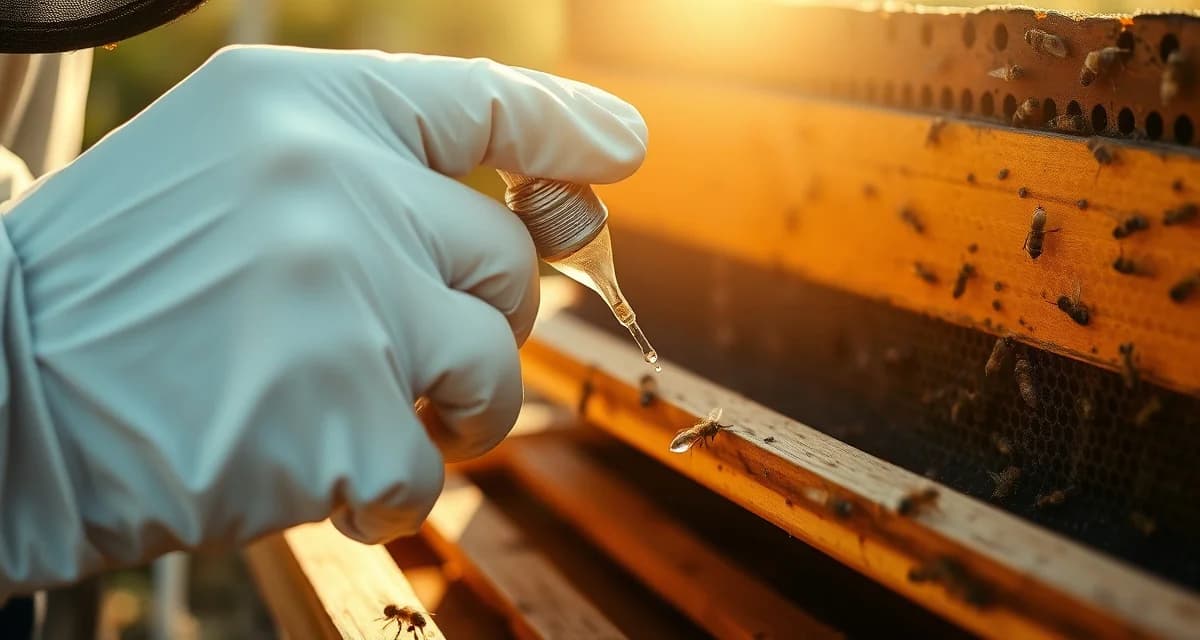
How to Use Oxalic Acid Dribble Correctly: Step-by-Step With Video Guide
Applying OA dribble too fast or too slow reduces coverage and decreases efficacy by up to 30%. This is one of those technique details that sounds minor until you understand what it means: a 30% efficacy drop from a 95% baseline means you're only killing 65% of mites instead of 95%. That's the difference between successful treatment and a colony that continues toward collapse.
Here's the complete step-by-step for OA dribble, including the technique elements that matter most.
TL;DR
- Oxalic acid (Api-Bioxal) is approved for dribble and vaporization methods; both kill only phoretic mites on adult bees
- Vaporization is more effective than dribble when brood is present because bees can contact vaporized acid across the colony
- The extended vaporization protocol (every 5 days for 3 applications) compensates for mites in capped brood
- Oxalic acid has no PHI restriction for honey supers when used according to the Api-Bioxal label
- Efficacy during true broodless periods can reach 95%; with brood present, efficacy drops to 50-70%
- Always wear a respirator and eye protection during vaporization; oxalic acid vapor causes lung damage
What OA Dribble Does and When to Use It
Oxalic acid dribble works by direct contact. The solution, applied to bees in the occupied seams between frames, coats the bees and the phoretic mites riding on them. Mites exposed to OA experience a toxic reaction that is fatal to them but safe for bees at correct doses.
Critical limitation: OA dribble only kills phoretic mites. Mites inside capped brood cells are not reached by the dribbled solution. This makes timing essential.
When to use OA dribble:
- Winter broodless period (most effective): 95-97% efficacy when no capped brood is present
- Other confirmed broodless periods: same high efficacy
- During an induced brood break: highly effective
- During active brood rearing: only 40-50% efficacy; most mites are in capped cells
What You Need
- Api-Bioxal (registered oxalic acid product) OR pre-mixed 3.5% solution per label directions
- 1:1 sugar syrup (if mixing yourself)
- Large syringe (60ml recommended) or commercial dribble applicator
- Nitrile gloves
- Eye protection (goggles or safety glasses)
- Respiratory protection if mixing dry OA (not needed for pre-mixed)
- Scale for measuring dry OA if mixing yourself
- VarroaVault logged and ready
Do not use unregistered oxalic acid (pool supply, food-grade) for varroa treatment. Only Api-Bioxal and other EPA-registered formulations are legal for use on honey bees.
Mixing the Solution (If Not Using Pre-Mixed)
Api-Bioxal can be applied as a dribble or vaporization. For the dribble method:
Per label directions: dissolve Api-Bioxal in 1:1 sugar syrup. The specific ratio is on the Api-Bioxal label, which specifies the exact grams per liter for the registered concentration. Always follow the current label; do not use older concentrations you've seen elsewhere.
Mix until fully dissolved. The solution should be clear. Mix fresh for each treatment session; don't store mixed OA solution.
Step 1: Confirm Broodlessness
Before applying, confirm the colony has no capped brood. On a day above 45°F, open the hive and inspect the brood frames. Look for capped cells with tan/brown cappings in the brood nest area.
If you see any capped brood: do not treat with dribble today. Come back in 1-2 weeks.
If brood is present but you need to treat urgently: switch to OA vaporization extended protocol (which works even with brood present) instead of dribble.
Log your observation in VarroaVault: "inspection - no capped brood observed" to document the broodless confirmation.
Step 2: Load Your Syringe
Fill your syringe or dribble applicator with the prepared OA solution. A 60ml syringe is ideal: it holds enough for 6-8 seams before refilling, which covers most winter clusters in one fill.
Set the syringe to deliver approximately 5ml per seam. Practice the flow rate before your first application: depress the plunger steadily while moving the syringe tip at a consistent speed along the seam.
Step 3: Apply to Occupied Seams
"Occupied seams" means the gaps between frames where bees are clustered. In a winter cluster, bees form a ball that spans multiple frames. You're applying solution to the top of each seam where bees are visible or where the cluster is located.
Technique:
- Position the syringe tip at the top of one seam, between two frame top bars
- Move the syringe tip along the seam at a consistent pace (approximately 10-15 seconds per seam for 5ml)
- The solution should drip down through the seam, coating bees below
- Apply in one smooth pass per seam; don't go back over a seam
Why pace matters: Moving too fast concentrates solution at one end of the seam (over-doses some bees, under-doses others). Moving too slow allows pooling at the top (surface coverage only). A steady, consistent pace distributes solution evenly down the seam for full cluster coverage. This is the technique factor that affects the up-to-30% efficacy difference.
Typical dose:
- 3-4 seams of bees: 15-20ml total
- 6-8 seams of bees: 30-40ml total
- Maximum dose per colony: 50ml
Count only occupied seams. Don't apply to empty seams with no bees. You're dosing the bees, not the frame gaps.
Step 4: Replace the Cover
Replace the inner cover and outer cover immediately after treatment. Exposure to cold air is stressful for a winter cluster. Work quickly but calmly.
Do not leave the hive open after treatment to "let it air out." OA doesn't require ventilation time.
Step 5: Log the Treatment in VarroaVault
Log immediately after treatment:
- Product: Api-Bioxal (oxalic acid dribble)
- Date: today
- Number of seams treated
- Total volume applied (ml)
- Broodless confirmed: yes
- Applicator: your name
VarroaVault automatically schedules a post-treatment count reminder for day 7-14. This count confirms efficacy and documents the winter treatment outcome.
If you have multiple hives to treat in sequence, log each one as you complete it. VarroaVault's mobile interface lets you log quickly in the field; you don't need to wait until you're inside.
Step 6: Post-Treatment Count
14 days after treatment, perform a mite wash on the colony. Log the result in VarroaVault. The app calculates efficacy against your pre-treatment baseline.
Expected efficacy in a broodless colony: 90-97%.
If your efficacy is below 90%: check whether brood was actually absent at treatment time. OA dribble will show reduced efficacy if brood was present that you didn't see during inspection.
Safety Notes
- OA solution irritates skin, eyes, and respiratory mucosa. Wear gloves and eye protection always.
- If solution contacts your eyes, flush with clean water for 15 minutes and seek medical attention.
- Keep OA solution away from children and pets.
- Mixed OA solution is considered a pesticide and should be disposed of according to local regulations, not poured down the drain.
Frequently Asked Questions
What is the correct technique for OA dribble application?
Apply 5ml of 3.5% OA solution per occupied seam at a consistent, steady pace (approximately 10-15 seconds per seam). Moving the syringe tip at a consistent pace ensures even distribution down the seam and full cluster coverage. Rushing or pausing creates uneven distribution and reduces efficacy.
Can I use grocery store oxalic acid for dribble?
No. Only EPA-registered oxalic acid products (Api-Bioxal and other registered formulations) are legal for varroa treatment. Grocery store or pool supply OA is not labeled for use on honey bees. Using it is a FIFRA violation and may result in penalties. It also lacks the quality controls and registered concentration specifications of Api-Bioxal.
How do I log an OA dribble treatment in VarroaVault?
After applying, go to your hive in VarroaVault, select "Log Treatment," choose "Oxalic Acid Dribble" as the product, and enter the number of seams, total volume applied, application date, and whether broodlessness was confirmed. VarroaVault automatically schedules a follow-up count reminder at day 7-14.
How many oxalic acid vaporizations can I do per year?
The Api-Bioxal label allows up to three vaporization treatments per year per hive. Under the extended protocol for colonies with brood present, three applications spaced 5 days apart count as one treatment event. Always follow current label instructions as registration requirements can be updated.
Can I use oxalic acid from the grocery store instead of Api-Bioxal?
No. In the United States, only EPA-registered Api-Bioxal is legal for treating honey bees. Industrial or food-grade oxalic acid is not registered for bee use and cannot be used legally. Using unregistered products violates federal pesticide law and may affect honey marketability. Api-Bioxal is widely available from beekeeping suppliers.
Is oxalic acid safe to use on brood?
Oxalic acid in dribble form is damaging to brood when applied directly; the label specifies use on broodless colonies for dribble application. Vaporized oxalic acid is less directly damaging to brood than dribble and is approved for use with brood present, though efficacy on mites in capped brood is limited. Always follow the label for the application method you are using.
What is How to Use Oxalic Acid Dribble Correctly: Step-by-Step With Video Guide?
This is a free, practical beekeeping guide published on VarroaVault that walks you through the correct technique for applying oxalic acid (Api-Bioxal) via the dribble method to treat Varroa mite infestations. It covers step-by-step application instructions, critical technique details like dribble speed, safety precautions, and how dribble compares to vaporization. The guide also includes a video walkthrough to help beekeepers visualize proper execution and avoid common mistakes that reduce treatment efficacy.
How much does How to Use Oxalic Acid Dribble Correctly: Step-by-Step With Video Guide cost?
The guide itself is free to read on VarroaVault. The primary cost is the oxalic acid product, Api-Bioxal, which is the only EPA-approved oxalic acid treatment for honey bees in the US. A typical 35g packet costs roughly $10–$20 and treats multiple hives. You'll also need basic protective equipment including gloves and eye protection. Overall, OA dribble is one of the most affordable Varroa treatments available to beekeepers.
How does How to Use Oxalic Acid Dribble Correctly: Step-by-Step With Video Guide work?
Oxalic acid dribble works through direct contact. A diluted oxalic acid solution is applied directly onto bees sitting in the hive's seams between frames. As bees groom and move through the colony, the acid kills phoretic Varroa mites clinging to adult bees. It does not penetrate capped brood cells, so it only eliminates mites not currently reproducing inside cells. Efficacy depends heavily on brood status and correct application speed and dosage.
What are the benefits of How to Use Oxalic Acid Dribble Correctly: Step-by-Step With Video Guide?
When applied correctly during a broodless period, OA dribble can achieve up to 95% Varroa mite kill rates with minimal risk to bees or honey. It leaves no residue that requires a pre-harvest interval, making it safe to use without removing honey supers when following the Api-Bioxal label. It's inexpensive, requires no specialized equipment beyond a syringe, and is one of the most accessible treatment methods for hobbyist and sidelined beekeepers managing small apiaries.
Who needs How to Use Oxalic Acid Dribble Correctly: Step-by-Step With Video Guide?
Any beekeeper managing honey bee colonies should understand OA dribble, but it's especially relevant for those dealing with elevated Varroa mite counts, preparing colonies for winter, or treating during natural or induced broodless periods. Hobbyist beekeepers without a vaporizer will find dribble particularly useful as an entry-level treatment. Beekeepers committed to low-chemical or integrated pest management approaches also benefit, since oxalic acid is an organic acid approved for use in certified-organic operations.
Related Articles
- How to Use Apiguard Correctly: Thymol Gel Application Guide
- Oxalic Acid Vaporization for Varroa: Complete Beekeeper Guide
- How Many Oxalic Acid Vaporizations Do I Need? A Dosing Guide
Sources
- American Beekeeping Federation (ABF)
- USDA ARS Bee Research Laboratory
- Honey Bee Health Coalition
- Penn State Extension Apiculture Program
- Project Apis m.
Get Started with VarroaVault
Oxalic acid is one of the most effective and accessible varroa treatments available, but timing and application method determine whether you get 95% efficacy or 50%. VarroaVault tracks your broodless window, application method, and pre/post mite counts so you can see what's actually working in your operation. See pricing and free tools at varroavault.com.