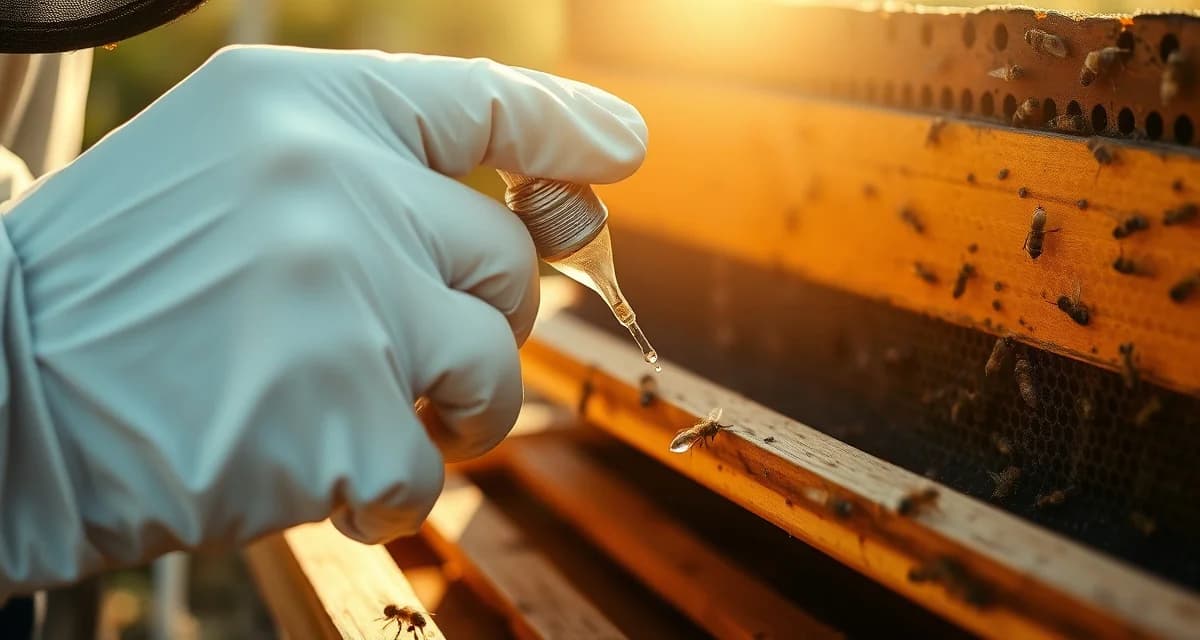
How Many Times Can I Use Oxalic Acid Dribble in One Season?
The OA dribble label specifies a single application per broodless period. Additional applications during brood presence achieve no additional mite kill and increase stress on the colony. One application, properly timed, is your entire dribble treatment.
This surprises many beekeepers who assume more treatments mean better results. With OA dribble, the biology doesn't work that way. A second dribble on the same colony doesn't meaningfully improve efficacy and isn't supported by the label.
TL;DR
- Oxalic acid (Api-Bioxal) is approved for dribble and vaporization methods; both kill only phoretic mites on adult bees
- Vaporization is more effective than dribble when brood is present because bees can contact vaporized acid across the colony
- The extended vaporization protocol (every 5 days for 3 applications) compensates for mites in capped brood
- Oxalic acid has no PHI restriction for honey supers when used according to the Api-Bioxal label
- Efficacy during true broodless periods can reach 95%; with brood present, efficacy drops to 50-70%
- Always wear a respirator and eye protection during vaporization; oxalic acid vapor causes lung damage
Why One Application Is the Limit
OA dribble kills phoretic mites: those riding on adult bees between reproductive cycles. When you apply the dribble solution to a broodless colony, virtually all mites are phoretic. A single application reaches 90-97% of them.
The problem with multiple dribble applications in the same season isn't resistance or chemistry: it's that after the first application has worked, there are very few remaining phoretic mites to kill. The mites that survive the first application are often deep in residual brood (if any remains) or were phoretic for only a brief window between the application and a new brood cycle.
More importantly: once brood rearing resumes, a dribble application does almost nothing. Mites inside capped brood are completely protected from the solution. You might kill 40-50% of the phoretic population with a dribble when brood is present, but that leaves 50-60% alive and unaffected. In that situation, dribble is the wrong tool entirely. Switch to OA vaporization extended protocol or a formic acid treatment when brood is present.
What the Label Actually Says
The Api-Bioxal label specifies one application per broodless period. This is a label restriction under FIFRA, not just a recommendation. Using OA dribble outside the label's instructions (including multiple applications per broodless period) is technically a FIFRA violation.
The label restriction reflects the research: a single application during a confirmed broodless period achieves the highest possible efficacy. Multiple applications don't improve on that. There's no justification for additional applications.
When Dribble Is the Right Tool
OA dribble shines in two situations:
Winter broodless period. This is the primary use case. When your colony is fully broodless (confirmed by inspection or by date in cold climates), a single dribble application reaches virtually all mites. This is the most efficient treatment in the beekeeper's toolkit: one visit, one application, 90-97% efficacy.
Splitting or package installation. A new package or a freshly made split with no capped brood is briefly broodless. Applying OA dribble in this window treats the mites the package started with before brood rearing establishes.
What dribble is NOT the right tool for:
- Active brood season treatment (use vaporization extended protocol instead)
- High-mite emergency treatment when brood is present (use formic acid)
- Routine mid-season monitoring treatment (use vaporization or strips)
If You Want More OA Protection During Brood Season
OA vaporization extended protocol is the answer. Three to five vaporizations spaced 5-7 days apart achieve 90-97% efficacy even with brood present, by timing applications to catch mites as they emerge from cells. It requires more visits than a dribble, but it's the registered and effective approach when brood is present.
Don't try to compensate for dribble's limitation by applying it more times. You'll stress the colony, violate the label, and still not solve the problem.
VarroaVault Tracking for OA Dribble
VarroaVault's treatment log flags a potential compliance issue if you log a second OA dribble application within 30 days of the first on the same hive. This is a reminder that a second dribble within a brood period is outside label guidelines.
When you log an OA dribble, the app also prompts you to confirm that the colony was broodless at the time of application. This step is in the log because efficacy interpretation depends on brood status. If you logged a dribble with brood present, the expected efficacy range for the post-treatment count shifts downward.
Frequently Asked Questions
Can I use OA dribble twice in one season?
Not effectively. The label specifies one application per broodless period, and that one application achieves 90-97% efficacy in a broodless colony. A second application during the same broodless period accomplishes nothing because the first application already killed the available phoretic mites. Once brood rearing resumes, dribble efficacy drops to 40-50%, making it the wrong tool regardless. If you need additional treatment during the brood season, switch to OA vaporization extended protocol.
Does OA dribble harm the colony if used more than once?
Multiple applications can cause cumulative bee stress. OA is acidic, and repeated exposure can harm adult bees, particularly the gut lining. The label restriction to a single application per broodless period exists partly for this reason. The honey bee is already under stress in winter; adding additional chemical exposure without efficacy benefit doesn't help the colony.
Does VarroaVault flag repeated OA dribble applications?
Yes. VarroaVault flags a potential compliance issue if you log a second OA dribble application within 30 days of the first on the same hive. The app also prompts you to confirm broodless status when logging a dribble, which affects expected efficacy calculations for your post-treatment count.
How many oxalic acid vaporizations can I do per year?
The Api-Bioxal label allows up to three vaporization treatments per year per hive. Under the extended protocol for colonies with brood present, three applications spaced 5 days apart count as one treatment event. Always follow current label instructions as registration requirements can be updated.
Can I use oxalic acid from the grocery store instead of Api-Bioxal?
No. In the United States, only EPA-registered Api-Bioxal is legal for treating honey bees. Industrial or food-grade oxalic acid is not registered for bee use and cannot be used legally. Using unregistered products violates federal pesticide law and may affect honey marketability. Api-Bioxal is widely available from beekeeping suppliers.
Is oxalic acid safe to use on brood?
Oxalic acid in dribble form is damaging to brood when applied directly; the label specifies use on broodless colonies for dribble application. Vaporized oxalic acid is less directly damaging to brood than dribble and is approved for use with brood present, though efficacy on mites in capped brood is limited. Always follow the label for the application method you are using.
What is How Many Times Can I Use Oxalic Acid Dribble in One Season??
The Api-Bioxal label permits only one oxalic acid dribble application per broodless period per season. This single-application limit exists because OA dribble only kills phoretic mites riding on adult bees — it cannot reach mites sealed inside capped brood cells. A second dribble does not meaningfully improve mite kill and adds unnecessary stress to the colony. Timing that one application correctly during a true broodless period is what determines success.
How much does How Many Times Can I Use Oxalic Acid Dribble in One Season? cost?
Oxalic acid dribble treatment itself is inexpensive — Api-Bioxal typically costs $20–$40 per packet, enough to treat multiple hives. The real cost is timing: a misapplied or poorly timed treatment wastes product and leaves your mite load unaddressed heading into the next brood cycle. Investing in an accurate mite wash or sticky board count before and after treatment is worthwhile to confirm efficacy.
How does How Many Times Can I Use Oxalic Acid Dribble in One Season? work?
OA dribble works by coating adult bees with oxalic acid solution as it is dripped between frames. Mites in the phoretic stage — clinging to adult bees between reproductive cycles — absorb the acid and die. Because the solution cannot penetrate capped brood cells, efficacy during a true broodless period can reach 95%. When brood is present, efficacy drops to 50–70%, which is why broodless timing is critical.
What are the benefits of How Many Times Can I Use Oxalic Acid Dribble in One Season??
A single well-timed OA dribble during a broodless period can knock out up to 95% of the varroa population — one of the highest efficacy rates available to hobbyist beekeepers without a veterinary prescription. It leaves no PHI restriction on honey supers when used per the Api-Bioxal label, making it safe for late-season or winter treatment without affecting honey quality.
Who needs How Many Times Can I Use Oxalic Acid Dribble in One Season??
Any beekeeper managing varroa in a temperate climate where colonies experience a winter or induced broodless period benefits from understanding the single-application dribble rule. It is especially relevant for hobbyists doing a late-fall or winter treatment when the queen has stopped laying. Commercial and sideliner beekeepers managing brood year-round should consider vaporization protocols instead, as dribble is less effective when capped brood is present.
Related Articles
- OA Dribble vs OA Vaporization: Which Method Should You Choose
- Best Oxalic Acid Vaporizer for Beekeepers: What to Look for in 2026
- How Many Bees Should I Use for a Mite Wash? Sample Size Explained
- How to Plan an Oxalic Acid Treatment Schedule
Sources
- American Beekeeping Federation (ABF)
- USDA ARS Bee Research Laboratory
- Honey Bee Health Coalition
- Penn State Extension Apiculture Program
- Project Apis m.
Get Started with VarroaVault
Oxalic acid is one of the most effective and accessible varroa treatments available, but timing and application method determine whether you get 95% efficacy or 50%. VarroaVault tracks your broodless window, application method, and pre/post mite counts so you can see what's actually working in your operation. See pricing and free tools at varroavault.com.