How Many Oxalic Acid Vaporizations Do I Need? A Dosing Guide
During broodless conditions, three vaporizations spaced 5-7 days apart achieve near 99% varroa mite kill in research studies. That's the short answer. The longer answer depends on whether your colony actually is broodless, what your starting mite load was, and whether your post-treatment count confirms the treatment worked.
The number of OA vaporizations needed isn't a fixed protocol. It's a decision based on your brood status, your mite count history, and the time of year.
TL;DR
- This guide covers key aspects of how many oxalic acid vaporizations do i need? a dosing guide
- Mite monitoring should happen at minimum every 3-4 weeks during active season
- The 2% threshold in spring/summer and 1% in fall are standard action points based on HBHC guidelines
- Always run a pre-treatment and post-treatment mite count to calculate efficacy
- Treatment records including product name, EPA number, dates, and counts are required for state inspection compliance
- VarroaVault stores all monitoring and treatment data with automatic threshold comparison and state export formatting
Why Brood Status Changes Everything
Oxalic acid kills mites on adult bees. It doesn't penetrate capped brood cells. A mite hiding inside a capped cell during vaporization survives the treatment and emerges when the bee does.
In a truly broodless colony: All mites are phoretic (riding on adult bees). They're all exposed. Three treatments at 5-7 day intervals catch the stragglers and any mites that weren't fully covered by the first application. Near 99% efficacy.
In a colony with some brood: Mites in capped cells survive each treatment. As brood emerges over the next 7-12 days, newly phoretic mites emerge with it. Repeated treatments at 5-7 day intervals catch these emerging mites between treatment doses. Efficacy is lower, perhaps 70-85%, depending on how much brood is present.
In a colony with heavy brood: OA vaporization becomes less effective as brood levels increase. The treated mites die; the brood-protected mites survive; the brood-protected cohort is larger. You may need 5 or more applications over several weeks, and efficacy still won't reach broodless levels. At this point, a different treatment (Apivar, MAQS) that works regardless of brood status is often more appropriate.
The 3-Treatment Protocol for Broodless Colonies
For colonies confirmed to be broodless (no capped brood, no larvae), three vaporizations at 5-7 day intervals is the standard protocol:
- Day 1: First vaporization. 2 grams of OA crystals per application regardless of colony size.
- Day 5-7: Second vaporization.
- Day 10-14: Third vaporization.
After the third treatment, wait 3-4 weeks and do an alcohol wash count. If your mite level has dropped dramatically from pre-treatment baseline (which it should have), the protocol worked. If counts are still elevated, additional treatments may be needed, or a different treatment type may be more appropriate.
Extended Protocol for Colonies With Some Brood
If your colony has light brood but you're choosing OA vaporization, extend the protocol to 5 applications over 3-4 weeks:
- Applications on days 1, 5-7, 10-14, 17-21, 24-28
This extended protocol keeps pressure on mites as they emerge from brood cells throughout the treatment window. Efficacy is still lower than broodless treatment, but it's meaningfully better than 3 applications.
When to Stop and Count
VarroaVault's OA protocol guide specifies the dosing schedule and prompts a post-treatment count to verify efficacy. This is the step most beekeepers skip, and it's a mistake.
You cannot know whether an OA treatment worked without counting afterward. The mites that survived don't announce themselves. Assuming the treatment worked because the bees look healthy is how treatment failures go undetected until spring deadouts.
Set a count reminder for 3-4 weeks after your last OA treatment. Compare the result to your pre-treatment baseline. A successful broodless OA protocol should drop counts by 90% or more. If it didn't, you need to investigate: was the colony broodless as confirmed? Was the dose correct? Is there resistance developing?
The oxalic acid vaporization guide covers the full protocol in detail, including equipment setup, dose calculation, and safety requirements. The varroa oxalic acid multiple rounds article specifically addresses the evidence for multiple-round protocols versus single-application approaches.
Frequently Asked Questions
How many times should I vaporize with oxalic acid?
In broodless conditions, three vaporizations at 5-7 day intervals achieve near 99% mite kill and are the standard protocol. In colonies with light brood, extend to 5 applications over 3-4 weeks. In colonies with heavy brood, OA vaporization efficacy is limited enough that you may want to use a different treatment type. Always follow up any OA protocol with a post-treatment count 3-4 weeks later to confirm efficacy.
How often should I repeat oxalic acid vaporization?
Applications should be spaced 5-7 days apart during the treatment series. This interval is based on mite emergence timing from capped cells: mites in capped cells on day 1 will emerge within the next 5-12 days and become vulnerable before your next application. Spacing applications further than 7 days reduces the overlap between treatment doses and allows more mites to complete their reproductive cycle before the next treatment.
When should I stop OA treatments and count to check efficacy?
After completing your intended protocol (3 or 5 applications), wait 3-4 weeks before counting. This allows the colony to cycle through enough brood to reveal whether the treatment reduced the overall mite population or just knocked down the phoretic portion. An alcohol wash count at 3-4 weeks post-treatment gives you the most accurate picture of how well the protocol worked.
How do I know if my varroa treatment is working?
Run a mite count 2-4 weeks after the treatment ends and compare it to your pre-treatment count. The efficacy formula is: ((pre-count - post-count) / pre-count) x 100. A result above 90% indicates effective treatment. Results below 80% should trigger investigation for possible resistance, application error, or reinfestation. Log both counts in VarroaVault to track efficacy trends across treatment cycles.
How often should I check mite levels in my hives?
At minimum, once per month (every 3-4 weeks) during the active season. Increase to every 2 weeks when counts are near threshold or after a treatment to verify it worked. In fall, monitoring frequency matters most because the window to treat before winter bees are raised is narrow. VarroaVault's monitoring reminders can be set to your preferred interval for each apiary.
What records should I keep for varroa management?
Each record should include: date of count or treatment, hive identifier, monitoring method used, number of bees sampled, mites counted, infestation percentage, treatment product name and EPA registration number, dose applied, treatment start and end dates, and PHI end date. State apiarists typically expect this level of detail during inspections. VarroaVault captures all of these fields in a single log entry.
What is How Many Oxalic Acid Vaporizations Do I Need? A Dosing Guide?
This dosing guide explains how many oxalic acid (OA) vaporizations beekeepers need to effectively control varroa mites. The short answer is three vaporizations spaced 5-7 days apart during broodless conditions, achieving near 99% mite kill. However, the actual number depends on your colony's brood status, starting mite load, and post-treatment mite counts. This guide walks through each variable so beekeepers can make informed, data-driven treatment decisions rather than following a one-size-fits-all protocol.
How much does How Many Oxalic Acid Vaporizations Do I Need? A Dosing Guide cost?
Oxalic acid vaporization itself is a low-cost treatment — OA crystals are inexpensive and a basic vaporizer runs $30–$150. The real investment is in mite monitoring: alcohol wash or sugar roll supplies cost under $20. VarroaVault offers digital record-keeping to track treatments and mite counts with automatic threshold alerts. The guide itself is free, covering dosing decisions, timing strategies, and compliance recordkeeping to help beekeepers protect colonies without unnecessary expense.
How does How Many Oxalic Acid Vaporizations Do I Need? A Dosing Guide work?
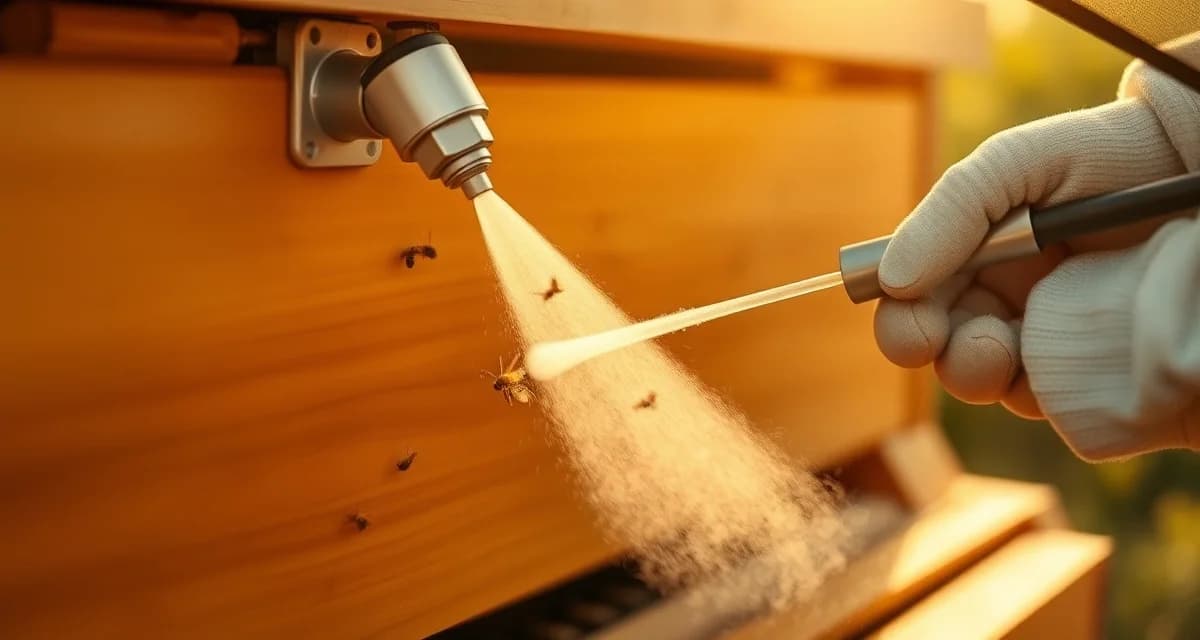
Oxalic acid vaporization works by sublimating OA crystals into a fine aerosol inside the hive. Mites on adult bees absorb the acid through contact, disrupting their biology. Because OA cannot penetrate capped brood cells, timing is critical — treatments during broodless periods are most effective. Three applications spaced 5-7 days apart ensure mites emerging from any remaining brood are also exposed. Pre- and post-treatment mite counts confirm whether the protocol achieved the target efficacy.
What are the benefits of How Many Oxalic Acid Vaporizations Do I Need? A Dosing Guide?
The primary benefit is dramatically reducing varroa mite loads — up to 99% kill rate under broodless conditions — without synthetic chemicals that mites can develop resistance to. OA vaporization is approved for use with honey supers in place, making it flexible throughout the season. Additional benefits include low chemical residue, low cost, and minimal colony disruption. Following a structured dosing protocol also ensures compliance with state inspection requirements and creates defensible treatment records.
Who needs How Many Oxalic Acid Vaporizations Do I Need? A Dosing Guide?
Any beekeeper managing colonies at risk of varroa infestation needs this guide — which means virtually every beekeeper in North America and Europe. It is especially valuable for those approaching winter broodless periods, beekeepers seeing elevated mite counts above the 2% spring/summer or 1% fall thresholds, and anyone who has completed an OA treatment but is unsure whether it worked. New beekeepers learning integrated pest management and experienced beekeepers refining their protocols will both benefit from the data-driven dosing framework covered here.
Sources
- American Beekeeping Federation (ABF)
- USDA ARS Bee Research Laboratory
- Honey Bee Health Coalition
- Penn State Extension Apiculture Program
- Project Apis m.
Get Started with VarroaVault
The information in this guide is most useful when you have your own mite count data to apply it to. VarroaVault stores every count, flags threshold crossings automatically, and builds the treatment history you need for state inspections and effective management decisions. See pricing and free tools at varroavault.com.