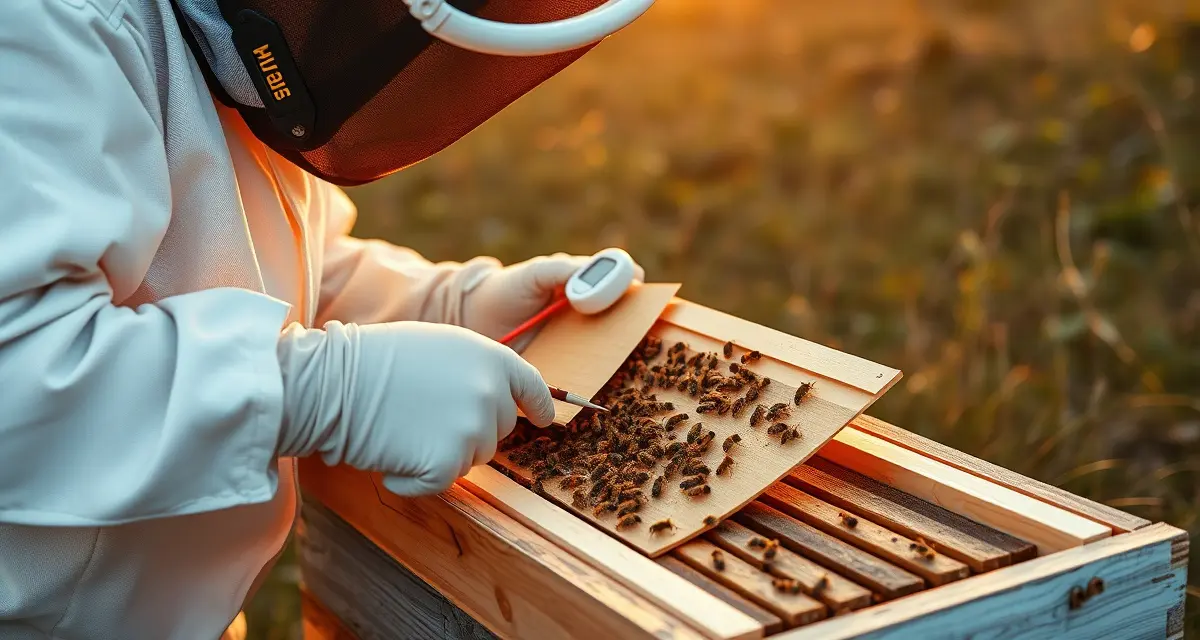
MAQS Application and Safety Guide: Formic Pro and Mite Away Quick Strips
Formic acid works in ways most other treatments can't: it penetrates capped brood and kills mites on pupae before they emerge. That's a notable advantage. But it comes with a notable responsibility, temperature. Apply MAQS or Formic Pro outside the safe range and you're risking queen loss, high bee mortality, and treatment failure. All in the same application.
This MAQS application safety guide covers everything you need to know before you open that package: what the safe window looks like, how to prepare the hive, what to watch for during treatment, and how to handle problems if they develop.
TL;DR
- Formic acid (MAQS, Formic Pro) is one of the few treatments that penetrates capped brood to kill mites inside cells
- Apply only when temperatures are between 50-85 degrees F; above 85 degrees risks queen loss and excessive bee mortality
- MAQS uses a 7-day treatment; Formic Pro can be applied as a 14-day extended protocol
- Formic acid has no PHI for honey supers when applied according to label instructions
- Efficacy typically ranges from 70-90% depending on temperature consistency during treatment
- Track daily temperatures during formic acid application in VarroaVault to correlate temperature with efficacy outcomes
Why Temperature Is the Central Variable
Formic acid is a volatile compound. Heat accelerates vaporization. When temperatures climb above the safe ceiling, acid vapor concentration inside the hive rises to levels that stress or kill queens and damage bees.
MAQS applied above 85°F causes meaningfully higher queen loss rates. That's not a minor side effect, it's a treatment that can cost you the colony's reproductive future if applied wrong.
The label specifies a temperature window of 50°F to 85°F (10°C to 29.5°C). That range matters at both ends:
- Below 50°F: Not enough volatilization. The treatment doesn't work.
- Above 85°F: Too much volatilization. Queen risk escalates sharply.
The tricky part? The temperature window applies to the entire treatment period, not just the day of application. A cool morning when you apply can turn into a mid-90s afternoon. You need to know the forecast for the next 7 days before you open the hive.
The Difference Between MAQS and Formic Pro
Both products contain formic acid, but they deliver it differently.
MAQS (Mite Away Quick Strips) uses a 7-day release format. Two strips per colony, placed on the bottom bars of the brood box. Treatment period is 7 days.
Formic Pro extends the release over 14 days using a slower-release matrix. One or two pads depending on colony size. The extended release means lower peak acid concentration, which some beekeepers prefer in warmer conditions.
Both products have a 0-day PHI, which is one of their major advantages. You can apply with honey supers on, a rare privilege among varroa treatments. Formic acid does not contaminate honey at approved doses.
For a deeper comparison of formic acid options, the formic acid varroa treatment guide covers both products in full.
Before You Apply: The Pre-Treatment Checklist
Confirm the Temperature Window
Don't rely on memory or a quick check of your phone. Pull the full 7-day forecast for your apiary location before you unwrap a strip. You're looking for:
- Daytime highs staying below 85°F
- Nighttime lows staying above 50°F
- No notable heat event in the forecast window
VarroaVault checks your local forecast before an MAQS application and warns if temperatures will exceed the safe range during the treatment period. That's the kind of check that prevents a $40 treatment from killing a $200 queen.
Check for the Right Colony Conditions
MAQS is most effective when:
- The colony has a full complement of bees (at least 6 frames of bees)
- The brood nest is active
- There's good ventilation in the hive
For smaller colonies, the full-dose application can be too concentrated. The Formic Pro label provides guidance on reduced dosing for smaller populations.
Decide on Entrance and Ventilation
The label recommends opening the bottom entrance fully during treatment to allow vapor to escape and reduce peak acid concentration. A screened bottom board helps. Don't restrict ventilation during a formic acid treatment, bees need the airflow.
Step-by-Step MAQS Application
Step 1: Set Up for Safety
Formic acid is caustic. Before touching the strips:
- Put on nitrile or rubber gloves, not latex
- Wear eye protection
- Have a face mask or respirator available if you're applying multiple colonies or are sensitive to acid fumes
- Work upwind if possible
Step 2: Open the Hive Quickly
You want minimal exposure time when the strips are going in. Have your hive tool ready, know which box you're treating, and move efficiently.
Step 3: Place Strips on the Bottom Bars
For MAQS: Remove the strips from the packaging with gloves on. Place one strip on each side of the brood nest, on top of the bottom bars of the brood box (not on top bars). The strips should rest flat, accessible to bees from below.
For Formic Pro: Follow the label for single or dual pad placement depending on colony strength. Place pads flat on top of the brood frames.
Step 4: Prop the Inner Cover
Most formic acid labels recommend providing a small gap (8-10mm) under the inner cover to allow vapor to escape from the top. A small piece of wood or a shim works fine. Don't seal the hive.
Step 5: Log the Application
Record the application date, temperature at time of application, forecasted high for the next 7 days, colony ID, and which product you used. This is the data you'll need if something goes wrong, and it's required for compliance records in many states.
What to Monitor During Treatment
Days 1-3: Expect Some Stress Behavior
You'll likely see increased bearding at the entrance, more fanning behavior, and heightened defensiveness. This is normal. Formic acid vapor irritates bees, they're ventilating actively and may be agitated.
What you're watching for during this period:
- Dead or dying bees on the landing board or inside the entrance
- notable brood mortality (some is expected, very large amounts suggest too-high temperature or dose)
Days 3-5: Peak Activity
Most of the mite kill happens in the first half of the treatment window. Colony stress behavior typically peaks and then subsides.
If temperatures spike unexpectedly above 85°F during this window, you have a decision to make: remove the strips early to prevent queen loss, or leave them and accept the risk. If you're tracking your apiary's temperature in VarroaVault and get an alert, that's your signal to check the hive.
Day 7 (MAQS): Strip Removal
Remove and dispose of spent MAQS strips as directed on the label. Don't bury them near waterways. Wear gloves.
What To Do If MAQS Causes Queen Loss
This is the most common serious complication of formic acid treatment applied in warm conditions.
Signs of queen loss post-treatment:
- No eggs visible 10-14 days after treatment
- Emergency queen cells on worker larvae
- Increased balling behavior or scattered laying patterns
What to do if you suspect queen loss:
- Wait 10-14 days before concluding the queen is gone. A stressed queen may stop laying temporarily. Give her time.
- Look for eggs on day 14. Eggs = queen present and laying. No eggs = confirm the situation.
- If queenless, introduce a replacement queen or combine with a queenright colony.
What does VarroaVault do here? If you log post-treatment inspection notes and flag a suspected queen issue, the app logs it in the colony health record and prompts a follow-up check at day 14. You won't forget to look.
Can I Use MAQS During a Honey Flow?
This is one of formic acid's genuine advantages: yes, you can. MAQS has a 0-day PHI, which means honey supers can remain on the hive during treatment. The formic acid does not contaminate honey at the doses used.
There's an important nuance, though. While the PHI is zero, the label specifies that you should not leave supers in place if you're actively filling them at high daily rates during treatment, high nectar flow can dilute the acid vapor and reduce efficacy. Most beekeepers treat between major flows when possible, but the option exists to treat during a flow if mite pressure demands it.
The [pre-harvest interval tracker](/varroa-treatment-efficacy-score) in VarroaVault documents your PHI status for each treatment type, including MAQS.
What temperature is safe for MAQS formic acid application?
The labeled safe window is 50°F to 85°F (10°C to 29.5°C), and this applies throughout the entire 7-day treatment period, not just the day of application. Check a full 7-day forecast before applying. If temperatures will exceed 85°F at any point during the treatment window, postpone the application or consider Formic Pro's slower-release format, which tolerates slightly higher peaks.
What do I do if MAQS causes queen loss?
First, give it two weeks. A stressed queen may stop laying temporarily and resume without intervention. At day 14 post-treatment, inspect for eggs. If you find eggs, the queen is present. If you find no eggs but there are emergency cells, let them complete and evaluate the new queen. If the hive is fully queenless, introduce a mated queen or combine with a queenright colony. Always log the incident in your treatment records, it may reflect a temperature exceedance or product issue worth documenting.
Can I use MAQS during a honey flow?
Yes. MAQS has a 0-day PHI and is labeled for use with honey supers on. It's one of the few treatments with this designation. However, heavy active flows may dilute efficacy somewhat, so many beekeepers prefer to treat between flows when possible. If mite pressure is high during a flow, don't delay treatment waiting for it to end, apply and monitor.
Can I use MAQS with honey supers on?
Yes. Formic acid (MAQS and Formic Pro) is approved for use with honey supers in place according to label instructions. This is one of the primary advantages of formic acid over amitraz. However, formic acid can impart off-flavors to honey if used under very high temperatures. Follow label temperature restrictions to minimize this risk.
What happens if temperatures drop below 50 degrees F during a MAQS treatment?
Formic acid vaporization slows significantly below 50 degrees F, reducing efficacy. If temperatures drop below 50 degrees F for an extended period during a MAQS or Formic Pro treatment, the treatment may not deliver its full dose. Document the temperature disruption in your records and consider running a post-treatment count sooner than normal to verify results. A repeat treatment may be needed.
Does formic acid work on mites in capped brood?
Yes, this is one of formic acid's key advantages over oxalic acid and thymol. Formic acid vapor penetrates capped brood cells and kills mites reproducing inside. This makes it more effective than oxalic acid when significant brood is present, though it also makes temperature management more critical since the active ingredient is an acid vapor.
FAQ
What is MAQS Application and Safety Guide: Formic Pro and Mite Away Quick Strips?
MAQS (Mite Away Quick Strips) and Formic Pro are formic acid-based varroa mite treatments for honey bee colonies. This guide covers safe application temperatures (50–85°F), hive preparation, treatment duration, and what to monitor during and after treatment. It's a practical reference for beekeepers using either the 7-day MAQS protocol or the extended 14-day Formic Pro protocol to achieve effective mite knockdown without harming queens or worker populations.
How much does MAQS Application and Safety Guide: Formic Pro and Mite Away Quick Strips cost?
MAQS and Formic Pro are commercial products with varying retail prices, typically ranging from $15–$30 per package depending on supplier and quantity. This guide itself is free educational content on VarroaVault. The real cost consideration is timing: applying outside the safe temperature window risks queen loss, which can cost far more than the treatment itself in lost colony productivity and requeening expenses.
How does MAQS Application and Safety Guide: Formic Pro and Mite Away Quick Strips work?
Formic acid volatilizes from the strips and penetrates capped brood cells, killing varroa mites on developing pupae — something most contact treatments cannot do. The acid vapor spreads through the hive over 7–14 days. Efficacy depends heavily on ambient temperature: consistent temperatures between 50–85°F drive steady vapor release. Too cold slows volatilization; too hot risks queen loss and excessive bee mortality from acid concentration spikes.
What are the benefits of MAQS Application and Safety Guide: Formic Pro and Mite Away Quick Strips?
The primary benefit is brood-penetrating efficacy — formic acid kills mites in capped cells, breaking the mite reproduction cycle more completely than treatments that only target phoretic mites. It also has no pre-harvest interval (PHI) for honey supers when applied per label instructions, making it suitable during honey flows. Resistance development in varroa to formic acid has not been documented, unlike some synthetic miticides.
Who needs MAQS Application and Safety Guide: Formic Pro and Mite Away Quick Strips?
Any beekeeper managing colonies with varroa infestations should understand formic acid application. It's especially relevant for those keeping bees organically, managing during honey flows, or dealing with mite-resistant populations where synthetic options like Apivar have shown reduced efficacy. Hobbyist and commercial beekeepers alike benefit from understanding temperature constraints, since misapplication is the leading cause of queen loss with this treatment class.
How long does MAQS Application and Safety Guide: Formic Pro and Mite Away Quick Strips take?
MAQS uses a single 7-day treatment period. Formic Pro offers an extended 14-day protocol that releases acid more gradually, which can reduce queen loss risk in borderline temperature conditions. Active monitoring should continue for 2–3 days post-application to catch any signs of queen failure or excessive mortality early. Total time investment including hive preparation and post-treatment inspection is typically spread across two to three colony visits.
What should I look for when choosing MAQS Application and Safety Guide: Formic Pro and Mite Away Quick Strips?
Choose based on your climate and management style. MAQS suits beekeepers with reliably moderate temperatures and shorter treatment windows. Formic Pro's slower-release 14-day protocol is better for regions with variable summer temperatures or beekeepers who prefer lower peak acid concentrations. Always verify the temperature forecast before application — a 7-day window of 50–85°F is non-negotiable. Track daily highs and lows in VarroaVault to correlate temperature conditions with your efficacy outcomes.
Is MAQS Application and Safety Guide: Formic Pro and Mite Away Quick Strips worth it?
Yes — when applied correctly, formic acid treatments offer 70–90% efficacy with no honey contamination risk and no known varroa resistance. The brood-penetrating action gives it a meaningful advantage over surface-contact treatments. The main caveat is temperature discipline: cut corners on the thermal window and you risk queen loss that negates any mite reduction benefit. Used within label parameters, it's one of the most reliable tools in an integrated varroa management program.
Sources
- American Beekeeping Federation (ABF)
- USDA ARS Bee Research Laboratory
- Honey Bee Health Coalition
- Penn State Extension Apiculture Program
- Project Apis m.
Logging MAQS in VarroaVault
VarroaVault's temperature compliance alert blocks MAQS treatment logging if the current temperature is outside the 10-29.5°C safe window at the time of entry. It also pulls your local 7-day forecast and flags any projected temperature exceedances during the treatment window.
After you log an MAQS application, the app schedules a day-7 strip removal reminder and a day-14 follow-up inspection prompt. Your MAQS treatment history links to your pre- and post-treatment mite counts so you can track formic acid efficacy across your apiary over time.
For scheduling and PHI tracking around honey production, see the pre-harvest interval tracker.
Get Started with VarroaVault
Formic acid's temperature requirements make timing critical. VarroaVault logs your treatment dates and the temperature window you applied in, so you can correlate conditions with efficacy outcomes over multiple seasons. Start your free trial at varroavault.com and build a treatment record that actually helps you improve results.