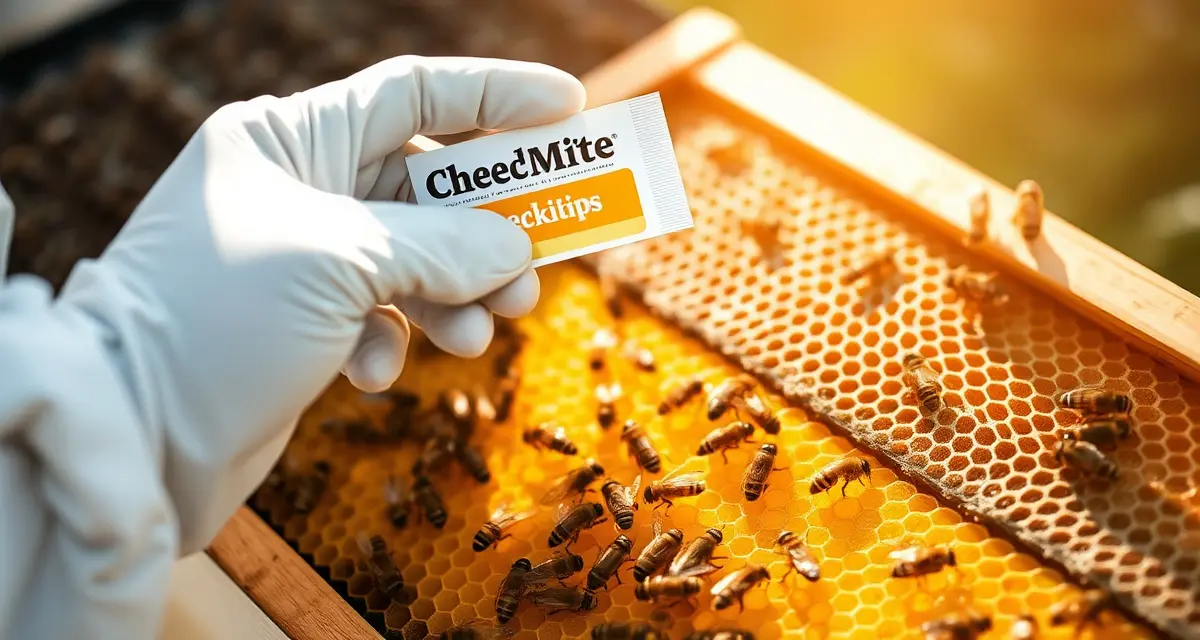
Coumaphos Varroa Treatment Guide: CheckMite Application and Safety
Coumaphos isn't where most beekeepers start when treating varroa. It's where they end up when other options have failed, high mite loads, suspected amitraz resistance, a colony that needs aggressive intervention before it collapses.
That's not a knock on coumaphos. CheckMite strips work. But they come with tradeoffs that don't apply to other treatments: wax contamination, documented resistance, and bioaccumulation concerns that persist across wax cycles. Understanding those tradeoffs is what separates informed use from problems.
Coumaphos has been detected in beeswax in 42 states. That number exists because coumaphos was historically overused as a primary treatment, leaving contaminated wax in commercial operations across the country. The lesson from that history is that coumaphos is a tool for specific situations, not a default option.
TL;DR
- Coumaphos (CheckMite+) is an organophosphate treatment; resistance is widespread in varroa populations
- It should not be a primary treatment in most operations given current resistance levels
- Coumaphos has significant PHI requirements and residues can accumulate in wax over time
- It remains on the EPA-registered treatment list but is rarely the first choice
- Always calculate pre/post efficacy when using coumaphos; low results may indicate existing resistance
- Log coumaphos use in VarroaVault with pre/post counts to track efficacy trends
What Coumaphos Is and How It Works
Coumaphos is an organophosphate acaricide and insecticide. It kills varroa mites by inhibiting acetylcholinesterase, an enzyme required for nerve function. In varroa, this causes paralysis and death.
CheckMite+ is the primary registered coumaphos product for varroa in the US, in strip format similar to Apivar. Two strips per colony, placed in the brood nest, for a 45-day treatment period.
Coumaphos is effective against varroa. It's also lipophilic, it binds to fats, which means it accumulates in beeswax over time. This bioaccumulation is the central concern with repeated use.
When Is Coumaphos Appropriate for Varroa Treatment?
Coumaphos is a last-resort synthetic, appropriate when:
- Amitraz resistance is confirmed or strongly suspected (post-Apivar count didn't drop to expected levels)
- A colony has a critically high mite load and needs aggressive intervention
- Other treatment options are contraindicated (e.g., temperature is outside the formic acid range, a super-safe option is needed but efficacy requirements are high)
- You're in a resistance management rotation and have exhausted other synthetic options
It's not the right first choice. The combination of wax contamination risk and documented resistance makes it a treatment to deploy deliberately, not routinely.
Application Protocol
Before Applying
- Remove honey supers. CheckMite cannot be used with supers on.
- Record a baseline mite count.
- Review your wax contamination history for this colony's comb. If the same combs have had multiple coumaphos treatments, wax replacement may be warranted before another application.
Strip Placement
Use 2 strips per colony. Place them in the brood nest, between brood frames where bee traffic is highest. The same placement principles as Apivar apply: strips in the brood contact zone achieve better mite kill than strips at the periphery.
For two-box colonies, one strip per box in the brood area.
Treatment Duration
The CheckMite label specifies 45 days. Remove strips at 45 days and dispose according to label instructions.
Wax Contamination: The Central Concern
Coumaphos binds to beeswax during treatment. After strips are removed, the comb retains measurable coumaphos residue. Subsequent treatments add more. Over multiple applications, wax residue accumulates to levels that have been detected in commercial honey samples and that may affect larval development.
Studies have shown coumaphos residues can persist in beeswax for years after treatment stops. The wax essentially becomes a slow-release reservoir.
How do I minimize coumaphos wax residue?
- Limit use to last-resort situations. Every unnecessary treatment adds to cumulative wax burden.
- Replace old comb. A wax rotation program, retiring 2-3 frames per year and replacing with fresh foundation, dilutes cumulative residue over time.
- Track cumulative treatments per colony. Knowing which colonies have had 1 vs. 3+ coumaphos applications helps you make wax replacement decisions.
VarroaVault's coumaphos wax residue tracker logs cumulative treatments to flag when wax replacement is recommended. After a threshold number of coumaphos applications on the same combs, the app triggers a comb rotation recommendation.
Resistance Risk
Varroa resistance to coumaphos is documented. The mechanism (target site insensitivity) means resistant mites aren't killed by the treatment regardless of dose or application quality.
If you're using CheckMite as an alternative to a suspected amitraz-resistant mite population, you may be trading one resistance problem for another if coumaphos was also used heavily in the past.
The post-treatment count is as important with coumaphos as with any other synthetic. If efficacy is below 90%, resistance should be on the differential list alongside application errors.
Does VarroaVault Track Coumaphos Cumulative Exposure?
Yes. VarroaVault tracks the number of coumaphos treatments applied to each colony and the elapsed time since the last application. When cumulative treatments on a colony reach a level associated with elevated wax residue concern, the app generates a wax replacement recommendation flag.
This isn't a hard limit, it's an advisory flag that prompts you to think about whether comb rotation makes sense before the next treatment cycle.
For the full treatment rotation framework that positions coumaphos correctly in the rotation, see the treatment rotation planner. For concerns about honey purity following coumaphos treatment, see the honey purity after treatment guide.
When is coumaphos appropriate for varroa treatment?
Coumaphos is a last-resort synthetic acaricide. It's appropriate when amitraz resistance is confirmed or suspected (post-Apivar efficacy was below 90% with correct application), when a colony needs aggressive intervention and other options are unavailable, or as part of a deliberate resistance management rotation after exhausting other synthetic options. It's not the right first choice for routine varroa management because of its wax contamination profile and documented resistance in some varroa populations.
How do I minimize coumaphos wax residue?
Three practices reduce cumulative wax contamination: first, limit coumaphos use to situations where it's specifically warranted, every treatment adds to wax burden. Second, implement a comb rotation program, retiring and replacing 2-3 frames per colony per year so that contaminated wax cycles out over time. Third, track which colonies have had the most coumaphos applications, they're the priority candidates for fresh foundation during your next comb rotation.
Does VarroaVault track coumaphos cumulative exposure?
Yes. Every coumaphos treatment you log is tracked against that colony's history. When the number of coumaphos treatments on a specific colony crosses a threshold associated with elevated residue concern, VarroaVault generates a wax replacement recommendation. This keeps the cumulative picture visible instead of losing it across seasons of records.
How do I know if my varroa treatment is working?
Run a mite count 2-4 weeks after the treatment ends and compare it to your pre-treatment count. The efficacy formula is: ((pre-count - post-count) / pre-count) x 100. A result above 90% indicates effective treatment. Results below 80% should trigger investigation for possible resistance, application error, or reinfestation. Log both counts in VarroaVault to track efficacy trends across treatment cycles.
How often should I check mite levels in my hives?
At minimum, once per month (every 3-4 weeks) during the active season. Increase to every 2 weeks when counts are near threshold or after a treatment to verify it worked. In fall, monitoring frequency matters most because the window to treat before winter bees are raised is narrow. VarroaVault's monitoring reminders can be set to your preferred interval for each apiary.
What records should I keep for varroa management?
Each record should include: date of count or treatment, hive identifier, monitoring method used, number of bees sampled, mites counted, infestation percentage, treatment product name and EPA registration number, dose applied, treatment start and end dates, and PHI end date. State apiarists typically expect this level of detail during inspections. VarroaVault captures all of these fields in a single log entry.
FAQ
What is Coumaphos Varroa Treatment Guide: CheckMite Application and Safety?
Coumaphos is an organophosphate miticide used to treat varroa mite infestations in honey bee colonies. CheckMite+ strips are the primary EPA-registered coumaphos product available to beekeepers. This guide covers correct strip placement, treatment duration, pre-harvest intervals, resistance concerns, and wax contamination risks. It is intended for beekeepers facing high mite loads or suspected resistance to other treatments like amitraz, where more common options have failed to bring mite counts under control.
How much does Coumaphos Varroa Treatment Guide: CheckMite Application and Safety cost?
CheckMite+ strips are a commercial beekeeping product with variable pricing depending on supplier and quantity. Typical retail pricing runs roughly $15–$25 per packet, which contains two strips treating one hive. Cost should be weighed against the full picture: contaminated wax may need replacing over time, and bioaccumulation of coumaphos residues can add downstream costs. Compare total cost of treatment cycles, not just the per-strip price, when budgeting varroa management across multiple hives.
How does Coumaphos Varroa Treatment Guide: CheckMite Application and Safety work?
Coumaphos works by inhibiting acetylcholinesterase, an enzyme essential to nerve function in varroa mites. CheckMite+ strips are placed between brood frames where mites contact the active ingredient as they move through the colony. The treatment kills phoretic mites on adult bees directly. Because coumaphos does not penetrate capped brood cells effectively, a full treatment cycle of 42–45 days is required to expose mites emerging across multiple brood cycles, maximizing efficacy against the full mite population.
What are the benefits of Coumaphos Varroa Treatment Guide: CheckMite Application and Safety?
The primary benefit of coumaphos is efficacy against varroa populations that have developed resistance to other registered treatments. For colonies with high mite loads and documented amitraz resistance, CheckMite+ can deliver meaningful knockdown when alternatives have failed. It is EPA-registered, has a defined protocol, and provides a measurable treatment option as a last-resort intervention. Its contact activity against phoretic mites provides rapid reduction in mite loads visible in alcohol wash or sugar roll counts within the first week of treatment.
Who needs Coumaphos Varroa Treatment Guide: CheckMite Application and Safety?
Coumaphos is appropriate for beekeepers dealing with varroa populations resistant to softer treatments, or managing colonies at critically high mite counts requiring aggressive intervention before collapse. Commercial operations with suspected amitraz resistance and hobbyist beekeepers who have exhausted oxalic acid and formic acid options may find CheckMite+ necessary. It is not recommended as a first-line treatment for new beekeepers or operations without prior mite monitoring data, given resistance concerns and the risk of wax contamination from casual or repeated use.
How long does Coumaphos Varroa Treatment Guide: CheckMite Application and Safety take?
A standard CheckMite+ treatment runs 42–45 days, covering approximately two brood cycles to expose mites that were capped during initial strip placement. Strips should be removed promptly at the end of this window; leaving them longer increases wax contamination without improving efficacy. Plan for pre-treatment alcohol wash counts, a mid-treatment check if mite pressure was severe, and a post-treatment wash 48–72 hours after strip removal to calculate percent efficacy and determine whether a follow-up intervention is needed.
What should I look for when choosing Coumaphos Varroa Treatment Guide: CheckMite Application and Safety?
When evaluating coumaphos use, prioritize three factors: resistance status of your local varroa population, current wax age and contamination history, and pre-harvest interval compliance. If your operation has used coumaphos before, test wax for residue accumulation before retreating. Confirm the colony truly needs organophosphate intervention by ruling out oxalic acid and formic acid options first. Choose a supplier with clearly dated product to ensure potency. Always verify EPA label compliance for your state, as application requirements can vary.
Is Coumaphos Varroa Treatment Guide: CheckMite Application and Safety worth it?
Coumaphos is worth using in the specific situations it was designed for: high mite loads, documented resistance to other treatments, and colonies at collapse risk. Used correctly with pre- and post-treatment mite counts, it can save colonies that would otherwise be lost. However, it is not worth routine use given wax bioaccumulation risks and the resistance it has already generated in varroa populations nationally. If softer treatments are still effective in your apiary, exhaust those options first and reserve coumaphos for genuine last-resort scenarios.
Sources
- American Beekeeping Federation (ABF)
- USDA ARS Bee Research Laboratory
- Honey Bee Health Coalition
- Penn State Extension Apiculture Program
- Project Apis m.
Get Started with VarroaVault
The information in this guide is most useful when you have your own mite count data to apply it to. VarroaVault stores every count, flags threshold crossings automatically, and builds the treatment history you need for state inspections and effective management decisions. See pricing and free tools at varroavault.com.