HopGuard for Varroa: When to Use It and How to Track Efficacy
HopGuard is not the most powerful varroa treatment available. It's not meant to be your heavy-hitter in a high-pressure situation. But used in the right circumstances, particularly in low-brood or broodless conditions as part of a rotation, it has a legitimate role in an IPM program.
HopGuard's efficacy increases significantly in broodless or low-brood conditions, which means its best uses are during winter treatment, after a brood break, or in early packages before the colony has built up substantial brood.
BeeScanning detects mites but gives no guidance on which treatment to use or when. VarroaVault pairs your mite count data with HopGuard timing windows so you can make an informed choice.
TL;DR
- HopGuard III uses hop beta acids as the active ingredient and is approved for use with honey supers in place
- Efficacy of HopGuard III is typically lower (60-75%) than oxalic acid or formic acid for adult bees
- It can be applied when other treatments cannot, such as during nectar flow with supers on
- HopGuard does not penetrate capped brood; multiple applications are needed to address mites emerging from cells
- It is approved for organic operations under certain certifying body standards
- Track HopGuard applications and post-counts in VarroaVault to measure actual efficacy in your operation
What HopGuard Is
HopGuard III contains potassium salts of hop (humulus lupulus) beta-acids. When strips are placed in contact with brood frames, the active ingredient migrates onto bees via grooming contact and kills phoretic varroa mites.
Like oxalic acid, HopGuard works on phoretic mites only, it has no meaningful effect on mites under capped brood. This significantly limits its efficacy during high-brood periods.
Key advantages:
- Can be used with honey supers on
- OMRI-listed organic option
- No minimum temperature requirements (unlike formic or thymol)
- Lower colony stress than acid treatments
Key limitation:
- Low-to-moderate efficacy during active brood season (often 40-60%)
- Much better performance when brood is minimal or absent
When HopGuard Works Best
Broodless periods: Same principle as OA. When all mites are phoretic, HopGuard can deliver meaningful knockdown. In winter or after an artificial brood break, it's a viable organic option when you can't or prefer not to use OA.
New packages: Packages start with no brood. A HopGuard treatment in the first 2-3 weeks, before the queen's brood is all capped, catches mites on adult bees before they can take refuge in cells.
Nucleus colonies: Same logic, if you're installing a nuc with minimal brood, early HopGuard treatment can knock back mite loads before brood levels build.
As a rotation partner: For operations committed to organic treatments, alternating OA vaporization with HopGuard provides rotation between modes of action (organic acid vs. beta-acid) without synthetic chemicals.
Step 1: Check Your Mite Load First
HopGuard isn't appropriate for colonies at 3-4% mite load during a brood-active period. That's a situation that needs a higher-efficacy treatment. HopGuard at 2% or higher in a summer colony will slow mite growth but likely won't bring you below threshold.
Use HopGuard when:
- Colony is below 2% and you're looking for maintenance or early intervention
- You're in a broodless or low-brood period and want an organic option
- You're treating a new package in the first two weeks
Do an alcohol wash before applying. Record the count. This is your pre-treatment baseline for efficacy calculation.
Step 2: Determine Strip Count
HopGuard strips are applied based on the number of comb frames covered with bees:
- 1-3 frames of bees: 1 strip
- 4-6 frames: 2 strips
- 7-10 frames: 3 strips
- 10+ frames: 4-5 strips
Count the frames where bees are actively present, not just frames in the box. A colony covering 6 frames gets 2 strips.
Step 3: Apply Strips
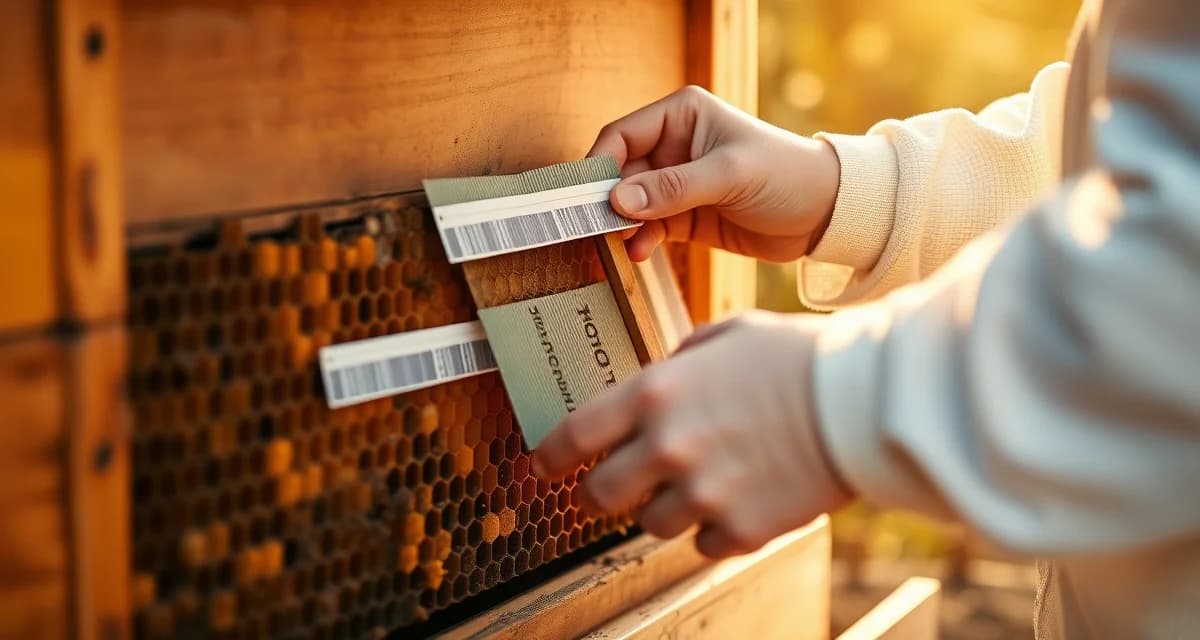
Fold the strips accordian-style and hang them between frames in the brood area. The corrugated paper structure is designed to maximize surface contact with passing bees.
HopGuard III strips are typically left in place for 30 days or until they dry out, whichever comes first. Remove dried strips promptly, they lose efficacy after drying.
You can apply up to two treatments per year. For a broodless-period program, applying once in November/December and once in January covers much of the winter period.
Step 4: Post-Treatment Count
Wait 7-10 days after removal (or after the 30-day window is complete) and do a post-treatment alcohol wash.
Calculate efficacy. During broodless periods, expect 60-85% efficacy, less than OA in the same conditions, but acceptable for rotation purposes in low-pressure situations.
During active brood season in a 4-frame colony, expect 40-60% efficacy, use this information to decide whether HopGuard achieved your management goal or whether a stronger treatment is needed.
If your post-count is still above threshold, VarroaVault will flag it and suggest a next step based on the season and your treatment history. It doesn't leave you with just a number, it connects the number to an action.
HopGuard in an Organic Operation
For USDA-certified organic honey producers, the list of approved varroa treatments is short: oxalic acid and formic acid are your two primary options, with thymol depending on your certifier. HopGuard is OMRI-listed and may be approved by some certifiers.
Check with your certifier before using any product for organic compliance purposes. Label requirements and certifier standards can differ.
Related Articles
FAQ
When is HopGuard most effective against varroa?
HopGuard is most effective when brood levels are low or absent. In a broodless winter colony, efficacy can reach 60-85%, lower than OA vaporization in the same conditions, but meaningful. During active brood season in a fully populated hive, efficacy typically falls to 40-60%, which is often insufficient as a standalone treatment for high mite loads.
How many HopGuard strips do I need per hive?
Strip count is determined by the number of frames actively covered with bees: 1 strip per 3 frames of bees, roughly. A 6-frame coverage colony needs 2 strips; a 10-frame coverage colony needs 3-4 strips. Always check current label instructions for exact dosing guidance, as they may be updated.
Can I use HopGuard when honey supers are on?
Yes. HopGuard III is labeled for use with honey supers in place. This is one of its advantages for summer maintenance treatments or in operations that prefer to avoid any treatment with super restrictions. Efficacy limitations during active brood season remain regardless of super presence.
How do I know if my varroa treatment is working?
Run a mite count 2-4 weeks after the treatment ends and compare it to your pre-treatment count. The efficacy formula is: ((pre-count - post-count) / pre-count) x 100. A result above 90% indicates effective treatment. Results below 80% should trigger investigation for possible resistance, application error, or reinfestation. Log both counts in VarroaVault to track efficacy trends across treatment cycles.
How often should I check mite levels in my hives?
At minimum, once per month (every 3-4 weeks) during the active season. Increase to every 2 weeks when counts are near threshold or after a treatment to verify it worked. In fall, monitoring frequency matters most because the window to treat before winter bees are raised is narrow. VarroaVault's monitoring reminders can be set to your preferred interval for each apiary.
What records should I keep for varroa management?
Each record should include: date of count or treatment, hive identifier, monitoring method used, number of bees sampled, mites counted, infestation percentage, treatment product name and EPA registration number, dose applied, treatment start and end dates, and PHI end date. State apiarists typically expect this level of detail during inspections. VarroaVault captures all of these fields in a single log entry.
What is HopGuard for Varroa: When to Use It and How to Track Efficacy?
HopGuard for Varroa: When to Use It and How to Track Efficacy is a practical beekeeping guide covering HopGuard III, an organic-approved varroa treatment using hop beta acids. The article explains when HopGuard works best — particularly in broodless or low-brood conditions — how its 60–75% efficacy compares to oxalic or formic acid, and how VarroaVault helps beekeepers pair mite count data with optimal HopGuard treatment timing windows for effective IPM rotation.
How much does HopGuard for Varroa: When to Use It and How to Track Efficacy cost?
The article HopGuard for Varroa: When to Use It and How to Track Efficacy is free to read on VarroaVault. HopGuard III itself is a commercially available varroa treatment product with pricing that varies by retailer and strip quantity. VarroaVault's mite tracking and treatment timing tools help you get the most out of each HopGuard application, maximizing efficacy without unnecessary product spend.
Sources
- American Beekeeping Federation (ABF)
- USDA ARS Bee Research Laboratory
- Honey Bee Health Coalition
- Penn State Extension Apiculture Program
- Project Apis m.
Use the Right Tool for the Conditions
HopGuard is a useful tool in the right circumstances. Track your counts before and after application in VarroaVault and know whether it did enough for your colony's situation. If the numbers say you need something stronger, your rotation planner will tell you what to reach for next.
Get Started with VarroaVault
The information in this guide is most useful when you have your own mite count data to apply it to. VarroaVault stores every count, flags threshold crossings automatically, and builds the treatment history you need for state inspections and effective management decisions. See pricing and free tools at varroavault.com.