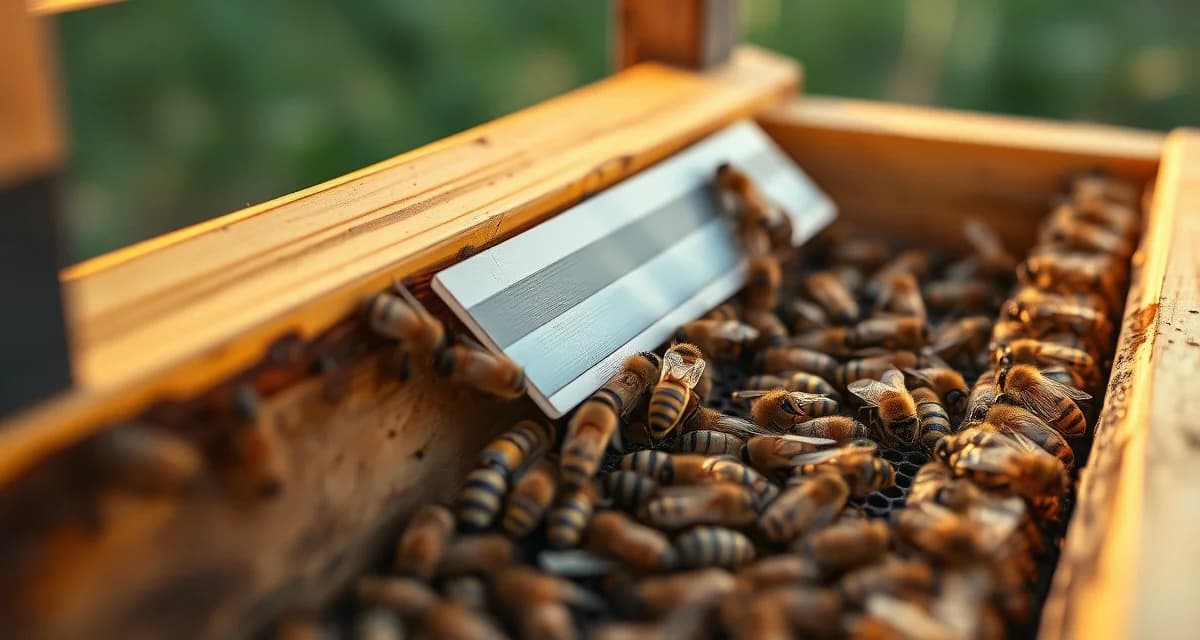
Formic Acid for Varroa Mites: MAQS and Formic Pro Guide
Formic acid is the only varroa treatment that kills mites under capped brood. Every other approved product works only on phoretic mites, mites riding on adult bees. Formic acid vapor penetrates cell cappings and reaches the mites reproducing inside.
That unique property makes MAQS (Mite-Away Quick Strips) and Formic Pro two of the most valuable tools in a rotation program, especially when brood levels are high and you need to address mites that are protected from other treatments.
MAQS achieves 90%+ efficacy in the optimal temperature range of 50-85°F. Outside that range, efficacy drops and colony risk rises.
TL;DR
- Formic acid (MAQS, Formic Pro) is one of the few treatments that penetrates capped brood to kill mites inside cells
- Apply only when temperatures are between 50-85 degrees F; above 85 degrees risks queen loss and excessive bee mortality
- MAQS uses a 7-day treatment; Formic Pro can be applied as a 14-day extended protocol
- Formic acid has no PHI for honey supers when applied according to label instructions
- Efficacy typically ranges from 70-90% depending on temperature consistency during treatment
- Track daily temperatures during formic acid application in VarroaVault to correlate temperature with efficacy outcomes
The Temperature Window Is Everything
Formic acid volatilizes, it vaporizes at ambient temperatures. Too cold and there's insufficient vapor concentration for efficacy. Too hot and you risk:
- Queen loss
- Excessive balling of bees
- Brood damage
- Colony rejection of the treatment (bees bearding outside the hive in high numbers)
The required temperature range for MAQS / Formic Pro: daytime highs between 50°F and 85°F, with nighttime lows above 50°F (for MAQS full treatment), or check Formic Pro's specific label requirements.
Before applying formic acid, check the 14-day forecast. If a heat wave is coming, delay. If temperatures are projected to drop below 50°F for extended periods during the treatment window, delay.
This temperature restriction is why formic acid is primarily a spring and fall treatment in most US regions. Summer application is possible in cooler years or higher elevations. Winter application is generally not feasible.
MAQS vs. Formic Pro: What's the Difference?
Both products contain formic acid in an evaporating pad format, but they differ in treatment duration:
| Feature | MAQS | Formic Pro |
|---------|------|-----------|
| Active ingredient | Formic acid | Formic acid |
| Treatment duration | 7 days (2 strips) | 14 days (1-2 strips per colony size) |
| Temperature range | 50-85°F | 50-85°F (check current label) |
| Honey supers allowed | Yes (check label) | Yes (check label) |
| Queen risk | Moderate at high temps | Lower (slower release) |
MAQS releases formic acid faster, completing treatment in 7 days. This means higher peak vapor concentration, more effective, but more queen risk in borderline conditions. Formic Pro releases more slowly over 14 days, with lower peak concentration and reduced queen risk.
For most situations, Formic Pro is the more forgiving option. MAQS is preferred when you need a faster treatment completion and temperatures are solidly in the middle of the acceptable range.
Step 1: Assess Your Colony Strength
Both products have application instructions that depend on colony size. Underpopulated colonies are at greater risk from formic acid treatment, the vapor concentration per bee is effectively higher.
Don't apply formic acid to:
- Packages with fewer than 4 frames of bees
- Nucs unless the label specifically addresses them
- Colonies that are already queenless or weak
For standard 8-10 frame colonies in a double-deep setup, full application rates are appropriate.
Step 2: Remove Entrance Reducers and Ensure Ventilation
Formic acid requires adequate hive ventilation to prevent vapor buildup to damaging concentrations. Before treatment:
- Remove entrance reducers
- Make sure the screened bottom board is open (if you use one)
- Do not apply to hives in full sun on warm days, direct sun + formic acid = dangerous heat buildup
Open mesh bottom boards help regulate vapor concentrations and are preferred during formic acid treatment in warmer conditions.
Step 3: Apply Strips
MAQS: Place 2 strips flat on top of the top bars of the upper brood box, toward the center. Remove paper backing. Close the hive. Leave for 7 days. Remove all strip material after 7 days.
Formic Pro: Check current label for your colony configuration. Strips are typically placed on top of the top bars. Leave for the full 14 days. Remove completely.
Wear nitrile or rubber gloves and eye protection when handling formic acid strips, the concentrated acid is corrosive.
Step 4: Monitor for Queen Loss
The most significant risk with formic acid treatment is queen loss, particularly at higher temperatures. Signs of queen issues:
- Excessive bearding (bees covering the outside of the hive) during treatment
- No eggs or young larvae visible 10-14 days after treatment completion
Check for queen presence 10-14 days after treatment by looking for eggs in central brood frames. If queenless, you have about 2-3 weeks before colony decline accelerates. Introduce a new queen or a frame of eggs and young larvae from another colony.
Queen loss rates with MAQS are typically 0-5% in optimal conditions and can rise to 10-15% in borderline temperature conditions. Factor this in when choosing timing.
Step 5: Post-Treatment Count
Wait 7-14 days after treatment completion, then do a post-treatment alcohol wash.
Calculate efficacy: ((Pre-count − Post-count) / Pre-count) × 100
Expected efficacy in optimal conditions: 85-95% depending on brood levels. Because formic acid reaches mites under capped brood, you often see better post-treatment counts than with OA extended vaporization at similar brood levels.
If efficacy is below 80%, check:
- Temperature during treatment (was there a heat event or cold snap?)
- Application (were strips placed correctly with paper backing removed?)
- Colony ventilation
- Brood levels (very heavy brood = more mites protected per cycle = lower apparent efficacy)
BeeKeepPal may let you record that you applied MAQS. It won't calculate whether the treatment reduced your mite load. VarroaVault calculates that automatically and stores the efficacy score alongside your treatment record.
Can Formic Acid Be Used With Honey Supers?
Both MAQS and Formic Pro can generally be used with honey supers in place, formic acid is a natural component of honey and doesn't result in residues at concentrations that affect honey safety or flavor. Check current label requirements, as they are updated periodically.
This is one of formic acid's major advantages over amitraz (Apivar), which requires super removal. If you hit a treatment threshold during active nectar flow and removing supers isn't practical, formic acid is one of the few options available.
FAQ
What temperature is safe to apply formic acid?
The required window is 50-85°F ambient temperature, with most applicators checking both daytime highs and nighttime lows. At the upper end (above 80°F), queen risk increases and some beekeepers prefer to delay. At the lower end (below 55°F), efficacy suffers. The middle of the range, 60-75°F, is the sweet spot. Always check the specific product label for current requirements.
Can formic acid be used with honey supers?
Yes, MAQS and Formic Pro are labeled for use with honey supers in place, which makes them uniquely valuable during nectar flow periods when Apivar isn't an option. Formic acid does not create residues in honey at treatment concentrations. Check current label requirements for any updates.
How long does MAQS take to work on varroa?
MAQS runs for 7 days. Formic Pro runs for 14 days. Full mite kill accumulates across the treatment period, with efficacy data typically assessed 7-14 days after treatment completion. Both products reach into capped brood cells, meaning mites that were protected at the start of treatment are exposed as the treatment progresses. Post-treatment counts typically show maximum efficacy at the 2-3 week mark post-treatment.
Can I use MAQS with honey supers on?
Yes. Formic acid (MAQS and Formic Pro) is approved for use with honey supers in place according to label instructions. This is one of the primary advantages of formic acid over amitraz. However, formic acid can impart off-flavors to honey if used under very high temperatures. Follow label temperature restrictions to minimize this risk.
What happens if temperatures drop below 50 degrees F during a MAQS treatment?
Formic acid vaporization slows significantly below 50 degrees F, reducing efficacy. If temperatures drop below 50 degrees F for an extended period during a MAQS or Formic Pro treatment, the treatment may not deliver its full dose. Document the temperature disruption in your records and consider running a post-treatment count sooner than normal to verify results. A repeat treatment may be needed.
Does formic acid work on mites in capped brood?
Yes, this is one of formic acid's key advantages over oxalic acid and thymol. Formic acid vapor penetrates capped brood cells and kills mites reproducing inside. This makes it more effective than oxalic acid when significant brood is present, though it also makes temperature management more critical since the active ingredient is an acid vapor.
What is Formic Acid for Varroa Mites: MAQS and Formic Pro Guide?
Formic Acid for Varroa Mites: MAQS and Formic Pro Guide is a comprehensive beekeeping resource covering how to use formic acid-based treatments to control varroa mite infestations. It explains how MAQS and Formic Pro work by penetrating capped brood cells to kill mites during reproduction — something most other treatments cannot do. The guide covers application temperature requirements (50–85°F), treatment durations, efficacy expectations of 70–90%, and honey super safety, making it an essential reference for any rotation-based mite management program.
How much does Formic Acid for Varroa Mites: MAQS and Formic Pro Guide cost?
The Formic Acid for Varroa Mites: MAQS and Formic Pro Guide is free to read on VarroaVault. The actual treatment products — MAQS and Formic Pro — are purchased separately through beekeeping suppliers, with costs varying by retailer and pack size. MAQS typically treats two hives per pack. While the guide itself costs nothing, VarroaVault offers tools to track treatment outcomes and daily temperatures during application, helping beekeepers correlate conditions with efficacy results across their apiary.
Sources
- American Beekeeping Federation (ABF)
- USDA ARS Bee Research Laboratory
- Honey Bee Health Coalition
- Penn State Extension Apiculture Program
- Project Apis m.
The Only Treatment That Reaches Under the Caps
Formic acid gives you something no other approved treatment does: access to mites in sealed cells. In a heavily brooded colony during peak season, this matters.
Track your formic acid cycles in VarroaVault and score your efficacy. If this is the right treatment for your current conditions, you'll have the data to confirm it. See how the efficacy loop works.
Get Started with VarroaVault
Formic acid's temperature requirements make timing critical. VarroaVault logs your treatment dates and the temperature window you applied in, so you can correlate conditions with efficacy outcomes over multiple seasons. Start your free trial at varroavault.com and build a treatment record that actually helps you improve results.