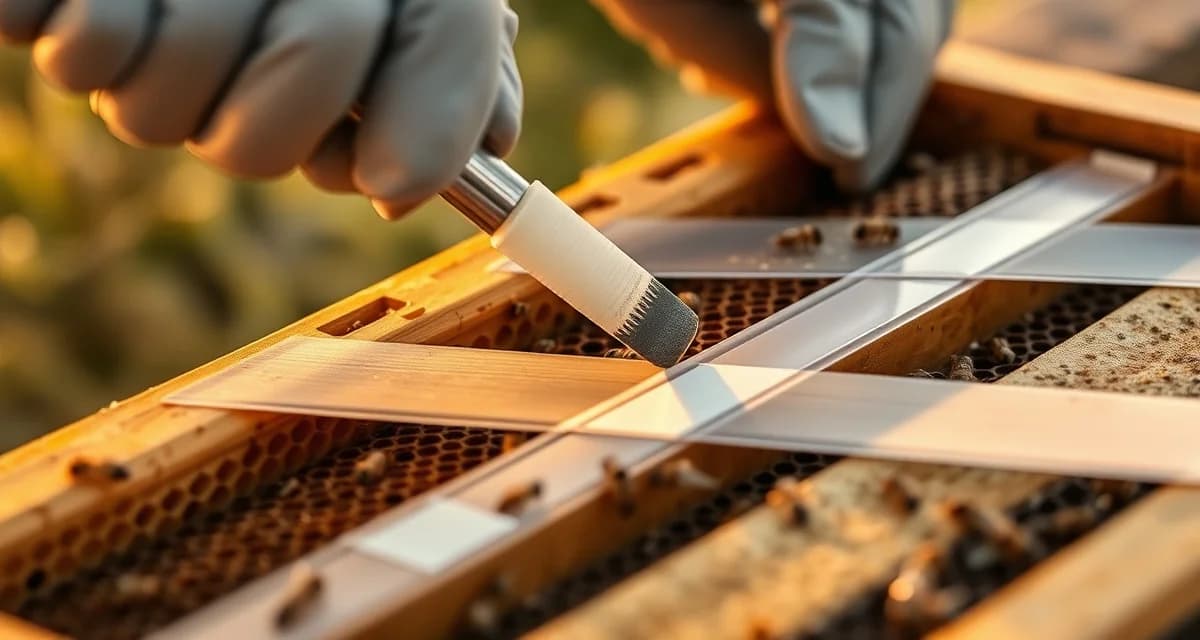
PHI for MAQS Formic Acid: Harvest Timing After Formic Treatment
MAQS is unusual among varroa treatments in two important ways. First, it has a 0-day PHI, no waiting period between treatment and harvest. Second, there's a specific restriction around honey super filling during the treatment period that's distinct from a standard PHI rule.
MAQS is unique in having both a 0-day PHI and a requirement to not fill supers during treatment.
Understanding the difference between a 0-day PHI and a during-treatment super restriction is what separates compliant MAQS use from inadvertent label violations.
TL;DR
- PHI (pre-harvest interval) is the required waiting period between the end of treatment and adding honey supers
- PHI varies by product: oxalic acid has no PHI for approved uses, MAQS has no PHI, Apivar requires supers to be off during treatment
- Applying treatments with supers on violates the label and may contaminate honey with residues
- State apiarists can ask for PHI compliance records during inspections
- Missing PHI windows is one of the most common compliance errors among small-scale beekeepers
- VarroaVault's PHI calendar blocks super-addition dates automatically based on your logged treatment dates
How the MAQS PHI Works
Formic acid is a naturally occurring compound found in honey at low levels. The EPA registration for MAQS reflects that treatment at approved doses does not raise honey formic acid levels above natural background, hence the 0-day PHI.
In practical terms, the 0-day PHI means: there is no waiting period between completing MAQS treatment and harvesting honey. This is a genuine advantage over most other varroa treatments, which require 14-day or longer PHI periods.
But the 0-day PHI doesn't mean there are no restrictions. The label specifies that honey supers should not be actively accumulating honey during the treatment period. If you're in a heavy nectar flow and supers are filling fast, MAQS treatment during that window creates a compliance question worth understanding.
What Is the MAQS PHI for Honey?
0 days. No waiting period after treatment ends before you can harvest honey.
However, the label also states that supers should not be present while MAQS strips are actively releasing formic acid, or more specifically, that honey being deposited in supers during treatment should not be harvested commercially (language varies by label version and country).
The practical interpretation that most US beekeepers and extension specialists use: supers can remain on during MAQS treatment (that's the whole advantage), but honey deposited during the active 7-day treatment period should ideally be left in the hive or considered part of the treatment-period batch rather than being extracted separately.
For most backyard and sideliner beekeepers, this distinction is invisible because honey collected over a 7-day treatment period is extracted with the rest of the super at season's end. For commercial honey producers tracking batch-specific records, it's worth understanding the label language for your jurisdiction.
Can I Leave Supers On During MAQS Treatment?
Yes. This is one of the defining features of MAQS and a primary reason beekeepers choose it during production season.
The formic acid in MAQS does not contaminate honey at treatment doses. The 0-day PHI is the EPA's confirmation of that determination. Supers can remain on the hive during the 7-day treatment period.
The restriction is that honey actively being deposited during treatment should not be extracted for commercial sale in some label interpretations. Check the current product label and your state's honey production regulations for the most precise guidance.
In practice, most US beekeepers treat with MAQS during or near a flow with supers on and harvest normally after treatment. The 0-day PHI supports this approach.
MAQS Super Restriction vs. MAQS PHI: The Difference
This distinction is subtle but important:
- PHI (0 days): No waiting period after treatment ends before harvest. You can extract honey the day MAQS treatment period concludes.
- During-treatment restriction: Honey being actively deposited during the 7-day treatment period may have label restrictions depending on jurisdiction and intended use (commercial vs. personal).
For personal beekeeping use, the 0-day PHI is the operative rule in the US and Canada. For commercial honey production, review the current label and consult your state apiarist.
MAQS super restriction alert in VarroaVault prevents harvest log entries for the treatment period regardless of PHI status, this keeps your treatment and harvest records cleanly separated in case of any audit or compliance review.
Timing MAQS for Maximum Benefit
Since MAQS can be used with supers on, it's often the preferred treatment during mid-season when mite pressure is building but taking supers off is economically painful.
Timing considerations:
Temperature window: 50-85°F (10-29.5°C) throughout the 7-day treatment period. This is often the binding constraint in summer, wait for a cool week.
Late-summer mite surge: The period between the end of the main summer flow and the start of the fall treatment window is often when MAQS shines. Supers may still be on from the tail end of a flow; mite counts are starting to climb. MAQS with supers on can knock down mites during that transition period without forcing a harvest decision.
Fall flow: If you have a fall flow (goldenrod, aster), MAQS can treat during it if temperatures cooperate. The 0-day PHI means fall flow honey isn't compromised by the treatment.
How VarroaVault Handles MAQS Super Restrictions
When you log an MAQS treatment:
- The treatment period (7 days for standard MAQS) is marked on your colony calendar
- Any harvest events logged during the treatment period generate a flag, not to stop you, but to ensure you're aware the harvest overlaps with active treatment
- After the treatment period ends, harvests log normally with no PHI restriction noted
For the pre-harvest interval comparison across all treatment types, the pre-harvest interval tracker shows each treatment's PHI and restriction status side by side. For the full MAQS application and safety protocol, see the MAQS application safety guide.
What is the MAQS PHI for honey?
The MAQS pre-harvest interval for honey is 0 days. There is no waiting period between the end of MAQS treatment and harvesting honey. This is one of the distinguishing advantages of formic acid treatments, formic acid is a naturally occurring compound in honey, and treatment at approved doses does not raise honey formic acid above natural background levels. However, the label includes specific language about honey deposited during the active treatment period, review the current label for your jurisdiction for precise guidance.
Can I leave supers on during MAQS treatment?
Yes. MAQS is labeled for use with honey supers on, which is its primary advantage over synthetic treatments that require super removal. Formic acid at MAQS doses does not contaminate honey to levels that require a post-treatment waiting period. In practice, most US beekeepers treat with MAQS during production season with supers in place and harvest normally after treatment. The 0-day PHI supports this approach.
How does VarroaVault handle MAQS super restrictions?
VarroaVault marks the MAQS treatment period on your colony calendar and flags any harvest events logged during the active 7-day treatment window, keeping your treatment and harvest records clearly separated. After treatment ends, harvests log without any PHI restriction noted. The system doesn't prevent you from logging a harvest during treatment; it ensures the overlap is visible in your records for compliance documentation purposes.
How do I know if my varroa treatment is working?
Run a mite count 2-4 weeks after the treatment ends and compare it to your pre-treatment count. The efficacy formula is: ((pre-count - post-count) / pre-count) x 100. A result above 90% indicates effective treatment. Results below 80% should trigger investigation for possible resistance, application error, or reinfestation. Log both counts in VarroaVault to track efficacy trends across treatment cycles.
How often should I check mite levels in my hives?
At minimum, once per month (every 3-4 weeks) during the active season. Increase to every 2 weeks when counts are near threshold or after a treatment to verify it worked. In fall, monitoring frequency matters most because the window to treat before winter bees are raised is narrow. VarroaVault's monitoring reminders can be set to your preferred interval for each apiary.
What records should I keep for varroa management?
Each record should include: date of count or treatment, hive identifier, monitoring method used, number of bees sampled, mites counted, infestation percentage, treatment product name and EPA registration number, dose applied, treatment start and end dates, and PHI end date. State apiarists typically expect this level of detail during inspections. VarroaVault captures all of these fields in a single log entry.
FAQ
What is PHI for MAQS Formic Acid: Harvest Timing After Formic Treatment?
PHI (Pre-Harvest Interval) for MAQS Formic Acid refers to the waiting period rules governing when you can harvest honey after using MAQS to treat varroa mites. MAQS is unique in having a 0-day PHI, meaning no waiting period is required after treatment ends before harvesting. However, there is a separate restriction: honey supers must not be allowed to fill during the active 7-day treatment window to prevent formic acid residue accumulation in marketable honey.
How much does PHI for MAQS Formic Acid: Harvest Timing After Formic Treatment cost?
MAQS Formic Acid strips are typically priced between $20–$40 per treatment pack (covering one hive) depending on supplier and quantity purchased. The PHI rules themselves carry no cost — they are label compliance requirements. However, non-compliance can be costly: contaminated honey batches may be unmarketable, and inspectors can require documentation of PHI adherence, potentially affecting your ability to sell honey commercially.
How does PHI for MAQS Formic Acid: Harvest Timing After Formic Treatment work?
MAQS works by slowly volatilizing formic acid from pads placed in the brood area over 7 days. This vapor penetrates capped brood cells and kills varroa mites on contact, including mites under cappings — something most treatments cannot achieve. The 0-day PHI works because formic acid is naturally present in honey and dissipates completely. The during-treatment super restriction prevents elevated residue levels from accumulating while the pads are actively off-gassing.
What are the benefits of PHI for MAQS Formic Acid: Harvest Timing After Formic Treatment?
The primary benefit of MAQS's 0-day PHI is harvest flexibility. Unlike Apivar (amitraz), which requires supers to be completely removed during treatment, MAQS allows beekeepers to treat during honey flows without losing the entire season's production. You can treat, remove the pads after 7 days, and harvest immediately. It also penetrates capped brood, offering efficacy advantages over contact-only treatments that cannot reach mites under cappings.
Who needs PHI for MAQS Formic Acid: Harvest Timing After Formic Treatment?
Any beekeeper using MAQS Formic Acid strips needs to understand PHI rules — from backyard hobbyists to commercial operations. It is especially critical for those selling honey at farmers markets, to retailers, or through co-ops, where residue testing or inspection records may be required. Small-scale beekeepers are statistically more likely to commit inadvertent label violations around super timing, making PHI literacy essential regardless of operation size.
How long does PHI for MAQS Formic Acid: Harvest Timing After Formic Treatment take?
MAQS treatment itself runs 7 days — the pads remain in the hive for the full treatment window. After pad removal, the PHI is 0 days, so harvesting can begin immediately. The key timing rule is during, not after: supers must not be filling with capped honey during the 7-day treatment period. Total compliance window from strip placement to harvest-ready status is therefore 7 days, assuming supers are properly managed throughout.
What should I look for when choosing PHI for MAQS Formic Acid: Harvest Timing After Formic Treatment?
When managing MAQS PHI compliance, look for three things: accurate treatment log dates so your 7-day window is clearly documented, temperature suitability (MAQS requires ambient temps of 50–85°F for safe efficacy), and super status during treatment. Avoid treating during strong nectar flows when supers are filling rapidly. Using a PHI tracking tool like VarroaVault's calendar, which auto-blocks super-addition dates based on logged treatments, reduces the risk of accidental label violations.
Is PHI for MAQS Formic Acid: Harvest Timing After Formic Treatment worth it?
Yes — for beekeepers treating during or near honey flows, MAQS's 0-day PHI is genuinely valuable. It eliminates the harvest delay required by most other varroa treatments and penetrates capped brood for superior mite knockdown. The compliance trade-off is managing super filling during the 7-day treatment window, which requires planning but is straightforward. For anyone balancing varroa control with honey production, MAQS offers one of the most harvest-friendly compliance profiles of any approved treatment.
Sources
- American Beekeeping Federation (ABF)
- USDA ARS Bee Research Laboratory
- Honey Bee Health Coalition
- Penn State Extension Apiculture Program
- Project Apis m.
Get Started with VarroaVault
PHI compliance is not complicated when your treatment dates and harvest windows are tracked in the same system. VarroaVault automatically calculates PHI end dates for every treatment you log and blocks honey super addition during restricted periods. See pricing and free tools at varroavault.com.