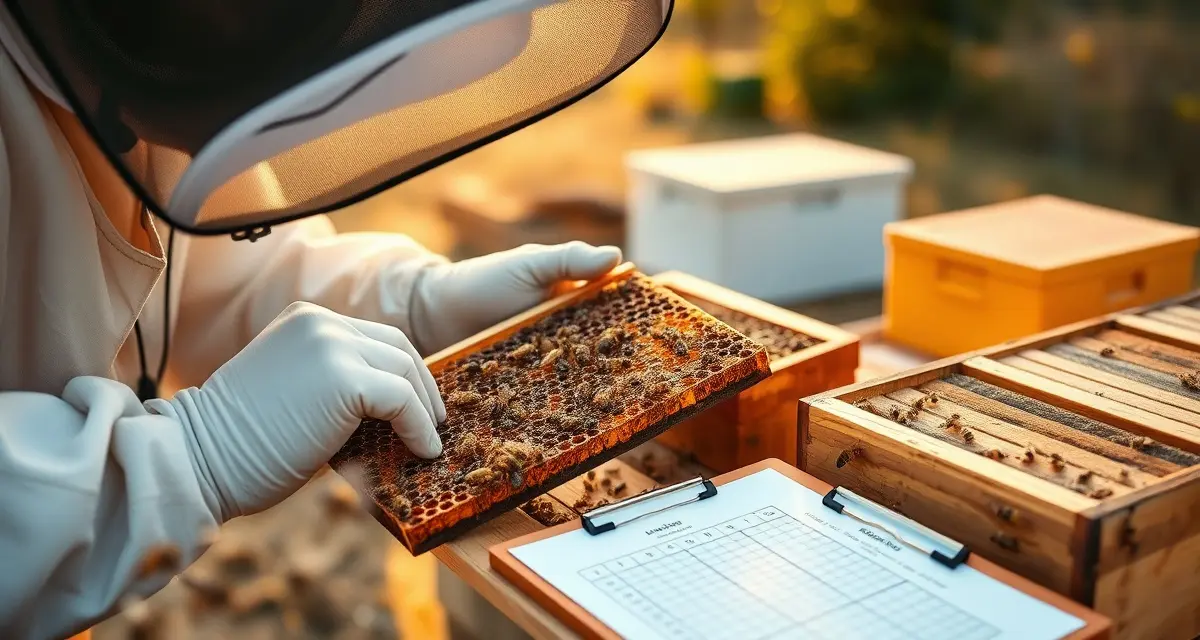
Tracking Pre-Harvest Intervals for Honey Production After Varroa Treatments
Pre-harvest intervals (PHI) are the legally mandated waiting periods between the removal of a varroa treatment and the placement of honey supers for harvest. Violating these intervals risks contaminating your honey with chemical residues, which is a food safety issue and a potential label violation with serious legal consequences. For beekeepers selling honey commercially, PHI compliance is non-negotiable.
What Each Treatment Requires
Each registered varroa treatment has its own PHI. These are specified on the product label, which is a legally binding document. Using the product in any way not consistent with the label is illegal. The intervals below are based on current US registrations and may change. Always verify against the current label before use.
Apivar (amitraz): Honey supers must not be on the hive at any time during the treatment period. Strips must be completely removed before supers are placed for harvest. There is no fixed PHI in days after strip removal, but the product must never be present in the hive while harvestable honey is being produced.
MAQS (formic acid): MAQS has the significant advantage of being approved for use with honey supers on the hive. However, it should not be applied within the 72-hour window immediately before you intend to harvest. Supers placed during or after MAQS treatment can be harvested. Always read the current label for updated guidance.
Apiguard (thymol gel): Honey supers must not be present during treatment. Apiguard is a fall treatment applied after the last super comes off, and supers should not be added until treatment is complete.
Api Life Var (thymol wafers): Similar to Apiguard. No supers during treatment. Remove all material before replacing supers.
Hopguard II (beta acids): Strips must be removed before honey supers are added. Follow current label for timing.
Oxalic acid (OAV): Oxalic acid occurs naturally in honey. Oxalic acid vaporization is approved for use with supers on in some formulations, but local regulations and label language vary. Confirm current label status before applying with supers in place.
Why PHI Tracking Fails Without a System
In the field, pre-harvest interval management is easy to lose track of. You might apply Apivar strips in late August, intend to remove them in October, but get busy and leave them in a few extra weeks. The strips come out in early November. You plan to put supers on in April. That seems like plenty of time. But if you did not record the strip removal date, you are working from memory. Memory of treatment dates from months ago is unreliable.
The more common failure is a beekeeper who applies Apivar in August, removes strips in October, and then gets a warm spell in November or December that triggers a quick nectar flow. Excited to capture the flow, supers go on. Strip removal date was October 15. Was that actually before supers went on? Only the records know for sure.
A second common failure occurs when multiple people manage hives on the same account. One person applies treatment in a yard. Another person sees the yard looks ready for supers and adds them without checking whether treatment is still active or when strips were removed.
How to Track PHI Effectively
A PHI tracker works by recording the treatment end date for each hive or yard and calculating the earliest allowable date for honey super placement. Every treatment event logged should generate an automatic note about when supers can go back on.
With Apivar, the relevant date is strip removal date. With MAQS, the relevant date is treatment completion. With thymol products, the relevant date is when the last dose is removed. The system should enforce a visible hold on honey super placement until the appropriate date has passed.
VarroaVault's treatment log captures removal dates and product type, and flags hives where the PHI has not yet cleared. The treatment calendar builder integrates PHI dates into your seasonal planning so honey production timing and treatment timing are managed as a single coordinated schedule rather than two separate mental tracks.
For Multi-Apiary Operations
Managing PHI across multiple yards is where individual memory becomes completely inadequate. A yard treated on September 1 and a yard treated on October 3 have different clearance dates. If you are also running MAQS in some yards but Apivar in others, the rules are different. A systematic record that shows the PHI status of every yard at a glance is the only reliable way to manage this at scale.
The cost of a PHI violation in terms of honey recalls, potential fines, and reputational damage to your business is far higher than the modest investment in a tracking system that prevents it from happening.
FAQ
What is Tracking Pre-Harvest Intervals for Honey Production After Varroa Treatments?
Pre-harvest intervals (PHI) are legally mandated waiting periods between removing a varroa treatment and placing honey supers for harvest. Each registered treatment — such as Apivar, MAQS, or oxalic acid products — carries its own PHI specified on the product label. For beekeepers, tracking these intervals is essential to ensure honey is free of chemical residues, comply with food safety regulations, and avoid serious legal consequences when selling commercially.
How much does Tracking Pre-Harvest Intervals for Honey Production After Varroa Treatments cost?
Tracking pre-harvest intervals costs nothing beyond the time and discipline to record treatment dates and removal dates. A simple hive log, spreadsheet, or beekeeping app is all you need. The real cost of not tracking PHI can be significant: contaminated honey may need to be discarded, and commercial sellers risk label violations, fines, or loss of sales accounts. The investment in record-keeping pays for itself immediately.
How does Tracking Pre-Harvest Intervals for Honey Production After Varroa Treatments work?
PHI tracking works by recording the exact date a varroa treatment is applied and the date it is removed, then calculating when honey supers can safely be placed or harvest can occur. Each product label specifies the required interval. For example, Apivar strips must be fully removed before supers go on, while MAQS allows supers during treatment but not within 72 hours of a harvest. You simply wait until the interval has passed before proceeding.
What are the benefits of Tracking Pre-Harvest Intervals for Honey Production After Varroa Treatments?
The primary benefit is food safety: honey harvested after respecting PHIs is free of chemical residues, protecting consumers and your reputation. For commercial beekeepers, PHI compliance protects you from regulatory violations and product recalls. It also builds buyer trust, supports organic or clean-label certifications, and gives you documented proof of responsible practices if your honey is ever tested or audited by a retailer or inspector.
Who needs Tracking Pre-Harvest Intervals for Honey Production After Varroa Treatments?
Any beekeeper who applies registered chemical varroa treatments and harvests honey needs to track PHIs. This is especially critical for hobbyists selling at farmers markets, commercial producers supplying retailers, and anyone pursuing certifications. Even backyard beekeepers who share or gift honey should follow PHIs as a best practice. If you use Apivar, MAQS, oxalic acid, or any other registered miticide, PHI compliance applies to you.
How long does Tracking Pre-Harvest Intervals for Honey Production After Varroa Treatments take?
The time required depends on the treatment used. Apivar strips must remain in the hive for a minimum of 6–8 weeks, and supers cannot be present during that period. MAQS treatments run 7 days. Oxalic acid dribble or vaporization intervals vary by product and application method. In all cases, the PHI clock starts when the treatment is removed or completed, and the waiting period before harvest typically ranges from zero to several days depending on the product.
What should I look for when choosing Tracking Pre-Harvest Intervals for Honey Production After Varroa Treatments?
Look for the PHI listed directly on the current product label — this is the legally binding document and supersedes any third-party sources. Verify the label reflects the current US registration, as PHIs can change between product versions. Choose treatments whose PHI fits your harvest schedule: MAQS is useful when supers are on, while Apivar suits late-season treatment after the honey flow. A good hive record system is essential for accurate tracking across multiple colonies.
Is Tracking Pre-Harvest Intervals for Honey Production After Varroa Treatments worth it?
Yes, tracking PHIs is absolutely worth it. The downside of skipping it — contaminated honey, regulatory violations, damaged buyer relationships, or a destroyed batch — far outweighs the minimal effort of logging treatment and removal dates. For commercial beekeepers, it is non-negotiable. For hobbyists, it is simply responsible practice. A consistent record-keeping habit protects your bees, your customers, and your operation with very little overhead.