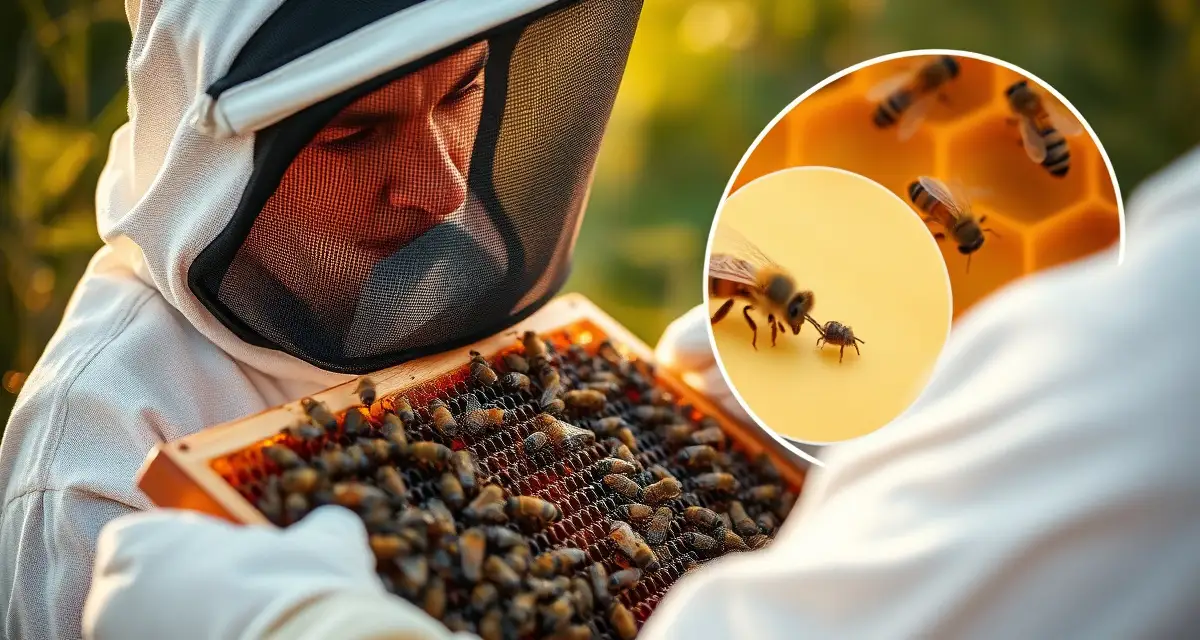
Varroa Treatment After Honey Harvest: The August Window
Colonies treated immediately after super removal in August have the strongest winter bee cohort of any treatment timing. That's not a coincidence: August is when the overlap between honey harvest completion and pre-winter mite management creates the optimal treatment window.
The moment your supers come off, your options open up. You're no longer restricted by PHI requirements on products like Apivar. Your hive has less traffic and is reorienting to the post-flow period. And you still have time, with brood being raised in August, to protect the bees that will form your winter cluster.
TL;DR
- PHI (pre-harvest interval) is the required waiting period between the end of treatment and adding honey supers
- PHI varies by product: oxalic acid has no PHI for approved uses, MAQS has no PHI, Apivar requires supers to be off during treatment
- Applying treatments with supers on violates the label and may contaminate honey with residues
- State apiarists can ask for PHI compliance records during inspections
- Missing PHI windows is one of the most common compliance errors among small-scale beekeepers
- VarroaVault's PHI calendar blocks super-addition dates automatically based on your logged treatment dates
Why August Super Removal and Mite Treatment Are Linked
The connection is timing. Winter bees (the long-lived bees that form the winter cluster and survive through spring) are primarily raised from brood laid in late July through September. A queen laying in August is laying the eggs that become winter bees.
Varroa mites inside those August brood cells damage developing bees by feeding on fat bodies and vectoring viruses. A winter bee parasitized by varroa in the pupal stage emerges with reduced immune function, lower fat reserves, and shorter lifespan. These are exactly the bees you need to survive 4-6 months of winter.
Treating immediately after super removal addresses this problem at the right time. A treatment started in early August, when mites are still actively reproducing in brood, protects the late-August and September brood from a high-mite environment.
Waiting until September costs you several weeks of winter bee production under elevated mite pressure. Those bees are already compromised by the time you treat.
Which Treatment Is Best Right After Super Removal
Best option in most situations: Apivar (amitraz strips)
With supers off, Apivar is your highest single-treatment efficacy option. Two strips per brood box, installed in the brood area. Leave for 42-56 days. Day-42 efficacy count required before removal.
Apivar works regardless of temperature, which matters in August when daytime highs can still be in the 80s-90s. The strips work slowly and systematically, knocking down mites over the full treatment period.
Best option if you want to avoid amitraz or have resistance concerns: OA vaporization extended protocol
Three to five vaporizations spaced 5-7 days apart. With brood present in August, the extended protocol is necessary for good efficacy. A single vaporization in August will achieve only 40-60% because most mites are inside capped brood.
The extended protocol requires more visits (five trips to the apiary over 3-4 weeks) but achieves comparable efficacy to Apivar without amitraz exposure.
Best option if you're in the temperature window (50-85°F): Formic Pro or MAQS
Both formic acid options can be used with supers on per their labels, but if supers are already off, they're even simpler to manage. Formic acid penetrates capped brood, making it effective against mites in the reproductive phase. The temperature window (not to exceed 85°F) can be a limiting factor in southern states in August.
Not recommended for August post-harvest: OA dribble
Dribble is only 40-50% effective when brood is present. In August, your colony almost certainly has brood. Save the dribble for the confirmed broodless period in October or November.
Counting Before You Treat
The ideal sequence:
- Remove supers (log the harvest event in VarroaVault).
- Perform an alcohol wash within 2-3 days of super removal.
- Log the count. VarroaVault records this as your pre-treatment baseline.
- If count is at or above threshold (2% for pre-winter, 3% during active season), initiate treatment immediately.
- Log the treatment.
- Set a reminder for the post-treatment efficacy count (day 42 for Apivar, 7-14 days after completion for OA or formic).
The pre-treatment count matters for two reasons: it establishes whether treatment is truly needed (some colonies, particularly VSH genetics, may still be below threshold in August) and it creates the baseline for efficacy calculation.
PHI Management After Harvest
When your supers come off, your PHI obligation from any previous treatments should already be resolved. If you're tracking PHI in VarroaVault and a PHI is still active when you remove supers, the dashboard will flag it. In that case, don't reinstall supers for any fall flow until the PHI clears.
For the August treatment itself: if you're using Apivar, the PHI restriction means no supers can go back on until strips are removed and the post-treatment interval has passed. If you're targeting a late-summer or fall honey flow with late wildflower or goldenrod, plan your treatment start date so strips are out before those supers need to go back on.
VarroaVault's harvest log triggers a notification recommending a mite count and treatment window assessment within 2 weeks of any logged harvest event.
Frequently Asked Questions
When should I treat after removing my honey supers?
Start treatment within 1-2 weeks of super removal, ideally immediately after confirming your mite count. The post-harvest window in August is optimal because you have full treatment product options (including Apivar without PHI conflicts), brood is still being raised for winter bee production, and you have enough time for a full treatment cycle before your winter preparation period begins.
Which treatment is best right after super removal in August?
Apivar is the most straightforward choice after super removal: strip installation is simple, it works in any temperature, and it achieves 90-95% efficacy by day 42. If you have amitraz resistance concerns or are rotating treatments, OA vaporization extended protocol (3-5 applications, 5-7 days apart) achieves comparable efficacy and avoids amitraz exposure. Formic acid options work well if temperatures stay below 85°F. Avoid OA dribble in August since brood is almost certainly present.
Does VarroaVault notify me to treat after I log a honey harvest?
Yes. Logging a harvest event in VarroaVault triggers a notification recommending a mite count and treatment window assessment within the following 2 weeks. The notification references your last logged count date to help you assess whether a fresh count is needed or whether a recent count provides adequate baseline data for a treatment decision.
How do I know if my varroa treatment is working?
Run a mite count 2-4 weeks after the treatment ends and compare it to your pre-treatment count. The efficacy formula is: ((pre-count - post-count) / pre-count) x 100. A result above 90% indicates effective treatment. Results below 80% should trigger investigation for possible resistance, application error, or reinfestation. Log both counts in VarroaVault to track efficacy trends across treatment cycles.
How often should I check mite levels in my hives?
At minimum, once per month (every 3-4 weeks) during the active season. Increase to every 2 weeks when counts are near threshold or after a treatment to verify it worked. In fall, monitoring frequency matters most because the window to treat before winter bees are raised is narrow. VarroaVault's monitoring reminders can be set to your preferred interval for each apiary.
What records should I keep for varroa management?
Each record should include: date of count or treatment, hive identifier, monitoring method used, number of bees sampled, mites counted, infestation percentage, treatment product name and EPA registration number, dose applied, treatment start and end dates, and PHI end date. State apiarists typically expect this level of detail during inspections. VarroaVault captures all of these fields in a single log entry.
What is Varroa Treatment After Honey Harvest: The August Window?
The August Window refers to the optimal period for varroa mite treatment immediately after honey supers are removed following the summer harvest. Once supers are off, PHI (pre-harvest interval) restrictions no longer apply, giving beekeepers access to the full range of treatments including Apivar. Treating during this window targets mites while brood is still being raised, protecting the winter bee cohort that will sustain the colony through cold months.
How much does Varroa Treatment After Honey Harvest: The August Window cost?
Varroa treatment itself is not a paid service — it refers to a timing strategy any beekeeper can apply. The cost depends on which treatment product you choose: oxalic acid is inexpensive, while strip-based treatments like Apivar cost more per application. VarroaVault offers a free PHI calendar tool that automatically calculates compliant treatment and super-addition windows based on your logged treatment dates.
How does Varroa Treatment After Honey Harvest: The August Window work?
After supers are removed in August, you apply your chosen varroa treatment according to label instructions. Products like Apivar (amitraz strips) are placed between brood frames and left for the full treatment duration. Because supers are off, there is no honey contamination risk. The treatment reduces the mite load on adult bees and emerging brood, so the long-lived winter bees raised in late August and September start life with lower mite exposure.
What are the benefits of Varroa Treatment After Honey Harvest: The August Window?
Treating immediately after the August harvest produces the strongest winter bee cohort of any treatment timing. Mite loads are reduced before the critical window of winter bee development, improving colony survival rates. It also keeps you PHI-compliant, avoiding honey contamination and passing state apiary inspections. Acting in August rather than waiting until autumn gives treatments more time to work while brood is still present, maximizing effectiveness before the colony tightens its cluster.
Who needs Varroa Treatment After Honey Harvest: The August Window?
Any beekeeper who harvests honey and overwinters colonies benefits from understanding the August Window. It is especially important for small-scale beekeepers, who account for the highest rate of PHI compliance errors. If you use Apivar or other treatments that require supers to be off, timing treatment to the post-harvest period is both a regulatory requirement and a best practice for colony health heading into winter.
Related Articles
Sources
- American Beekeeping Federation (ABF)
- USDA ARS Bee Research Laboratory
- Honey Bee Health Coalition
- Penn State Extension Apiculture Program
- Project Apis m.
Get Started with VarroaVault
The information in this guide is most useful when you have your own mite count data to apply it to. VarroaVault stores every count, flags threshold crossings automatically, and builds the treatment history you need for state inspections and effective management decisions. See pricing and free tools at varroavault.com.