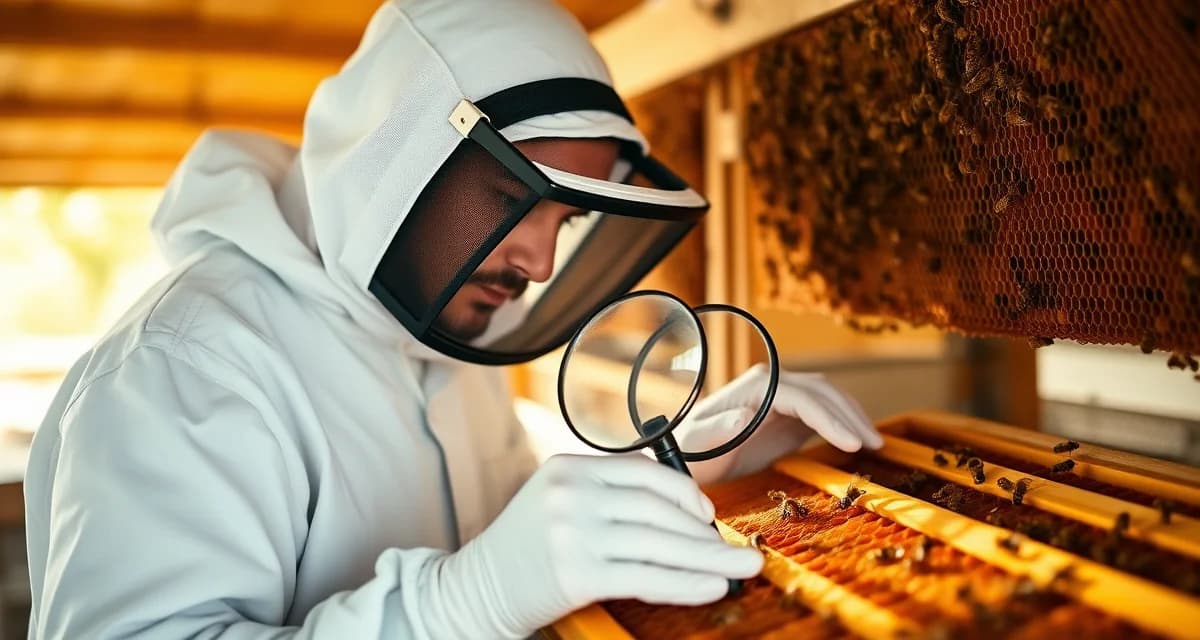
PHI Compliance FAQ: 20 Questions About Harvest Safety After Treatment
The most common PHI compliance mistake is calculating PHI from application date instead of strip removal date for Apivar and Apistan. That error can lead to honey being harvested weeks before it's legally permissible -- not a problem you want to discover during an inspection.
This FAQ answers the 20 most common PHI questions from beekeepers. The pre-harvest interval tracker in VarroaVault calculates PHI automatically for every logged treatment.
TL;DR
- PHI (pre-harvest interval) is the required waiting period between the end of treatment and adding honey supers
- PHI varies by product: oxalic acid has no PHI for approved uses, MAQS has no PHI, Apivar requires supers to be off during treatment
- Applying treatments with supers on violates the label and may contaminate honey with residues
- State apiarists can ask for PHI compliance records during inspections
- Missing PHI windows is one of the most common compliance errors among small-scale beekeepers
- VarroaVault's PHI calendar blocks super-addition dates automatically based on your logged treatment dates
Basic PHI Concepts
1. What is PHI?
PHI stands for pre-harvest interval. It's the minimum time that must pass between the last treatment application (or treatment removal, for strip products) and harvesting honey from treated hives. PHI is a federal label requirement -- it's not a guideline or a suggestion.
2. Why does PHI exist?
PHI ensures that any treatment residue has dissipated to levels below the maximum residue limit (MRL) established by the EPA for that product. Harvesting honey before PHI clearance can result in adulterated honey -- honey with pesticide residues above legal limits -- which is a food safety issue and a legal one.
3. What happens if I harvest honey before PHI clears?
You've produced adulterated honey under federal law. If the honey is sold, it's a food safety violation. If it's identified during a regulatory inspection, the honey may be confiscated and you may face fines. For commercial operations selling to buyers who conduct residue testing, early harvest can result in rejected loads and loss of contracts.
4. Does PHI apply to honey I keep for personal use?
Legally, PHI applies to all honey from treated hives regardless of whether you sell it. In practice, personal-use honey from a single hive is unlikely to be tested or reviewed. But the legal standard is the same -- PHI is a federal label requirement.
PHI by Product
5. What is the PHI for Apivar (Amitraz)?
Apivar has a 14-day PHI calculated from the date the strips are removed, not the date they were applied. For a standard 42-56 day treatment course, this means your total waiting period from application date is 56-70 days minimum before harvest.
6. What is the PHI for Apistan (Tau-Fluvalinate)?
Apistan has a 30-day PHI calculated from strip removal. Total from application: 72-86 days minimum.
7. What is the PHI for MAQS (Formic Acid)?
MAQS has 0-day PHI for honey. You can harvest honey from hives treated with MAQS with no waiting period. This is one of the advantages of formic acid treatments during active flow.
8. What is the PHI for Formic Pro (Formic Acid)?
Formic Pro has 0-day PHI for honey. Same as MAQS -- no waiting period required.
9. What is the PHI for Api-Bioxal (Oxalic Acid)?
Api-Bioxal has 0-day PHI. You can harvest honey immediately after treatment.
10. What is the PHI for Apiguard (Thymol)?
Apiguard label requires that honey supers be removed 2 weeks before treatment begins (not after). Check the current label -- requirements have been updated over time. Do not add honey supers until 2 weeks after the last Apiguard tray is removed.
11. What is the PHI for ApiLife VAR (Thymol Blend)?
ApiLife VAR requires removing honey supers before application. Follow the current label for the waiting period before reinstalling supers. Generally, do not add supers until the treatment is complete and at least 1-2 weeks have passed.
12. What is the PHI for HopGuard 3 (Hop Beta Acids)?
HopGuard 3 has 0-day PHI and is approved for use with supers on in most states. Check your state-specific requirements -- some states have added restrictions on super-on use.
13. What is the PHI for CheckMite+ (Coumaphos)?
CheckMite+ strips must be removed before supers are installed and has PHI restrictions beyond just removal timing. Follow the label carefully; CheckMite+ has the most complex PHI requirements of any registered product.
Calculation Questions
14. For Apivar, do I calculate PHI from when I put the strips in or when I take them out?
From when you take them out. This is the most common calculation error. If strips go in August 1 and come out September 22 (42 days), your PHI period of 14 days starts September 22. Supers safe after October 6.
15. If I leave Apivar strips in longer than 42 days, does PHI change?
PHI is still 14 days from removal. If you leave strips in for 56 days instead of 42, the PHI calculation is the same from the removal date. Your total time from application to harvest is 56 + 14 = 70 days instead of 42 + 14 = 56 days.
16. If I apply MAQS with supers on, when can I harvest?
Immediately. MAQS has 0-day PHI and is approved for use with supers on. Honey in supers at the time of MAQS application is harvestable with no waiting period.
17. Can I put supers on during an Apivar treatment?
No. Apivar requires supers to be off the hive during the treatment period. Supers should be removed before strip installation and not reinstalled until 14 days after strip removal.
18. My Apivar treatment ran long and my fall flow is starting -- what do I do?
Remove the strips immediately and start your 14-day clock. If the fall flow starts before your PHI clears, don't add supers until the PHI period ends. You'll miss some of the early fall flow, but that's the consequence of the late treatment timing. VarroaVault's PHI tracker will show you exactly when supers can safely go back on.
VarroaVault PHI Features
19. Does VarroaVault calculate PHI from application date or removal date?
VarroaVault calculates PHI correctly based on the product's label requirements. For strip products (Apivar, Apistan), PHI is calculated from the strip removal date, which is a separate log entry from the application date. When you log strip removal, VarroaVault immediately updates your PHI calendar showing the earliest harvest date. For products with application-date PHI, the calculation runs from the application entry.
20. What is the PHI for each registered varroa treatment?
A complete PHI reference is in VarroaVault's treatment product glossary: Api-Bioxal (0 days), MAQS (0 days), Formic Pro (0 days), HopGuard (0 days), Apivar (14 days from strip removal), Apistan (30 days from strip removal), Apiguard (add supers 2+ weeks after last tray removal), ApiLife VAR (follow label), CheckMite+ (follow label carefully). For current label requirements, always check the current EPA-approved label for the specific product you have -- labels can be updated.
Frequently Asked Questions
What is PHI and why does it matter for honey production?
PHI (pre-harvest interval) is the federally mandated waiting period between treatment application or completion and honey harvest. It ensures that residue levels in honey drop below EPA maximum residue limits before harvest. Harvesting before PHI clearance produces adulterated honey -- a food safety violation for commercial producers and a legal risk for all beekeepers. PHI periods range from 0 days (for organic acid treatments like OA and formic acid) to 30+ days for synthetic acaricide strip products calculated from strip removal date.
Does VarroaVault calculate PHI from application date or removal date?
VarroaVault calculates PHI from the correct date for each product type. For Apivar and Apistan, PHI runs from strip removal (logged as a separate entry). For MAQS and Formic Pro, PHI is 0 days from application. For Api-Bioxal, PHI is 0 days. The system prevents the most common error -- calculating from application date instead of removal date for strip products -- by requiring a separate removal log entry and calculating PHI automatically from that date.
What is the PHI for each registered varroa treatment?
PHI by product: Api-Bioxal (0 days), MAQS/Formic acid (0 days), Formic Pro (0 days), HopGuard 3 (0 days), Apivar (14 days from strip removal), Apistan (30 days from strip removal), Apiguard (supers off during treatment + follow label for reinstallation timing), ApiLife VAR (follow label). Always verify against the current EPA label for your specific product, as labels can be updated. VarroaVault's product database is updated when label changes occur.
How do I know if my varroa treatment is working?
Run a mite count 2-4 weeks after the treatment ends and compare it to your pre-treatment count. The efficacy formula is: ((pre-count - post-count) / pre-count) x 100. A result above 90% indicates effective treatment. Results below 80% should trigger investigation for possible resistance, application error, or reinfestation. Log both counts in VarroaVault to track efficacy trends across treatment cycles.
How often should I check mite levels in my hives?
At minimum, once per month (every 3-4 weeks) during the active season. Increase to every 2 weeks when counts are near threshold or after a treatment to verify it worked. In fall, monitoring frequency matters most because the window to treat before winter bees are raised is narrow. VarroaVault's monitoring reminders can be set to your preferred interval for each apiary.
What records should I keep for varroa management?
Each record should include: date of count or treatment, hive identifier, monitoring method used, number of bees sampled, mites counted, infestation percentage, treatment product name and EPA registration number, dose applied, treatment start and end dates, and PHI end date. State apiarists typically expect this level of detail during inspections. VarroaVault captures all of these fields in a single log entry.
What is PHI Compliance FAQ: 20 Questions About Harvest Safety After Treatment?
PHI Compliance FAQ: 20 Questions About Harvest Safety After Treatment is a practical reference guide for beekeepers covering pre-harvest interval rules for common varroa treatments like Apivar, Apistan, MAQS, and oxalic acid. It explains the legally required waiting periods between treatment and honey harvest, clarifies the most common compliance mistakes, and outlines what state apiarists may check during inspections. The article is designed to help small-scale and commercial beekeepers avoid contaminated honey and regulatory violations.
How much does PHI Compliance FAQ: 20 Questions About Harvest Safety After Treatment cost?
The article itself is free to read on VarroaVault. The platform's PHI tracking tools, including the pre-harvest interval tracker and automated PHI calendar that blocks super-addition dates based on logged treatments, are available through a VarroaVault account. Pricing for premium features varies by subscription tier. There is no cost to access the core FAQ content, making it a useful starting point for any beekeeper researching treatment compliance.
How does PHI Compliance FAQ: 20 Questions About Harvest Safety After Treatment work?
The guide works as a question-and-answer reference covering 20 of the most common PHI compliance questions. Each answer explains the rules for a specific scenario—such as when to start counting the PHI window, what to do if supers were left on during treatment, or how oxalic acid differs from strip-based treatments. VarroaVault's PHI tracker integrates with the concepts covered, automatically calculating compliant harvest dates when treatments are logged.
What are the benefits of PHI Compliance FAQ: 20 Questions About Harvest Safety After Treatment?
Using this guide helps beekeepers avoid the most costly PHI mistake: harvesting honey before the legally required waiting period ends. Benefits include understanding product-specific rules, avoiding pesticide residue contamination, staying prepared for state apiarist inspections, and having a reliable reference when treatment timing questions arise mid-season. For users of VarroaVault's tracker, the guide reinforces how automated PHI calculations protect both honey quality and legal compliance.
Who needs PHI Compliance FAQ: 20 Questions About Harvest Safety After Treatment?
Any beekeeper using chemical varroa treatments—whether hobbyist or commercial—needs to understand PHI compliance. It is especially relevant for those using Apivar or Apistan, where strip removal timing is commonly miscalculated. Small-scale beekeepers are cited as particularly prone to PHI errors. Beekeepers in states with active apiary inspection programs, or those selling honey commercially, have the most to gain from understanding and documenting their PHI compliance correctly.
Sources
- American Beekeeping Federation (ABF)
- USDA ARS Bee Research Laboratory
- Honey Bee Health Coalition
- Penn State Extension Apiculture Program
- Project Apis m.
Get Started with VarroaVault
PHI compliance is not complicated when your treatment dates and harvest windows are tracked in the same system. VarroaVault automatically calculates PHI end dates for every treatment you log and blocks honey super addition during restricted periods. See pricing and free tools at varroavault.com.