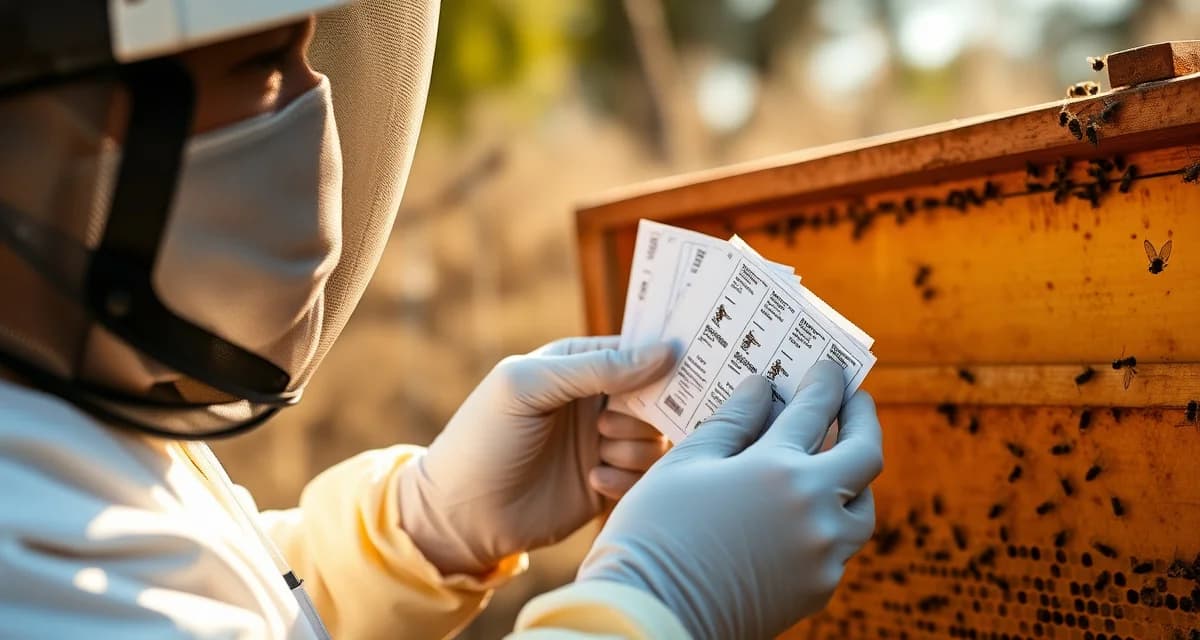
Amitraz Safety for Beekeepers: Apivar Strip Handling and Disposal
Amitraz is a monoamine oxidase inhibitor. Accidental human exposure requires immediate medical attention. That sentence belongs at the top of this guide, not buried in fine print, because most beekeepers treating with Apivar strips are not fully aware of how serious amitraz exposure is compared to other varroa treatment options.
Apivar is an effective, well-used amitraz treatment, and the vast majority of beekeepers use it without incident. But that's because proper PPE and careful handling prevent exposure, not because the chemical is low-risk. Understanding what amitraz does and why handling protocols matter keeps it in the safe-and-effective category.
TL;DR
- Amitraz requires a respirator, not just a dust mask, during Apivar strip handling
- Use nitrile gloves at minimum; disposable coveralls are recommended for extended handling
- Amitraz is toxic to dogs -- keep pets away from hive equipment during and after treatment
- Dispose of used strips according to label instructions; do not burn or leave near animals
- PPE requirements for amitraz are stricter than for oxalic acid or thymol treatments
- Log treatment dates and PPE notes in VarroaVault to maintain a complete safety record
What Amitraz Is and How It Works
Amitraz is an acaricide (specifically a formamidine) that disrupts the central nervous system of arachnids including varroa mites through monoamine oxidase inhibition. It's highly effective against varroa at the doses in Apivar strips.
The mechanism that makes it toxic to mites also creates hazards for other organisms including humans, mammals, and horses in particular. Horses are significantly more sensitive to amitraz toxicity than most other species, which is relevant for beekeepers who keep horses near treated apiaries or who may have amitraz residue on equipment that a horse contacts.
In humans, amitraz exposure can cause: central nervous system depression, bradycardia (slowed heart rate), drowsiness, vomiting, and in serious exposures, coma. The effects of monoamine oxidase inhibitors on the human nervous system are well-documented in agricultural and veterinary literature.
Is Amitraz a Restricted-Use Pesticide?
In some states, yes. Restricted-use pesticide (RUP) status requires a licensed pesticide applicator certification to purchase and apply the product. In states where amitraz is an RUP, using Apivar without the required certification is a regulatory violation.
Check your state's pesticide registration database or contact your state department of agriculture to confirm the current classification in your jurisdiction. Apivar's status has changed in some states over recent years, so current information is more reliable than what you may have heard in the past.
VarroaVault's treatment rotation planner tracks your treatment history and, in states where amitraz is an RUP, can flag the applicator certification requirement before you log an amitraz treatment.
Required PPE for Apivar Strip Application
What the Label Requires
The Apivar label specifies:
- Chemical-resistant gloves (nitrile gloves meet the minimum requirement)
- Protective clothing (long sleeves, long pants)
- Avoid breathing vapors or mist (adequate outdoor ventilation is required)
Unlike formic acid or oxalic acid vaporization, Apivar strips don't generate significant vapor during normal use. The primary exposure routes are skin absorption through direct contact and accidental ingestion (wash hands thoroughly before eating after handling strips).
Practical PPE Application
Gloves: Nitrile gloves are adequate. Change gloves between hives if possible, or at minimum remove and replace gloves if they come into contact with propolis or comb that could transfer amitraz.
After treatment: Wash hands and exposed skin thoroughly with soap and water before eating, drinking, or touching your face. Remove and wash protective clothing before wearing again around children or animals.
Strip handling: Remove strips from packaging carefully. The active ingredient is impregnated into the plastic strip. Avoid bending or manipulating the strips more than necessary during application.
Applying Apivar Strips
Correct Placement
Apivar strips go between frames in the brood nest, positioned so that bees will walk across them as they tend brood. The contact between bees and the treated strip surface is how amitraz reaches phoretic mites.
Correct placement: 2 strips for colonies with fewer than 5 brood frames, 2 strips for typical 8-10 frame colonies, placed 2-3 frames apart in the brood nest center.
Do not place strips: In honey supers (creates a residue pathway into honey), outside the brood nest area where bee contact will be limited, or touching the bottom board.
Treatment Duration
Apivar strips remain in the hive for 42-56 days (6-8 weeks). The extended period allows the slow-release amitraz to address mites in multiple brood cycles.
Remove strips promptly after the treatment period ends. Leaving strips in past the label removal date increases residue buildup and doesn't improve efficacy after the label period.
Logging in VarroaVault
Log your Apivar treatment with the application date, strip count, lot number, and planned removal date. VarroaVault's amitraz treatment guide and [treatment rotation planning](/treatment-rotation-planning) tools track the treatment cycle and schedule your removal reminder.
Strip Removal and Disposal: The Part Beekeepers Often Skip
This is the most commonly neglected safety and compliance step in Apivar use.
Used Apivar strips still contain residual amitraz and must be handled as hazardous material. They cannot be left in hives indefinitely, thrown in regular trash, burned (amitraz combustion products are hazardous), or composted.
Required Disposal Procedure
- Wear gloves when removing strips after the 42-56 day treatment period
- Seal used strips in a sealed plastic bag
- Label the bag as containing amitraz pesticide waste
- Dispose of according to your local hazardous waste program
Many county hazardous waste collection programs accept small quantities of used pesticide strip material. Contact your local solid waste authority for the nearest collection point or scheduled collection event.
Apivar strip disposal is documented in VarroaVault's Apivar disposal log. When you log strip removal, the platform records the removal date, disposal method, and any compliance documentation details. This creates a verifiable record that used strips were not left in hives past label requirements.
Why Disposal Documentation Matters
Some state inspectors review treatment disposal compliance alongside application compliance. Evidence that strips were removed and disposed of properly, rather than accumulating in hives season after season, demonstrates responsible amitraz management. It also directly addresses the residue buildup concerns that arise in honey supers and wax comb.
Residue Management
Amitraz and its metabolites can accumulate in beeswax comb over multiple treatment cycles. This is an ongoing concern in commercial apiculture. Regular comb rotation, replacing old dark comb with new foundation, helps manage long-term residue buildup. Wax used for beeswax products should come from combs with documented low treatment history.
Frequently Asked Questions
What PPE is required for Apivar strip application?
The Apivar label requires: chemical-resistant gloves (nitrile gloves are adequate), long sleeves and pants to minimize skin contact, and adequate outdoor ventilation to avoid breathing any vapors. Unlike formic acid or OA vaporization, Apivar strips don't produce significant vapors during normal field use, so a respirator isn't required for application. The primary exposure risk is skin absorption from direct contact with the strips. Wash hands thoroughly with soap and water after handling strips and before eating, drinking, or touching your face.
How do I safely dispose of used Apivar strips?
Used Apivar strips contain residual amitraz and must be treated as hazardous pesticide waste. Wear gloves when removing strips from hives. Seal used strips in a plastic bag labeled as amitraz pesticide waste. Dispose of through your local hazardous waste collection program or scheduled hazardous waste collection event. Do not burn, compost, or place in regular trash. Do not leave strips in hives past the 42-56 day label treatment period. VarroaVault's Apivar disposal log records removal date and disposal method for compliance documentation.
Does VarroaVault track Apivar disposal for compliance?
Yes. VarroaVault's Apivar treatment log includes a strip removal and disposal step that must be completed within the label's maximum treatment period. When you log strip removal, you record the removal date and disposal method. This creates a verifiable record that strips were removed on schedule and disposed of appropriately, addressing both the label compliance requirement and the residue management concern. The disposal record is included in VarroaVault's compliance export when needed for state inspections or operational audits.
How do I know if my varroa treatment is working?
Run a mite count 2-4 weeks after the treatment ends and compare it to your pre-treatment count. The efficacy formula is: ((pre-count - post-count) / pre-count) x 100. A result above 90% indicates effective treatment. Results below 80% should trigger investigation for possible resistance, application error, or reinfestation. Log both counts in VarroaVault to track efficacy trends across treatment cycles.
How often should I check mite levels in my hives?
At minimum, once per month (every 3-4 weeks) during the active season. Increase to every 2 weeks when counts are near threshold or after a treatment to verify it worked. In fall, monitoring frequency matters most because the window to treat before winter bees are raised is narrow. VarroaVault's monitoring reminders can be set to your preferred interval for each apiary.
What records should I keep for varroa management?
Each record should include: date of count or treatment, hive identifier, monitoring method used, number of bees sampled, mites counted, infestation percentage, treatment product name and EPA registration number, dose applied, treatment start and end dates, and PHI end date. State apiarists typically expect this level of detail during inspections. VarroaVault captures all of these fields in a single log entry.
What is Amitraz Safety for Beekeepers: Apivar Strip Handling and Disposal?
Amitraz Safety for Beekeepers: Apivar Strip Handling and Disposal is a practical safety guide covering the risks of amitraz exposure when using Apivar strips to treat Varroa mite infestations. Amitraz is a monoamine oxidase inhibitor, meaning accidental exposure can cause serious health effects requiring immediate medical attention. The guide outlines required PPE, correct handling procedures, pet hazards, disposal protocols, and how to log treatments in VarroaVault — giving beekeepers the information they need to use Apivar effectively and safely.
How much does Amitraz Safety for Beekeepers: Apivar Strip Handling and Disposal cost?
Apivar strips themselves are a commercial product with their own retail price, typically around $30–$50 for a pack treating several hives. The safety guidance in this article is free. VarroaVault, the platform referenced for logging treatment records, offers its own subscription or free tier depending on features needed. There is no cost associated with following the PPE and handling protocols described — the main investment is purchasing appropriate gloves, a respirator, and disposable coveralls before beginning treatment.
How does Amitraz Safety for Beekeepers: Apivar Strip Handling and Disposal work?
Amitraz works as an acaricide and monoamine oxidase inhibitor that disrupts the nervous system of Varroa mites, causing detachment from bees and mite death. Apivar strips are inserted between brood frames and release amitraz slowly over a 6–10 week treatment period. For beekeepers, safe use means wearing nitrile gloves and a respirator during handling, keeping pets away from treated equipment, and disposing of used strips according to label instructions rather than burning or discarding them near animals.
What are the benefits of Amitraz Safety for Beekeepers: Apivar Strip Handling and Disposal?
The primary benefit is effective Varroa control paired with a clear safety framework that prevents accidental amitraz exposure. Beekeepers gain confidence handling a powerful treatment by understanding exactly what PPE is required and why. Logging treatment dates and PPE notes in VarroaVault creates a complete health record for each hive. Compared to other treatments, Apivar's slow-release format is straightforward to apply — and following this guide ensures that effectiveness is never undermined by unsafe shortcuts that put the beekeeper, pets, or colony at risk.
Who needs Amitraz Safety for Beekeepers: Apivar Strip Handling and Disposal?
Any beekeeper using Apivar strips to manage Varroa mite loads needs this guidance, particularly those new to amitraz-based treatments who may underestimate its toxicity compared to oxalic acid or thymol. Hobbyist and commercial beekeepers alike benefit from a clear PPE checklist and disposal protocol. Dog owners should pay close attention, as amitraz is acutely toxic to dogs. Anyone maintaining treatment records for compliance, insurance, or personal colony management will also find the VarroaVault logging recommendations directly applicable to their workflow.
Sources
- American Beekeeping Federation (ABF)
- USDA ARS Bee Research Laboratory
- Honey Bee Health Coalition
- Penn State Extension Apiculture Program
- Project Apis m.
Get Started with VarroaVault
Amitraz (Apivar) is one of the most effective varroa treatments available when applied correctly and monitored for efficacy. VarroaVault logs your treatment dates, calculates efficacy from your pre/post counts, and alerts you when results suggest rotation is needed. See pricing and free tools at varroavault.com.