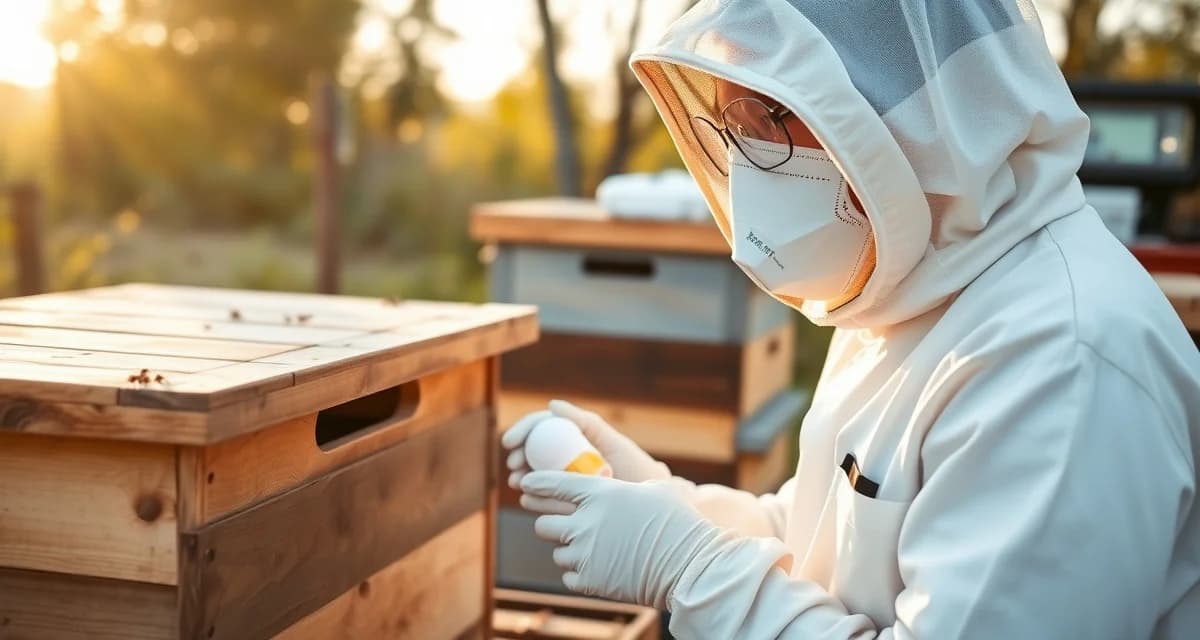
Oxalic Acid Safety for Beekeepers: PPE, Handling, and Disposal
OA vaporization without respiratory protection can cause permanent lung damage. That's not an exaggeration. Oxalic acid vapor is highly irritating to the respiratory tract, and repeated exposure without adequate protection causes cumulative damage that doesn't always present symptoms until significant harm has already occurred. Most beekeeper injuries from oxalic acid treatment happen without proper PPE.
Oxalic acid is one of the most effective varroa treatments available, but it requires respect. The same properties that make it lethal to mites make it hazardous to you if you're not protected.
TL;DR
- Oxalic acid (Api-Bioxal) is approved for dribble and vaporization methods; both kill only phoretic mites on adult bees
- Vaporization is more effective than dribble when brood is present because bees can contact vaporized acid across the colony
- The extended vaporization protocol (every 5 days for 3 applications) compensates for mites in capped brood
- Oxalic acid has no PHI restriction for honey supers when used according to the Api-Bioxal label
- Efficacy during true broodless periods can reach 95%; with brood present, efficacy drops to 50-70%
- Always wear a respirator and eye protection during vaporization; oxalic acid vapor causes lung damage
What Makes Oxalic Acid Hazardous
Oxalic acid (OA) is a dicarboxylic acid that causes tissue damage through direct chemical action. It's corrosive to mucous membranes, skin, and eyes. In solution form, it can cause burns on contact with skin or eyes. As a vapor (during vaporization treatment), it can be inhaled deeply into the lungs before the irritation response triggers.
The vapor form is more dangerous than the solution form for two reasons: vapor disperses invisibly (you can't see whether you're in a contaminated area), and vapor reaches deeper into the respiratory system than liquid splashes that are more immediately detected.
Chronic low-level vapor exposure without respiratory protection is the primary occupational hazard for beekeepers doing repeated OA vaporization treatments throughout a season.
PPE Requirements by Application Method
OA Dribble
Dribble involves applying a measured volume of OA solution (typically 3.2% oxalic acid dihydrate in 1:1 sugar syrup) directly onto the seams of bees in the hive.
Minimum required PPE for dribble:
- Chemical-resistant gloves (nitrile gloves at minimum, thicker chemical-resistant gloves for larger volumes)
- Safety glasses or goggles
- Long sleeves to protect forearms from accidental contact
Optional but recommended:
- Chemical-resistant apron
- Closed-toe shoes resistant to liquid splashes
The primary dribble hazard is skin and eye contact from splashing or drips. The solution is corrosive, and getting it on your eyes is a medical emergency requiring immediate flushing with water.
OA Vaporization
Vaporization involves heating solid OA crystals or a pre-loaded vaporizer pan inside the hive, producing OA vapor that distributes through the colony.
Minimum required PPE for vaporization:
- Full-face respirator with OA-rated cartridges (N95 or P100 rated for acid vapors). A dust mask is NOT adequate. A standard N95 does NOT protect against OA vapor.
- Nitrile or chemical-resistant gloves
- Eye protection (full-face respirator typically covers this)
- Long sleeves and pants
What "OA-rated cartridges" means: Standard particulate respirators (N95, surgical masks) filter particles but not chemical vapors. OA vapor requires an organic vapor/acid gas combination cartridge or a HEPA + acid combination rated for the specific application. Look for P100 with acid gas combination cartridges from established respirator manufacturers.
The label on all EPA-registered OA vaporization products requires this level of respiratory protection. It's not a suggestion. Using a dust mask or no respiratory protection during vaporization exposes you to potentially lung-damaging concentrations of OA vapor with each hive treatment.
Extended-Release OA Products
Products like Api-Bioxal in glycerin-soaked pads or similar extended-release formulations are placed in the hive and left for an extended treatment period. Direct OA vapor exposure during application is lower than active vaporization, but still requires:
- Nitrile gloves during handling
- Eye protection
- Follow label-specific instructions
Safe Handling Procedures
Mixing OA Solution
If you're mixing OA solution from crystals rather than using pre-mixed commercial products:
- Mix in a well-ventilated area, not in an enclosed space
- Wear gloves and eye protection throughout
- Add OA to sugar syrup, not the other way around (reduces splashing)
- Use a designated measuring container not used for food
- Store prepared solution in a sealed, labeled container away from children and pets
Pre-mixed commercial OA solutions (available from bee suppliers) eliminate the mixing step and reduce handling risk. For beekeepers doing occasional small treatments, pre-mixed is often the safer and more convenient choice.
During Treatment
For vaporization treatments, the minimum safety protocol is:
- Seal the hive entrances before inserting the vaporizer to prevent vapor escape
- Insert the loaded vaporizer through the entrance
- Move away from the hive during the heating cycle (at least 10 feet)
- Wait the full treatment duration as specified by the vaporizer manufacturer
- Allow 5+ minutes of additional ventilation time before removing the vaporizer
- Use gloves and respiratory protection when removing the vaporizer immediately post-treatment
VarroaVault's safety checklist must be acknowledged before an OA vaporization treatment log can be submitted. This built-in safety step ensures the PPE requirement is front of mind before every treatment event, not an afterthought.
Emergency Response
Skin contact (solution): Remove contaminated clothing immediately. Rinse affected area with large amounts of water for at least 15 minutes. If irritation persists, seek medical attention.
Eye contact: Immediately flush with water for at least 15-20 minutes, holding eyelids open. Seek emergency medical attention even if symptoms seem mild initially. OA eye exposure can cause serious damage that develops over hours.
Inhalation: Move to fresh air immediately. If symptoms (coughing, burning sensation, difficulty breathing) persist, seek medical attention. Repeated low-level vapor exposure without protection is a long-term hazard even without acute symptoms.
Storage and Disposal
Storage
Keep OA crystals and solutions:
- In original containers, clearly labeled
- In a locked storage area away from children and pets
- Away from food and drink
- In a cool, dry location out of direct sunlight
OA is classified as a corrosive and should be stored separately from flammable or combustible materials.
Disposal
Used OA solution or crystals cannot be poured down household drains in all jurisdictions. Check your local regulations. Most jurisdictions have hazardous waste disposal programs that accept small quantities of corrosive solutions.
Used vaporizer pans and deposited OA residue: Allow the vaporizer to cool completely after use. The OA residue can be rinsed with water. The resulting dilute OA wash water can typically be disposed of as described above.
Apivar strips and other treatment disposal are covered in the amitraz safety guide. PHI requirements and treatment residue context are in the [pre-harvest interval tracker](/pre-harvest-interval-tracker).
Frequently Asked Questions
What PPE is required for oxalic acid vaporization?
For OA vaporization, the minimum required PPE is: a full-face respirator with acid gas-rated cartridges (P100 with organic vapor/acid gas combination cartridges), chemical-resistant gloves, and protection for skin and eyes. A standard N95 or dust mask is not adequate, because OA vapor penetrates particulate filters. The EPA label for all registered OA vaporization products specifies this level of respiratory protection, making it a legal requirement as well as a safety necessity. Most beekeeper OA injuries occur because proper respiratory protection was not used.
Is oxalic acid dangerous to bees at the correct dose?
At the recommended dose of 5mL per seam of bees (dribble) or label-specified doses for vaporization, oxalic acid is not significantly harmful to adult bees or developing brood. Research on properly dosed OA treatment shows bee mortality comparable to untreated control groups. Overdosing, applying OA to colonies that are too small for the dose, or applying multiple applications without appropriate intervals can cause bee mortality. The OA treatment guides and dose calculators are calibrated to the label dose, which balances efficacy against bee safety.
Does VarroaVault include a safety checklist for OA treatment?
Yes. VarroaVault requires acknowledgment of an OA vaporization safety checklist before the treatment log entry can be submitted. The checklist covers required PPE items (respirator type, gloves, eye protection), confirms the beekeeper is treating in ventilated conditions, and confirms all entrance sealing is done before heating the vaporizer. This safety acknowledgment step is logged with the treatment record, creating documentation that safety procedures were followed. The checklist for OA dribble is a shorter version covering skin and eye protection requirements specific to liquid OA handling.
How many oxalic acid vaporizations can I do per year?
The Api-Bioxal label allows up to three vaporization treatments per year per hive. Under the extended protocol for colonies with brood present, three applications spaced 5 days apart count as one treatment event. Always follow current label instructions as registration requirements can be updated.
Can I use oxalic acid from the grocery store instead of Api-Bioxal?
No. In the United States, only EPA-registered Api-Bioxal is legal for treating honey bees. Industrial or food-grade oxalic acid is not registered for bee use and cannot be used legally. Using unregistered products violates federal pesticide law and may affect honey marketability. Api-Bioxal is widely available from beekeeping suppliers.
Is oxalic acid safe to use on brood?
Oxalic acid in dribble form is damaging to brood when applied directly; the label specifies use on broodless colonies for dribble application. Vaporized oxalic acid is less directly damaging to brood than dribble and is approved for use with brood present, though efficacy on mites in capped brood is limited. Always follow the label for the application method you are using.
What is Oxalic Acid Safety for Beekeepers: PPE, Handling, and Disposal?
Oxalic acid safety for beekeepers covers the protective equipment, safe handling procedures, and proper disposal methods required when treating hives with oxalic acid (Api-Bioxal) for varroa mite control. It addresses the serious respiratory and eye hazards posed by vaporization, the importance of respirators rated for acid vapors, gloves, and eye protection, plus how to neutralize and dispose of unused solution without harming the environment.
How much does Oxalic Acid Safety for Beekeepers: PPE, Handling, and Disposal cost?
Oxalic acid safety isn't a product with a price—it's a set of practices every beekeeper using Api-Bioxal must follow. The cost involves purchasing appropriate PPE: a respirator with OV/P100 cartridges ($30–$80), chemical-resistant gloves ($10–$20), and splash-rated goggles ($15–$30). Api-Bioxal itself costs roughly $20–$40 per package. Cutting corners on PPE to save money risks permanent lung damage, making proper safety gear the most cost-effective investment a beekeeper can make.
How does Oxalic Acid Safety for Beekeepers: PPE, Handling, and Disposal work?
During oxalic acid vaporization, a heated vaporizer sublimates solid oxalic acid into fine airborne crystals that bees contact throughout the hive, killing phoretic varroa mites on contact. The vapor settles on bees and surfaces, providing residual contact. Because the vapor is highly irritating to mucous membranes and lung tissue, beekeepers must seal hive entrances, use a respirator with acid-rated cartridges, wear gloves and goggles, and stay upwind until the hive is fully sealed and vapor has dissipated.
What are the benefits of Oxalic Acid Safety for Beekeepers: PPE, Handling, and Disposal?
Following proper oxalic acid safety protocols protects your long-term respiratory health, since cumulative lung damage from repeated unprotected exposures may not appear until serious harm is done. It also ensures legal compliance, as Api-Bioxal is an EPA-registered pesticide with label requirements that carry legal weight. Safe handling reduces contamination risk to honey, protects bystanders, and prevents environmental harm during disposal. Beekeepers who work safely can use oxalic acid consistently across seasons without risking their health or their operation.
Who needs Oxalic Acid Safety for Beekeepers: PPE, Handling, and Disposal?
Any beekeeper using oxalic acid dribble or vaporization treatments for varroa control needs to understand these safety protocols. This is especially critical for hobbyists new to vaporization who may underestimate the hazard, backyard beekeepers treating in confined spaces, and commercial operators treating many colonies in succession where exposure accumulates rapidly. If you are purchasing a vaporizer or Api-Bioxal for the first time, understanding PPE requirements and safe disposal is essential before your first treatment.
Sources
- American Beekeeping Federation (ABF)
- USDA ARS Bee Research Laboratory
- Honey Bee Health Coalition
- Penn State Extension Apiculture Program
- Project Apis m.
Get Started with VarroaVault
Oxalic acid is one of the most effective and accessible varroa treatments available, but timing and application method determine whether you get 95% efficacy or 50%. VarroaVault tracks your broodless window, application method, and pre/post mite counts so you can see what's actually working in your operation. See pricing and free tools at varroavault.com.