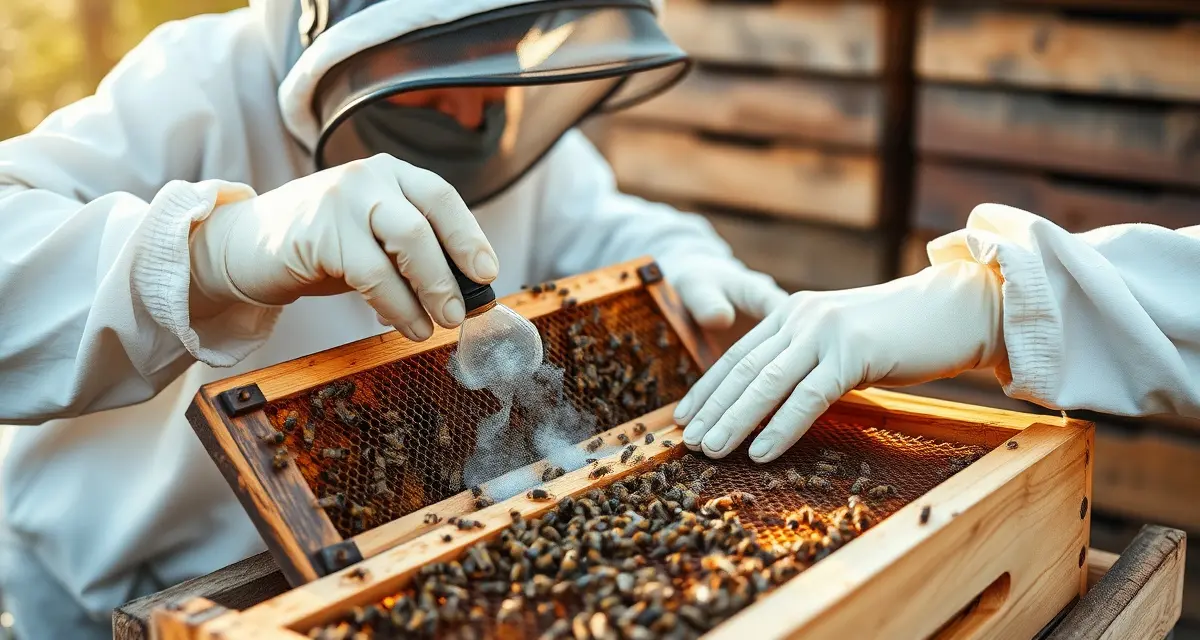
How to Use Oxalic Acid on Bees for Varroa Control
Oxalic acid (OA) is one of the safest and most effective varroa treatments available, when it's used correctly. The key factors are timing, dose, and method. Get all three right and you can knock mites back to near zero during the right treatment window.
Here's a complete how-to covering both application methods.
TL;DR
- Oxalic acid (Api-Bioxal) is approved for dribble and vaporization methods; both kill only phoretic mites on adult bees
- Vaporization is more effective than dribble when brood is present because bees can contact vaporized acid across the colony
- The extended vaporization protocol (every 5 days for 3 applications) compensates for mites in capped brood
- Oxalic acid has no PHI restriction for honey supers when used according to the Api-Bioxal label
- Efficacy during true broodless periods can reach 95%; with brood present, efficacy drops to 50-70%
- Always wear a respirator and eye protection during vaporization; oxalic acid vapor causes lung damage
Two Methods: Vaporization vs. Dribble
OA Vaporization: The acid is heated to sublimation. Vapors fill the hive and contact phoretic mites on adult bees. Can be used during the broodless period for maximum efficacy, or as an extended protocol during active brood season.
OA Dribble: A diluted oxalic acid solution is drizzled directly onto bees between frames. Effective during broodless periods. Limited by the FDA label to once per colony per year.
For most beekeepers managing multiple hives, vaporization is the preferred method due to speed and flexibility.
Dribble Method
What you need:
- Api-Bioxal (FDA-approved OA product for bees)
- 50% sugar syrup solution
- Syringe (50ml works well)
Preparation: Mix Api-Bioxal in 50% sugar syrup per label instructions. The label specifies the ratio, follow it exactly.
Application:
- Open the hive carefully
- Locate frames with winter cluster
- Use the syringe to apply approximately 5ml of OA solution between each frame covered with bees, not more than 50ml total per hive
- Do not dribble on bare comb; apply directly onto bees
- Close the hive
Timing: Apply once during the broodless period per year. Don't apply if brood is present, the solution can harm larvae.
Expected efficacy: 90-99% in confirmed broodless conditions.
Vaporization Method
What you need:
- OA vaporizer (commercial unit)
- Api-Bioxal
- P100 respirator, safety goggles, gloves
- Entrance plugs (foam or cloth)
Dose: 1 gram of oxalic acid dihydrate per hive. This is the same regardless of how many boxes the hive has.
Application:
- Put on PPE before handling OA
- Block the hive entrance
- Measure 1g of OA into vaporizer cup
- Insert vaporizer through entrance or bottom of hive
- Activate heat per vaporizer instructions (torch or battery)
- Wait 2-3 minutes for full sublimation
- Leave entrance blocked for 10 minutes
- Open entrance; remove vaporizer after cooling
Broodless period: 1-2 treatments, 7 days apart
Active brood season: 3-5 treatments, 5-7 days apart (extended protocol)
Safety: This Is Non-Negotiable
Oxalic acid vapor is a respiratory irritant. A P100 respirator is required. Not a basic dust mask, you need vapor-grade filtration.
- Always work upwind
- Don't lean over the entrance during or immediately after treatment
- Let equipment cool before transporting
- Store OA in the original container, locked away from children and animals
Confirming Efficacy
Do a post-treatment alcohol wash 7-10 days after your final treatment.
In broodless conditions, expect 90-99% efficacy. If you see less than 90% reduction, check whether brood was still present, whether dose was correct, and whether the entrance was adequately sealed.
VarroaVault logs your OA treatment dates and automatically prompts the post-treatment count based on the protocol you used.
Related Articles
- Oxalic Acid Varroa Treatment FAQ: 20 Questions Answered
- Formic Acid Varroa Treatment Guide: MAQS and Formic Pro
FAQ
How many oxalic acid treatments does a hive need?
For a broodless-period vaporization: 1-2 treatments (7 days apart). For an extended active-brood protocol: 3-5 treatments (5-7 days apart). For dribble: once per year per label. Don't exceed label recommendations.
Can you use oxalic acid with honey supers on?
Check current label requirements. The FDA-approved product Api-Bioxal has specific guidance on this. Generally, OA vaporization is most commonly done in winter when no supers are present. Always refer to the current label before treating.
Is oxalic acid treatment painful for bees?
At approved doses, OA is not significantly harmful to adult bees. Worker bee populations generally tolerate the treatment well. OA should not be applied when brood is present (dribble method) as it can harm developing larvae. The vapor method in correctly dosed quantities causes minimal bee impact.
How many oxalic acid vaporizations can I do per year?
The Api-Bioxal label allows up to three vaporization treatments per year per hive. Under the extended protocol for colonies with brood present, three applications spaced 5 days apart count as one treatment event. Always follow current label instructions as registration requirements can be updated.
Can I use oxalic acid from the grocery store instead of Api-Bioxal?
No. In the United States, only EPA-registered Api-Bioxal is legal for treating honey bees. Industrial or food-grade oxalic acid is not registered for bee use and cannot be used legally. Using unregistered products violates federal pesticide law and may affect honey marketability. Api-Bioxal is widely available from beekeeping suppliers.
Is oxalic acid safe to use on brood?
Oxalic acid in dribble form is damaging to brood when applied directly; the label specifies use on broodless colonies for dribble application. Vaporized oxalic acid is less directly damaging to brood than dribble and is approved for use with brood present, though efficacy on mites in capped brood is limited. Always follow the label for the application method you are using.
What is How to Use Oxalic Acid on Bees for Varroa Control?
Oxalic acid (OA) varroa control is a method of treating honey bee colonies for varroa mite infestations using oxalic acid, an organic compound approved for use in the form of Api-Bioxal. It can be applied via vaporization or dribble. Vaporization sublimates the acid into vapor that contacts phoretic mites on adult bees, while the dribble method applies a diluted solution directly onto bees between frames. Timing and brood status are critical factors that determine efficacy, which can reach 95% during broodless periods.
How much does How to Use Oxalic Acid on Bees for Varroa Control cost?
This varroa management guide on VarroaVault is completely free to access. The cost associated with oxalic acid treatment relates to purchasing Api-Bioxal, the EPA-approved oxalic acid product, which typically runs $20–$40 per package depending on quantity, plus a vaporizer device ($30–$150) if using the vaporization method. Required safety gear—a respirator and eye protection—adds a one-time cost. The dribble method requires minimal equipment, making it a low-cost entry point for beekeepers new to oxalic acid treatment.
Sources
- American Beekeeping Federation (ABF)
- USDA ARS Bee Research Laboratory
- Honey Bee Health Coalition
- Penn State Extension Apiculture Program
- Project Apis m.
Log Your OA Treatments and Verify Results
OA is most effective with precise timing and verified efficacy. VarroaVault helps you schedule your broodless-period treatments and tracks post-treatment counts automatically. Learn more about treatment timing.
Get Started with VarroaVault
Oxalic acid is one of the most effective and accessible varroa treatments available, but timing and application method determine whether you get 95% efficacy or 50%. VarroaVault tracks your broodless window, application method, and pre/post mite counts so you can see what's actually working in your operation. See pricing and free tools at varroavault.com.