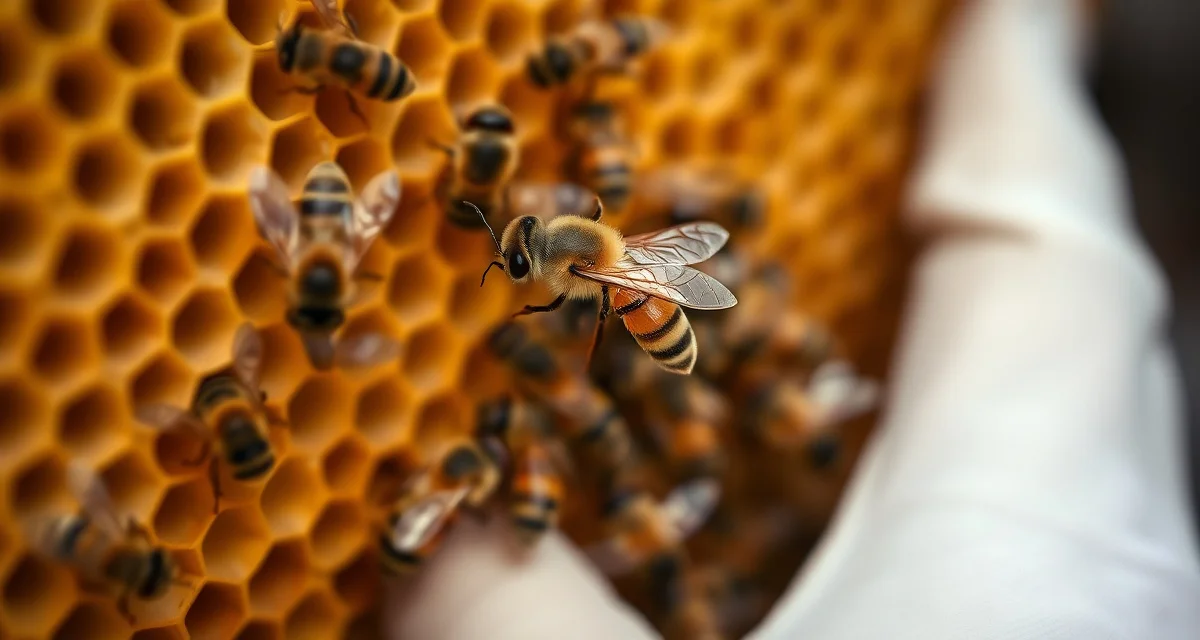
Varroa Treatment for Africanized Honey Bee Colonies
Africanized colonies in Texas and Florida account for an increasing share of managed operations in those states. Beekeepers in AHB-present zones -- primarily Texas, Arizona, New Mexico, California, Florida, and adjacent states -- need varroa protocols that account for the specific challenges these colonies present, particularly the defensive behavior that makes standard treatment procedures more dangerous.
This guide covers adapted varroa treatment protocols for AHB colonies, with safety-first approaches to each registered treatment type.
TL;DR
- Treatment decisions should always be triggered by a mite count result, not a fixed calendar date
- Different treatments have different temperature requirements, PHI restrictions, and brood penetration capabilities
- Always run a post-treatment count 2-4 weeks after treatment ends to calculate efficacy
- Efficacy below 80% warrants investigation -- possible resistance, application error, or reinfestation
- Rotate treatment chemistry to prevent resistance buildup across successive cycles
- VarroaVault logs treatment events, calculates efficacy, and flags when rotation is recommended
Understanding the AHB Treatment Challenge
Africanized honey bees carry the same varroa mite parasite as European Apis mellifera. Their mite dynamics are not dramatically different from European bees in most respects -- they're susceptible to the same mites, at similar reproductive rates, and respond to the same registered treatments. The biological challenge of varroa management is the same.
The challenge is the colony's defensive response to management interventions. AHB colonies respond to disturbance more rapidly, with more bees, at greater distances from the hive, and with more sustained pursuit than European colonies. This changes the risk calculus for every procedure that requires opening the hive or working near it.
For varroa treatment, the specific concerns are:
- Extended hive opening time required for strip insertion
- Repeated access required for OA vaporization protocols
- Smoke effectiveness is reduced and shorter-duration with AHB
- Equipment failure or slow operator movement can trigger severe defensive responses
Safety Protocol Before Any Treatment
Regardless of which treatment method you use, these safety steps apply to every AHB colony treatment:
Suit and PPE: Full suit with a veil that's properly sealed at the neck and wrists. No exceptions. Sting penetration through gaps in improperly fitted gear is a primary cause of beekeeper injury with AHB colonies.
Timing: Treat early morning (before 8 AM) when foragers are in the hive and temperatures are lower. Midday treatments on hot days produce the most defensive responses in AHB colonies.
Smoke: Use cool, dense smoke generously before and throughout any hive opening. AHB's response to smoke is shorter-duration than European bees -- plan for continuous re-smoking rather than a single application at the start.
Assistance: Have a second person present for AHB treatments if possible, positioned to assist quickly if defensive behavior escalates. Inform them of your egress plan before you start.
Egress plan: Know your exit route before you open the hive. An unplanned retreat with bees following you is more dangerous than a planned retreat at the right moment.
Emergency plan: Know the nearest medical facility and have access to an EpiPen if you have any history of allergic reaction to stings.
Treatment Options by Method
OA Vaporization
OA vaporization is often the preferred method for AHB colonies because it minimizes time with the hive open. The vaporizer is inserted through the entrance with the hive sealed, and you step away during the treatment period.
Adapted protocol for AHB:
- Seal the entrance with a damp sponge or foam plug before inserting the vaporizer wand
- Use a vaporizer with a long enough wand that you can plug the entrance and step back 5-6 feet from the hive during treatment
- Do not stand directly in front of the entrance during vaporization
- Wear your respirator throughout the procedure -- bees exiting during vaporization can target your face
- Use the extended protocol (3 treatments at 5-day intervals) for brood-present colonies
For the broodless period dribble, vaporization is strongly preferred over dribble for AHB colonies because it eliminates the need to pour into an open hive.
OA Dribble
If vaporization equipment isn't available, dribble can be done on broodless AHB colonies with the following adaptations:
- Pre-smoke more heavily than usual before opening
- Have your dribble solution ready before you open the hive -- minimize the time the hive is open
- Dribble quickly across frame seams and close immediately
- Do not stop to inspect or manipulate frames; this is a treatment procedure, not an inspection
The elevated risk of dribble versus vaporization for AHB colonies is real. If you can access vaporization equipment, use it.
Apivar Strips
Apivar requires the most hive access time of any treatment -- inserting strips between brood frames requires opening the hive and placing strips in the brood nest area. For AHB colonies, this is the highest-risk procedure.
Adapted protocol:
- Insert strips quickly -- have them pre-measured and ready before opening
- Target the frames flanking the main brood cluster; do not rearrange frames while strips are being placed
- Use two helpers if available: one to smoke continuously, one to hand you strips
- Complete insertion in under 5 minutes if possible
- For strip removal at 42-56 days, use the same rapid-access protocol
The benefit of Apivar for AHB colonies is that hive access is limited to two events (installation and removal) rather than the 3 entries required for an OA vaporization extended protocol. For beekeepers who find the vaporization entries more stressful, Apivar's two-entry profile may be preferable despite the individual entry risk.
Formic Acid (MAQS / Formic Pro)
Formic acid treatments require placing gel pads or polymer strips on the top bars of the brood frames. The placement procedure is faster than Apivar strip insertion but still requires hive opening.
AHB-specific consideration: formic acid fumes may intensify defensive responses during placement. Smoke heavily before placement and close the hive quickly. The fume load during the treatment period (7 days for MAQS, 14 days for Formic Pro) will produce some additional defensive behavior -- inform people who may approach the hive during the treatment window.
Temperature limits apply regardless of colony type: 50-85°F for MAQS, 50-79°F for Formic Pro.
Flagging AHB Colonies in Your Records
Accurate records are important for AHB colony management. Your treatment records should note the colony's AHB status so that anyone accessing your records -- including yourself in the future or a state apiarist conducting an inspection -- understands the safety considerations for that hive.
VarroaVault's AHB colony flag activates a safety reminder before any treatment log is submitted for flagged hives. The flag also notes the treatment method used and any observations about defensive behavior, building a record of which methods were most manageable for a given colony. The beekeeping software texas and beekeeping software florida guides cover the state-specific record-keeping requirements for AHB-present operations.
Frequently Asked Questions
How do I safely treat an Africanized colony for varroa?
The safest approach is OA vaporization with entrance sealing, which minimizes time with the hive open and allows you to step back during the treatment period. Regardless of method: wear a fully sealed suit, treat in early morning, smoke heavily and continuously, have an egress plan, and never work an AHB colony alone. Minimize any action that requires extended hive opening -- pre-stage all equipment before opening, work quickly, and close the hive as soon as the procedure is complete. Do not treat an AHB colony in defensive mode (mid-afternoon heat, recent disturbance, high-alert posture at the entrance).
Which varroa treatments minimize defensive behavior in AHB colonies?
OA vaporization minimizes defensive behavior because it allows you to seal the entrance, insert the vaporizer, and step away during treatment -- the hive is never "opened" in the traditional sense. Products requiring entrance or top placement without full box opening (like some OA vaporizers that work through the entrance slot) are preferable to full-frame inspection procedures. Apivar and formic acid require opening the hive and working inside the box, which produces more defensive response, though these can be managed with proper preparation and rapid technique.
How do I flag an Africanized colony in VarroaVault?
In the hive record, select "Africanized" in the colony type field. Once flagged, VarroaVault activates safety reminder prompts before each treatment log entry for that hive, noting the AHB status and recommended safety steps for the treatment method selected. The AHB flag also appears on the apiary map and hive list views so you can identify AHB colonies at a glance when planning your management schedule.
How do I know if my varroa treatment is working?
Run a mite count 2-4 weeks after the treatment ends and compare it to your pre-treatment count. The efficacy formula is: ((pre-count - post-count) / pre-count) x 100. A result above 90% indicates effective treatment. Results below 80% should trigger investigation for possible resistance, application error, or reinfestation. Log both counts in VarroaVault to track efficacy trends across treatment cycles.
How often should I check mite levels in my hives?
At minimum, once per month (every 3-4 weeks) during the active season. Increase to every 2 weeks when counts are near threshold or after a treatment to verify it worked. In fall, monitoring frequency matters most because the window to treat before winter bees are raised is narrow. VarroaVault's monitoring reminders can be set to your preferred interval for each apiary.
What records should I keep for varroa management?
Each record should include: date of count or treatment, hive identifier, monitoring method used, number of bees sampled, mites counted, infestation percentage, treatment product name and EPA registration number, dose applied, treatment start and end dates, and PHI end date. State apiarists typically expect this level of detail during inspections. VarroaVault captures all of these fields in a single log entry.
What is Varroa Treatment for Africanized Honey Bee Colonies?
Varroa treatment for Africanized honey bee (AHB) colonies refers to adapted mite management protocols designed for the unique challenges AHB colonies present. While AHB carry the same varroa mite parasite as European colonies, their highly defensive behavior makes standard inspection and treatment procedures more dangerous. Protocols must account for increased protective gear requirements, modified application techniques, and the need to trigger treatments based on mite count thresholds rather than fixed calendar schedules.
How much does Varroa Treatment for Africanized Honey Bee Colonies cost?
There is no single fixed cost for varroa treatment in AHB colonies. Expenses vary based on treatment type — oxalic acid, formic acid, amitraz strips, or thymol — colony count, and additional safety equipment required for AHB work. Registered treatments generally range from a few dollars to around $20 per colony per cycle. Factor in enhanced protective gear, additional labor time due to defensive behavior, and post-treatment mite counts when budgeting for AHB operations.
How does Varroa Treatment for Africanized Honey Bee Colonies work?
AHB varroa treatment works by applying a registered acaricide — chemical or organic — that reduces mite populations within the colony. Treatment selection depends on ambient temperature, whether brood is present, and honey super status. A pre-treatment mite count establishes baseline infestation. After the treatment period ends, a post-treatment count is run 2–4 weeks later to calculate efficacy. Results below 80% reduction indicate possible resistance, application error, or reinfestation and require investigation.
What are the benefits of Varroa Treatment for Africanized Honey Bee Colonies?
Effective varroa management in AHB colonies protects colony health, reduces viral disease transmission carried by mites, and supports sustainable honey production. Rotating treatment chemistry across successive cycles prevents resistance buildup. Running efficacy calculations after each treatment cycle gives beekeepers actionable data to refine protocols. For AHB operations specifically, structured treatment logging reduces the number of hive inspections needed, limiting unnecessary exposure to defensive colonies while maintaining rigorous mite control.
Who needs Varroa Treatment for Africanized Honey Bee Colonies?
Beekeepers managing colonies in AHB-present states — primarily Texas, Arizona, New Mexico, California, Florida, and adjacent regions — need AHB-specific varroa protocols. This includes both commercial operations and hobbyist beekeepers working feral or hybrid colonies with Africanized genetics. Any beekeeper whose colonies exhibit heightened defensive behavior should adopt adapted treatment procedures that prioritize handler safety while maintaining the same evidence-based mite monitoring and treatment rotation standards used in European honey bee management.
Sources
- American Beekeeping Federation (ABF)
- USDA ARS Bee Research Laboratory
- Honey Bee Health Coalition
- Penn State Extension Apiculture Program
- Project Apis m.
Get Started with VarroaVault
The information in this guide is most useful when you have your own mite count data to apply it to. VarroaVault stores every count, flags threshold crossings automatically, and builds the treatment history you need for state inspections and effective management decisions. See pricing and free tools at varroavault.com.