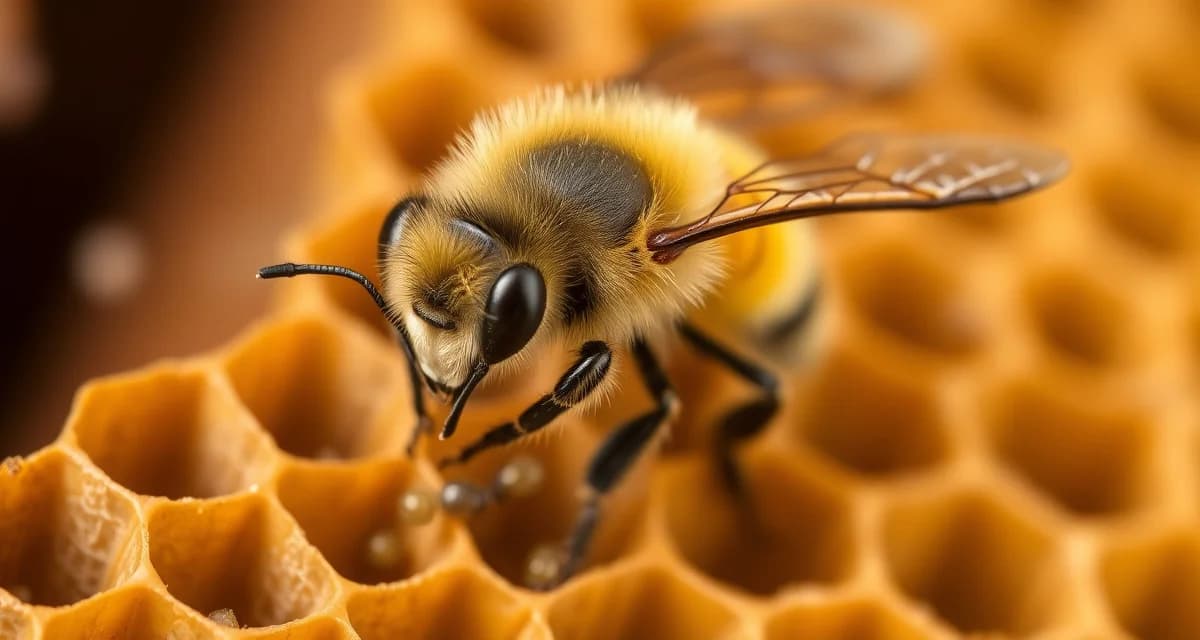
Honey Bee Grooming Behavior and Varroa: What Science Shows
Colonies with high grooming scores remove 25-35% of phoretic mites per day, compared to 5-10% for low-grooming colonies. That difference in natural mite removal rate has real consequences for mite population dynamics -- a colony removing a third of phoretic mites daily through its own behavior faces a fundamentally different mite growth trajectory than one removing one-in-twenty.
Grooming behavior is one of two primary mechanisms that contribute to varroa resistance in honey bee populations (the other being hygienic behavior, which targets mites in capped brood). Understanding what grooming is, how it varies across bee populations, and whether you can select for it in your queen rearing program is worthwhile for any beekeeper interested in the genetics side of varroa management.
TL;DR
- This guide covers key aspects of honey bee grooming behavior and varroa: what science shows
- Mite monitoring should happen at minimum every 3-4 weeks during active season
- The 2% threshold in spring/summer and 1% in fall are standard action points based on HBHC guidelines
- Always run a pre-treatment and post-treatment mite count to calculate efficacy
- Treatment records including product name, EPA number, dates, and counts are required for state inspection compliance
- VarroaVault stores all monitoring and treatment data with automatic threshold comparison and state export formatting
What Grooming Behavior Is
Grooming in honey bees refers to two related behaviors:
Auto-grooming: Individual bees clean their own body, using their legs and mouthparts to dislodge mites from their cuticle. A mite that is successfully dislodged during auto-grooming falls off the bee. Whether the mite then survives depends on what happens next.
Allo-grooming: One bee grooms another, targeting mites on the groomed bee's body. Allo-grooming is particularly effective at reaching areas that bees can't auto-groom (like the back of the thorax where mites often attach). In colonies with strong allo-grooming behavior, bees actively inspect and groom nestmates rather than just tolerating being groomed.
In both cases, the effectiveness of grooming against varroa is measured not just by whether mites are dislodged, but by whether they are killed. A dislodged mite that lands on the bottom board and crawls back onto a bee has not been effectively removed. Studies of high-grooming bee populations show evidence of mite mutilation -- missing legs and punctured bodies -- indicating that these bees are biting mites during grooming, not merely dislodging them.
Natural Variation in Grooming Levels
Grooming intensity varies substantially across honey bee populations, and it's partly heritable. Populations that have experienced varroa pressure for multiple generations without human management -- like feral colonies in some areas or selectively bred lines -- tend to show higher grooming rates than commercial bee populations that have been managed with chemical treatments for decades.
The most extensively studied high-grooming populations include:
Gotland Island bees: A Swedish feral population that survived varroa without treatment for over 20 years. This population shows both elevated grooming and hygienic behavior compared to managed commercial populations.
Russian honey bees: A USDA ARS program imported and selectively bred bees from Primorsky, Russia -- a region where varroa had been present for centuries before spreading to Europe and North America. Russian bees show elevated grooming and hygienic behavior and have been available as a commercial line since the early 2000s.
VSH (Varroa Sensitive Hygiene) bees: Selected by USDA ARS Baton Rouge for the specific hygienic trait of removing mites from capped cells. VSH behavior is distinct from grooming but complements it.
Locally adapted feral populations: In some US states, researchers have documented feral bee populations that are maintaining themselves without intervention, suggesting that natural selection for varroa resistance traits -- including grooming -- is occurring in these populations.
What Science Shows About Efficacy
The honest summary of grooming behavior research is that natural grooming alone is rarely sufficient to keep mite populations below treatment thresholds in managed colonies without additional intervention. High-grooming colonies do better than low-grooming colonies, and the difference is measurable. But "better" and "treatment-free" are not the same thing for most beekeepers in most environments.
The practical effect of high grooming rates in a managed hive is that mite population growth is slower -- which means your treatment window is somewhat wider, your September count after a successful August treatment recovers more slowly, and your natural mite load at any given point in the season is lower than in a low-grooming colony.
For beekeepers doing queen rearing who want to factor grooming behavior into their selection, the trait is worth tracking alongside mite count results. A colony that maintains low mite counts despite conditions that elevate counts in neighboring colonies -- and shows mite debris on the bottom board with mutilation damage -- is a potential grooming line worth propagating.
Selecting for Grooming
If you're doing queen rearing and want to incorporate grooming into your selection criteria, here's a practical approach:
Track mite load per colony over time. Colonies that consistently land below the apiary average mite count across multiple seasons, despite similar treatment history, are your best candidates for grooming behavior.
Check bottom board debris. In colonies with active grooming behavior, you'll find mites on sticky boards that show mutilation damage -- missing legs or punctured bodies. Low-grooming colonies show more intact mites in their debris.
Cross-reference with season length. A low-mite count in a colony that was treated aggressively isn't evidence of grooming; it's evidence of effective treatment. You want low-mite colonies that achieved that status with the same treatment protocol as neighboring colonies.
VarroaVault's queen rearing module includes a grooming behavior score field where you can log your observations alongside mite count data. Over multiple seasons, this data builds a correlation picture -- showing whether your high-grooming-score queens produce daughter colonies with consistently lower mite loads. The hygienic behavior varroa resistance guide covers the related hygienic behavior trait. The mite resistant bee genetics page covers the broader genetics picture for varroa resistance selection.
Frequently Asked Questions
How do bees groom varroa mites off each other?
Bees groom themselves (auto-grooming) using their legs and mouthparts to dislodge mites from their cuticle, and they groom nestmates (allo-grooming) by actively inspecting and removing mites from other bees' bodies. In populations with enhanced grooming behavior, the bees don't just dislodge mites -- they bite and mutilate them during grooming, preventing the mite from successfully reattaching to another bee. This mite-biting behavior is what makes grooming genuinely effective as a varroa management mechanism, rather than just temporarily displacing mites.
Can I breed for better grooming behavior?
Yes. Grooming behavior is partly heritable and can be selected for in a queen rearing program. The practical approach is to identify colonies that consistently maintain low mite counts relative to your apiary average, check their bottom board debris for mutilated mites (evidence of active grooming), and use those colonies as your queen rearing sources. Several commercial queen breeders offer queens from VSH and Russian lines with documented higher grooming rates. Progress through selection is gradual but measurable over multiple seasons of tracking mite counts alongside behavioral observations.
Does VarroaVault track grooming behavior data for queen line selection?
Yes. VarroaVault's queen rearing module includes a grooming behavior score field where you log your assessment of a colony's grooming activity, alongside mite count data. Over time, VarroaVault correlates your grooming scores with mite count outcomes per colony, showing whether high-grooming-score colonies consistently achieve lower mite loads. This data supports evidence-based queen line selection decisions rather than relying on observations from a single season.
How do I know if my varroa treatment is working?
Run a mite count 2-4 weeks after the treatment ends and compare it to your pre-treatment count. The efficacy formula is: ((pre-count - post-count) / pre-count) x 100. A result above 90% indicates effective treatment. Results below 80% should trigger investigation for possible resistance, application error, or reinfestation. Log both counts in VarroaVault to track efficacy trends across treatment cycles.
How often should I check mite levels in my hives?
At minimum, once per month (every 3-4 weeks) during the active season. Increase to every 2 weeks when counts are near threshold or after a treatment to verify it worked. In fall, monitoring frequency matters most because the window to treat before winter bees are raised is narrow. VarroaVault's monitoring reminders can be set to your preferred interval for each apiary.
What records should I keep for varroa management?
Each record should include: date of count or treatment, hive identifier, monitoring method used, number of bees sampled, mites counted, infestation percentage, treatment product name and EPA registration number, dose applied, treatment start and end dates, and PHI end date. State apiarists typically expect this level of detail during inspections. VarroaVault captures all of these fields in a single log entry.
What is Honey Bee Grooming Behavior and Varroa: What Science Shows?
Honey Bee Grooming Behavior and Varroa: What Science Shows is a science-backed guide exploring how bees naturally remove varroa mites through grooming. It covers the difference in mite removal rates between high- and low-grooming colonies, how grooming interacts with hygienic behavior as a resistance mechanism, and how beekeepers can use this knowledge in queen rearing programs. The article bridges colony-level genetics and practical varroa management strategies.
How much does Honey Bee Grooming Behavior and Varroa: What Science Shows cost?
This is a free educational article published on VarroaVault. There is no cost to read it. VarroaVault provides open-access beekeeping and varroa management resources to help beekeepers at all levels make informed decisions about mite monitoring, treatment thresholds, and breeding for natural resistance traits like grooming behavior.
How does Honey Bee Grooming Behavior and Varroa: What Science Shows work?
Honey bee grooming behavior works by bees detecting, dislodging, and chewing varroa mites off nestmates. High-grooming colonies remove 25-35% of phoretic mites per day through this behavior, dramatically slowing mite population growth. Colonies are scored for grooming intensity, and queens from high-grooming lines are selected for breeding programs. Combined with hygienic behavior targeting capped brood, grooming creates a compounding natural defense against varroa.
What are the benefits of Honey Bee Grooming Behavior and Varroa: What Science Shows?
Understanding grooming behavior helps beekeepers reduce chemical treatment frequency by selecting for genetically resistant stock. Colonies with strong grooming traits maintain lower mite loads naturally, lowering the risk of crossing action thresholds. It also supports more sustainable apiary management, improves long-term colony health, and contributes to broader varroa-resistant bee populations when high-grooming queens are propagated through local breeding programs.
Who needs Honey Bee Grooming Behavior and Varroa: What Science Shows?
This article is most relevant to beekeepers interested in varroa-resistant breeding, queen rearing, and reducing reliance on chemical treatments. It suits intermediate to advanced beekeepers who already monitor mite loads and want to incorporate genetic selection into their management. Researchers, apiary inspectors, and beekeeping educators will also find value in its review of the science behind grooming as a heritable varroa resistance mechanism.
Related Articles
- Honey Bee Health Coalition Varroa Management Guidelines: 2026 Update
- Nectar Flow Mite Monitoring: Balance Honey Production and Varroa Control
Sources
- American Beekeeping Federation (ABF)
- USDA ARS Bee Research Laboratory
- Honey Bee Health Coalition
- Penn State Extension Apiculture Program
- Project Apis m.
Get Started with VarroaVault
The information in this guide is most useful when you have your own mite count data to apply it to. VarroaVault stores every count, flags threshold crossings automatically, and builds the treatment history you need for state inspections and effective management decisions. See pricing and free tools at varroavault.com.