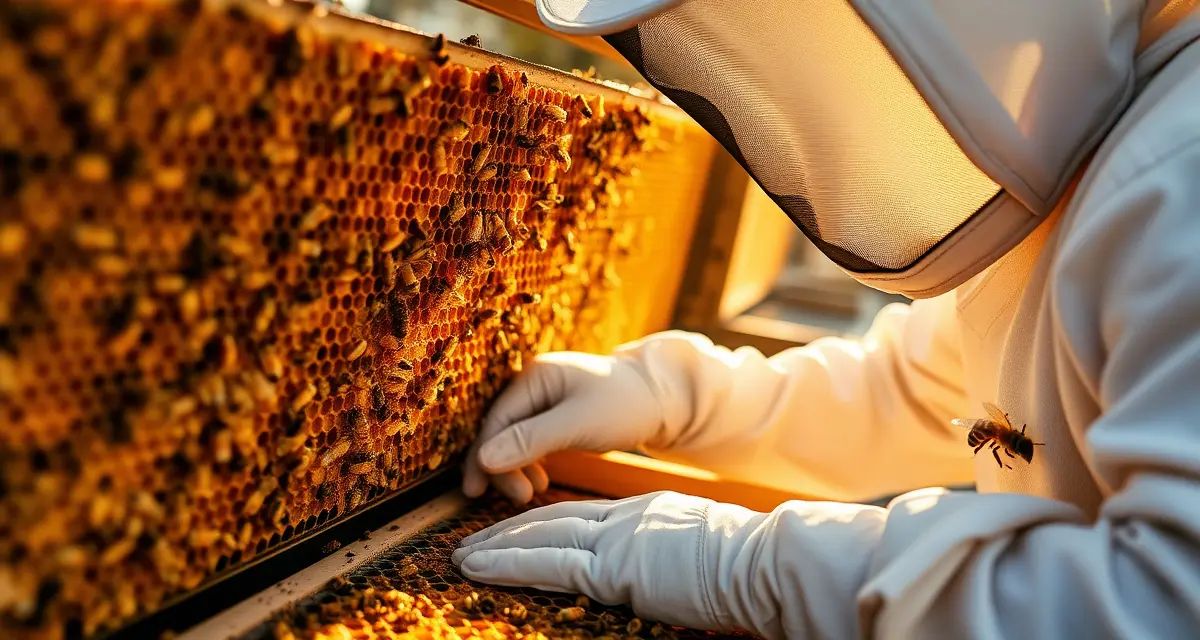
Varroa Mite Management in Commercial Honey Production: Scale and Compliance
US commercial honey producers who fail a PHI audit face average penalties of $18,000 plus product recall costs. That's before you account for the reputational damage and loss of retail relationships that can follow a publicized violation. For an operation depending on honey sales for its primary income, a single compliance failure can erase a year's margin.
This guide covers what commercial honey production demands from a varroa management program: not just effective mite control, but systematic PHI tracking, compliant documentation, and audit-ready records across every hive in your operation.
TL;DR
- Commercial operations managing 50+ hives cannot rely on per-hive manual records without significant time investment
- Treatment efficacy must be tracked across yards, not just individual hives, to detect resistance patterns
- USDA APHIS and state apiarists increasingly request documented treatment protocols for commercial inspections
- PHI compliance across multiple apiaries and multiple treatments requires a systematic tracking system
- VarroaVault's commercial tier supports multi-yard management with yard-level reporting and bulk data entry
- Generating a treatment history report for all apiaries takes under 60 seconds in VarroaVault
The Commercial Honey Production Varroa Challenge
Managing varroa in a 50-hive backyard operation is challenging. Managing it across 500 hives spread over 20 apiaries while maintaining consistent honey quality, meeting PHI requirements, and satisfying retail buyer requirements for documentation is a different category of problem.
The core challenges unique to commercial honey producers:
Scale: Individual treatment events involve hundreds of strip applications or dozens of OA vaporizer runs. Tracking each one accurately at this scale requires systems, not just diligence.
PHI compliance across the entire operation: Every hive that produces honey must have a clean PHI record. For operations with multiple apiaries and multiple applicators, ensuring that no honey super goes on before PHI has cleared for every treatment logged on that hive requires systematic tracking.
Employee applicator management: When multiple employees treat different apiaries on different days, your records need to show who applied what, when, and where. This audit trail protects the operation if a compliance question arises.
Multiple product rotation: Commercial operations typically run multi-product rotations across the season. Keeping track of which apiaries received which treatments, in what sequence, is the kind of multi-variable record problem that paper systems can't handle reliably.
Certifier and buyer requirements: Some honey buyers and most organic certifiers now require treatment record exports as part of their quality assurance programs. Your records need to be exportable in a readable format.
PHI Requirements for Commercial Honey Production
The pre-harvest interval is the time that must pass between the last application of a treatment and the addition of honey supers (or harvesting of honey already in supers). PHI requirements vary by product:
- Api-Bioxal (OA dribble): 0 days PHI. Can be used while supers are on (check label for specific restrictions). Generally the safest choice from a PHI perspective.
- Apivar (amitraz): Must be removed before adding supers. The critical rule: strips must be in place 42-56 days before removal, and supers go on after strips are out. Amitraz residue in honey is a regulatory violation with significant consequences.
- MAQS/Formic Pro (formic acid): Can be used with honey supers in place per the label, but temperature and bee stress considerations still apply. Some commercial producers remove supers during treatment to avoid any formic acid residue risk.
- Apiguard/ApiLife VAR (thymol): Must NOT be used with honey supers in place. 4-week treatment period must complete before supers are added.
- HopGuard III (hop beta acids): Can be used with honey supers according to label.
For every hive that produces honey, you need a dated record showing the last treatment, the product's PHI, and the harvest date. If any harvest date falls before PHI cleared, that's a violation.
Building a PHI Compliance System for Large Operations
The only way to maintain reliable PHI compliance across hundreds of hives is to automate the tracking. Manual calendar management fails because it requires someone to check every hive's treatment record before adding supers or harvesting. At scale, that check gets skipped.
VarroaVault's PHI tracker works as follows: when you log a treatment, the app records the product and calculates the PHI expiry date for that hive. Before you can log a honey harvest on any hive, VarroaVault shows the current PHI status, green for cleared, amber for approaching, red for not yet cleared.
The commercial honey compliance audit export generates a PHI compliance summary for every hive in your production season. This shows: treatment date, product, PHI duration, PHI expiry date, and harvest date for each hive. Any hive where the harvest date precedes PHI expiry is flagged.
You can run this audit yourself before your own harvest season, before a buyer audit, or before a state inspection.
Managing Treatment Records With Multiple Employees
At commercial scale, you likely have employees applying treatments across multiple apiaries. Each applicator needs to log their own treatments, and your records need to identify who applied what.
VarroaVault's team features allow you to add employees as loggers with their own login credentials. Every treatment they log is attributed to their account. You see a consolidated view of all treatments across all applicators from your admin account.
This creates an automatic chain of custody for treatment records. If a compliance question arises about a specific hive on a specific date, you can identify who applied the treatment and when they logged it.
Product Rotation Strategy at Commercial Scale
Commercial honey producers typically run a rotation that balances efficacy, PHI management, and resistance prevention across the production calendar:
Spring (before honey flow, supers off):
- Apivar: 42-56 day treatment, strips out before supers go on
- Or: OA extended vaporization protocol (3-5 treatments, 5-7 days apart)
Summer (during flow):
- PHI-safe options only: OA vaporization (label allows supers on, check current label)
- Formic acid (MAQS per label) if temperature appropriate
- Monitor closely; avoid treatments with long PHIs if flow is active
Post-harvest (August-September, supers off):
- Most critical window. All products available.
- Formic Pro or MAQS for brood-penetrating efficacy
- Or Apivar if not used in spring
Winter:
- OA dribble during confirmed broodless period
- No PHI concern; no honey to harvest
What a PHI Audit Actually Looks Like
If your honey is sold to a distributor or major buyer, you may face a supply chain audit that includes treatment records. If a state inspector identifies a potential residue violation, they'll request records demonstrating PHI compliance for every lot of honey from your operation.
An audit typically asks:
- What treatments were applied to the hives that produced this honey lot?
- What are the PHI requirements for those treatments?
- What is the documented harvest date?
- Do the harvest dates fall after all PHI periods cleared?
Without organized records, this audit takes days to reconstruct from paper files. With VarroaVault's compliance export, it takes minutes.
Residue Testing and Compliance Verification
Some commercial producers now voluntarily test honey for pesticide residues before sale. Screening tests for amitraz metabolites, coumaphos, and tau-fluvalinate are available through agricultural labs and beekeeping supply companies.
If you've maintained PHI compliance, testing should confirm clean honey. If residues appear despite documented compliance, you have a wax contamination issue or a data accuracy problem worth investigating.
The Financial Case for Systematic PHI Management
At an average commercial honey price of $4-8 per pound and a production of 40-80 pounds per hive, a 100-hive operation generates $16,000-64,000 in honey revenue annually. A PHI violation that triggers a recall affects not just that season's revenue but potentially your buyer relationships.
The average $18,000 penalty for a PHI audit failure doesn't include product recall logistics, testing costs, or the revenue impact of lost buyer confidence. Against those numbers, the cost of systematic record-keeping with VarroaVault is trivial.
Setting Up VarroaVault for Commercial Honey Production
New commercial accounts should configure:
- All apiaries with accurate hive counts and location data
- Employee accounts for all treatment applicators
- Honey super status tracking enabled for PHI monitoring
- PHI alerts at 7 days and 1 day before expiry
- Batch treatment entry for efficient multi-hive logging
- Quarterly compliance audit schedule reminders
The first season will take the most setup time. After that, the records build automatically as your team logs treatments and inspections.
Frequently Asked Questions
What PHI records do commercial honey producers need to maintain?
Commercial honey producers need treatment records showing the product applied, application date, EPA registration number, and applicator for every hive in production. PHI compliance documentation should show the calculated PHI expiry date and the harvest date for each hive, confirming that no honey was harvested before PHI cleared.
How does VarroaVault help commercial honey producers with compliance?
VarroaVault automatically calculates PHI expiry for every treatment logged, tracks PHI status per hive, sends alerts before PHI expires, and generates a compliance audit export showing treatment history and PHI clearance dates for every production hive. The export is formatted for buyer audits and state inspection review.
What happens if a commercial honey producer fails a PHI audit?
A PHI violation under FIFRA can result in civil penalties averaging $18,000 per violation plus the cost of product recall and disposal. Distributors and buyers who discover PHI violations typically terminate supplier relationships. In severe cases, state agencies can suspend honey production permits pending investigation.
How do I know if my varroa treatment is working?
Run a mite count 2-4 weeks after the treatment ends and compare it to your pre-treatment count. The efficacy formula is: ((pre-count - post-count) / pre-count) x 100. A result above 90% indicates effective treatment. Results below 80% should trigger investigation for possible resistance, application error, or reinfestation. Log both counts in VarroaVault to track efficacy trends across treatment cycles.
How often should I check mite levels in my hives?
At minimum, once per month (every 3-4 weeks) during the active season. Increase to every 2 weeks when counts are near threshold or after a treatment to verify it worked. In fall, monitoring frequency matters most because the window to treat before winter bees are raised is narrow. VarroaVault's monitoring reminders can be set to your preferred interval for each apiary.
What records should I keep for varroa management?
Each record should include: date of count or treatment, hive identifier, monitoring method used, number of bees sampled, mites counted, infestation percentage, treatment product name and EPA registration number, dose applied, treatment start and end dates, and PHI end date. State apiarists typically expect this level of detail during inspections. VarroaVault captures all of these fields in a single log entry.
What is Varroa Mite Management in Commercial Honey Production: Scale and Compliance?
Varroa mite management in commercial honey production refers to the systematic program of controlling Varroa destructor mite infestations across large-scale beekeeping operations while maintaining full regulatory compliance. Unlike hobbyist beekeeping, commercial producers managing 50 or more hives must track treatment efficacy across multiple yards, maintain Pre-Harvest Interval (PHI) records for every hive, and produce audit-ready documentation for USDA APHIS inspectors and state apiarists. A single compliance failure can result in penalties averaging $18,000 plus product recall costs, making systematic management essential for protecting revenue.
How much does Varroa Mite Management in Commercial Honey Production: Scale and Compliance cost?
Varroa mite management itself involves purchasing approved treatments such as oxalic acid, formic acid, or amitraz strips, which range from a few dollars to several dollars per hive depending on the product and scale. The real cost for commercial producers lies in compliance failures: PHI audit violations average $18,000 in penalties before factoring in recall costs and lost retail relationships. Investing in a systematic tracking platform like VarroaVault's commercial tier costs significantly less than a single violation and protects your entire operation's annual margin.
How does Varroa Mite Management in Commercial Honey Production: Scale and Compliance work?
Commercial varroa management works by combining approved chemical or organic treatments with rigorous mite monitoring and documentation. Producers sample mite loads across hive yards using alcohol wash or sugar roll methods, apply treatments according to label directions and PHI windows, and record every intervention with timestamps and lot numbers. Effective programs also track resistance patterns by comparing pre- and post-treatment mite counts at the yard level. Digital platforms automate bulk data entry and generate yard-level reports, replacing manual per-hive records that become unmanageable at scale.
What are the benefits of Varroa Mite Management in Commercial Honey Production: Scale and Compliance?
A structured commercial varroa management program protects honey operations on multiple fronts. It reduces colony losses caused by mite-vectored viruses, which directly boosts honey yields and pollination performance. Documented treatment protocols satisfy USDA APHIS and state apiarist inspection requirements, avoiding costly penalties. PHI tracking prevents residue violations that trigger product recalls and damage retail relationships. Yard-level resistance monitoring allows producers to rotate treatments proactively before efficacy collapses. Together, these benefits safeguard both the biological health of colonies and the financial health of the operation.
Who needs Varroa Mite Management in Commercial Honey Production: Scale and Compliance?
Any US honey producer operating 50 or more hives needs a formal varroa management and compliance program. This is especially critical for operations selling through retail channels, supplying packing houses, or participating in USDA-certified programs where audit readiness is mandatory. Multi-yard operations face the greatest documentation burden, as tracking PHI windows and treatment histories across dozens of apiaries manually is impractical and error-prone. Commercial beekeepers whose primary income depends on honey sales have the most to lose from a single compliance failure and the most to gain from systematic mite management.
Related Articles
Sources
- American Beekeeping Federation (ABF)
- USDA ARS Bee Research Laboratory
- Honey Bee Health Coalition
- Penn State Extension Apiculture Program
- Project Apis m.
Get Started with VarroaVault
Commercial beekeeping operations need a varroa management system that scales across yards, generates compliance-ready reports, and flags resistance before it costs you colonies. VarroaVault was built for exactly this kind of multi-apiary operation. Start your free trial at varroavault.com and see how it fits your operation.