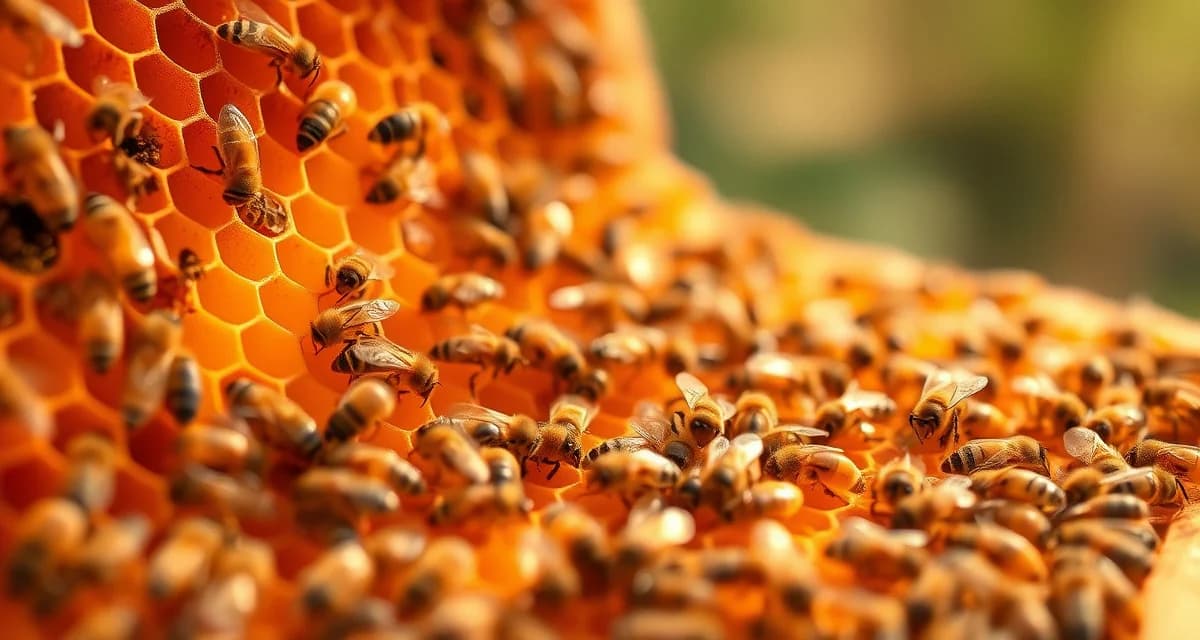
Varroa Impact on Honey Production: How Mites Cost You Revenue
A single high-mite season can reduce honey yield by 20-40% and colony quality scores for pollination contracts. Most beekeepers know varroa is bad for bees. Fewer have done the math on what it costs them in actual revenue.
ROI modeling shows that a 1% mite reduction in August increases average fall honey yield by 12 pounds per hive. At any current honey price, that's a meaningful number per hive. Across a commercial or sideliner operation, it adds up quickly.
This guide explains the mechanisms by which varroa reduces honey production, quantifies the revenue impact, and shows how consistent mite management directly translates into production outcomes.
TL;DR
- This guide covers key aspects of varroa impact on honey production: how mites cost you revenu
- Mite monitoring should happen at minimum every 3-4 weeks during active season
- The 2% threshold in spring/summer and 1% in fall are standard action points based on HBHC guidelines
- Always run a pre-treatment and post-treatment mite count to calculate efficacy
- Treatment records including product name, EPA number, dates, and counts are required for state inspection compliance
- VarroaVault stores all monitoring and treatment data with automatic threshold comparison and state export formatting
Why High Mites Mean Less Honey
The relationship between varroa and honey production is not linear, but it's real and well-documented. Multiple mechanisms operate simultaneously:
Shortened Forager Lifespan
Honey bees that developed in mite-infested brood cells have reduced fat body stores and lower vitellogenin levels compared to bees that developed in clean cells. Fat bodies are the energy reserve that fuels foraging. Vitellogenin influences lifespan, immune function, and foraging behavior.
The result: foragers from high-mite colonies have shorter productive foraging lifespans. A forager that should contribute to the colony for 3-4 weeks of active foraging may contribute for only 1-2 weeks before her physiological reserves are exhausted. Multiply that shortened productive life across thousands of foragers and the colony's foraging force capacity drops substantially.
Studies have documented a 20-30% reduction in foraging lifespan for bees raised in high-mite colonies compared to bees raised in treated, low-mite colonies under the same conditions.
Reduced Brood Area and Colony Population
Varroa-damaged brood doesn't become healthy foragers. Pupae that die in cells, emerge with deformed wings, or emerge compromised by viral load don't join the foraging workforce at all. As mite populations build through summer, the proportion of successfully emerging, healthy bees declines.
A colony with 4% mite load in July is producing a compromised brood cohort. Some percentage of emerging bees are DWV-affected, a larger percentage have reduced lifespan from subclinical viral load and fat body depletion. The forager force, which drives honey production, is smaller than it should be for a colony of that physical size.
Early Winter Decline
The winter bee cohort quality argument is especially relevant for late-season honey production. Colonies that failed to protect winter bees through August mite management may show accelerated fall decline, reducing the colony's ability to cap and store honey through the fall flow even when nectar is available.
Quantifying the Revenue Impact
Per-Hive Honey Yield Impact
Research-backed estimates suggest:
- A colony at 0-1% mite load through August produces approximately baseline honey yield
- At 2-3% mite load, honey yield typically declines 15-25% from baseline
- At 3-5% mite load, decline reaches 25-40%
- Above 5%, colony health is severely compromised and honey production falls well below 40% of potential, or the colony may fail entirely before harvest
The 1% mite reduction in August translating to 12 pounds of additional fall honey yield is a conservative estimate from field data. At $8/pound for raw honey (a reasonable current wholesale benchmark), that's $96 per hive per year in recovered revenue for each percentage point of mite reduction.
A 10-hive hobbyist managing down from 3% average to 1.5% average in August might realistically recover 180 pounds of honey across the operation, worth roughly $1,440 at wholesale.
Colony Quality for Pollination Contracts
Commercial beekeepers with pollination contracts have a second revenue channel that varroa directly affects. Pollination contracts specify minimum hive strength requirements, typically frames of bees and brood at placement. Colonies weakened by varroa may fail to meet the contract minimum, resulting in:
- Reduced per-hive payment rates (many contracts have tiered pricing by colony strength)
- Colony replacement costs if too many fall below minimum
- Contract termination risk if minimum standards aren't met consistently
A grower paying $200/hive for almond pollination at 8+ frame strength versus $120/hive for 5-7 frame strength is a $80/hive difference. A 100-hive operation with half its colonies underperforming due to varroa pressure loses $4,000 in a single almond placement from that gap alone.
VarroaVault's ROI model shows the breakeven analysis: treating one extra colony that would have died pays for 14 months of Hobby plan. For operations managing revenue-producing colonies, the math is even more favorable.
The Compounding Cost of Reactive Treatment
There's a difference between beekeepers who manage mites proactively, treating at threshold before populations build, and beekeepers who treat reactively, treating when problems are already visible. The difference shows up in both colony health and honey production.
Reactive treatment happens after the mite-damaged brood cohort has already been raised. You've reduced the mite load, but the foragers working the honey flow are the compromised bees from the weeks before you treated. You can't retroactively improve the lifespan of bees that are already in the field.
Proactive threshold management keeps mite loads low enough that the brood being raised during active nectar flows is healthy brood. Those bees become high-quality foragers with full lifespan and full physiological capacity.
The honey yield difference between proactive and reactive varroa management in commercial operations has been documented at 15-20% under controlled comparisons. That's not a marginal difference. It's a meaningful production gap that accumulates over a season and over years.
Using VarroaVault to Track Revenue Impact
VarroaVault's ROI calculation connects your mite count trend history to your honey production records. When you log honey harvest weight per hive and compare it to the count trend from the preceding 3-4 months, the correlation between mite management and production becomes visible in your own data.
Some commercial beekeepers are initially skeptical that software can demonstrate this connection in their specific operation. After a season or two of tracking both count data and harvest data, most find the correlation is even stronger than they expected.
Access the production impact tracking through VarroaVault's treatment software overview, and see how commercial-scale revenue analysis connects to the commercial beekeeper management software guide.
What Better Mite Management Actually Costs
The calculation that motivates adoption of serious mite management:
- Monthly monitoring (1 alcohol wash per hive = 30 minutes per 10-hive apiary) = 1 hour/month
- Timely treatment when needed = 2-3 hours per treatment event for a 10-hive apiary
- VarroaVault Hobby subscription = $29/month
Against:
- 12 pounds additional honey per hive per 1% mite reduction in August
- 0-2 colony losses prevented per year from timely threshold intervention
- 40% lower reactive treatment costs from catching problems early
The investment is minimal. The return, in honey yield, colony survivorship, and pollination revenue, is real and measurable.
Frequently Asked Questions
How much honey production is lost to varroa?
At 2-3% mite load through the honey production season, colonies typically yield 15-25% below their potential. At 3-5%, the decline reaches 25-40%. The mechanism is reduced forager lifespan, smaller healthy forager populations, and earlier fall colony decline, all driven by the fat body depletion and viral load that mite-infested brood development causes. Research-backed estimates suggest a 1% mite reduction in August produces approximately 12 additional pounds of fall honey per hive, a meaningful per-hive revenue difference at any current honey price.
Can better varroa management increase my honey revenue?
Yes, and measurably. Commercial beekeepers who implement consistent threshold-based mite management report 15-20% higher honey yields compared to reactively managed operations. For pollination contract beekeepers, maintaining colony strength above contract minimums through consistent mite management directly protects per-hive contract rates. The ROI calculation is straightforward: the cost of monitoring, treatment, and management software is consistently less than the revenue recovered from improved honey yields and colony survivorship.
Does VarroaVault show me the financial impact of my mite levels?
Yes. VarroaVault's ROI model connects your historical mite count data to your logged honey production records, showing the correlation between mite management periods and harvest outcomes. The platform also generates breakeven analysis showing how many colonies need to be saved from mite-related loss to offset subscription costs. For most operations with even moderate honey production or pollination revenue, the math typically shows positive ROI within the first season of consistent use.
How do I know if my varroa treatment is working?
Run a mite count 2-4 weeks after the treatment ends and compare it to your pre-treatment count. The efficacy formula is: ((pre-count - post-count) / pre-count) x 100. A result above 90% indicates effective treatment. Results below 80% should trigger investigation for possible resistance, application error, or reinfestation. Log both counts in VarroaVault to track efficacy trends across treatment cycles.
How often should I check mite levels in my hives?
At minimum, once per month (every 3-4 weeks) during the active season. Increase to every 2 weeks when counts are near threshold or after a treatment to verify it worked. In fall, monitoring frequency matters most because the window to treat before winter bees are raised is narrow. VarroaVault's monitoring reminders can be set to your preferred interval for each apiary.
What records should I keep for varroa management?
Each record should include: date of count or treatment, hive identifier, monitoring method used, number of bees sampled, mites counted, infestation percentage, treatment product name and EPA registration number, dose applied, treatment start and end dates, and PHI end date. State apiarists typically expect this level of detail during inspections. VarroaVault captures all of these fields in a single log entry.
What is Varroa Impact on Honey Production: How Mites Cost You Revenue?
Varroa mites are parasites that attach to honey bees and feed on their fat bodies, weakening individual bees and suppressing colony health. When mite loads go unchecked, colonies produce less honey—often 20–40% less in a single bad season. This article breaks down the exact mechanisms behind that loss and shows beekeepers how to calculate the real dollar impact of mite pressure on their honey yield and pollination contract value.
How much does Varroa Impact on Honey Production: How Mites Cost You Revenue cost?
Varroa management itself costs relatively little—oxalic acid treatments run a few dollars per hive, and alcohol wash supplies are minimal. The real cost question is the inverse: what does NOT managing mites cost you? Research-backed ROI modeling in this article shows that a 1% mite reduction in August translates to roughly 12 additional pounds of honey per hive. At current market prices, that payoff far exceeds any treatment expense.
How does Varroa Impact on Honey Production: How Mites Cost You Revenue work?
Varroa mites reproduce inside capped brood cells and emerge with each new bee, spreading exponentially through the colony. They suppress bees' immune systems, shorten adult bee lifespan, and reduce the fat body reserves bees need to produce royal jelly and beeswax. Fewer healthy nurse bees means less brood care, weaker foragers, and a smaller workforce available during the nectar flow—directly cutting honey output when it matters most.
What are the benefits of Varroa Impact on Honey Production: How Mites Cost You Revenue?
Consistent mite management protects honey yield, improves colony quality scores for pollination contracts, and reduces colony losses heading into winter. This article quantifies those benefits with concrete numbers so beekeepers can make data-driven treatment decisions rather than reactive ones. Sideliner and commercial operations especially benefit from understanding the cumulative revenue difference between proactive monitoring and waiting until mite pressure becomes visible.
Who needs Varroa Impact on Honey Production: How Mites Cost You Revenue?
Any beekeeper who sells honey, holds pollination contracts, or wants to overwinter strong colonies should understand the economic stakes of varroa. Hobbyists with a few hives will find the per-hive math useful. Sideliners and commercial operators managing dozens or hundreds of colonies will see why even modest mite reductions compound into significant seasonal revenue differences. If you track hive counts but not mite loads, this article is written for you.
Related Articles
Sources
- American Beekeeping Federation (ABF)
- USDA ARS Bee Research Laboratory
- Honey Bee Health Coalition
- Penn State Extension Apiculture Program
- Project Apis m.
Get Started with VarroaVault
The information in this guide is most useful when you have your own mite count data to apply it to. VarroaVault stores every count, flags threshold crossings automatically, and builds the treatment history you need for state inspections and effective management decisions. See pricing and free tools at varroavault.com.