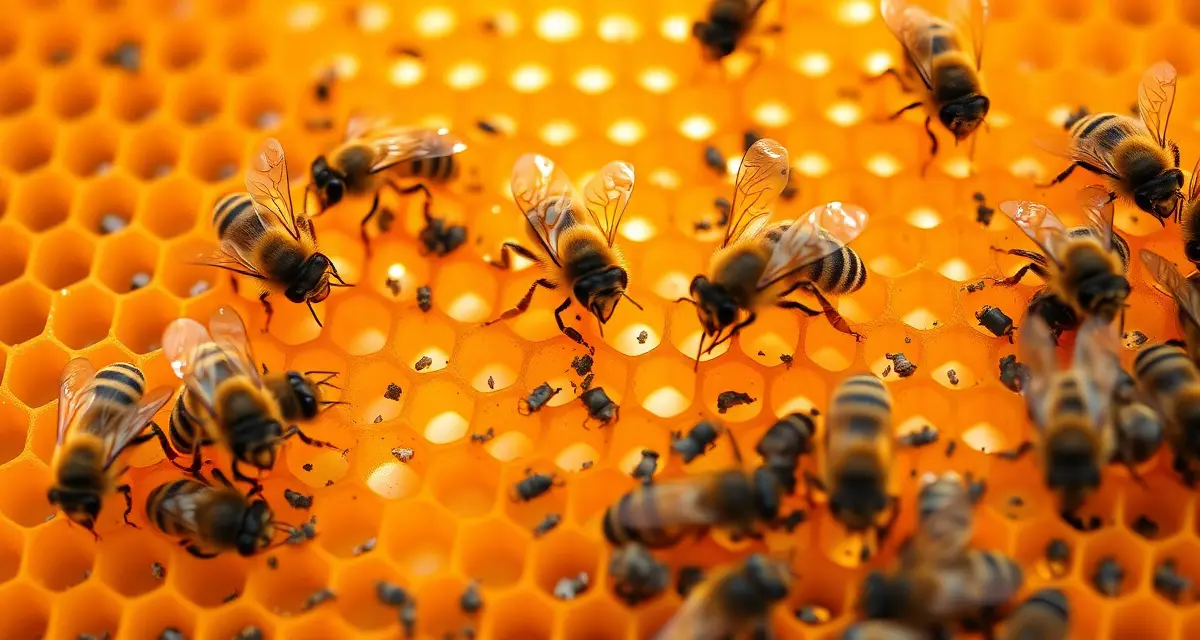
Hygienic Behavior in Bees: Breeding for Varroa Resistance
Colonies with 95%+ hygienic behavior scores have been shown to maintain sub-threshold mite levels without chemical treatment. That's not a marketing claim. It's the outcome of decades of selective breeding research, primarily from the work of Dr. Marla Spivak at the University of Minnesota and breeding programs that have worked from her foundation.
The challenge is that most bees don't have strong hygienic behavior naturally. It's a trait that exists in wild populations and in selectively bred lines, but it's been diluted out of most commercial stock. Getting there takes either buying from programs that have done the selection work, or doing the selection work yourself.
This guide explains what hygienic behavior is, how to test for it, what VSH means and how it differs, and how to track your results over time to improve your stock.
TL;DR
- Hygienic behavior (HB) and varroa-sensitive hygiene (VSH) are heritable traits that allow bees to detect and remove mite-infested pupae
- Colonies with strong hygienic traits can maintain mite populations at lower levels than non-hygienic colonies under the same conditions
- VSH specifically targets mite reproduction, not just mite presence -- VSH bees remove cells containing reproducing mites
- Selecting for hygienic genetics takes multiple seasons of breeding and testing to achieve meaningful results
- Hygienic traits alone rarely eliminate the need for varroa monitoring; they reduce pressure but do not always hold below threshold
- Track mite counts in hygienic stock over multiple seasons in VarroaVault to measure whether genetics are maintaining acceptable levels
What Hygienic Behavior Is
Hygienic behavior is a specific heritable trait that causes worker bees to detect, uncap, and remove diseased or parasitized brood from sealed cells. Varroa-resistant hygienic colonies detect cells containing mite-infested pupae and remove them before the mites inside can complete their reproductive cycle.
If a mite enters a cell, lays eggs, and those eggs develop into adult mites while the pupa develops, one mite becomes three to four mites by the time the bee emerges. The colony gains nothing by removing that bee after emergence. It gains a lot by removing the entire mite family before they emerge.
A colony scoring 95%+ on a standardized hygienic behavior test removes 95% of killed brood within 24-48 hours. At that removal rate, mite reproductive success drops dramatically. Mites enter cells, attempt to reproduce, and get removed before their offspring can contribute to population growth. The mite population can't build under those conditions.
How to Test a Colony for Hygienic Behavior
The standard field test for hygienic behavior is the freeze-killed brood test (FKB). It's accessible with basic equipment and produces reliable results.
What You Need
- Liquid nitrogen (available from welding supply stores) or dry ice
- A liquid-nitrogen-safe container (small thermos or dewar)
- A metal pipe or can approximately 3 inches in diameter
- A thermometer (optional but helpful)
- The colony you want to test
The Freeze Test Protocol
Step 1: Select a frame with sealed brood. Choose a frame with a solid patch of sealed worker brood. Mark a section of approximately 100 cells (a roughly 4x25 cell area).
Step 2: Apply liquid nitrogen to the marked area. Press the metal pipe against the face of the frame over the marked area and pour liquid nitrogen into the pipe. Hold for 30-45 seconds to ensure penetration through the full depth of the cells, killing the pupae inside. The frozen section will turn a slightly lighter color as pupae die.
Step 3: Return the frame and record the time. Put the frame back in the colony and note the time. The bees will begin inspecting the frozen cells.
Step 4: Check at 24 and 48 hours. Return 24 hours later and count the cells that have been uncapped and cleaned. Return again at 48 hours and count again.
Calculate hygienic score: Cells cleaned at 24 hours / total killed cells x 100 = 24-hour hygienic score. Cells cleaned at 48 hours / total killed cells x 100 = 48-hour hygienic score.
A colony scoring 95%+ at 48 hours is considered hygienic. Below 50% is considered non-hygienic. The 50-95% range is the gray zone where the trait is partially expressed but not strongly enough to provide meaningful varroa suppression.
Alternative: The Pin Test
If you don't have access to liquid nitrogen, the pin test is an accessible alternative. Insert a large pin through the cappings of 100 sealed worker brood cells in a standardized pattern, killing the pupae without disturbing the cappings. The bees detect the dead brood and uncap those cells over the following 24-48 hours.
The pin test is somewhat less precise than FKB (because visual assessment of pin-killed brood can be ambiguous) but workable for routine colony screening.
What VSH Means and How It Differs
VSH stands for Varroa Sensitive Hygiene. It's a more specific trait than general hygienic behavior, though the two overlap. VSH refers specifically to the ability of worker bees to detect mites in the reproductive stage, not just dead brood generally.
General hygienic behavior detects dead or diseased brood from any cause. VSH specifically targets actively reproducing varroa in cells. VSH bees disrupt varroa reproduction directly, even when the brood itself appears otherwise healthy.
In practice, VSH bees interrupt mite reproduction by removing the foundress mite from cells, removing mite offspring, or otherwise disrupting the reproductive sequence. The result is high non-reproductive mite rates (mites present in cells but not reproducing successfully), which prevents population growth even when the bees don't remove the mite-infested bee entirely.
VSH is a more powerful trait than general hygienic behavior for varroa specifically. The most effective resistant bee lines combine high general hygienic scores with strong VSH behavior.
Selecting for Hygienic Behavior in Your Apiary
If you want to improve your stock's hygienic behavior over multiple seasons, you need to test, select, and propagate.
Test all colonies in your apiary. Score every colony with the freeze test. You'll almost certainly find variation, even among colonies from similar genetic stock. Some will score 80%, some 60%, some 95%.
Identify your top performers. The colonies scoring 95%+ are your genetic candidates. Note their queen line, origin, and any other characteristics.
Raise queens from high-performing colonies. Graft from your best-scoring queens to propagate the hygienic trait. Use these queens to replace poor-performing colonies in your apiary.
Test offspring colonies. When the colonies headed by daughters of your best queens are established, test them. If hygienic scores in daughter colonies are consistently high, you're selecting for the trait. If scores are inconsistent, look at your drone-source population, because if your apiary drones come from non-hygienic colonies, they're diluting the trait in new queens.
Track scores alongside mite outcomes. VarroaVault's hygienic behavior test results link to queen line records so you can compare hygienic scores against mite count trends across queen generations. The connection between test score and actual mite outcomes over time is the evidence you need to know whether your selection is working.
This is also linked to the queen rearing program tracker for beekeepers managing active breeding programs.
Purchasing Hygienic and VSH Stock
If you're not raising your own queens, purchasing from programs that specifically test and certify hygienic behavior is the fastest path to improved genetics. Several programs in the US offer VSH-certified queens that have been independently tested before sale.
The Honey Bee Genetics program at UC Davis, the Minnesota Hygienic line, and various VSH breeding programs through USDA ARS have produced tested stock. Bee breeders who work with these lines, and who test and publish their colonies' hygienic scores, are your best source for queens with documented resistant genetics.
The treatment-free beekeeping guide covers the broader context of genetic selection in operations aiming to reduce or eliminate chemical treatments.
Realistic Expectations
Hygienic behavior is a genuinely effective varroa management tool. But it's not magic. Here's what to expect:
In high-mite-pressure environments: Even strongly hygienic colonies may need occasional treatment if surrounded by non-hygienic hives that are pumping out mites through drifting and robbing. The genetic resistance reduces your treatment frequency; it may not eliminate the need entirely.
In lower-pressure environments: Colonies with strong VSH and hygienic scores often do maintain sub-threshold levels without treatment in moderate-mite-pressure conditions. These are the colonies that make treatment-reduced or treatment-free beekeeping possible.
Improvement takes time. Genetic improvement of a whole apiary through queen selection is a multi-year process. Year one you're testing and identifying your best stock. Year two you're raising daughters and propagating. Year three you're starting to see the impact across the apiary. Patience and consistent record-keeping are both required.
Frequently Asked Questions
How do I test a colony for hygienic behavior?
The freeze-killed brood test (FKB) is the standard method. Mark 100 sealed worker brood cells, apply liquid nitrogen through a small pipe to kill the pupae inside, return the frame to the colony, and count the cleaned cells at 24 and 48 hours. Divide cleaned cells by 100 to get your hygienic percentage. A score of 95%+ at 48 hours indicates strong hygienic behavior capable of suppressing varroa reproduction. The pin test (puncturing capped cells with a pin) is a lower-equipment alternative but less precise. For apiary-wide screening, test every colony at least once per season.
What is VSH and how does it differ from general hygienic behavior?
General hygienic behavior is the tendency of worker bees to detect and remove dead or diseased brood from sealed cells, regardless of cause. VSH (Varroa Sensitive Hygiene) is a more specific trait that targets actively reproducing varroa in brood cells, disrupting mite reproduction before the infested bee even dies. VSH bees can detect and interrupt mite reproduction even in otherwise healthy-looking brood. Colonies with strong VSH maintain high non-reproductive mite rates, meaning mites are present but not successfully reproducing, which prevents population growth. VSH is more specific to varroa suppression; general hygiene addresses a broader range of brood diseases as well.
Does VarroaVault track hygienic behavior scores?
Yes. VarroaVault's colony records include a hygienic behavior test section where you can log freeze test or pin test results, including the date tested, testing method, 24-hour score, and 48-hour score. These test results link to the queen line record for that colony, so over multiple seasons you can compare hygienic scores against actual mite count trends and treatment frequency. This connected view helps you assess whether selecting for high-scoring queen lines is producing lower mite pressure outcomes in your apiary over time.
How do I know if my varroa treatment is working?
Run a mite count 2-4 weeks after the treatment ends and compare it to your pre-treatment count. The efficacy formula is: ((pre-count - post-count) / pre-count) x 100. A result above 90% indicates effective treatment. Results below 80% should trigger investigation for possible resistance, application error, or reinfestation. Log both counts in VarroaVault to track efficacy trends across treatment cycles.
How often should I check mite levels in my hives?
At minimum, once per month (every 3-4 weeks) during the active season. Increase to every 2 weeks when counts are near threshold or after a treatment to verify it worked. In fall, monitoring frequency matters most because the window to treat before winter bees are raised is narrow. VarroaVault's monitoring reminders can be set to your preferred interval for each apiary.
What records should I keep for varroa management?
Each record should include: date of count or treatment, hive identifier, monitoring method used, number of bees sampled, mites counted, infestation percentage, treatment product name and EPA registration number, dose applied, treatment start and end dates, and PHI end date. State apiarists typically expect this level of detail during inspections. VarroaVault captures all of these fields in a single log entry.
What is Hygienic Behavior in Bees: Breeding for Varroa Resistance?
Hygienic behavior (HB) is a heritable trait in honey bees where workers detect and remove varroa-infested or diseased pupae from capped cells before mites can reproduce. Breeding for varroa resistance means selectively propagating colonies that score 95% or higher on standardized hygiene tests. This approach, pioneered by Dr. Marla Spivak at the University of Minnesota, produces bees capable of naturally suppressing mite populations without relying solely on chemical treatments.
How much does Hygienic Behavior in Bees: Breeding for Varroa Resistance cost?
There is no fixed cost — it depends on your approach. Purchasing mated hygienic queens from reputable breeding programs typically runs $30–$60 each. Sourcing VSH or Minnesota Hygienic stock may cost more due to selection rigor. If you conduct your own breeding program, costs include freeze-killed brood test supplies and record-keeping time. Long-term, hygienic stock can reduce spending on miticides, making the investment economically sound for beekeepers managing multiple colonies.
How does Hygienic Behavior in Bees: Breeding for Varroa Resistance work?
Hygienic bees use olfactory cues to detect compromised or mite-infested cells. Worker bees uncap those cells and remove the pupae before varroa can complete a reproductive cycle. VSH (varroa-sensitive hygiene) is a more targeted variant — VSH bees specifically identify cells containing reproducing mites, not just dead brood. Both traits are heritable, meaning colonies that score well can pass the behavior to offspring when queens are bred from high-performing stock.
What are the benefits of Hygienic Behavior in Bees: Breeding for Varroa Resistance?
Colonies with strong hygienic behavior can maintain varroa levels below treatment thresholds without chemical intervention, reducing or eliminating miticide use. This lowers input costs, minimizes chemical residues in wax and honey, and supports pollinator health long-term. Breeding for these traits also builds locally adapted stock that improves over generations. For hobbyist and commercial beekeepers alike, hygienic genetics offer a sustainable, proactive alternative to reactive mite management.
Who needs Hygienic Behavior in Bees: Breeding for Varroa Resistance?
Any beekeeper dealing with varroa — which includes virtually all managed honey bee operations in the Northern Hemisphere — benefits from understanding and selecting for hygienic traits. It is especially valuable for beekeepers who want to reduce chemical dependence, those managing treatment-resistant mite populations, or anyone interested in long-term stock improvement. Beginners starting new colonies and experienced breeders refining local genetics both have strong reasons to prioritize hygienic behavior scores when selecting queens.
Related Articles
- Winter to Spring Varroa Transition: What to Do When Bees Start Flying
- How to Keep Bees in an Urban Area: Varroa Management in Dense Neighborhoods
Sources
- American Beekeeping Federation (ABF)
- USDA ARS Bee Research Laboratory
- Honey Bee Health Coalition
- Penn State Extension Apiculture Program
- Project Apis m.
Get Started with VarroaVault
The information in this guide is most useful when you have your own mite count data to apply it to. VarroaVault stores every count, flags threshold crossings automatically, and builds the treatment history you need for state inspections and effective management decisions. See pricing and free tools at varroavault.com.