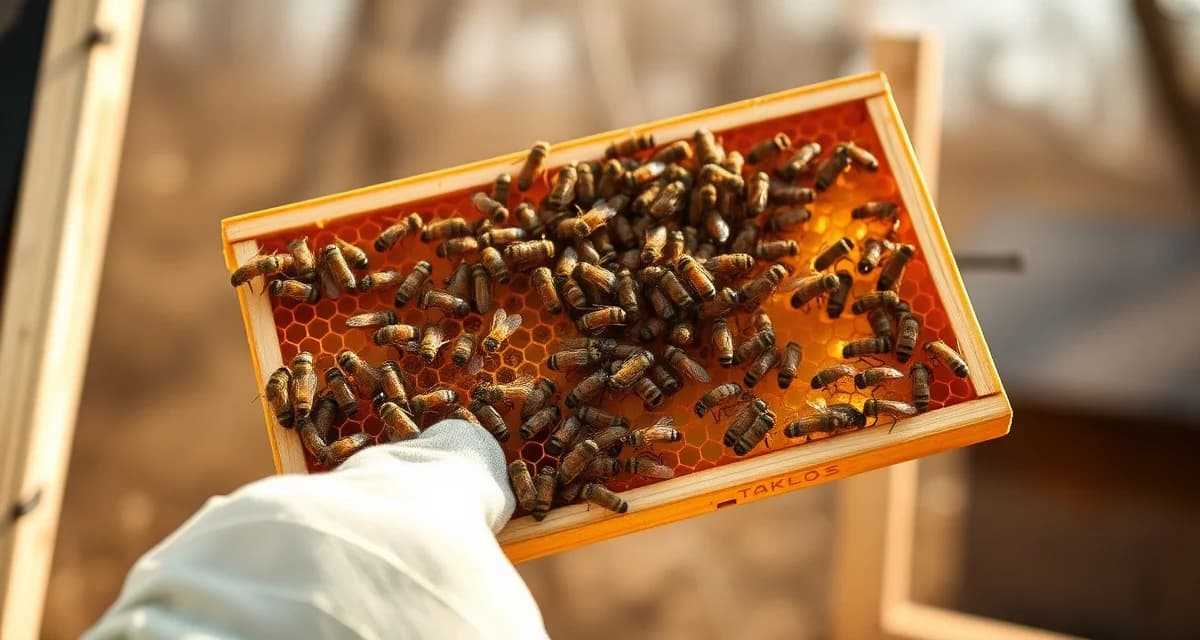
Winter to Spring Varroa Transition: What to Do When Bees Start Flying
Colonies that survived winter often have compressed bee populations that make the spring threshold more critical, not less. A colony with 5,000 bees at a 2% mite load has 100 mites. A colony with 15,000 bees at 2% has 300 mites. The percentage looks the same, but the smaller spring colony is under proportionally greater mite stress relative to its total population and has less buffer before decline accelerates.
The spring transition is easy to get wrong in two opposite directions: treating too early (before the colony has brood to justify it) and treating too late (waiting until April or May when the colony is already building rapidly on an elevated mite load).
TL;DR
- Winter colony losses caused by varroa are largely preventable with effective fall treatment before winter bees are raised
- Winter bees raised under high mite pressure in August-September have shorter lifespans and cannot sustain the cluster
- The fall treatment window (August-September in most regions) is the most important management action of the year
- oxalic acid dribble during a true broodless period (December-January in northern states) can rescue high-mite colonies
- A 1% mite threshold in fall (vs. 2% in summer) reflects the higher stakes of winter bee quality
- Track fall mite counts and winter survival rates together in VarroaVault to measure the impact of your treatment timing
What to Do When Bees Start Flying
First flights don't mean count time yet. When you see bees flying on a warm February or March day, the colony is alive and oriented, but it's not necessarily ready for a mite count. Wait until you can confirm brood is being raised before your first spring count.
Why not count immediately: In a very small early-spring cluster, a 300-bee alcohol wash sample is a proportionally larger fraction of the bee population than in a full summer colony. Taking 300 bees from a 3,000-bee spring colony removes 10% of its population. Wait until the colony has clearly started building (6+ frames of bees) before performing an invasive count.
What to do on the first warm inspection (above 55°F and sunny): Open the hive and quickly assess without a full mite count. Check for the queen (eggs or young larvae), confirm food stores aren't dangerously low, and estimate population. Close up quickly. Log the spring survival check in VarroaVault.
The First Spring Count
Target your first formal mite count for late March through April in most northern states, earlier in warmer climates. The colony should have at least 6 frames of bees and visible brood before you count.
Why this timing matters: An April count captures the mite load on a growing colony. If that count comes back at 2% or above, you have time to treat in April or May, achieve good efficacy, and let the colony build through spring in a low-mite environment. Waiting until May or June to count means a 2% colony has already been building on that mite load for 4-6 weeks, producing potentially compromised bees.
What threshold to use: 3% during the active spring season. However, given that spring colonies are smaller and have less buffer, treating at 2% in March-April is reasonable if you're concerned about the colony's capacity to withstand mite pressure during spring build-up.
What method to use: Alcohol wash. Not sugar roll. The spring count is a decision count; you need accuracy.
Interpreting Spring Count Results
Below 1.5%: Good shape. Set your next count for 4 weeks later. If the colony is growing well, this is expected: the winter broodless OA dribble should have knocked mites down to near zero.
1.5-2.5%: Borderline. If you're heading toward the spring honey flow with supers going on in 4-6 weeks, treating now with OA vaporization extended protocol makes sense. If the honey flow is far off, you can wait and recount in 3 weeks to see the trajectory.
Above 2.5-3%: Treat immediately. This colony carried significant mite load through winter despite treatment (or wasn't treated) and is now building on a high-mite foundation. OA vaporization extended protocol is appropriate if brood is present. If the colony is still broodless (possible in early March in northern states), a single OA dribble can still knock counts down before brood rearing begins in earnest.
Setting Up Your Spring Monitoring Schedule
After your first count, set VarroaVault to the active-season monitoring schedule:
- Monthly counts April through June
- Every 3 weeks in July and August
- Monthly in September and October
- Winter pack-down assessment in late October or November
If any April or May count comes back above 2.5%, switch to 3-week monitoring for the following 6 weeks to track the response to treatment.
VarroaVault's spring activation checklist generates automatically when your last logged count is more than 90 days old and bee flight activity is expected in your climate zone (based on your location's typical first flight date). The checklist walks you through the first spring inspection, first count, and monitoring schedule setup.
Common Spring Mistakes to Avoid
Treating too early on a tiny cluster. A colony with 2,000-3,000 bees in late February isn't ready for invasive counting or some treatments. OA dribble is appropriate in this window if the colony is still broodless, but any treatment requiring strong colony health for distribution (formic acid, thymol) should wait until the colony is stronger.
Not counting before the spring flow. Some beekeepers skip the spring count because everything "looks fine." A spring check is the best opportunity to catch a problem before summer compound it. Log a count before supers go on.
Assuming the winter treatment was adequate without confirming. An October OA dribble that achieved 95% efficacy still leaves some mites. By March, those survivors have had 4 months. Your spring count tells you where you're actually starting from, not where you think you should be based on last fall's treatment.
Frequently Asked Questions
When should I do my first spring mite count?
Wait until the colony has at least 6 frames of bees and visible brood before doing your first formal count, typically late March through April in northern states. Counting too early (when the colony has fewer than 3,000 bees) takes a proportionally large sample from a small population. In warmer climates, first spring counts may be appropriate as early as February. The alcohol wash is the right method: this is a decision count.
How do I assess my surviving colonies in early spring?
The first warm inspection (above 55°F) should confirm the queen is present (look for eggs or young larvae), estimate food stores by hefting the hive from the back, and estimate the bee population. Log this as a spring survival check in VarroaVault. Don't do a full mite count in this first inspection if the colony is very small: wait until the colony is at 6+ frames of bees before the invasive count.
Does VarroaVault help me set up my spring monitoring schedule?
Yes. VarroaVault's spring activation checklist generates automatically when your last logged count is more than 90 days old, walking you through the first spring inspection, first mite count, and monitoring schedule setup for the new season. After your first spring count, you can configure monthly reminders through June, with 3-week reminders for July and August where mite pressure typically peaks.
Can I treat for varroa during winter?
In northern regions where colonies form a tight winter cluster with no brood (typically December-February), oxalic acid dribble is an effective and label-approved treatment. It achieves very high efficacy during true broodless periods because all mites are phoretic. The temperature should be above 40 degrees F during dribble application for bee welfare. Vaporization is also possible but requires safe outdoor conditions for the applicator.
How do I know if my colony survived winter in good mite condition?
Do an early spring mite count (February-March in most regions) as soon as the colony is active and temperatures allow. A count below 1% suggests winter treatment was effective and the colony has a good start. A count above 2% in early spring indicates mites survived in high numbers and a spring treatment should be started promptly before brood population expands.
What is Winter to Spring Varroa Transition: What to Do When Bees Start Flying?
The winter to spring varroa transition refers to the critical period when honey bee colonies shift from their dormant winter cluster to active spring buildup. As bees begin flying and the queen resumes laying, mite populations can explode rapidly. Colonies that survived winter often have smaller populations, making even moderate mite loads proportionally more damaging. Proper monitoring and timely treatment during this window is essential to prevent colony collapse before summer.
How much does Winter to Spring Varroa Transition: What to Do When Bees Start Flying cost?
Managing the winter to spring varroa transition costs nothing beyond your existing beekeeping supplies. An alcohol wash or sugar roll to test mite levels requires only basic tools. Oxalic acid treatments cost just a few dollars per hive. The real cost of skipping this management step is far higher — losing an entire colony represents the loss of bees, drawn comb, honey stores, and the time invested in building that hive.
How does Winter to Spring Varroa Transition: What to Do When Bees Start Flying work?
As temperatures rise above 50°F and bees begin cleansing flights, the colony transitions out of its broodless winter period. The queen resumes laying, brood production accelerates, and varroa mites shift from phoretic (riding adult bees) to reproductive (inside capped brood cells). This rapid shift means mite counts that seemed manageable in January can double or triple within weeks, making early spring the last easy window to treat before population dynamics favor the mite.
What are the benefits of Winter to Spring Varroa Transition: What to Do When Bees Start Flying?
Catching and addressing varroa loads early in spring prevents the compounding effect of mite population growth during peak brood rearing. A colony treated at 1–2% in February or March can build strongly through April and May. Colonies left untreated often reach damaging threshold levels by early summer, leading to weakened foragers, virus transmission, and collapse precisely when the honey flow should be at its peak.
Who needs Winter to Spring Varroa Transition: What to Do When Bees Start Flying?
Every beekeeper managing overwintered colonies needs to understand the winter to spring varroa transition. It is especially critical for beekeepers in northern climates where colonies experience a true broodless period, as that window offers the best opportunity for oxalic acid treatment. New beekeepers who received packages or nucs the prior year and experienced their first winter should treat spring monitoring as a non-negotiable part of their April management checklist.
How long does Winter to Spring Varroa Transition: What to Do When Bees Start Flying take?
The spring varroa management window is narrow — roughly four to eight weeks depending on your region and how quickly the colony expands. In most northern states, this means acting between late February and early April. Once a colony reaches 15,000–20,000 bees with heavy brood production underway, effective mite reduction becomes harder and treatment options more limited. Early, decisive monitoring followed by prompt treatment takes only a few hours but protects months of colony development.
Related Articles
Sources
- American Beekeeping Federation (ABF)
- USDA ARS Bee Research Laboratory
- Honey Bee Health Coalition
- Penn State Extension Apiculture Program
- Project Apis m.
Get Started with VarroaVault
Winter losses are largely a fall varroa management problem. VarroaVault helps you track fall treatment timing, verify efficacy with post-treatment counts, and build the record that shows you whether your winter preparation is actually working year over year. See pricing and free tools at varroavault.com.