Sugar Roll Varroa Count: Step-by-Step Instructions
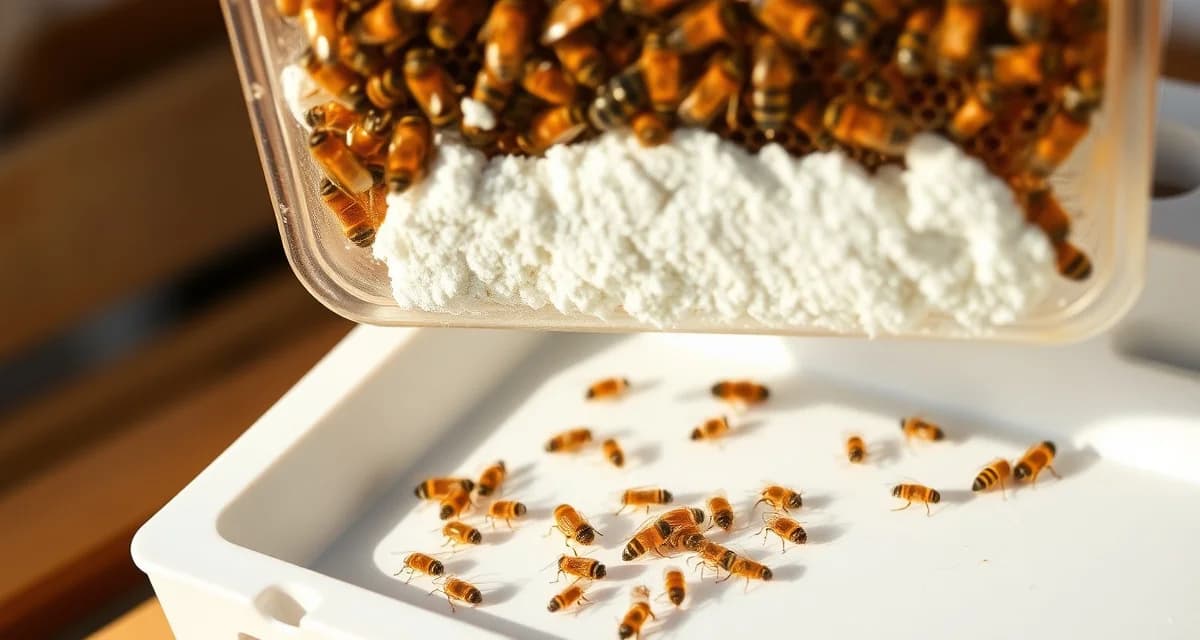
The sugar roll is a non-lethal varroa monitoring method. You coat bees in powdered sugar, which causes mites to release their grip and fall off. The bees survive. The mites are counted.
The tradeoff: sugar roll is 15-20% less accurate than alcohol wash. It typically undercounts mites because sugar doesn't fully dislodge all attached mites. For trend monitoring and regular checks, it's a useful tool. For threshold decisions close to 1% or 2%, confirm with alcohol wash.
TL;DR
- Sugar roll is a non-lethal monitoring method but is 15-20% less accurate than alcohol wash
- It uses approximately 300 bees rolled in powdered sugar; mites fall off onto a white surface for counting
- Sugar roll is useful for beekeepers who prefer not to sacrifice bees, but results may undercount mite levels
- The 2% threshold in summer and 1% in fall apply regardless of monitoring method used
- Sample from the brood nest center -- not the outer frames or entrance -- for accurate results
- Log sugar roll results with method notation in VarroaVault so you can compare accuracy across methods
Materials
- Wide-mouth jar with a mesh lid (or regular lid with holes for ventilation)
- 2 tablespoons of powdered (confectioner's) sugar
- White tray or white container
- Half-cup measure
- Water and a spray bottle (for releasing bees)
Step 1: Collect 300 Bees
Same as alcohol wash, find the brood nest center frame, shake or brush nurse bees into the jar. Aim for half a cup, approximately 300 bees.
Confirm the queen isn't in the sample before proceeding.
Step 2: Add Powdered Sugar
Add approximately 2 tablespoons of powdered sugar to the jar with the bees.
Close the lid (or use the mesh lid if you have one).
Step 3: Roll and Wait
Roll the jar gently to coat all bees in powdered sugar. They should be fully dusted.
Turn the jar upside down (or on its side) and leave in a warm spot for 2 minutes. This gives time for the sugar to coat mites and cause them to release from bee bodies.
Step 4: Shake Mites Onto the Tray
Hold the mesh lid down and shake the jar vigorously over the white tray. Mites fall through the mesh onto the tray; bees remain in the jar.
Shake for 30-60 seconds, rotating the jar to dislodge all loose mites.
Step 5: Count Mites
Mites on the white tray are easier to see than in alcohol wash because the background is clean. They're reddish-brown ovals against white sugar.
Count every mite visible on the tray.
Step 6: Release Bees
Open the jar near the hive entrance and give the bees a gentle mist of water to help clean off the sugar. They'll find their way back into the hive.
Alternatively, shake the bees back through the hive entrance directly.
Step 7: Calculate
(Mites ÷ Bees) × 100 = Infestation %
Apply the same thresholds: 2% spring/summer, 1% late summer/fall.
Important: Accuracy Limitation
Studies show sugar roll consistently detects fewer mites than alcohol wash, typically 15-20% fewer. This means:
- A 1% sugar roll result could be 1.2% on alcohol wash
- A 1.8% sugar roll result could be above the 2% threshold on alcohol wash
For regular trend monitoring (are mites going up or down over the season?), sugar roll is fine.
For a treatment decision at or near the threshold, especially the tight 1% pre-winter threshold, consider confirming with an alcohol wash before deciding not to treat.
Related Articles
- Backyard Beekeeper Varroa Program: A Simple 4-Step Plan for 1-5 Hives
- How to Calculate Varroa Mite Infestation Rate: Step-by-Step
- How to Do a Field Varroa Count in Under 5 Minutes
FAQ
Is sugar roll accurate enough for varroa monitoring?
Sugar roll is acceptable for trend monitoring but should be confirmed with alcohol wash for threshold-level treatment decisions, especially in late summer when the 1% pre-winter threshold is tight. The 15-20% undercount bias means sugar roll can give a false sense of safety when you're near the treatment threshold.
Does the sugar in a sugar roll kill bees?
No. The sugar is harmless to bees. The bees will groom themselves and other bees after the roll, removing the sugar. Returning them through the entrance allows hive bees to help clean them up. A properly done sugar roll returns nearly all sampled bees to the colony.
Can I use regular table sugar for a sugar roll?
Powdered (confectioner's) sugar is recommended. Fine, dust-like powdered sugar coats bees and mites more thoroughly than granulated table sugar. Granulated sugar doesn't adhere well enough to cause good mite dislodgement.
How do I know if my varroa treatment is working?
Run a mite count 2-4 weeks after the treatment ends and compare it to your pre-treatment count. The efficacy formula is: ((pre-count - post-count) / pre-count) x 100. A result above 90% indicates effective treatment. Results below 80% should trigger investigation for possible resistance, application error, or reinfestation. Log both counts in VarroaVault to track efficacy trends across treatment cycles.
How often should I check mite levels in my hives?
At minimum, once per month (every 3-4 weeks) during the active season. Increase to every 2 weeks when counts are near threshold or after a treatment to verify it worked. In fall, monitoring frequency matters most because the window to treat before winter bees are raised is narrow. VarroaVault's monitoring reminders can be set to your preferred interval for each apiary.
What records should I keep for varroa management?
Each record should include: date of count or treatment, hive identifier, monitoring method used, number of bees sampled, mites counted, infestation percentage, treatment product name and EPA registration number, dose applied, treatment start and end dates, and PHI end date. State apiarists typically expect this level of detail during inspections. VarroaVault captures all of these fields in a single log entry.
What is Sugar Roll Varroa Count: Step-by-Step Instructions?
A sugar roll varroa count is a non-lethal method for monitoring varroa mite levels in a beehive. You collect approximately 300 bees from the brood nest, coat them in powdered sugar, and roll the jar so mites detach and fall onto a white surface for counting. The bees survive the process. While 15-20% less accurate than alcohol wash, it's a practical option for beekeepers who prefer not to sacrifice bees during routine monitoring.
How much does Sugar Roll Varroa Count: Step-by-Step Instructions cost?
The sugar roll varroa count method itself is free — it requires only common materials: a wide-mouth jar with a mesh lid, powdered confectioner's sugar, and a white tray or container. There is no cost to perform the test beyond these inexpensive supplies. Logging your results in VarroaVault to track mite trends over time is also free, allowing you to compare accuracy across monitoring methods and make informed treatment threshold decisions.
Sources
- American Beekeeping Federation (ABF)
- USDA ARS Bee Research Laboratory
- Honey Bee Health Coalition
- Penn State Extension Apiculture Program
- Project Apis m.
Log Your Sugar Roll Results
Sugar roll data is still valuable when tracked over time. Log your counts in VarroaVault with the monitoring method noted, the platform accounts for method when interpreting results. Track your trend and know when a confirming alcohol wash is warranted.
Get Started with VarroaVault
The information in this guide is most useful when you have your own mite count data to apply it to. VarroaVault stores every count, flags threshold crossings automatically, and builds the treatment history you need for state inspections and effective management decisions. See pricing and free tools at varroavault.com.