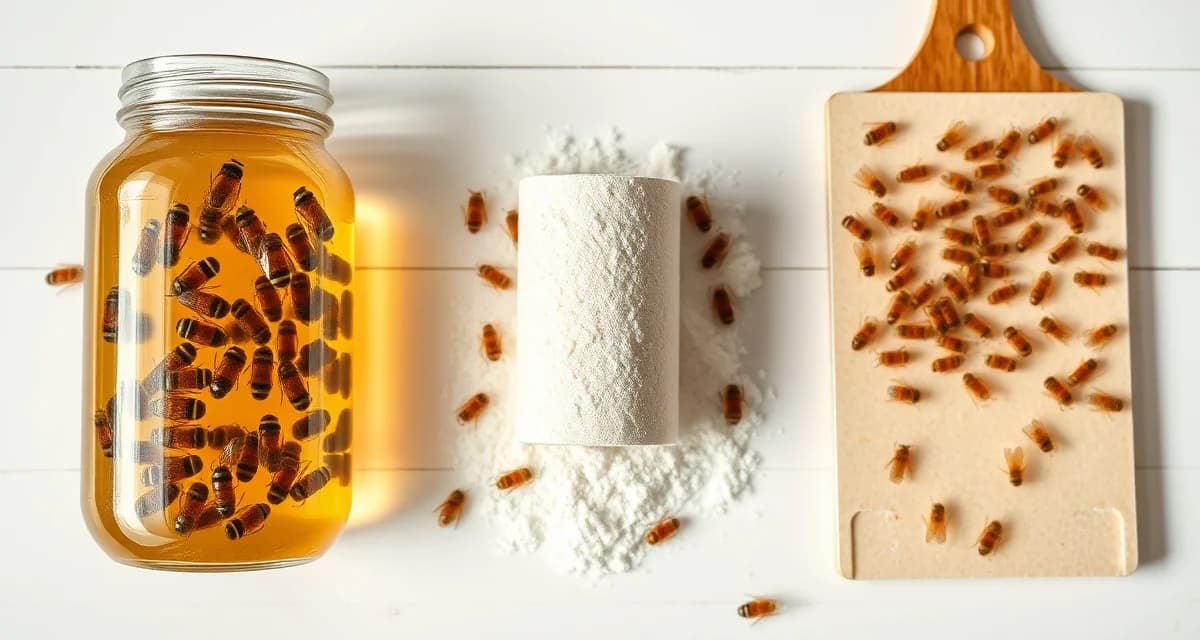
Varroa Mite Count Methods Compared: Alcohol Wash vs Sugar Roll vs Sticky Board
Three primary methods exist for monitoring Varroa mite levels in honey bee colonies. Each has a different accuracy profile, different equipment requirements, and different use cases. Choosing the right method for your situation makes a real difference in the quality of data you base your management decisions on.
Method 1: Alcohol Wash
The alcohol wash is the gold standard. You collect approximately 300 nurse bees from a brood frame, submerge them in isopropyl alcohol, shake to dislodge mites, and filter the mites out through a mesh for counting. The result is a mite-per-bee ratio that can be expressed as a precise percentage.
Accuracy: The highest of the three methods. Studies consistently show alcohol wash captures 95 to 100% of phoretic mites in the sample. The precision of the method comes from the complete bee sample disruption that ensures mites are fully dislodged.
Drawback: The bee sample is killed. Approximately 300 bees per test are sacrificed. For large colonies, this is a negligible loss (less than 0.1% of the population). For very small colonies or nuclei, it represents a higher percentage of the workforce.
Equipment needed: Jar, fine mesh lid, isopropyl alcohol (70%), white tray for counting.
Best for: Anyone who needs an accurate, actionable mite percentage. This should be the standard method for treatment decisions, efficacy checks, and any record that will be used for compliance or comparison purposes.
Method 2: Sugar Roll
The sugar roll uses powdered sugar rather than alcohol. Bees are coated in sugar and rolled for 1 to 2 minutes. Mites that are dislodged fall through the mesh and are counted in the shaken-out sugar. The bees are returned to the hive alive.
Accuracy: Consistently lower than alcohol wash. Sugar roll typically captures 60 to 80% of phoretic mites in the sample. The mites' sticky pads and the bee's body hairs allow mites to re-attach during the rolling process. This means a sugar roll count of 2% may represent a true infestation of 2.5 to 3%.
Drawback: The undercount bias means sugar roll results should not be used interchangeably with alcohol wash data without applying a correction factor. Using raw sugar roll data at an action threshold designed for alcohol wash data can lead to treating later than necessary.
Equipment needed: Sugar roll cup with mesh lid, powdered sugar, white tray.
Best for: Beekeepers who want a non-lethal method and understand the accuracy tradeoff. Useful for trending (the relative change over time is informative even if the absolute number is slightly off) and for beekeepers with very small colonies.
Method 3: Sticky Board (Natural Mite Drop)
A sticky board is placed under a screened bottom board to catch mites that naturally fall from bees. The board is counted after 24 hours (or 48 or 72 hours with division) to estimate mite fall rate.
Accuracy: The lowest of the three methods for precise infestation percentage. The number of mites that fall naturally per day does not translate directly to an infestation percentage because fall rate varies by time of year, colony size, brood ratio, and bee behavior. General correlations exist (e.g., fewer than 10 mites per day is low, 50 or more per day is very high) but these are rough guides only.
Drawback: Cannot give you a precise infestation percentage. The correlation between mite fall and actual infestation is too variable for reliable treatment threshold decisions.
Best for: Supplemental monitoring, post-treatment efficacy confirmation (a spike in mite fall after treatment begins confirms treatment is working), and as a no-disturbance monitoring option in cold weather when hive opening is not safe.
Which Method to Use When
For treatment decisions: Alcohol wash only. The precision matters when you are deciding whether to invest in a treatment or not.
For post-treatment efficacy checks: Sticky board can confirm that treatment is causing mite drop. Alcohol wash 10 to 14 days after treatment end gives a precise post-treatment percentage for your records.
For winter monitoring: Sticky board is the only viable option when it is too cold to do a full inspection and alcohol wash safely.
Recording Methods Consistently
VarroaVault tracks which method was used for each count, which is important because switching methods mid-season can make trend data misleading if the underlying accuracy difference is not accounted for. Always note your method in the log. See the varroa scouting frequency commercial guide for how to integrate these methods into a commercial monitoring schedule.
FAQ
What is Varroa Mite Count Methods Compared: Alcohol Wash vs Sugar Roll vs Sticky Board?
This article is a practical comparison of the three most widely used Varroa mite monitoring techniques: alcohol wash, sugar roll, and sticky board. It breaks down the accuracy, equipment needs, and ideal use cases for each method so beekeepers can choose the right tool for their situation. Whether you manage one hive or a hundred, understanding which method gives you reliable data is essential for making sound treatment decisions before mite loads reach damaging levels.
How much does Varroa Mite Count Methods Compared: Alcohol Wash vs Sugar Roll vs Sticky Board cost?
Monitoring Varroa mites costs very little. An alcohol wash setup requires a jar, mesh lid, and isopropyl alcohol — under $10 total. A sugar roll needs only powdered sugar and a mesh jar. Sticky boards can be purchased for $3–8 or made from cardboard and petroleum jelly. The real investment is your time, roughly 5–20 minutes per hive depending on method. Compared to the cost of losing a colony, routine mite monitoring is one of the highest-return practices in beekeeping.
How does Varroa Mite Count Methods Compared: Alcohol Wash vs Sugar Roll vs Sticky Board work?
Each method works differently. Alcohol wash submerges ~300 bees in isopropyl alcohol to dislodge and count phoretic mites, giving a precise percentage. Sugar roll coats the same bee sample in powdered sugar, causing mites to fall off into water for counting — bees survive but accuracy is lower. Sticky boards sit on the hive floor to catch naturally falling mites over 24–72 hours, providing a daily drop count without disturbing the colony. Each method measures phoretic mites, not those hidden in capped brood.
What are the benefits of Varroa Mite Count Methods Compared: Alcohol Wash vs Sugar Roll vs Sticky Board?
Comparing methods gives you a clearer picture of which tool fits your apiary. Alcohol wash delivers the most accurate data for confident treatment timing. Sugar roll offers a bee-safe alternative when precision matters but sacrificing bees is a concern. Sticky boards allow passive, no-disturbance monitoring suitable for regular tracking. Together, the comparison helps you match method to context — whether you're confirming a treatment threshold, checking a new colony, or running a large operation where speed and simplicity matter most.
Who needs Varroa Mite Count Methods Compared: Alcohol Wash vs Sugar Roll vs Sticky Board?
Any beekeeper who manages colonies with brood should use Varroa mite monitoring. Hobbyists with a few hives benefit from knowing when mite loads cross treatment thresholds before populations crash. Commercial and sideliner beekeepers need efficient, repeatable methods across many colonies. New beekeepers building monitoring habits early will avoid reactive management. Beekeepers in areas with high Varroa pressure, or those overwintering colonies, especially need reliable counts. If your hive has capped brood, Varroa mites are present — the question is how many.
How long does Varroa Mite Count Methods Compared: Alcohol Wash vs Sugar Roll vs Sticky Board take?
The time required depends on method and experience. An alcohol wash takes roughly 10–15 minutes per hive including sample collection, soaking, filtering, and counting. A sugar roll is similar in duration but requires waiting 2–3 minutes for mites to dislodge before counting. Sticky boards require 24–72 hours of passive collection, then 2–5 minutes to count the drop. Most beekeepers recommend sampling every 30 days during the active season, making the per-visit time investment modest relative to the information gained.
What should I look for when choosing Varroa Mite Count Methods Compared: Alcohol Wash vs Sugar Roll vs Sticky Board?
When choosing a monitoring method, consider accuracy needs, colony size, and how often you'll test. If you need the most reliable data for treatment decisions, choose alcohol wash. If preserving bees matters more than maximum precision — especially for small colonies or nucs — sugar roll is a reasonable compromise. Use sticky boards for trend monitoring between active counts, not as your sole decision-making tool. Also consider equipment on hand, your comfort level with each technique, and whether you're monitoring one hive or scaling across many.
Is Varroa Mite Count Methods Compared: Alcohol Wash vs Sugar Roll vs Sticky Board worth it?
Yes. Regular Varroa monitoring is one of the most cost-effective practices in beekeeping. Mite infestations that go undetected until symptoms appear — deformed wings, reduced population, brood disease — are far harder and more expensive to manage. A $5 alcohol wash kit used monthly gives you data to treat proactively, before mite loads become colony-threatening. The time cost is low, the equipment is basic, and the payoff is colonies that survive winter and remain productive. Skipping monitoring is the decision that consistently costs beekeepers the most.