Varroa Treatment for New Package Bees: When and How to Start
A new broodless package treated with OA dribble within the first week arrives at colony establishment with near-zero mite load. That's a significant advantage heading into your first season. A package that starts mite-free builds population on clean brood through spring and summer, giving you a much lower mite load entering the critical fall treatment window than a package that wasn't treated at installation.
The question of whether and when to treat a new package is one that confuses a lot of new beekeepers. Here's what you need to know.
TL;DR
- Package bees from commercial suppliers arrive with variable mite loads; never assume they are mite-free
- Test within 2 weeks of installation before the first brood cycle produces a large capped brood population
- Early mite monitoring in packages allows oxalic acid dribble treatment on the broodless period after queen release
- Package bees from the southern US often have higher initial mite loads than locally-raised bees
- Log the package source, installation date, and first mite count in VarroaVault to track mite introduction history
- Establishing a monitoring schedule from day one prevents the common first-year mistake of untested packages
Why New Packages Are a Treatment Opportunity
New packages arrive without capped brood. The bees that make up a package have been shaken from multiple donor colonies, and while they carry varroa mites, those mites are entirely phoretic (riding on adult bees) because there's no brood for them to reproduce in.
This is exactly the condition that makes OA dribble maximally effective. In a broodless colony, all mites are exposed. A single OA dribble treatment kills the vast majority of them. Your package starts its colony life with near-zero mite load.
If you skip this window, mites immediately begin reproducing in the brood the queen starts laying within days of installation. By the time you're doing your first mite count a month in, the mites that were phoretic at installation have already completed their first reproductive cycles in the package's first brood.
Should I Treat a New Package With OA Dribble?
For most beekeepers in most situations: yes. The broodless package window is too good to pass up.
Arguments for treating:
- Near-100% mite kill in broodless conditions
- Colony starts the season with clean brood
- Significantly lower mite loads heading into the critical fall treatment window
- Inexpensive treatment that won't harm a broodless colony
Arguments against treating (or reasons to reconsider):
- If the package arrives with a laying queen and early brood already present (uncommon but possible), the broodless advantage is reduced
- Some beekeepers prefer not to stress a package with any treatment in the first week while the queen is being accepted
- If you know the source apiary had very low mite levels and screened the mite load before packaging
For the vast majority of package bees, where the source mite levels are unknown, early OA dribble is the right call.
When to Do Your First Mite Count on a New Package
Package bee onboarding in VarroaVault auto-schedules a 30-day mite count reminder. That's the right timing: wait until your package has established a few frames of capped brood (about 3-4 weeks after installation), then do an alcohol wash from the nurse bees in the brood area.
This first count tells you:
- Whether the OA dribble treatment worked (if you treated at installation)
- What your starting mite load is for the season
- Whether the package arrived with a high mite load that survived the initial treatment
If your 30-day count is above 1%, treat again. If it's below 0.5%, you're in excellent position heading into spring.
How to Dribble OA on a Package
Preparation: Mix oxalic acid solution at 3.5% w/v (standard commercial preparations are pre-mixed). You'll need approximately 50ml per treatment.
Timing: Within 3-7 days of installation, before the queen begins laying and brood is capped. The sooner the better within this window.
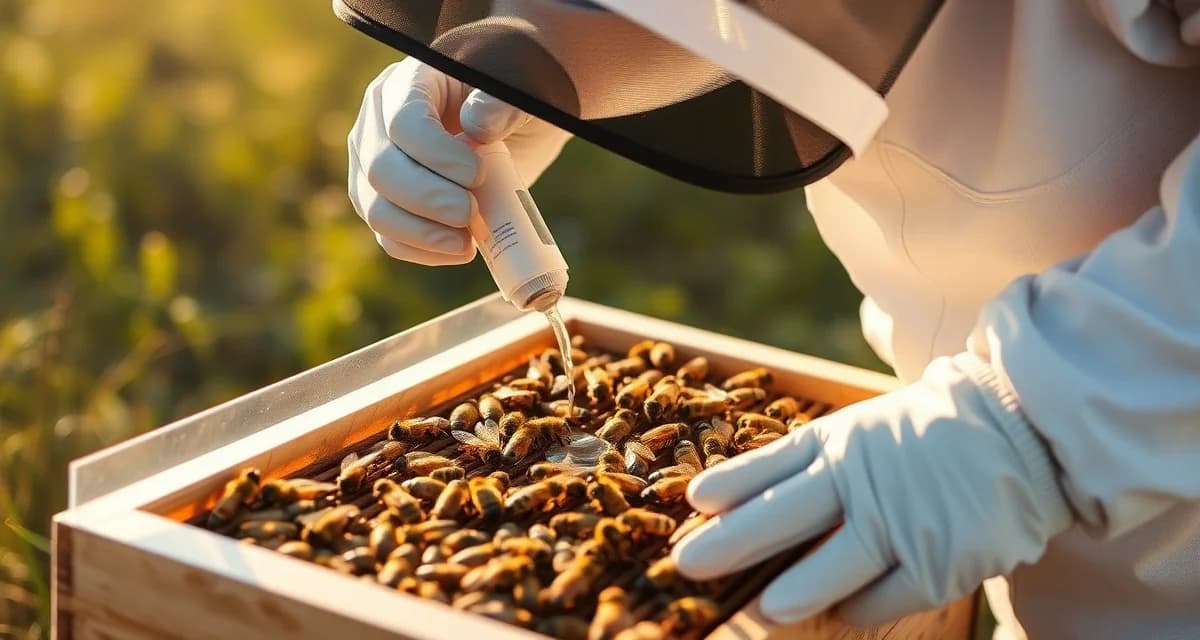
Application: Dribble 5ml of solution over 10 bees (approximately 500ml per treatment, divided across the frames of bees). In a package installed in a standard Langstroth box, work across the top bars, dribbling directly onto the surface of the bee cluster.
Queen consideration: You don't need to find the queen. If she's in a cage and not yet released, she's protected from the OA solution by the cage. If she's been released but laying hasn't begun, she can tolerate the dribble. OA dribble is generally safe for queens.
After treatment: Replace the cover and leave the colony alone for 48 hours. The bees will clean up the solution and groom each other.
How to Log a Package Bee Acquisition in VarroaVault
When you log a new hive acquisition in VarroaVault, select "Package Bees" as the acquisition type. The system automatically:
- Creates a new hive profile
- Schedules a 30-day mite count reminder
- Schedules an OA treatment window reminder for days 1-7 post-installation
- Tracks the acquisition date and source information you enter
After logging your installation OA treatment and your 30-day count, VarroaVault integrates this package into your standard seasonal monitoring and treatment calendar.
For more on managing varroa in newly established colonies, see our varroa in new package bees guide. For OA dribble dosing specifics, the oxalic acid dribble calculator provides dose calculation for your specific colony population.
Frequently Asked Questions
Should I treat a new package with OA dribble?
For most packages arriving broodless, yes. The broodless window immediately after installation is when OA dribble achieves near-complete mite kill. Treating a broodless package with OA dribble costs very little in time and money and gives your new colony the best possible start on mite management for the season. Skip it only if you have confirmed low-mite source colony data or if the package arrives with active brood already established.
When should I do my first mite count on a new package?
At 30 days after installation, once the colony has established 3-4 frames of capped brood. This timing gives the colony enough time to begin meaningful brood rearing while still being early enough in the season to catch any mite population that survived installation or began reproducing from the first brood. VarroaVault auto-schedules this reminder when you log a package bee acquisition.
How do I log a package bee acquisition in VarroaVault?
Go to the hive management section and add a new hive. Select "Package Bees" as the acquisition type and enter the installation date, source apiary or supplier if known, and any initial notes. VarroaVault creates the hive profile, schedules the OA treatment window reminder for the first week, and schedules the 30-day mite count reminder. After that, the hive enters the standard monitoring calendar for your USDA zone.
How do I know if my varroa treatment is working?
Run a mite count 2-4 weeks after the treatment ends and compare it to your pre-treatment count. The efficacy formula is: ((pre-count - post-count) / pre-count) x 100. A result above 90% indicates effective treatment. Results below 80% should trigger investigation for possible resistance, application error, or reinfestation. Log both counts in VarroaVault to track efficacy trends across treatment cycles.
How often should I check mite levels in my hives?
At minimum, once per month (every 3-4 weeks) during the active season. Increase to every 2 weeks when counts are near threshold or after a treatment to verify it worked. In fall, monitoring frequency matters most because the window to treat before winter bees are raised is narrow. VarroaVault's monitoring reminders can be set to your preferred interval for each apiary.
What records should I keep for varroa management?
Each record should include: date of count or treatment, hive identifier, monitoring method used, number of bees sampled, mites counted, infestation percentage, treatment product name and EPA registration number, dose applied, treatment start and end dates, and PHI end date. State apiarists typically expect this level of detail during inspections. VarroaVault captures all of these fields in a single log entry.
What is Varroa Treatment for New Package Bees: When and How to Start?
Varroa treatment for new package bees is the practice of monitoring and managing Varroa destructor mite infestations starting at colony installation. Because commercial packages arrive with variable mite loads — sometimes high, especially from southern US suppliers — beekeepers should test within the first two weeks and treat during the broodless window after queen release using oxalic acid dribble. Early intervention prevents mite populations from exploding once capped brood is present.
How much does Varroa Treatment for New Package Bees: When and How to Start cost?
Varroa treatment itself has no single cost — it refers to a management practice, not a product. Oxalic acid dribble solution is inexpensive, often under $20 for a season's supply. Alcohol wash supplies and a refractometer-style mite wash kit run $10–30. The real cost of skipping early treatment is much higher: colony losses, reduced honey production, and the expense of replacing dead colonies the following spring.
How does Varroa Treatment for New Package Bees: When and How to Start work?
After installing a package, wait for the queen to be released and confirm she is laying. During this broodless window — typically days 3–7 — apply an oxalic acid dribble directly onto the bees between frames. With no capped brood for mites to hide in, the treatment reaches nearly all mites present. Test first with an alcohol wash or sugar roll to confirm mite levels warrant treatment, then monitor again two weeks later.
What are the benefits of Varroa Treatment for New Package Bees: When and How to Start?
Early treatment of new packages establishes a near-zero mite baseline heading into spring buildup. Clean brood produced from the start means mite populations grow slower, reducing pressure during summer and giving you a much lower mite load entering the critical fall treatment window. Colonies that start mite-free are more productive, less likely to collapse in their first winter, and provide a cleaner data baseline when logging results in VarroaVault.
Who needs Varroa Treatment for New Package Bees: When and How to Start?
Any beekeeper installing package bees needs a Varroa management plan from day one — especially beginners who may assume new packages are mite-free. Packages sourced from commercial apiaries, particularly from the southern US, frequently carry meaningful mite loads at installation. Hobbyists with just one or two hives benefit as much as commercial operators: a single unmanaged colony can collapse within a season if mites are left unchecked through the first brood cycle.
Sources
- American Beekeeping Federation (ABF)
- USDA ARS Bee Research Laboratory
- Honey Bee Health Coalition
- Penn State Extension Apiculture Program
- Project Apis m.
Get Started with VarroaVault
The information in this guide is most useful when you have your own mite count data to apply it to. VarroaVault stores every count, flags threshold crossings automatically, and builds the treatment history you need for state inspections and effective management decisions. See pricing and free tools at varroavault.com.