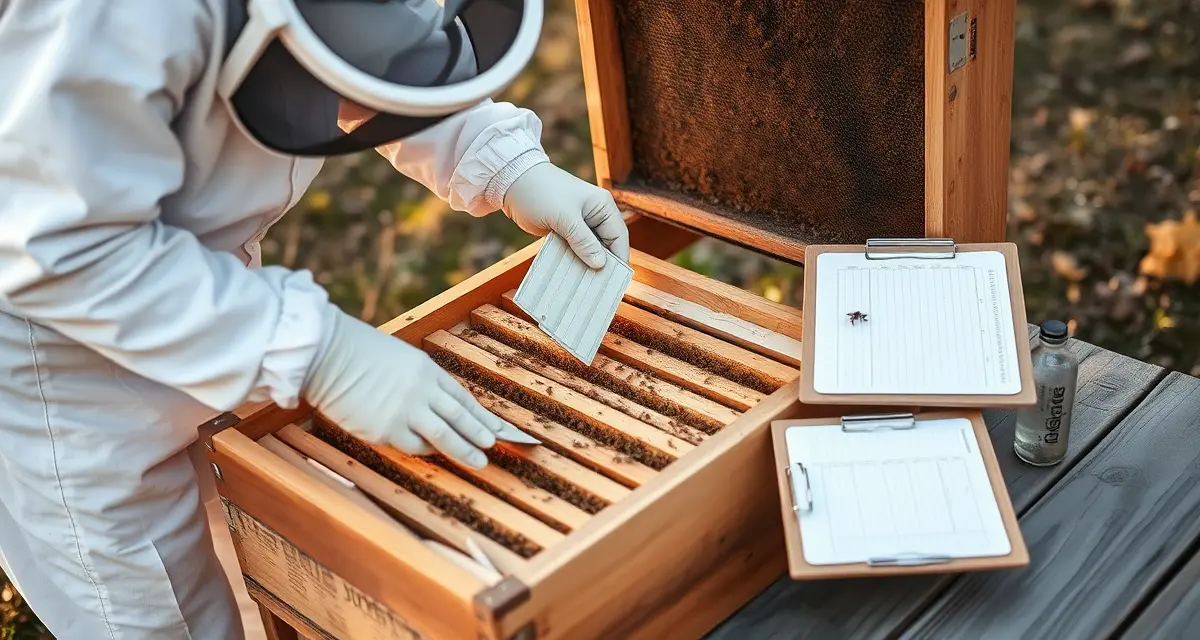
How to Run a Commercial Varroa Treatment Day: Logistics and Logging
Commercial operations that pre-calculate treatment quantities waste 40% less product than those who estimate on the day. That waste is real money at scale: at $3-5 per Apivar strip and 2 strips per hive, miscalculating product needs for a 300-hive operation means wasting 60-120 strips on a single treatment day.
A well-organized treatment day is as much logistics as beekeeping. Here's how to run it efficiently.
TL;DR
- Commercial operations managing 50+ hives cannot rely on per-hive manual records without significant time investment
- Treatment efficacy must be tracked across yards, not just individual hives, to detect resistance patterns
- USDA APHIS and state apiarists increasingly request documented treatment protocols for commercial inspections
- PHI compliance across multiple apiaries and multiple treatments requires a systematic tracking system
- VarroaVault's commercial tier supports multi-yard management with yard-level reporting and bulk data entry
- Generating a treatment history report for all apiaries takes under 60 seconds in VarroaVault
The Week Before: Preparation
Product quantity calculation:
For Apivar: 2 strips per brood box x number of brood boxes in each hive. Sum the total across all hives to be treated. Add 10% buffer for damaged strips and miscounts. Order accordingly.
For OA vaporization: 1 gram per brood box. A 200-hive operation treating 2-box colonies needs a minimum of 400 grams of Api-Bioxal. Add 20% buffer for waste and spillage during extended protocol applications.
For Formic Pro: One or two pads per hive depending on colony size. Pre-count colonies by expected size category (small, medium, large) and calculate pads needed for each category.
VarroaVault's treatment day planner pre-calculates product quantities by pulling your hive count, box configuration, and colony strength data. You get a product list before you order, not after you discover you're short.
Equipment check:
- Vaporizer functionality (test before treatment day, not on the day)
- PPE: N100 respirators for each crew member doing OA vaporization, nitrile gloves, goggles
- Strip installation tools (small pliers help with Apivar strip manipulation in tight frames)
- Labels/markers for hives that have been treated (tape markers or flag pins)
- Tablet or phone with VarroaVault loaded and hive list pre-loaded
Crew assignment:
For an operation above 100 hives, designate specific roles:
- Treatment applier: installs strips or runs vaporizer
- Logger: records each treatment in VarroaVault as it happens
- Hive opener/closer: prepares each hive and seals after treatment
One experienced applier with one logger and one opener/closer can treat 40-60 hives per day with Apivar, faster with single-application OA vaporization.
Day-of Logistics
Morning check:
- Confirm weather (temperature in range for temperature-dependent treatments)
- Confirm all crew have PPE
- Confirm product quantities loaded
- Assign hive sections to each crew if working multiple yards
Systematic hive progression:
Work in a clear pattern: front to back, left to right, marked on a map. Never treat randomly. The logger needs to know exactly which hive was just treated and which is next. Skipping or doubling up on hives in a large yard is extremely easy without a systematic approach.
Use a master hive list in VarroaVault showing each hive ID in treatment order. The logger checks off each hive as treatment is applied. At the end of the day, any unchecked hive IDs are visible immediately.
Logging protocol:
The logger enters each treatment in VarroaVault's batch entry mode as the applier works:
- Hive ID
- Product and dose
- Number of strips or vaporizations applied
- Time
- Any notes (hive unusually defensive, cluster smaller than expected, etc.)
Batch entry mode allows the logger to treat multiple hives in sequence with the same product and dose, then confirm each hive ID in the sequence. This is faster than individual entry for operations treating all hives with the same product.
Don't save logging for end of day. Memory errors and fatigue at the end of a 200-hive treatment day lead to missed records. Log as you go.
During Treatment: Product-Specific Notes
Apivar:
- Install strips so they contact the cluster. Strips hanging in empty space away from bees have reduced contact efficacy.
- Record the number of strips per hive. Weak colonies (under 5 frames) may need only two strips total even with two brood boxes if one box is mostly empty.
- Note the date strips need to be removed (42-56 days from application). VarroaVault creates this reminder automatically when the treatment is logged.
OA Vaporization (extended protocol):
- The first treatment day sets the clock for subsequent applications. Log application 1; VarroaVault automatically creates reminders for applications 2-5 at your selected interval (5, 6, or 7 days).
- Seal entrances completely before vaporization and maintain for 10 minutes after vapor cycle completes.
- Log each application separately, not as a batch. The extended protocol tracker needs individual application dates.
Formic Pro/MAQS:
- Check temperature at treatment time, not at 6am. If afternoon temperatures exceed 85°F, delay to a cooler day.
- Note whether supers are on or off. Log this in VarroaVault as it affects PHI calculation.
End-of-Day Reconciliation
Before leaving the apiary:
- Cross-check the treatment log against the master hive list. Every hive on the list should have a treatment entry.
- Count unused product. Unused product count should match the pre-calculated quantity minus treatments applied.
- Confirm all PHI expiry dates have been logged. VarroaVault calculates these automatically when treatment dates and products are entered.
- Note any hives that couldn't be treated (found queenless, colony too weak, defensive, etc.) so they get follow-up scheduling.
Post-Treatment: Scheduling the Efficacy Count
For a 200-hive operation, counting every hive post-treatment isn't realistic. Count a sample: 10-15% of hives (20-30 hives from a 200-hive operation), selected to include a representative mix of yards, colony sizes, and count histories.
Log the post-treatment count schedule in VarroaVault. The efficacy calculations from your sample hives give you the operation-level efficacy picture without counting everything.
If sample counts show low efficacy (below 80%), expand counting to confirm the pattern before next treatment cycle.
Frequently Asked Questions
How do I plan a treatment day for 200 hives?
Start the week before with product quantity calculation (strips and pads per hive based on your colony strength data), equipment check, and crew assignment. Designate roles: applier, logger, opener. On the day, work systematically through hives in order with the logger entering each treatment in VarroaVault's batch entry mode as the applier works. Don't save logging for end of day. End with a reconciliation check to confirm all hives are logged and all PHI dates are calculated.
What information do I need before a commercial treatment day?
Hive count and box configuration for each hive (to calculate product quantities), colony strength estimates (to determine dose), current mite count data (to confirm treatment is warranted), temperature forecast (for temperature-dependent treatments), crew assignments, and a fully stocked product inventory with 10-20% buffer. VarroaVault's treatment day planner pulls this information from your hive records to pre-calculate product quantities and generate a treatment checklist.
Does VarroaVault pre-calculate product quantities for treatment days?
Yes. The treatment day planner uses your hive count, box configuration, and colony strength data to calculate required product quantities before you order. For Apivar, it calculates total strips needed (2 per brood box) across your entire operation. For OA vaporization, it calculates grams of Api-Bioxal needed. The pre-calculation includes a buffer and compares the calculated quantity to your logged inventory if you're tracking product stock in VarroaVault.
How do I know if my varroa treatment is working?
Run a mite count 2-4 weeks after the treatment ends and compare it to your pre-treatment count. The efficacy formula is: ((pre-count - post-count) / pre-count) x 100. A result above 90% indicates effective treatment. Results below 80% should trigger investigation for possible resistance, application error, or reinfestation. Log both counts in VarroaVault to track efficacy trends across treatment cycles.
How often should I check mite levels in my hives?
At minimum, once per month (every 3-4 weeks) during the active season. Increase to every 2 weeks when counts are near threshold or after a treatment to verify it worked. In fall, monitoring frequency matters most because the window to treat before winter bees are raised is narrow. VarroaVault's monitoring reminders can be set to your preferred interval for each apiary.
What records should I keep for varroa management?
Each record should include: date of count or treatment, hive identifier, monitoring method used, number of bees sampled, mites counted, infestation percentage, treatment product name and EPA registration number, dose applied, treatment start and end dates, and PHI end date. State apiarists typically expect this level of detail during inspections. VarroaVault captures all of these fields in a single log entry.
What is How to Run a Commercial Varroa Treatment Day: Logistics and Logging?
Running a commercial varroa treatment day means systematically applying mite treatments across 50 or more hives using pre-planned logistics: calculating exact product quantities beforehand, organizing yard run lists, and logging every treatment as you go. The process covers preparation in the week prior, execution across multiple apiaries, and post-treatment record keeping. It reduces product waste, ensures PHI compliance, and creates the documented treatment history that state apiarists and USDA APHIS increasingly require from commercial beekeeping operations.
How much does How to Run a Commercial Varroa Treatment Day: Logistics and Logging cost?
There is no direct cost to running a treatment day — it is an operational process, not a product. However, the varroa treatments themselves carry real costs. Apivar strips run $3–5 each, with two strips required per hive. For a 300-hive operation, poor pre-calculation can waste 60–120 strips in a single day. Using a structured approach with tools like VarroaVault's commercial tier reduces that waste significantly, making the logistics investment pay for itself quickly at scale.
How does How to Run a Commercial Varroa Treatment Day: Logistics and Logging work?
A commercial varroa treatment day works by breaking the process into three phases: pre-calculation of product needs by yard and hive count, systematic application following a prepared yard run list, and same-day logging of treatments applied. Mite wash or alcohol wash counts taken before treatment establish a baseline. Each hive's treatment date, product, dose, and colony notes are recorded. This creates a traceable treatment history across all apiaries, enabling resistance pattern detection and regulatory compliance reporting.
What are the benefits of How to Run a Commercial Varroa Treatment Day: Logistics and Logging?
The core benefits are reduced product waste, better resistance detection, and regulatory readiness. Pre-calculating quantities prevents over-ordering and wasted strips. Tracking efficacy at the yard level — not just the hive level — reveals if a treatment is underperforming in a specific location, an early signal of resistance. Documented treatment logs also satisfy USDA APHIS and state apiarist inspection requirements. With VarroaVault, generating a full treatment history report across all apiaries takes under 60 seconds.
Who needs How to Run a Commercial Varroa Treatment Day: Logistics and Logging?
Any beekeeper managing 50 or more hives across multiple yards needs a structured treatment day process. At that scale, per-hive manual records without a system become unmanageable and error-prone. Commercial producers selling honey also face PHI compliance obligations across multiple treatments and apiaries, which requires systematic tracking. Operations being reviewed by state apiarists or participating in USDA programs need documented treatment protocols on demand. Hobbyists with a few hives can manage informally, but commercial-scale operations cannot afford to.
Related Articles
Sources
- American Beekeeping Federation (ABF)
- USDA ARS Bee Research Laboratory
- Honey Bee Health Coalition
- Penn State Extension Apiculture Program
- Project Apis m.
Get Started with VarroaVault
Commercial beekeeping operations need a varroa management system that scales across yards, generates compliance-ready reports, and flags resistance before it costs you colonies. VarroaVault was built for exactly this kind of multi-apiary operation. Start your free trial at varroavault.com and see how it fits your operation.