Natural beekeeping varroa treatment: what actually works
TL;DR
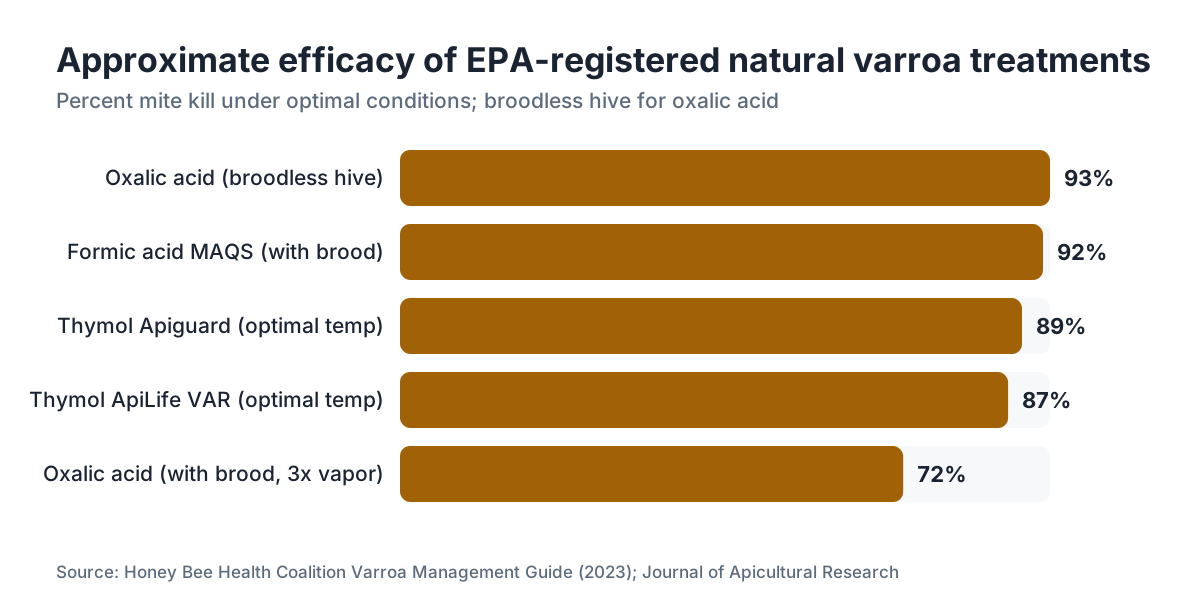
- The most effective natural varroa treatments are oxalic acid (90%+ efficacy in broodless hives), thymol-based products like ApiLife VAR and Apiguard (roughly 85-93% in the right temperatures), and formic acid via Mite-Away Quick Strips (up to 95%).
- Cultural controls like brood breaks and drone comb removal help but rarely suffice alone.
- All three acids are EPA-registered and legal in managed colonies.
What does 'natural' actually mean for varroa treatment?
A natural varroa treatment is one built from compounds that occur in nature and leave no synthetic residue in wax or honey above regulatory thresholds. That is the useful definition. The three that matter are oxalic acid (found in rhubarb and many plants), thymol (the active compound in thyme oil), and formic acid (produced by ants and present in honey at low levels).
None of these are magic, and none are the same as doing nothing. Varroa destructor can crash a colony in a single season [1]. Picking a natural product does not exempt you from real mite management. You still count mites. You still treat when counts cross thresholds. You still time treatments to your colony's brood cycle.
Here is the part that surprises new beekeepers: oxalic acid, thymol, and formic acid are all EPA-registered for honey bee colonies [2]. These are not folk remedies. They carry published efficacy data, approved labels, and legal standing in the US. That is what separates them from sugar dusting or essential oil smoke blends, which have no reliable efficacy data and no registration. If someone swears those work on varroa, ask to see the study. There isn't one worth citing.
For a closer look at the mite itself before you choose a treatment, the varroa mite overview covers the parasite's biology and why it's so hard to wipe out entirely.
When should you start treating? What mite thresholds trigger action?
Treat when your alcohol wash or sugar roll hits 2 mites per 100 bees (2%) during the brood-rearing season, and 1 mite per 100 bees (1%) heading into fall when the colony raises the winter bees that must survive until spring. Those are the Honey Bee Health Coalition's numbers [3], and they are the closest thing the industry has to consensus, built on real colony-loss data rather than guesswork.
Timing matters as much as the number. A colony hitting 3% in August in a northern state is in far worse shape than the same count in May. August is when mites reproduce fastest, and those summer mites go on to parasitize the long-lived winter bees your colony depends on. Treat late and you lose.
The practical rule: sample monthly April through August, then twice in September. Use alcohol wash over sugar roll. Sugar roll undercounts mites by a meaningful margin in most hands [11]. Sticky boards tell you mites are present but not how many are riding bees, which makes them a fine screening tool and nearly useless for treatment decisions.
Never set up a monitoring calendar before? VarroaVault's free protocol tools generate one from your region and hive count, so you always know when to sample next.
How effective is oxalic acid as a natural varroa treatment?
Oxalic acid is the most effective natural varroa treatment in the US when you use it correctly in a broodless hive, and that qualifier carries enormous weight. It kills phoretic mites (the ones riding adult bees) at rates above 90%. It does essentially nothing to mites sealed inside capped brood [4].
The only EPA-registered oxalic acid product in the US is Api-Bioxal [2]. The label allows two methods: dribble (trickle) and vaporization. A third method, extended-release oxalic acid on glycerin-soaked shop towels, has shown up in experimental-use-permit contexts and extension literature, but check your current state rules before using anything not printed on the label.
Vaporization (sublimation) is faster per hive but demands a dedicated vaporizer and strict personal protection, including a respirator rated for organic vapors and acid gases. Dribble works fine at small scale and needs only a syringe. In a broodless hive, the two methods land close together, roughly 90-95% mite kill in peer-reviewed trials [4].
With brood present, some beekeepers run three vaporizations seven days apart to catch mites as they emerge, but efficacy drops against a true broodless treatment. The cleaner approach pairs oxalic acid with a brood break: pull the queen for 24 days, let all the brood hatch, then treat once. Best kill rate, single exposure.
Oxalic acid leaves no detectable residue in honey at labeled doses [4]. It's already present in honey naturally at low concentrations. That background is part of why regulators chose it as the basis for an approved natural treatment.
Does thymol work for varroa, and what temperature does it need?
Yes, thymol works, and it needs ambient temperatures between roughly 59°F and 105°F (15-40°C) to do it. Thymol is the active ingredient in two EPA-registered products: Apiguard (a thyme oil gel) and ApiLife VAR (a tablet blended with thymol, eucalyptus oil, and camphor) [2]. Both work by slow volatilization. The thymol evaporates inside the hive and kills mites by contact and fumigation. Published trials put efficacy between about 85 and 93%, with temperature driving most of the swing [5].
The temperature window is not a suggestion. Below 59°F it doesn't evaporate fast enough to work. Above 105°F it evaporates too fast and can push bees to abscond or the queen to fail. That makes thymol most useful in late summer and early fall in temperate climates, usually August through September across most of the northern US and Canada.
Apiguard uses a 25g gel tray per application, two applications 10-14 days apart. ApiLife VAR uses a scored tablet on the top bars, replaced every seven days for three treatments. Follow the label on dose and ventilation. Thymol needs an upper entrance or a screened bottom board open for vapor movement. Seal the hive and the concentration climbs until the bees leave.
Thymol doesn't reach capped brood in useful concentrations, so like oxalic acid it loses ground in high-brood colonies. Time it after spring buildup finishes and before the fall cluster forms. In a northern state that window is often only six to eight weeks. Don't miss it.
Thymol has one clear edge over oxalic acid for anyone who hates vaporizers: the gel or tablet is simple, needs almost no equipment, and moves fast across a sideline operation with many hives to treat.
What is formic acid and how does it compare to oxalic acid and thymol?
Formic acid is the only natural varroa treatment that kills mites inside capped brood cells, which sets it apart from the other two [6]. The US-registered product is Mite-Away Quick Strips (MAQS) from NOD Apiary Products, applied as formic acid gel pads for seven days. A two-pad treatment reaches up to 90-95% efficacy including mites in capped brood in published data, though real-world results vary [6].
It also works colder than thymol. The MAQS label sets a 50°F minimum nighttime temperature, which makes it usable earlier in spring and later in fall. You can even apply it with honey supers on, because formic acid does not leave residue in honey at labeled doses [6]. That is unusual and worth knowing if you're in a late-season flow and still need to treat.
The cost is stress. Formic acid is harder on queens and colonies than oxalic acid or thymol. Field studies report queen loss around 5-10% [6]. Brood spotting and short-term population dips happen too. Above 85-90°F, skip MAQS, because the faster volatilization ramps up colony and queen stress.
Formic Pro is a newer formic acid product from the same maker, with a 14-day extended-release profile and somewhat more forgiving temperature guidelines. Check the current EPA label for the approved ranges.
So the split is simple. Need to treat through a brood cycle without pulling supers? Formic acid is your best natural option. Colony broodless, or you can engineer a brood break? Oxalic acid is simpler and gentler on the bees.
| Treatment | Active compound | Kills mites in brood? | EPA registered? | Approx. efficacy | Temperature range |
|---|---|---|---|---|---|
| Api-Bioxal (dribble/vapor) | Oxalic acid | No | Yes | 90-95% (broodless) | Below 50°F OK for dribble; vapor flexible |
| Apiguard | Thymol | No | Yes | 85-93% | 59-105°F |
| ApiLife VAR | Thymol blend | No | Yes | 85-92% | 59-105°F |
| MAQS / Formic Pro | Formic acid | Yes | Yes | 90-95% | 50-85°F (MAQS); wider for Formic Pro |
Do cultural controls like drone comb removal and brood breaks actually help?
Yes, but treat them as tools that shrink mite populations, not treatments that clear them. Drone brood removal works because Varroa reproduces in drone cells at a rate roughly 7-10 times higher than in worker cells [1]. Insert a frame of drone foundation, let the bees draw it and the queen lay it up, then cut or freeze it out before the cells cap. You pull a disproportionate share of reproducing mites out with it. In a low-mite colony early in the season, that slows mite growth in a way you can measure.
The limit is real. Drone comb removal is labor intensive and only delays the mite curve. It will not drag a high load down to a safe one. The Honey Bee Health Coalition classifies it as a supplemental practice, not a standalone treatment [3].
Brood breaks are a different animal. A genuine break of 24 days or more collapses the mite's reproductive cycle, because mites can only reproduce in capped brood. Every mite goes phoretic, which is the perfect setup for a single oxalic acid treatment that kills 90%+ of them. You get a brood break by caging the queen, making a split, or catching a natural winter broodless stretch. It's the single most powerful move for amplifying oxalic acid.
Hygienic behavior deserves the same respect. Hygienic bees detect and remove mite-infested brood, which lowers the mite reproductive rate. VSH (Varroa Sensitive Hygiene) stock has the strongest evidence base [7]. Requeening with VSH or selected hygienic stock is one of the longest-lasting investments you can make in mite resistance, even though it doesn't replace chemical treatment when counts are high.
Powdered sugar dusting and essential oil sprays get pitched online as natural varroa controls. No peer-reviewed study has found meaningful efficacy for either [3]. Skip them.
Are natural varroa treatments safe for honey and wax?
Yes. All three EPA-registered natural treatments have been evaluated for residue in honey and wax, and at labeled doses the residues are either undetectable or below any regulatory concern.
Oxalic acid occurs naturally in honey at roughly 5-50 mg/kg depending on floral source [4]. Api-Bioxal at the labeled dribble dose nudges that concentration up by a small amount, still within or near the natural background range. European residue data keeps showing treated honey stays within standards.
Thymol (Apiguard and ApiLife VAR) can leave detectable residue in wax and honey at concentrations that may shift flavor if applied during an active flow. Both labels require removing honey supers before treatment. After treatment ends and a waiting period passes, residues fade. Wax holds thymol longer than honey does.
Formic acid (MAQS and Formic Pro) is the odd one out, labeled for use with supers on, a status the manufacturer earned through residue studies submitted to EPA. Formic acid is volatile and does not build up in honey at meaningful levels at the labeled dose [6].
On wax, the longer view favors natural products. Amitraz (the synthetic in Apivar) leaves residue in beeswax at levels documented across many commercial operations. Natural treatments carry a much better wax residue profile, which is one concrete reason some beekeepers prefer them beyond principle.
What does resistance to natural treatments look like, and is it a real risk?
No documented population-level resistance to oxalic acid, thymol, or formic acid exists, unlike the well-established resistance to pyrethroids (Apistan) and amitraz [8]. Part of the reason: these compounds kill through direct acid contact, fumigation, and broad chemical disruption, which is harder for a mite to evolve around than the specific receptor-binding that synthetic acaricides depend on.
That is not a license to get lazy. Hammering one treatment in one apiary could, over many mite generations, select for tolerance. Rotate treatment modes across years instead, exactly what integrated pest management (IPM) guidance recommends [10]. Oxalic acid in winter broodless conditions, thymol or formic acid in summer, and monitoring throughout to confirm the treatment did its job.
When your post-treatment count doesn't drop much (an effective treatment should knock counts down 80-90% or more), work through the likely causes before you blame resistance: wrong application, temperatures out of range, brood shielding mites from contact. An application error is far more common than a resistant mite. Re-treat before you assume the worst.
Pre- and post-treatment counts are the only way to know a treatment worked. A notebook or a plain spreadsheet beats memory every time.
How do you choose the best natural varroa treatment for your situation?
No single treatment wins for every beekeeper. The right pick depends on the season, brood status, your local temperature range, whether supers are on, and honestly how much equipment you feel like buying.
Here is how I'd work through it.
Winter or late fall, colony broodless or nearly so: oxalic acid, dribble or vapor. Cheap, easy, and maximally effective in exactly this window. A single Api-Bioxal dribble treatment in January runs roughly $1-2 per hive and delivers the best kill rate of any natural option [2].
Summer with brood, supers off: thymol (Apiguard or ApiLife VAR) if temperatures cooperate. In a heat wave, wait. If you have to treat straight through a brood cycle and your load is high, formic acid (MAQS or Formic Pro) earns the extra cost and the queen-loss risk.
Summer with supers on: formic acid is your only EPA-registered natural option that allows supers during treatment. Reach for it when counts demand action now.
High mite load, any time: engineer a brood break first if you can. Cage the queen, wait 24 days, treat with oxalic acid. You'll beat any treatment applied through a full brood nest.
Managing several hives and trying to stay organized? The free tracking and scheduling tools at VarroaVault log counts, schedule treatments by colony, and compare outcomes across your apiary without you building a spreadsheet from scratch.
For sourcing products and equipment, beekeeping supply companies vary widely on availability and price, so compare before buying in bulk.
What do extension services and the Honey Bee Health Coalition recommend?
Monitor first, treat when thresholds are crossed, rotate treatment modes, and use genetics where you can. That is the Honey Bee Health Coalition's integrated approach, laid out in the most widely cited varroa management guide in North America [3]. The 2023 edition lists oxalic acid, thymol, and formic acid as the primary registered natural (organic) treatment options and steers beekeepers away from powdered sugar, essential oils, and other unregistered approaches.
University extension programs line up behind that. The Penn State Extension bee lab, the University of Minnesota Bee Lab, and North Carolina State's apiculture program all publish varroa fact sheets recommending the same core treatments [9]. Their guidance leans on alcohol wash monitoring, early fall treatment timing, and brood-break strategies as amplifiers.
EPA registration of Api-Bioxal, Apiguard, ApiLife VAR, MAQS, and Formic Pro means each product cleared formal review for bee safety, residues, and environmental effect [2]. That backing matters when you're weighing a registered product against a home remedy someone described on a forum.
The Coalition frames the goal plainly, stating that integrated pest management aims "to keep varroa populations below levels that will cause damage to a colony," not to eliminate the mite entirely [3]. Zero mites is not a realistic target in most managed apiaries. Low mites, healthy bees, and consistent monitoring is.
What beekeeping practices outside of treatment reduce varroa pressure long-term?
Treatment alone is a treadmill. You treat, mites rebound, you treat again. The beekeepers who slow that cycle down do a few things differently.
Genetics first. VSH queens and hygienic stock interrupt the mite reproductive cycle by removing infested pupae before mites finish developing [7]. The University of Minnesota Bee Lab has documented hygienic colonies holding lower mite levels across a season than non-selected stock. Requeening is no one-time fix, since queens age and hives supersede, but building toward hygienic stock across your apiary pays off.
Apiary isolation helps less than most people hope. Varroa spreads by drift and robbing between colonies within a yard, and from feral colonies nearby. You can't seal your apiary off from the mite reservoir in the surrounding landscape. Keeping your own hives healthy and treated does cut the within-yard drift load, though.
Split management is underrated for mite control. Split a strong colony in spring and each unit carries a lower mite load per bee, while the queenless split gets a brood break during the queen-rearing stretch. Done right, splits act as informal brood breaks that slow mite growth on their own.
Don't overwinter weak colonies. A colony heading into fall with a high mite load and a shrinking population becomes a mite bomb for its neighbors through late-season robbing. Treat the weak colony, then combine it into a strong one. That beats letting it collapse and seed everyone else.
Curious how hive design intersects with colony health? The mud beehive article covers an angle on traditional hive construction that some natural beekeepers find worth reading.
How do I apply oxalic acid safely, and what equipment do I need?
Start with safety, because oxalic acid is corrosive. The Api-Bioxal label requires gloves, eye protection, and for vaporization, a respirator rated for organic vapors and acid gases (NIOSH P100 with an OV/P100 combination cartridge is the standard recommendation) [2]. Never vaporize without a respirator. The vapor inside the hive is concentrated enough to damage your lungs with repeated unprotected exposure.
For dribble, mix Api-Bioxal into sugar syrup at the labeled ratio (about a 3.5% oxalic acid solution, which the Api-Bioxal product is formulated to hit when you follow the mixing instructions). Apply 5 ml per seam of bees, no more than 50 ml per colony total. In a broodless colony, one dribble does it.
For vaporization, a vaporizer (about $25 for basic units up to $200+ for heated-plate commercial models) holds a measured dose of Api-Bioxal crystals. Insert it at the hive entrance, heat until sublimation finishes, and leave the hive sealed about 10 minutes. Run three treatments at five-day intervals if brood is present, or one treatment in a broodless colony.
Basic vaporizers and Api-Bioxal are available through most beekeeping supply companies. Prices and stock swing seasonally, so buy Api-Bioxal before you need it. It sells out in fall in a lot of markets.
Store Api-Bioxal cool and dry, away from children and pets. The crystals are hygroscopic and pull in moisture if left open, which can cut efficacy.
Frequently asked questions
Can I treat for varroa with honey supers on the hive?
Formic acid products (MAQS and Formic Pro) are the only EPA-registered natural treatments labeled for use with honey supers on. Oxalic acid and thymol-based products require removing supers first. If you have a high mite count during a flow and supers are on, MAQS is your legal, registered option. Follow the label temperature limits and accept the small queen-loss risk.
Is oxalic acid safe for bees and their larvae?
At labeled doses, adult bees tolerate oxalic acid well. It doesn't penetrate capped cells, so larvae under sealed brood aren't exposed. In broodless colonies, dribble or vapor application causes minimal adult mortality. Overdosing, meaning more than the label allows, does harm bees, so measure carefully and follow the Api-Bioxal label exactly.
What is the cheapest natural varroa treatment?
Oxalic acid dribble costs the least per hive. Api-Bioxal bought in bulk runs roughly $1-2 per colony per treatment, and you only need a syringe. Vaporization adds a one-time vaporizer cost ($25-200) but saves time at scale. Thymol products run $3-6 per hive per treatment cycle. Formic acid (MAQS) runs $5-8 per hive per application.
How often should I test for varroa mites during the season?
The Honey Bee Health Coalition recommends monthly sampling during the brood-rearing season (roughly April through August in the northern US) and twice in September, when the winter-bee cohort is being raised. An alcohol wash on a 300-bee sample is the most accurate field method. Hit 2% (2 mites per 100 bees) anytime in summer or 1% going into fall and it's time to treat.
Does powdered sugar dusting work as a varroa treatment?
No. Controlled studies find no meaningful reduction in mite loads from sugar dusting. It grooms some phoretic mites off adult bees for a moment but does nothing to mites in brood and doesn't kill the ones that drop. The Honey Bee Health Coalition's varroa management guide doesn't recommend it. It's a waste of time if your goal is mite control.
Can I use essential oils like tea tree or wintergreen for varroa?
No published peer-reviewed evidence shows tea tree oil, wintergreen, or similar essential oils reduce varroa to a meaningful degree in managed colonies, and they aren't EPA-registered for this use. Thymol, derived from thyme essential oil, is effective and registered, but only in the specific EPA-approved formulations (Apiguard and ApiLife VAR), not as raw thyme oil applied informally.
What is VSH stock and does it really reduce varroa?
VSH stands for Varroa Sensitive Hygiene. It describes honey bee stock bred to detect and remove mite-infested pupae before mites finish reproducing. University of Minnesota and USDA research has documented VSH colonies holding significantly lower mite levels across the season than non-selected stock. VSH doesn't erase the need for monitoring and treatment in most managed apiaries, but it meaningfully slows mite population growth.
How do I know if my varroa treatment actually worked?
Run an alcohol wash 48-72 hours after treatment ends and compare it to your pre-treatment count. A successful treatment should cut mite load by 80-90% or more. If the count barely moved, check whether temperature was out of range, whether significant brood was present, whether you applied correctly, or whether you need to treat again. Never assume success without a post-treatment count.
What temperature is too cold or too hot for thymol varroa treatments?
Apiguard and ApiLife VAR both need ambient temperatures between roughly 59°F (15°C) and 105°F (40°C). Below 59°F the thymol won't volatilize fast enough to work. Above 105°F it volatilizes too fast, which can drive bees out of the hive and stress or kill queens. In practice, thymol works best in late summer and early fall, usually August through September across most of the northern United States.
Is formic acid hard on queens, and how worried should I be?
Queen loss during MAQS treatment is a real, documented risk. Field studies report loss rates around 5-10% at labeled doses, and the risk climbs with temperature. If your colony is strong and your queen is young, the risk is manageable. If your queen is old or the colony is borderline, weigh whether the mite situation is urgent enough to accept that risk or whether another treatment fits better.
Can I make my own oxalic acid solution instead of buying Api-Bioxal?
In the US you can't legally use homemade oxalic acid solutions in managed colonies under EPA regulations. Api-Bioxal is the only EPA-registered oxalic acid product for bees, and the label is the law. Some countries (Canada, the UK, the EU) have different frameworks and different approved products. Using food-grade oxalic acid sold as wood bleach or another non-labeled product is an off-label use and not recommended.
Do natural varroa treatments affect the taste or safety of honey?
At labeled doses, no meaningful safety or flavor effect on honey has been documented for oxalic acid or formic acid. Oxalic acid is naturally present in honey. Formic acid volatilizes and doesn't accumulate. Thymol can leave a detectable herbal note if applied during an active flow or if concentration climbs too high, which is why labels require removing supers. Follow the label and you avoid the issue.
What is the difference between Apiguard and ApiLife VAR?
Both are thymol-based and EPA-registered for varroa control. Apiguard is a pure thymol gel (25g tray) applied in two rounds 10-14 days apart. ApiLife VAR is a tablet blended with thymol plus eucalyptus oil, levomenthol, and camphor, applied in three rounds seven days apart. Efficacy is similar (roughly 85-93%). ApiLife VAR's multi-compound blend may have a slightly broader mode of action, but the choice often comes down to what you can source locally.
Sources
- EPA, Pesticide Registration for Honey Bee Uses (Api-Bioxal, Apiguard, ApiLife VAR, MAQS, Formic Pro): Oxalic acid (Api-Bioxal), thymol-based products (Apiguard, ApiLife VAR), and formic acid products (MAQS, Formic Pro) are EPA-registered for use in managed honey bee colonies.
- Honey Bee Health Coalition, Varroa Management Guide (2023 edition): Treatment thresholds of 2 mites per 100 bees during the brood-rearing season and 1 mite per 100 bees going into fall are recommended; powdered sugar dusting is not recommended as a treatment.
- USDA AMS National Organic Program, Oxalic Acid Technical Report: Oxalic acid occurs naturally in honey at roughly 5-50 mg/kg; Api-Bioxal at labeled doses does not leave residues above natural background levels; oxalic acid kills phoretic mites at 90-95% efficacy in broodless hives and does not penetrate capped brood cells.
- Journal of Apicultural Research, Thymol efficacy and temperature dependence in Varroa control: Thymol-based products achieve 85-93% varroa efficacy in field trials; efficacy is strongly temperature-dependent, requiring ambient conditions between 59°F and 105°F.
- NOD Apiary Products / EPA, Mite-Away Quick Strips (MAQS) product label and efficacy data: MAQS achieves up to 90-95% efficacy including mites in capped brood; is labeled for use with honey supers on; queen loss rates of approximately 5-10% are documented in field use.
- University of Minnesota Bee Lab, Varroa Sensitive Hygiene (VSH) research: VSH colonies maintain significantly lower mite levels across the season compared to non-selected stock; hygienic behavior interrupts mite reproduction by removing infested pupae.
- USDA ARS Baton Rouge Bee Research Unit, Acaricide resistance in Varroa: Resistance to oxalic acid, thymol, and formic acid has not been documented at the population level in Varroa destructor; resistance to pyrethroids and amitraz is well established.
- Penn State Extension, Varroa Mite Management in Honey Bee Colonies: Penn State Extension recommends alcohol wash monitoring as the most accurate field method, early fall treatment timing, and brood-break strategies as amplifiers of oxalic acid efficacy.
- North Carolina State University Apiculture, Integrated Pest Management for Varroa: NCSU Extension recommends rotating treatment modes across years to reduce selection pressure on mite populations.
- University of Minnesota Extension, Honey Bee Disease and Pest Management: Sugar roll undercounts mites compared to alcohol wash; monthly sampling April through August and twice in September is recommended.
Last updated 2026-07-09