Acid treatments for varroa mites: oxalic and formic acid explained
TL;DR
- Oxalic acid and formic acid are the two EPA-registered organic acid options for varroa control.
- Oxalic acid, applied by dribble or vapor, exceeds 95% mite kill in a broodless colony but does nothing to mites under cappings.
- Formic acid (Mite Away Quick Strips or Formic Pro) penetrates capped brood at 60 to 90% efficacy.
- Match the acid to your brood state and temperature.
- Neither replaces monitoring.
What are acid treatments for varroa mites and how do they work?
Acid treatments are organic acid miticides that kill Varroa destructor on contact. Two acids are registered in the United States: oxalic acid (OA) and formic acid (FA). Both occur in honey at trace levels, which is part of why their EPA labels carry a zero-day honey withholding period when you follow the directions. That's a real edge over synthetic acaricides like amitraz or fluvalinate, which force strict withdrawal periods.
Oxalic acid kills by touching the mite's soft body. A mite walks across a treated bee or crosses OA vapor, the acid wrecks its cuticle, and the mite dies. It does not move through wax, so mites tucked under capped brood are completely safe from it. Formic acid does the opposite job. It volatilizes, and the vapor pushes through cappings to reach mites inside sealed cells. That single fact is why beekeepers pick formic acid when a colony is packed with brood.
Neither acid kills eggs. Neither has a documented resistance mechanism in varroa after decades of use, which is genuinely good news and sets both apart from the synthetics [1].
Want the biology of the pest before you pick a weapon? Start with our varroa mite overview.
What is oxalic acid and how effective is it against varroa?
Oxalic acid dihydrate is the active ingredient in Api-Bioxal, the only EPA-registered OA product for U.S. beekeeping as of 2025 [2]. It ships as a powder you dissolve into sugar syrup for dribbling or load into a vaporizer wand.
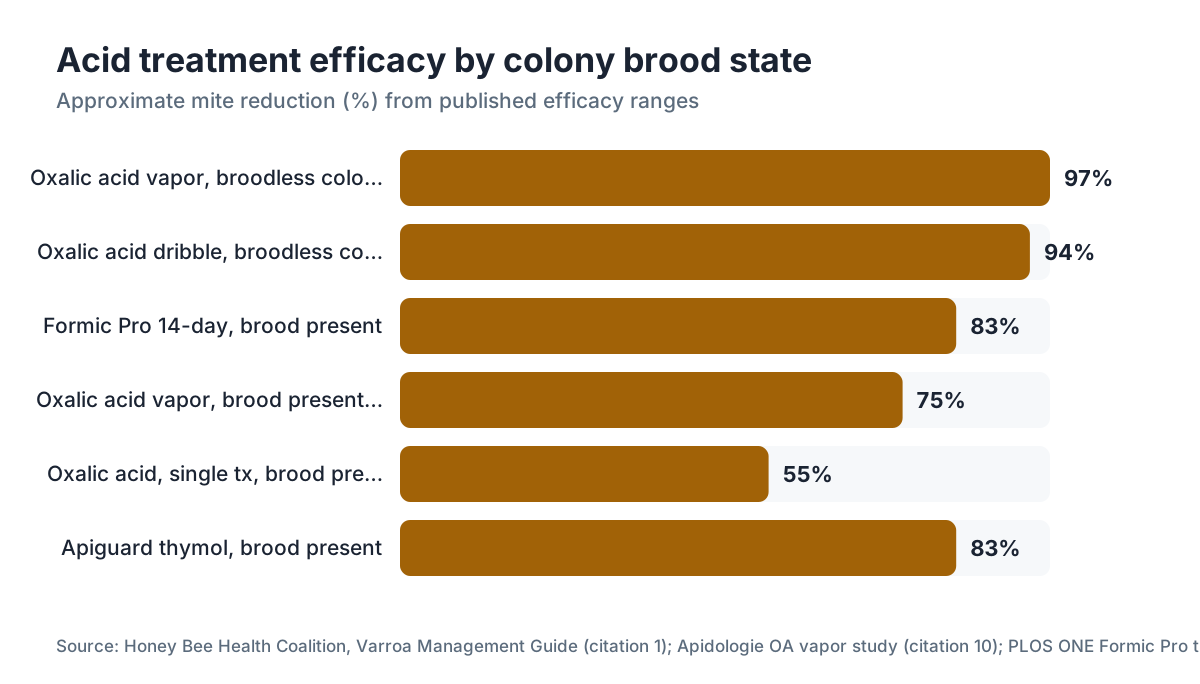
Brood state decides everything about the numbers. The Honey Bee Health Coalition's Varroa Management Guide puts oxalic acid dribble in a broodless colony at roughly 90 to 99% knockdown of phoretic mites [1]. Nothing on the market beats that. Add capped brood and a single dribble or vapor treatment falls to about 50 to 60%, because most of the mites are sealed away where the acid can't reach [1].
Vapor beats dribble when brood is present, mostly because you can repeat it without cracking the hive open. Some protocols call for three vapor treatments spaced 5 days apart to catch mites as they hatch out. The Honey Bee Health Coalition puts it plainly: "Oxalic acid is most effective when colonies are broodless" [1]. That line is not a footnote. It's the constraint that drives your entire calendar.
Api-Bioxal label rates: dribble is 5 mL of 3.5% solution (35 g OA dissolved in 1 L of 1:1 sugar syrup) per seam of bees, capped at 50 mL total per colony. Vapor dose is 1 gram of powder per brood box [2]. Do not exceed the label. More acid does not buy more dead mites. It buys dead bees.
Vaporizers run from about $30 for a battery sublimator to over $200 for propane commercial units. The cheap battery wands are fine for a hobbyist with fewer than 20 hives. They just take longer per box.
What is formic acid treatment and which products contain it?
Formic acid is the active ingredient in two EPA-registered products here: Mite Away Quick Strips (MAQS) and Formic Pro [3][4]. Both deliver the acid through gel pads you set on the bottom bars of the brood box. The pad volatilizes over days, and the vapor moves through the whole hive, including under the cappings.
MAQS uses two pads at once for a 7-day treatment. Formic Pro gives you two options: a 14-day extended-release version (two pads, one pulled at day 10) or a shorter two-treatment protocol. Extended release kills fewer bees than the fast 7-day burn, especially in heat [4].
Brood penetration is the whole reason to reach for it. A single Formic Pro 14-day treatment on a colony with brood lands around 60 to 90% efficacy depending on temperature, colony size, and airflow [1][4]. Formic acid is also what European beekeepers have leaned on for decades, longer than we have in North America.
Temperature is the one variable that will ruin your treatment. Both MAQS and Formic Pro need ambient temperatures between 50 and 85 degrees Fahrenheit (10 to 29 C) at application and through the whole run. Treat above 85 and you risk killing brood and the queen. Treat below 50 and the pads barely volatilize, so efficacy craters [3][4]. This is not label boilerplate. It's the hardest rule in formic acid work.
One more thing. Formic vapor is rough on your lungs. Wear nitrile gloves and eye protection at minimum, and don't hang your face over an open hive right after placing pads. A NIOSH-approved organic vapor respirator is smart if you're running through a lot of colonies.
Oxalic acid vs formic acid: which one should you use?
The honest answer: it turns on your brood state and your timing, not on which acid sounds tougher.
Use oxalic acid when:
- The colony is broodless (winter cluster, swarm, or an induced brood break)
- Temperatures are above 40 F for dribble, above freezing for vapor
- You want the cheapest option (Api-Bioxal powder runs about $20 to 30 for enough to treat 50-plus colonies by vapor)
Use formic acid when:
- The colony holds a lot of capped brood you need to treat through
- Temperatures sit reliably between 50 and 85 F (a tighter window than OA)
- You'll accept slightly higher bee mortality risk during hot spells
- You want a single 14-day treatment that works during the active season
Table: Acid treatment comparison at a glance
| Feature | Oxalic Acid (Api-Bioxal) | Formic Acid (MAQS / Formic Pro) |
|---|---|---|
| EPA registered in U.S. | Yes [2] | Yes [3][4] |
| Penetrates capped brood | No | Yes |
| Efficacy, broodless colony | 90 to 99% [1] | N/A (built for brood present) |
| Efficacy, brood present | 50 to 60% single tx [1] | 60 to 90% [1][4] |
| Temperature window | >40 F dribble; any above freezing for vapor | 50 to 85 F (10 to 29 C) [3] |
| Honey withholding | 0 days (per label) [2] | 0 days (per label) [3] |
| Typical cost per colony | $0.50 to 2.00 | $3 to 8 |
| Queen damage risk | Low | Moderate at high temps [4] |
| Application ease | Moderate (vapor needs equipment) | Easy (pad placement) |
Many beekeepers hit brood-heavy colonies with formic acid in late summer, then close out with an oxalic dribble on the broodless winter cluster. That two-stage sequence is the core seasonal strategy the Honey Bee Health Coalition recommends [1].
When is the best time of year to apply acid treatments?
Timing is where hobbyists blow it. The calendar matters less than what's happening inside the hive, but the seasonal patterns are worth knowing cold.
Late summer to early fall (August through October across most of North America) is the treatment window that decides winter survival. Varroa peaks here after the spring and summer buildup, right when your colony is raising the long-lived winter bees. A colony going into winter over 2 to 3% infestation often dies by February [1]. Treat before fall brood rearing winds down, so you cut the mite load before those winter bees are even laid.
Formic acid usually leads in this window because brood is still active. If temperatures cooperate with that 50-to-85 rule, one 14-day Formic Pro run knocks levels down hard.
Midwinter belongs to oxalic acid. Cluster tight, little or no brood, one dribble or vapor treatment gets you that 90 to 99% knockdown. December or January is common. Even where bees cluster loosely all year, any broodless stretch is your opening for OA.
Spring is a poor time for heavy treatment because colonies are building brood and growing fast. But if counts climb quickly, a formic treatment before the brood peak beats watching the colony fall apart in June.
You can't time any of this without counts. Alcohol wash or sugar roll every 30 days through the active season is the standard. A 2% threshold (about 2 mites per 100 bees) is a common trigger, and some sources drop to 1% in fall [1]. Treating on a schedule without monitoring is guessing with acid.
How do you apply oxalic acid safely and correctly?
For the dribble, dissolve 35 grams of Api-Bioxal in 1 liter of warm 1:1 sugar syrup. Apply 5 mL per seam of bees visible between the frames, working across the box. Cap it at 50 mL per colony. Don't drench them. Light coverage is the goal. Never apply to supers. The label spells this out [2].
For vapor, load 1 gram of Api-Bioxal powder into the vaporizer pan. Seal the entrance and any gaps, insert the wand, apply heat per the manufacturer's instructions, wait 2 to 3 minutes after heating stops, then pull the wand and leave the entrance sealed another 10 minutes. Repeat per your protocol: once for a broodless colony, or three times at 5-day intervals if brood is present.
Safety gear is not optional. Oxalic vapor burns your airway and eyes. An N95 dust mask does nothing against it. Use a NIOSH-approved respirator with organic vapor cartridges (a P100 combination cartridge). Gloves on. Stay out of the plume entirely. The EPA label says the same [2].
Store Api-Bioxal in its original container, dry and cool, away from children. Shelf life after opening is limited, so check the lot expiration. Degraded powder can form byproducts that are harder on bees.
One field note: battery vaporizers pull serious current. Bring a fully charged battery and a spare. Running low mid-treatment means weak vapor and a half-done job.
How do you apply formic acid (MAQS or Formic Pro) safely?
Both MAQS and Formic Pro arrive as ready-to-use gel pads. No mixing. Lay the pads flat on the bottom bars, centered over the brood cluster, below the top bars of the lower brood box frames. Don't stack them. Don't cover them with newspaper or anything else [3][4].
MAQS: place two pads at once, remove after 7 days. Keep the top entrance or ventilation open so the gas escapes. A reduced entrance traps vapor and kills more bees.
Formic Pro: the 14-day protocol uses two pads. Pull one at day 10 and the second at day 14. The slower release is much gentler on the colony, and I'd take Formic Pro over MAQS for almost everything unless I specifically needed the fast knockdown.
Check the forecast before you place pads. A heat wave inside the next 7 to 14 days means wait. A colony baking at 90-plus with formic pads inside can lose its queen and a chunk of its brood. Enough beekeepers have learned this the hard way that it bears repeating: the temperature window is a hard rule [3][4].
Gloves and eye protection while handling pads. Formic acid at application strength is corrosive to skin and eyes. Get it on your skin, flush with water right away.
Don't run formic pads with honey supers on for human consumption, per the MAQS label. The Formic Pro label handles supers with more nuance. Read it for your own use [4].
Can you use acid treatments with honey supers on?
This is one of the most common questions, and the answer splits by acid and by product.
Oxalic acid (Api-Bioxal) must not go on when honey supers are present for human consumption. The EPA label is explicit [2]. Pull supers before treating, let the bees clear any residue, then put them back. The zero-day withholding on the label covers honey already in the hive at treatment time, not supers you add later, but the label's intent is clear: don't treat above supers.
Formic acid is messier. The MAQS label allows use with supers on but tells you to check local regulatory requirements [3]. Formic Pro's guidance varies by country and needs a read at treatment time [4]. In practice, plenty of beekeepers pull supers anyway, because formic vapor can leave an off flavor in honey at high concentrations, mostly in hot weather or small colonies where vapor builds up.
Safest play across the board: treat in late summer after you've pulled the honey crop. You sidestep the label ambiguity, you dodge the flavor risk, and you land the timing for protecting winter bees. That's what I do.
What about Apiguard for varroa? How does it compare to acid treatments?
Apiguard is a thymol-based gel, not an acid. Thymol comes from thyme oil. It's EPA-registered and widely used, but it works on a different mechanism than oxalic or formic acid.
Apiguard slowly releases thymol vapor, toxic to varroa at concentrations bees mostly tolerate. It needs temperatures above 59 F (15 C) to volatilize well, and its efficacy hangs on temperature even more than formic acid does. The label calls for two 50g doses, 10 to 14 days apart [5].
How does it stack up? Trial efficacy runs roughly 74 to 93% depending on temperature and brood state, generally below oxalic acid in broodless colonies but on par with formic acid when brood is present [1][5]. Bees strip thymol gel out aggressively above 86 F, wasting the dose. It also carries a strong odor that can taint honey if supers are on, same worry as formic acid.
Apiguard is a legitimate tool, especially if you can't hit the formic acid temperature window. But for most hobbyists, oxalic acid in winter plus formic acid in late summer beats a thymol-only plan on cost and kill. Apiguard does not replace an oxalic winter treatment.
To source any of these, compare vendors in our guides to beekeeping supply companies and free shipping honey bee supply companies.
Does varroa resistance to acid treatments exist?
As of 2025, there is no documented resistance to oxalic acid or formic acid in varroa anywhere in the world. That's a real distinction from synthetics like fluvalinate (Apistan) and coumaphos (CheckMite+), where resistance is widespread and, in some apiaries, leaves those treatments close to useless [6].
The reason acids are unlikely to breed resistance sits in the mechanism. They kill by broad chemical toxicity, not by hitting one receptor or metabolic pathway. Evolving past a proton attack on your own cuticle is a far higher bar than evolving past a single neurotransmitter blocker.
Still, "no documented resistance" is not "resistance is impossible." Nobody should treat carelessly or lean on one tool. Rotating in non-chemical methods (brood breaks, drone comb removal) and staying on your monitoring keeps pressure down on more than one front.
The University of Florida IFAS Extension recommends treating only when monitoring confirms the need, not on a fixed calendar, partly to avoid piling on selection pressure even where resistance risk is low [7].
What are the legal and labeling rules you need to follow?
In the U.S., any pesticide you apply to a beehive has to follow its EPA-registered label. The label is the law. Dosing Api-Bioxal above the label, applying it in a way the label doesn't describe, or using industrial oxalic acid instead of Api-Bioxal on bees is a federal violation under FIFRA, the Federal Insecticide, Fungicide, and Rodenticide Act [8].
This is not academic. Industrial or pool-grade oxalic acid is cheaper and has a long unofficial history in beekeeping, but it is not EPA-registered for bee use, and using it breaks federal law. Stick with Api-Bioxal.
State rules stack on top of federal ones. Some states require a pesticide applicator license to buy or apply certain miticides. Check your state department of agriculture site for beekeeping-specific pesticide rules. Cornell's bee extension is a solid start for the Northeast, and land-grant extensions cover their own regions well [7][9].
If you keep bees in Canada, oxalic acid is registered under a separate system and Formic Pro carries its own Canadian label guidance. The Honey Bee Health Coalition's guide covers North American context for both countries [1].
Keep records of every treatment: date, product, lot number, dose, colony ID. Legal or not, you want that log. If a colony crashes after treatment, or a honey buyer asks about residue history, the record answers for you.
How do you build a full acid treatment protocol across a year?
A working protocol for a hobbyist in temperate North America looks about like this.
July to August: monitor monthly with an alcohol wash. If the mite load hits 2%, treat right away with formic acid (Formic Pro 14-day) as long as temperatures are in range.
August to September: after pulling honey supers, treat every colony, either across the board or by monitoring. This is your most important window. Formic acid if brood is heavy. Oxalic vapor (three times, 5-day intervals) if brood is lighter.
October to November: monitor again after treatment. If counts are still up, a second formic treatment in early October can be warranted before temperatures drop under 50 F for good.
December to January: oxalic dribble or vapor on the broodless winter cluster. One treatment usually does it if the fall work landed. Dribble 5 mL per seam. Low cost, low risk, very high kill in broodless conditions.
April to May: first spring check. Alcohol wash before the colony builds up. Mite loads already at 1% mean a problem that likely traces back to an incomplete fall cycle.
VarroaVault's free treatment calendar tool maps this to your location and tracks monitoring across the apiary. Pair it with the beekeeping supplies you'll need for the season.
The Honey Bee Health Coalition's Varroa Management Guide is the best free reference for building your plan [1]. Download it. Then actually read it.
What does the research actually say about acid treatment outcomes?
The oxalic acid data is the strongest of the bunch. A widely cited study in Apidologie found OA vapor efficacy against phoretic mites topped 95% in broodless colonies across multiple apiaries and climates [10]. The Honey Bee Health Coalition pulls this literature together and consistently reports 90 to 99% for OA in broodless conditions [1].
Formic acid research is messier, because efficacy swings with temperature, colony size, and application method. A 2019 trial in PLOS ONE found Formic Pro 14-day treatments cut mites 76 to 91% across colonies with varying brood, with the low end showing up in big colonies carrying heavy brood [11]. That range is honest. Expect the variability.
The head-to-head is well studied too. A review in the Journal of Apicultural Research concluded that no single treatment holds a steady 90%-plus efficacy with brood present, and that sequential or combination protocols beat any one treatment used alone [6].
Nobody has great long-term resistance monitoring across large U.S. varroa populations for acids specifically. The closest ongoing work runs out of USDA ARS bee labs and cooperative extension networks. That's a real gap. For now, 30-plus years of European use without a resistance report is reassuring, but don't file it under permanent guarantee.
Frequently asked questions
Can I use oxalic acid on a hive with brood?
Yes, but efficacy drops sharply. A single OA treatment on a colony with capped brood kills only phoretic mites (those on adult bees), roughly 50 to 60% of the total. Mites under cappings survive. To do better with brood present, run three vapor treatments at 5-day intervals to catch mites as they emerge, or switch to formic acid, which penetrates cappings.
How long does oxalic acid treatment take to work?
Mite mortality starts within hours of contact with oxalic vapor or dribble solution. Most of the kill happens within 24 to 48 hours. You won't see an instant change in your wash count because dead mites drop through the screened bottom board. Re-check with an alcohol wash 5 to 7 days after treatment to measure the knockdown.
Is oxalic acid safe for bees and brood?
At label rates, oxalic acid has minimal impact on adult bees and worker brood. Some queen mortality risk exists with repeated treatments, though it stays low under standard protocols. Don't overtreat. High doses or repeated applications in quick succession harm brood. Never exceed the label. The Api-Bioxal label specifies a maximum of one dribble treatment per year per colony.
What temperature does oxalic acid vaporization require?
There's no strict lower limit for OA vaporization the way there is for formic acid, but bees should be clustered enough that vapor reaches them during treatment. Most practitioners treat above 40 F so bees are on the cluster rather than dispersed. Don't treat when bees are flying actively, since they won't get adequate contact with the vapor.
How many times can I treat with formic acid in one season?
The MAQS label allows two sequential treatments per season. Formic Pro allows more but recommends not treating more than twice in a brood cycle. Repeated formic applications raise queen loss risk. Monitor mite counts after each treatment and skip the unnecessary repeats. Combine with OA in winter rather than leaning on formic acid over and over in fall.
Can formic acid kill the queen?
Yes, it's a real risk. Queen loss is most likely when formic acid goes on above 85 F, in small or weak colonies, or with poor ventilation. The Formic Pro 14-day protocol causes fewer queen losses than MAQS at the same temperatures, partly from its slower release. Always check for a laying queen 2 to 3 weeks after treatment.
What is the difference between MAQS and Formic Pro?
Both are formic acid gel pad products. MAQS delivers a 7-day rapid release using two pads placed at once. Formic Pro offers a 14-day extended release using two pads (one pulled at day 10). Formic Pro generally causes less bee and brood mortality and matches or beats MAQS on mite kill in most conditions. I'd choose Formic Pro for most hobbyist applications.
Do I need a special vaporizer to use Api-Bioxal?
Yes. The Api-Bioxal label requires vaporization equipment rated for OA sublimation, not a DIY heat source. Battery-powered sublimators (such as Varomorus or Prokopovich-style wands) run $30 to $150 and work well for small operations. Propane models cost more but treat faster at scale. Never heat OA powder on improvised stoves. Inhaling uncontrolled vapor is a serious health hazard.
What protective gear do I need for acid treatments?
For oxalic vapor: a NIOSH-approved respirator with P100 or combination OV/P100 cartridges, chemical splash goggles, and nitrile gloves. An N95 dust mask is not adequate. For formic acid pad placement: nitrile gloves and safety glasses at minimum, with an OV respirator wise while handling pads. Both acids burn skin and mucous membranes at treatment concentrations.
How do I know if the acid treatment worked?
Do an alcohol wash on 300 bees from the brood nest 5 to 7 days after treatment. Compare that count to your pre-treatment wash. A successful treatment should bring counts below 1 to 2 mites per 100 bees. You can also count natural mite fall on a sticky board for 24 hours after treatment, but the alcohol wash gives you a more accurate infestation percentage.
Can I use oxalic acid and formic acid together in the same treatment cycle?
Not at the same time, but sequentially yes. A common approach: apply formic acid in late summer while brood is present, then follow up with oxalic acid vapor or dribble on the broodless winter cluster. This two-stage plan hits both capped and phoretic mites across the season. Don't apply both at once. There's no evidence of added benefit and the combined chemical stress on bees is higher.
Where can I buy Api-Bioxal and formic acid treatments?
Api-Bioxal, MAQS, and Formic Pro sell through beekeeping supply retailers in the U.S. Check local bee supply stores, co-ops, or national suppliers. Some states require a veterinary feed directive or pesticide applicator license for certain products, so confirm your state's rules before ordering. See our beekeeping supply companies guide for vetted vendor options.
How much does acid treatment cost per hive?
Oxalic acid by vapor costs roughly $0.50 to 2.00 per colony once you own a vaporizer (which runs $30 to $200 upfront). A 275g jar of Api-Bioxal at around $20 to 30 treats 50-plus colonies by vapor. Formic acid pads (MAQS or Formic Pro) run about $3 to 8 per colony depending on pack size and supplier. Formic acid costs more per treatment, but it buys the brood penetration OA can't give you.
Is using non-label oxalic acid (pool grade or industrial) legal for treating bees?
No. Under FIFRA, only EPA-registered products applied per their labels are legal for pesticide use on bees in the U.S. Industrial or pool-grade oxalic acid is not registered for bee use. Using it violates federal law even though the active ingredient is chemically identical. Fine risk and liability aside, Api-Bioxal is cheap enough that there's no practical reason to use an unlabeled source.
Sources
- Honey Bee Health Coalition, Varroa Management Guide (current edition): Oxalic acid efficacy 90-99% in broodless colonies; 50-60% with brood; seasonal treatment timing recommendations; Formic Pro efficacy ranges
- EPA, Api-Bioxal Pesticide Registration (Reg. No. 90604-1): Api-Bioxal is the only EPA-registered oxalic acid product for U.S. beekeeping; label rates (5 mL per seam, 1g vapor per box); no honey withholding; no supers during treatment
- EPA, MAQS (Mite Away Quick Strips) Pesticide Registration: MAQS temperature range 50-85 F; two-pad simultaneous application; 7-day treatment; label allows use with supers with caveats
- EPA, Formic Pro Pesticide Registration: Formic Pro 14-day extended release protocol; temperature window 50-85 F; queen damage risk at high temperatures; 60-90% efficacy range
- Vita Bee Health, Apiguard Product Label and Technical Information: Apiguard requires temperatures above 59 F (15 C); two 50g dose protocol 10-14 days apart; thymol-based mechanism
- Journal of Apicultural Research, Treatments for Varroa destructor: review of efficacy and resistance: Fluvalinate and coumaphos resistance widespread; no documented resistance to oxalic or formic acid; sequential protocols outperform single treatments with brood present
- University of Florida IFAS Extension, Varroa Mite Management: Treat only when monitoring confirms need; 2% infestation threshold; avoid unnecessary selection pressure even on low-resistance-risk treatments
- EPA, Federal Insecticide Fungicide and Rodenticide Act (FIFRA) overview: FIFRA requires all pesticides to be used per their EPA-registered label; using non-registered products or off-label rates is a federal violation
- Cornell University College of Agriculture and Life Sciences, Honey Bee Extension: State-level pesticide applicator license requirements for beekeeping miticides; northeastern U.S. context
- Apidologie, Efficacy of oxalic acid by sublimation in broodless and brood-containing colonies: OA vapor efficacy exceeded 95% against phoretic mites in broodless colonies across multiple apiaries and climates
- PLOS ONE, Formic Pro field trial data for varroa management in colonies with brood: Formic Pro 14-day treatments achieved 76-91% mite reduction in colonies with varying brood levels; lower efficacy in larger colonies with heavy brood
Last updated 2026-07-09