Formic acid for varroa mites: how it works, when to use it, and what to watch
TL;DR
- Formic acid kills varroa by evaporating into a vapor that moves through wax cappings and reaches mites inside capped brood, something no other approved organic acid does.
- Applied between 50°F and 85°F (10°C to 29°C), it hits 90%+ efficacy in field trials.
- It's the only organic treatment that works on mites under wax.
What is formic acid and why do beekeepers use it for varroa?
Formic acid is an organic acid found in ant venom and, at low levels, in honey itself. For varroa control, it's the active ingredient in two EPA-registered products sold in North America: Mite Away Quick Strips (MAQS) and Formic Pro. Both are approved for honey bee colonies, including during a honey flow, which makes formic acid unusual among varroa treatments. [1]
The reason beekeepers reach for it is brood penetration. Most treatments kill only phoretic mites, the ones riding on adult bees between brood cycles. Formic acid vapor moves through the wax cappings of worker and drone cells and reaches the reproductive mites inside. That's the whole ballgame. If you've got capped brood and you want to knock the mite population down instead of trimming its edges, formic acid is one of the few tools that gets under the wax.
Formic acid also leaves no residue in wax or honey at label rates, which matters if you're producing honey. The EPA label for Formic Pro notes the product is acceptable for use in organic production. [1]
The tradeoffs are real. Formic acid burns skin and eyes, demands careful temperature timing, and can kill brood and queens if you misuse it. This is no beginner's grab-and-go. For a beekeeper who understands the window, though, it's one of the most effective things you can put in a hive.
How does formic acid kill varroa mites?
The kill mechanism is contact toxicity delivered by vapor. A strip or gel pad sits in the hive and the acid evaporates slowly. That vapor fills the hive air, moves through the porous wax cappings of brood cells, and touches the mites directly. Mites absorb the acid through their cuticle. At enough concentration, it wrecks their cell chemistry and kills them.
Phoretic mites on adult bees catch it more directly, since they're sitting right in the vapor. The interesting part is what happens under cappings. Research by Charrière and Imdorf at the Swiss Bee Research Centre, published in Apidologie, found formic acid vapor reaches lethal concentrations for varroa inside capped brood cells within hours, while bee larvae tolerate a higher dose than the mites do. [2] The gap between what the bee can survive and what kills the mite is the entire treatment window.
This is why temperature matters so much. Evaporation rate sets vapor concentration. Too cold and the acid barely evaporates, so it never reaches lethal levels inside cells. Too hot and it floods the hive, kills open brood, and stresses or kills the queen.
No varroa population has developed confirmed resistance to formic acid. The kill is physical chemistry, not a lock-and-key receptor, so mites have a much harder time evolving around it than they do around synthetic acaricides like fluvalinate or coumaphos. [3]
What temperature kills varroa mites with formic acid?
Temperature governs everything. The Formic Pro label (the most widely used product in North America as of 2024) specifies 50°F to 85°F (10°C to 29°C) ambient during treatment. MAQS uses a tighter upper bound of 79°F (26°C) for its 7-day strip treatment. [1]
Below 50°F, evaporation crawls and efficacy falls off. Strips laid during a cold snap do almost nothing. Above 85°F, vapor concentration climbs high enough to kill open brood and, sometimes, cause the queen to fail. The Honey Bee Health Coalition's Varroa Management Guide flags meaningful queen loss risk when temperatures run over 85°F for stretches during a Formic Pro treatment. [4]
So formic acid works best in spring (after the flow but while nights stay cool) and in early fall before nights drop below 50°F. In hot-summer country like Texas or the deep South, the window narrows to almost nothing from June through August.
Here's the thing that trips people up: the label means ambient outdoor temperature, not hive temperature. A hive can run 6 to 10 degrees warmer than the air outside, especially a tight cluster. If the forecast says 80°F, the brood nest might be pushing 90°F, past the safe line. When in doubt, treat on the cool end.
| Product | Min Temp (°F) | Max Temp (°F) | Application Duration |
|---|---|---|---|
| Formic Pro (2-strip) | 50 | 85 | 14 days |
| Formic Pro (1-strip) | 50 | 85 | 20 days |
| MAQS (2-strip) | 50 | 79 | 7 days |
Data from EPA-registered product labels. [1]
How effective is formic acid against varroa, and what does the research actually say?
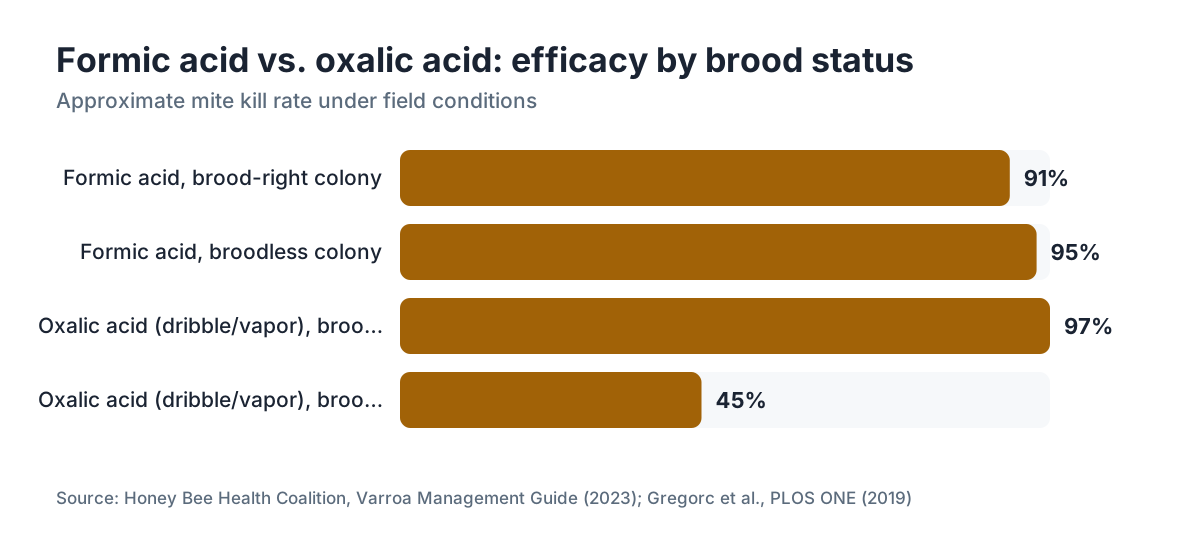
Efficacy in the literature runs from about 63% to 97%, with most solid field trials landing near 90% under good conditions. A 2019 study in PLOS ONE by Gregorc and colleagues, comparing organic acid treatments, found Formic Pro at 14-day application killed 90.6% of mites in colonies that still had capped brood. [5] That number matters because it was measured against mites in brood, the hard part of the problem, more than phoretic mites.
MAQS studies show similar results. The Honey Bee Health Coalition's Varroa Management Guide cites 90%+ kill rates for MAQS in properly run trials. [4] The qualifier in every study is "properly run": right temperature window, right placement, no shortcuts on colony prep.
Efficacy drops when a colony carries a lot of drone brood. Drone cells stay capped longer, and some research suggests vapor penetrates the bigger cells less reliably. In a heavy drone year, your field result may land 10 to 15 points under the trial numbers.
One honest limit: you can't fully separate the chemistry from the timing. Treat in early fall, after the flow but before the winter bees are raised, and you catch the population at the right moment. The same strips in July with heavy brood underperform. The treatment and the timing work together, always.
Formic acid also has no documented varroa resistance. You can't say that for tau-fluvalinate (Apistan), where resistant mite populations are established across North America. [3]
How do you apply formic acid strips correctly?
Read the label. That's not filler. MAQS and Formic Pro have specific placement rules that change both efficacy and safety, and the two labels differ from each other.
For Formic Pro, the two-strip protocol puts one strip on top of each brood box, either on the top bars or the bottom board depending on your setup and the current label guidance. Peel the protective paper off both sides. Don't seal the hive tight: the acid vapor has to exchange rather than concentrate, so some ventilation is required. Many beekeepers open the front entrance wider than usual or run a screened bottom board during treatment. [1]
For MAQS, two strips go across the top bars of the lower brood box, perpendicular to the frames. The label says to remove the entrance reducer or leave it at full open during treatment.
A few things the basic instructions skip:
Don't treat a weak colony. A nuc or a hive already stressed by disease or starvation handles formic acid badly. The minimum is roughly 6 frames of bees. Small colonies also carry less brood, so they get less of the brood-penetration benefit that makes the hassle worthwhile.
Wear real PPE. Nitrile gloves alone won't cut it. Formic acid vapor burns mucous membranes and the respiratory tract. The right kit is a half-face respirator with combined organic vapor and acid gas cartridges (OV/AG rated), plus splash goggles, not safety glasses. Handle a strip outdoors for a few seconds and you might tolerate it. Work in a bee yard with dead air and you'll know inside 30 seconds that you need the respirator.
Leave the hive shut for the first 4 to 7 days if you can. Cracking it open releases a slug of concentrated vapor that can hurt you and disrupts the treatment inside.
What are the risks and side effects of formic acid in the hive?
Queen loss is the side effect beekeepers report most and worry about most. Published studies put MAQS queen loss between 3% and 15% depending on conditions, running higher when treatment temperatures push toward or past the labeled max. [4] Formic Pro, with its slower release, tends to show lower queen loss in head-to-head comparisons, though the data isn't deep.
Brood loss during treatment is normal and expected. Formic acid kills some open larvae, which shows up as a spotty pattern in the first week. This is not European foulbrood. Don't confuse the two. The colony usually recovers and the queen resumes laying within 10 to 14 days. If the brood loss is severe and she stops laying after treatment ends, that's a sign of queen damage.
Heat multiplies both risks. Treat at 80°F, then let a heat spike push ambient to 90°F mid-treatment, and you can lose brood across multiple frames and injure the queen. Watch the forecast. Heat wave coming? Pull the strips early.
There's essentially no mammalian toxicity concern from residue in treated honey; the residues break down to CO2 and water. The FDA and EPA have reviewed the residue data for both MAQS and Formic Pro. [1] The danger is to you during application, not to anyone eating the honey.
One risk that gets less attention: supersedure after treatment. Even a surviving queen can trigger the colony to replace her 4 to 6 weeks later. Treating in fall and planning to overwinter with that queen? Check her again 6 weeks after treatment.
How does formic acid compare to oxalic acid for varroa treatment?
This is the comparison everyone asks about, and the answer hinges on one thing: whether your colony has capped brood.
Oxalic acid kills varroa by direct contact. Bees groom each other, pick up oxalic acid from treated surfaces or vaporized residue, and phoretic mites absorb a lethal dose. It does not penetrate capped cells. A 2016 study cited by the Honey Bee Health Coalition found oxalic acid efficacy around 90 to 99% in broodless colonies, dropping to 30 to 60% when significant capped brood is present. [4] Treat a full colony with oxalic acid in midsummer and you knock down the phoretic mites while the brood hatches out carrying the next wave.
So the honest read: oxalic acid is simpler, cheaper per treatment, gentler on queens, and brutal against mites in a broodless colony (late fall, winter, or a fresh split). Formic acid is harder to run, riskier for queens, and demands temperature management, but it's the better call any time you've got brood and can't wait for a broodless window.
Extended-release oxalic acid sits in between. Products like Api-Bioxal applied to glycerin-soaked cellulose pads release acid slowly over weeks and reach some of the hive environment, so they can trim mite loads in brood-right colonies, but efficacy stays below formic acid for mites under cappings. [6] The only legal delivery is the EPA-registered product; shop-made glycerin recipes are not legal under current EPA registration.
Manage a varroa mite infestation across the whole season, not at one point, and many experienced beekeepers use both: formic acid for the brood-right summer and fall treatment, oxalic acid dribble or vapor in the broodless winter window.
You can find both at most beekeeping supply companies that carry a treatment line.
When is the best time of year to treat with formic acid?
The best window for formic acid is right after the honey flow, in late summer and early fall, roughly August through September across most of the continental US. Four reasons that window works.
The supers are off, or nearly so. Formic acid is technically approved with supers on, but most beekeepers and extension services still say pull them first to avoid off-flavors in the honey. [4]
Mite populations peak in late summer, because the colony has been growing mites on top of a big brood population all spring and summer. A late-July alcohol wash reading 2% can hit 4% by September if you do nothing.
The winter bees, the long-lived bees that carry the colony to spring, start being raised in August and September. You want them born into a low-mite hive. A mite-loaded nurse bee raises weaker fat-body bees that struggle through winter. Treating before those bees emerge is arguably the highest-leverage move on the whole calendar. [8]
Late August and early September temperatures usually fall inside the application window in most temperate climates, though the upper limit stays a real problem in the South.
Spring is a secondary window, useful after early splits or for new packages once they've built up brood. It gives you a clean start to the season. The catch is variable spring weather and the 50°F-night floor, a real constraint in April up north.
Midsummer is the hardest time because of heat and because supers may be on. If mite counts force your hand, many beekeepers pull the supers, run formic acid for 14 days, then reassess. Not ideal, but better than letting counts run to 5% by August.
Can you use formic acid with honey supers on?
Technically yes, with real caveats. Both Formic Pro and MAQS are labeled for use with honey supers on, which is unusual and a genuine selling point for producers who can't pull supers every treatment cycle. [1]
The practical worry is off-flavor. Formic acid vapor can move up into the supers and leave a sour or sharp note in capped honey at high enough concentration. The research is mixed. Some studies find no detectable flavor difference after a properly applied treatment. Others, mostly at higher temperatures where evaporation runs fast, find elevated formic acid levels. Honey naturally holds small amounts of formic acid (roughly 100 to 300 mg/kg), and treatment residues usually decay back to background within a few weeks. [2]
Most extension services, Penn State among them, say remove supers before treatment when you can. [7] Treating an active flow with supers filling? Weigh the mite-count risk against the flavor risk and make the call. I'd pull the supers if counts are at 2% or below and I have time. At 4% or above in July, I'd treat and accept the chance of minor off-flavor in a super.
Never treat within a week or two of extracting honey you plan to sell. The residue timeline from application to safe extraction isn't documented precisely enough for me to hand you a confident commercial margin.
Are there concerns about formic acid resistance in varroa mites?
No confirmed resistance to formic acid has been documented in Varroa destructor as of the most recent published literature. The kill is non-specific: formic acid denatures proteins and breaks cell membranes through acidification. There's no single receptor or enzyme for the mite to evolve around, the same reason oxalic acid shows no resistance either. [3]
Compare that to pyrethroids. Resistance to tau-fluvalinate and flumethrin is widespread across North American and European mite populations, first documented in the 1990s, and now makes Apistan unreliable in many regions. Coumaphos (CheckMite+) resistance is documented too. [3]
That doesn't make formic acid invincible forever. Resistance evolves when selection pressure stays constant and survivors breed. Rotating treatment chemistry is still good practice. For now, the organic acids (formic and oxalic) are the most durably effective tools in the non-synthetic kit, and their resistance picture is far cleaner than the synthetics.
The Honey Bee Health Coalition's Varroa Management Guide recommends rotating treatment modes and monitoring mites regardless of what you use, because efficacy shifts more with colony and timing than with chemistry. [4]
How do you monitor whether formic acid treatment worked?
Don't skip this. Treatment without monitoring is guessing.
The standard post-treatment check is an alcohol wash on roughly 300 bees from the brood nest. (People call it a sugar roll too, but the alcohol wash is more accurate.) You want a count below 2 mites per 100 bees (2%) afterward. If you're still above that 3 to 4 weeks after a formic acid treatment, it underperformed, and you reassess: re-treat with a different product, follow up with oxalic acid, or figure out what went wrong the first time. [4] [9]
A sticky board under a screened bottom board gives you a directional read on mite mortality in the first 3 to 5 days. A big spike in drop confirms the treatment is working. No meaningful drop in the first 48 to 72 hours is a bad sign, and it usually means the temperature was too low or the strips went in wrong.
The Honey Bee Health Coalition recommends monitoring before treatment, 3 to 4 weeks after, and again in late fall before overwintering. [4] That gives you three data points across the late-summer to fall stretch that decides the winter. Want a structured way to track counts over time? The free tools at VarroaVault give you a monitoring log and threshold alerts tied to your own colony count.
For a full breakdown of monitoring methods, mite identification, and the life cycle that drives treatment timing, see the varroa mite overview.
What's the legal status of formic acid treatments in the United States?
Formic acid for varroa is EPA-registered under two products: MAQS (EPA Reg. No. 83923-1) and Formic Pro (EPA Reg. No. 83923-3). Both are registered for beekeepers to apply directly, rather than licensed pesticide applicators, which keeps them within reach of hobbyists and sideliners. [1]
State registration varies. Most states accept EPA-registered products automatically, but a handful require separate state registration. Check your state department of agriculture's pesticide list before you buy if you're unsure. Most state university extension services keep current approved-product lists for beekeepers.
For certified organic operations, Formic Pro is listed by the Organic Materials Review Institute (OMRI) as acceptable in organic production, and MAQS holds a similar status. [10] Formic acid's natural presence in honey and its approval during honey flow make it one of the cleaner fits with organic certification among varroa treatments. [1]
No federal restriction caps purchase quantity for either product. Both sell through standard beekeeping supply companies without special licensing. As of 2024, a MAQS pack (two strips, one hive treatment) runs roughly $20 to $30, and a Formic Pro pack (two strips) runs roughly $30 to $40. Prices move by retailer. Buying in bulk for a sideline? Compare across suppliers, and check whether any offer free shipping honey bee supply companies deals on larger orders.
Frequently asked questions
What temperature do you need for formic acid to work on varroa?
Both Formic Pro and MAQS require ambient temperatures between 50°F and 85°F (10°C to 29°C) during treatment. MAQS has a tighter upper bound of 79°F. Below 50°F, evaporation is too slow for lethal vapor concentrations. Above 85°F, the vapor gets concentrated enough to kill brood and injure queens. Check the seven-day forecast before applying and pull strips early if a heat spike arrives.
Does formic acid kill varroa under capped brood?
Yes. This is the main reason to choose formic acid over oxalic acid in a brood-right colony. Formic acid vapor permeates wax cappings and reaches lethal concentrations inside worker and drone brood cells. Oxalic acid does not penetrate cappings effectively, making it close to useless against the reproductive mite population in a colony with significant capped brood.
How long does formic acid treatment take?
Formic Pro's two-strip protocol runs 14 days. The single-strip protocol runs 20 days. MAQS finishes in 7 days. You leave strips in for the full duration without opening the hive, then remove them. Run an alcohol wash mite count 3 to 4 weeks after treatment to verify efficacy, since mites in newly hatched brood take a few weeks to fully show up in the count.
Can formic acid kill the queen?
It can. Published studies put queen loss from MAQS between 3% and 15%, with higher rates when temperatures exceed label maximums. Formic Pro tends to show lower queen loss thanks to its slower release. Queens can also be damaged without dying right away, leading to supersedure 4 to 6 weeks after treatment. Always inspect for a laying queen and normal brood pattern about three weeks out.
Is formic acid safe to use with honey supers on?
It's labeled for use with supers on, but most extension services recommend removing supers when possible to avoid off-flavors in honey. At high temperatures, formic acid vapor can push acid levels in capped honey above natural background. If mite counts are high and supers can't come off, treat and monitor honey quality. Don't extract honey for sale within 2 weeks of treatment, and skip this approach entirely for premium varietal honeys.
How does formic acid compare to oxalic acid for varroa?
Formic acid penetrates capped brood cells; oxalic acid doesn't. In a broodless colony, oxalic acid hits 90 to 99% efficacy and is simpler and cheaper. In a colony with capped brood, oxalic acid drops to 30 to 60%, while formic acid reaches 90%+ in trials. Many beekeepers use formic acid in late summer and oxalic acid in the broodless winter window as a two-step annual protocol.
What PPE do you need when applying formic acid strips?
At minimum: a half-face respirator with combined organic vapor and acid gas cartridges (OV/AG rated), splash goggles, and chemical-resistant gloves (more than nitrile). Formic acid vapor burns eyes, skin, and the respiratory tract. Open the package and place strips with your face turned away from the hive entrance. Work in good airflow. If you catch a sharp sour smell while applying, you're getting too much vapor.
Has varroa developed resistance to formic acid?
No confirmed resistance to formic acid has been documented in any Varroa destructor population. The kill mechanism is non-specific acid toxicity to cell membranes, harder for mites to evolve around than a synthetic acaricide's receptor target. Pyrethroids like tau-fluvalinate have documented widespread resistance in North America since the 1990s. Formic and oxalic acid currently show no resistance patterns, though good practice still includes treatment rotation.
How do I know if formic acid treatment worked?
Run an alcohol wash 3 to 4 weeks after treatment. You want below 2 mites per 100 bees. A sticky board mite drop spike in the first 48 to 72 hours after application is a good early sign the treatment is active. No meaningful drop in that window usually means the temperature was too low or the strip placement was wrong. Recheck counts at 3 to 4 weeks regardless, since brood hatch-out can briefly re-inflate phoretic mite numbers.
Can I use formic acid in early spring?
Yes, with caveats. Spring works if overnight temperatures stay above 50°F and daytime highs stay below 85°F. In northern states that's often late April through May. Spring treatment is useful post-split or for packages that have built up brood, giving colonies a low-mite start before build-up. The limit is variable spring weather: a cold snap mid-treatment drops efficacy, and an early warm spell can push temps toward the upper line.
What is the right mite threshold to trigger a formic acid treatment?
The Honey Bee Health Coalition recommends treating when alcohol wash counts reach 2% (2 mites per 100 bees) during the honey production season, or 1% in late summer when winter bees are being raised. Many extension services use similar thresholds. Formic acid is strong enough that you don't need to wait for a higher threshold; the brood-penetrating advantage is most valuable before the population snowballs past 3 to 4%.
How does oxalic acid and glycerin work compared to formic acid?
Extended-release oxalic acid treatments (oxalic acid absorbed into glycerin-soaked cellulose pads, sold as Api-Bioxal on an extended-release matrix) release acid slowly over several weeks. They stretch out contact exposure for phoretic mites. Some studies show modest effects on mite loads in colonies with brood, but efficacy stays below formic acid for capped-brood mites. The glycerin delivery method is only legal via EPA-registered products, not homemade preparations.
Can I use formic acid in a new package or nucleus colony?
With caution. The minimum colony size for formic acid is roughly 6 frames of bees. A small nuc or fresh package with 3 frames may not buffer the vapor well, and queen loss risk climbs in smaller colonies. If mite counts demand early treatment in a small colony, an oxalic acid dribble is gentler and lower-risk. Wait until the colony grows to at least 5 to 6 frames of adult bees before using formic acid.
Where do I buy Formic Pro or MAQS?
Both products sell through most major beekeeping supply retailers in North America without special licensing. Many local beekeeping association co-ops buy in bulk to cut per-unit cost. Online suppliers often carry both; compare prices including shipping, especially for orders of 10 or more packs if you run a sideline. Check for the OMRI listing on the package if you need organic certification documentation.
Sources
- EPA, Formic Pro and MAQS product label registration documents: Formic Pro (EPA Reg. No. 83923-3) and MAQS (EPA Reg. No. 83923-1) are registered for varroa control, labeled for use with honey supers on, within 50-85°F, and acceptable for organic production
- Apidologie, Charrière & Imdorf (2002), formic acid vapor penetration in capped brood: Formic acid vapor reaches lethal concentrations for varroa inside capped brood cells while larvae tolerate higher concentrations than adult mites; formic acid occurs naturally in honey at 100-300 mg/kg
- USDA ARS, Bee Research Laboratory: varroa resistance to acaricides: Tau-fluvalinate and coumaphos resistance is widespread in North American varroa populations; no confirmed resistance to formic or oxalic acid has been documented
- Honey Bee Health Coalition, Varroa Management Guide (2023): Formic acid achieves 90%+ efficacy including in capped brood; queen loss risk is elevated above 85°F; oxalic acid efficacy drops to 30-60% in brood-right colonies; 2% mite threshold recommended for treatment trigger
- PLOS ONE, Gregorc et al. (2019), efficacy comparison of organic acid treatments including Formic Pro: Formic Pro 14-day application achieved 90.6% mite mortality in colonies with capped brood present
- EPA, Api-Bioxal (oxalic acid dihydrate) registration and label: Api-Bioxal is the only EPA-registered oxalic acid product for varroa; extended-release glycerin-based method is only legal via registered product, not homemade preparations
- Penn State Extension, Varroa Mite Management in Honey Bee Colonies: Penn State Extension recommends removing honey supers before formic acid treatment when possible to minimize off-flavor risk in harvested honey
- University of Minnesota Extension, Varroa Mite Management: Late summer and early fall represent the highest-leverage treatment window because winter bees are being raised and mite populations peak after summer build-up
- North Carolina State University Extension, Varroa Mite Control: Alcohol wash is the recommended monitoring method; a count below 2 mites per 100 bees post-treatment indicates successful control
- USDA Agricultural Marketing Service, National Organic Program regulations: Formic acid treatments listed under OMRI are acceptable for use in certified organic honey bee operations
Last updated 2026-07-09