How to treat varroa in hot weather when formic acid is risky
TL;DR
- Formic acid (MAQS or Formic Pro) carries real brood and queen loss risk above 85°F, and most labels prohibit use above 92°F.
- In hot weather your best alternatives are oxalic acid vaporization with repeated treatments, Apiguard or ApiLife Var (thymol-based, effective up to 99 to 105°F), or Apivar (amitraz, no hard heat ceiling).
- Treat at 2 mites per 100 bees and recount 3 to 4 weeks after any treatment.
Why is formic acid risky in hot weather?
Formic acid kills mites by releasing vapor that soaks through capped brood cells and reaches the mites hiding on developing pupae. That same vapor, at high concentration, kills bees and queens too. Heat is the problem. The acid volatilizes faster as temperatures climb, so the hive fills with vapor faster than the bees can fan it out.
The Formic Pro label (one of two registered products in the U.S.) is blunt about the ceiling: it prohibits application when ambient temperature exceeds 92°F for the 7-day strip regimen. The MAQS (Mite Away Quick Strips) label carries a similar restriction and warns of higher queen loss above 85°F [1]. Even inside the labeled window, beekeepers report more queen loss in summer than in fall, because afternoon spikes push hive temps past safe thresholds even when the morning low reads fine.
Queen loss is the practical problem you actually feel. A queenless colony in July or August is a genuine setback. A replacement queen takes 4 to 6 weeks to start laying and rebuild population, and that lands right when mite pressure usually peaks. This is bigger than label compliance. A failed formic treatment can hand you a weaker colony going into fall than if you'd used a slower method correctly.
Here's the line I hold to. If your daytime highs sit consistently above 85°F, formic acid is a bad bet. If highs run above 92°F, it's off the label, period.
What are the real alternatives to formic acid in summer heat?
Four registered options deserve serious thought: oxalic acid (OA), Apiguard (thymol), ApiLife Var (also thymol-based), and Apivar (amitraz strips). Each has its own temperature profile, efficacy window, and brood-penetration limit. Here's the honest comparison.
| Treatment | Active ingredient | Temperature range | Penetrates capped brood? | Brood-free required? | Typical efficacy (per Honey Bee Health Coalition) |
|---|---|---|---|---|---|
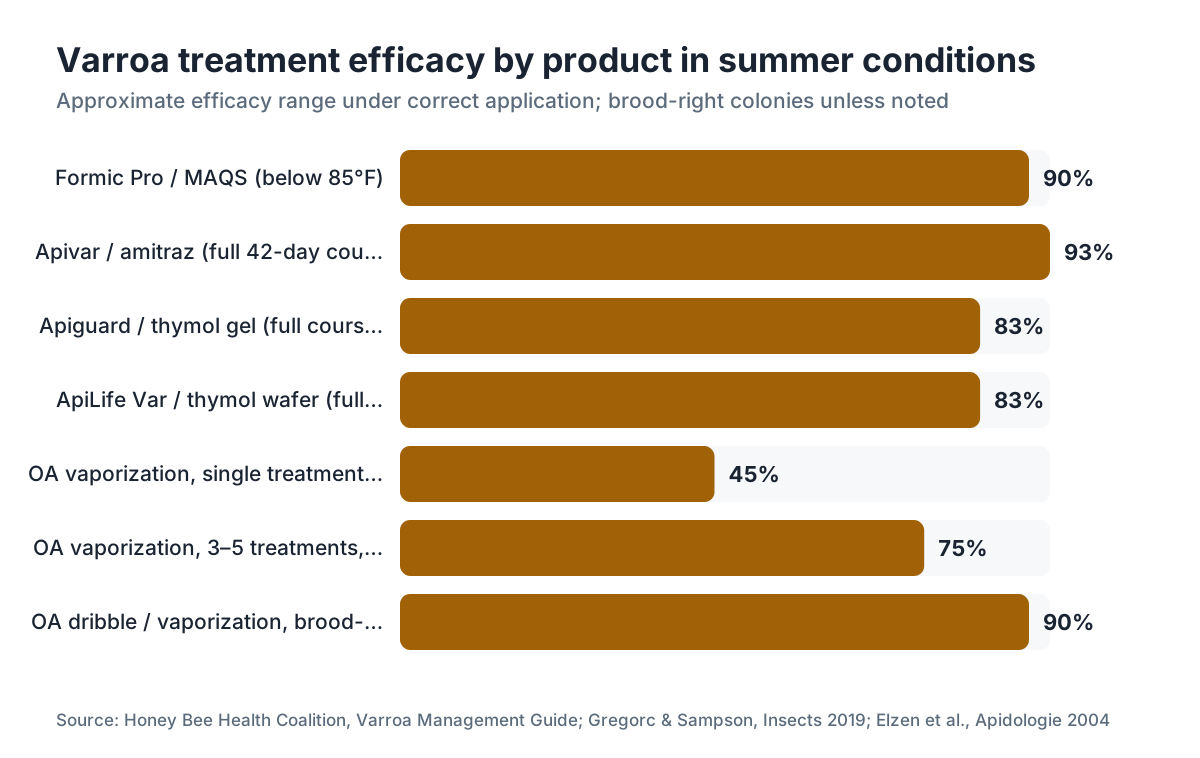
| Formic Pro / MAQS | Formic acid | 50 to 92°F | Yes | No | 90%+ in good conditions |
| Oxalic acid (vaporization) | Oxalic acid | 20 to 100°F+ | No | For single treatment; repeat for brood | No |
| Oxalic acid (dribble) | Oxalic acid | Above freezing | No | Yes for single dose | No |
| Apiguard | Thymol gel | 59 to 105°F (hive temp) | Limited | No | 74 to 93% over full course [2] |
| ApiLife Var | Thymol blend | 59 to 99°F (ambient) | Limited | No | 74 to 93% range [3] |
| Apivar | Amitraz | No hard temp ceiling | No | No | 91 to 95% in studies [4] |
The Honey Bee Health Coalition's Varroa management guide is the closest thing beekeeping has to a shared reference. If you haven't read it, that's the first thing to fix [2].
Amitraz (Apivar) earns its place here because it has no real upper temperature limit and works right through a brood period. The catch is a list. Resistance shows up in some U.S. apiaries, efficacy hangs on good strip placement, and the 42-day treatment ties up the hive through summer. It's a legitimate tool, especially against a high mite load when nothing else fits. But it shouldn't be your reflex every summer, or you push resistance along faster.
For most hobbyists riding out a hot stretch in July or August, oxalic acid vaporization on a repeated schedule, or a full Apiguard course, is the practical path.
How does oxalic acid vaporization work when there's brood in the hive?
This is the most misunderstood part of summer mite work. Oxalic acid (OA) vapor kills phoretic mites, the ones riding on adult bees out in the open. It does not reach into capped brood. Mites tucked under wax cappings on pupae ride out an OA treatment untouched.
A healthy summer colony almost always has brood. So a single OA vaporization misses a big chunk of your mite population. Research from the University of Florida and elsewhere shows that on a colony with normal brood, one OA vaporization may knock down only 30 to 60% of mites, depending on how much brood is capped at the time [5].
Repeated treatments are the fix. A common protocol among commercial and sideliner operations is three to five vaporizations spaced five days apart. The logic tracks the brood cycle: mites sealed under cappings during treatment one emerge with young bees over the next few days, now phoretic, and treatment two catches them. You leapfrog through the brood.
The EPA-registered label for oxalic acid vaporization (oxalic acid dihydrate, sold as Api-Bioxal) permits multiple treatments in the hive without the brood-free restriction that governs the dribble method [6]. Read your specific label. Application rates matter and vary a little between formulations.
One field note. Vaporize in the early morning when bees are clustered and temps are manageable, seal the entrance for at least 10 minutes, and wear a respirator rated for organic vapors. OA vapor is hard on human lungs. That part is not optional.
What is Apiguard and does it work in hot weather?
Apiguard is a thymol gel registered for varroa control in the U.S. A tray of gel sits on top of the brood frames and releases thymol vapor slowly. Bees walk through it and spread it through the hive, and the vapor kills phoretic mites. Like OA, it barely touches capped brood.
Its temperature requirement is an advantage in summer, not a liability. The Apiguard label calls for hive temperature between 59°F and 105°F for the product to work [7]. Below 59°F bees cluster and stop spreading the gel. Above 105°F at the hive, efficacy falls and bees can get irritated. Most summer hives, even in hot country, stay under 105°F inside the cluster because bees actively thermoregulate.
A standard course is two trays, each left two weeks, for a four-week total. You need an eke or an empty super above the brood box to give the tray headspace. Skip it and bees strip the gel faster, and efficacy drops.
Efficacy in well-run trials lands around 74 to 93%, real but short of formic acid at its best [2]. The gap bites hardest when mite loads are high heading into fall. If your count is above 3 mites per 100 bees in July, Apiguard alone may not pull you down to safety before the fall population decline starts. In that spot, pairing Apiguard with repeated OA vaporizations, or switching to Apivar, is worth a look.
Heat also makes bees beard heavily during an Apiguard course, which is normal. A few colonies will abscond if thymol concentration climbs too high in a very hot hive. Pulling the tray for a day during a heat wave and then putting it back is a fine adjustment, though it stretches your timeline.
What is ApiLife Var and how is it different from Apiguard?
ApiLife Var is thymol-based too, but it comes as a wafer (a vermiculite tablet) instead of a gel. It also carries small amounts of eucalyptol, menthol, and camphor. The treatment is two to three wafers set at the corners of the top brood box, replaced weekly for three to four weeks.
Its temperature window runs slightly narrower. The label requires ambient temperatures between 59°F and 99°F [3]. That 99°F ceiling is a real constraint in the desert Southwest or the deep South, where summer ambient temps routinely blow past it. In those areas, Apiguard's hive-temperature standard (rather than ambient) buys you a little more room.
Efficacy matches Apiguard closely, in the same 74 to 93% band the HBHC reports. Some beekeepers like the wafer because it handles easier than a gel tray. Neither product clearly beats the other in the research I've seen.
What mite threshold should trigger treatment in summer?
The most widely cited threshold from the Honey Bee Health Coalition is 2 mites per 100 bees (2%) during the brood-rearing season, roughly spring through late summer [2]. Above that, colonies carry an elevated risk of heavy population loss or collapse before winter.
That 2% number is a guideline, not a statute. A colony climbing toward its fall cluster peak in September has less room for mite pressure than the same colony in May with months of build ahead. If it's August and you're already at 1.5%, treat anyway. Mite populations double roughly every three to five weeks under summer brood conditions.
The alcohol wash (also called an ethanol wash) and the sugar roll are the two common monitoring methods. Alcohol wash is more accurate. A 2019 comparison in Insects found the sugar roll undercounts mites by roughly 25 to 40% versus an alcohol wash on the same sample [8]. So if your sugar roll reads 2%, the real number is likely higher. That matters when you're deciding whether Apiguard alone will do the job.
VarroaVault has free mite-count calculators and threshold trackers if you want a tool that does the math and flags when your count is trending toward the treatment line.
For summer specifically: treat at or above 2%, and don't hold out for a more convenient week. A colony that crosses 3 or 4% in July often crashes by September even if you finally treat in late August.
Can you use Apivar (amitraz) in hot weather instead?
Yes, and it's genuinely underused as a summer option. Apivar strips contain amitraz, a synthetic acaricide with no meaningful upper temperature limit on the label. Bees brush against the strips, pick up amitraz on their bodies, and carry it through the hive. Mites take it up on contact.
Apivar doesn't reach into brood, but it works continuously across a 42 to 56 day period, so it catches mites as they emerge from cells over several brood cycles. Net efficacy in studies where strips sat correctly runs 91 to 95% [4].
The concerns are real. Amitraz resistance is confirmed in some U.S. apiaries, though the geographic spread is still patchy in published data. Rotating chemical classes, so not reaching for Apivar every summer, is the main way to slow it. Apivar also must be out of the hive during a honey flow you plan to harvest. The label is specific about that.
For a hobbyist staring at a very high mite count in August with no patience for a multi-treatment protocol, Apivar is a rational choice. Don't feel guilty for using it. Feel guilty for not treating at all.
For background on varroa mite biology and lifecycle, that context makes clear why contact-only treatments need full treatment windows.
How should you time varroa treatments around a summer honey flow?
This is where a lot of hobbyists make their worst call. Supers are on, honey is coming in, so they hold off on treatment to protect the crop. By the time the flow ends, the mite population has doubled or tripled.
Here's the reality. Thymol products and oxalic acid are not permitted with honey supers in place (check your specific label, but that's the standard restriction across products). Apivar is also prohibited during a honey-production period per its label. Formic acid (MAQS, Formic Pro) is the one registered product labeled for use with honey supers on, and summer heat is exactly what makes it risky.
The honest path for most beekeepers: monitor mite levels through the flow, treat the moment supers come off, and accept that this is a tight window. If mites hit 2% before the flow ends and you can't treat safely with supers on, you have a decision. Pull supers early and treat, or wait and swallow the risk of colony damage. Neither is clean. Pulling supers early and treating is usually right once counts reach 2.5% or higher.
Some beekeepers run a walk-away split during a flow to build a brood break in a nucleus colony, then treat that queenless nuc with OA dribble while the parent colony keeps working the flow. That's a legitimate move if you have the equipment and the bandwidth to manage it.
For the general beekeeping supplies you'll want for summer treatments, stage your OA vaporizer, eke, Apiguard trays, and respirator before July. That way you're not scrambling when counts spike.
What does a brood break do for varroa control in summer?
A brood break, which means removing or caging the queen long enough for all capped brood to emerge, is one of the most effective mite tools going, and it costs nothing in chemicals. Once brood is capped, roughly 12 days pass before the last worker pupae emerge. During that gap, every mite is phoretic on adult bees, and a single OA vaporization or dribble can reach 90%+ kill because the mites have nowhere to hide.
The cost is population. A brood break stalls colony growth right when you might want maximum foragers. During a strong summer flow, that's a real tradeoff. Brood breaks make the most sense in late summer after the main flow, or in nuc colonies managed for mite reduction rather than honey.
Caging the queen for 24 days (a full brood cycle) and then treating with OA is a documented strategy with strong efficacy data. The Honey Bee Health Coalition covers this approach directly in its guide [2]. If you're a hobbyist with a handful of colonies and a high August mite load, this is genuinely worth doing on at least one hive.
How do you monitor treatment effectiveness after a summer varroa treatment?
This step gets skipped more than any other. You treat, you feel good, you move on. But treatments fail, and you won't know it without a follow-up count.
The standard recommendation from the Honey Bee Health Coalition and most university extension programs is an alcohol wash 3 to 4 weeks after finishing a full treatment course [2]. If counts still sit above 2%, the treatment underperformed and you need to act again.
For oxalic acid vaporization on a colony with brood, a mite wash two weeks after your final vaporization shows how the population actually responded. Since OA vaporization on a brood-right colony may reach only 60 to 75% efficacy in a single round, expect counts lower but not zero. Treat again if you're still above threshold.
A sticky board under a screened bottom board gives you a daily mite-drop count. That's less precise than a wash but takes almost no effort, and it tells you whether mites are still falling after treatment. Commercial operations lean on it as a trend indicator. It's weaker than an alcohol wash for making an actual treatment decision.
Your state extension service is often the best local reference. Penn State Extension, the University of Minnesota Bee Lab, and UC Davis Bee Health all publish guidance tied to regional conditions [9][10].
Are there any natural or non-chemical approaches that help in summer heat?
A few, and none replace a registered treatment when mite loads are high. That's the honest answer.
Genetic resistance is real. Colonies with VSH (Varroa Sensitive Hygiene) or Mite Mauler genetics show meaningful drops in mite reproduction. Research from the USDA ARS Baton Rouge lab documents VSH colonies holding mite levels below treatment thresholds in field conditions without chemical intervention in some years [11]. If you're requeening anyway, choosing VSH or hygienic stock from a reputable breeder is a legitimate mite management move.
Screened bottom boards help modestly by letting mites fall out without climbing back. Reviews put the reduction at roughly 10 to 15%, useful but not enough on its own.
Small-cell foundation, drone trapping (pulling capped drone brood to cut mite reproduction), and other cultural controls each shave some mite buildup, but none comes close to the efficacy of registered chemical treatments. Drone trapping in particular takes real discipline and consistency to work, and most hobbyists don't keep it up rigorously enough to see the benefit.
Run these as additions to a treatment plan, not stand-ins for one.
What does a practical summer varroa plan look like, step by step?
Here's the approach I'd actually run, stated plainly.
Monitor before you need to. Alcohol wash every two to four weeks from late May through September. Don't wait until you're worried. By then you're usually behind.
If you hit 2% mites per 100 bees while honey supers are on and daytime highs are above 85°F, pull the supers. Yes, even with honey still coming in. A dead colony in October makes no honey.
With supers off, pick your treatment by temperature and mite load:
- Below 3% mites and sustained temps below 85°F: Apiguard or ApiLife Var, two to four week course.
- Above 3% mites, or temps too high for thymol: Apivar, 42 to 56 days, placed correctly between brood frames.
- Any time you have a brood break (from a split, queen failure, or intentional caging): OA dribble or one vaporization, the highest efficacy of any method.
- Ongoing summer management with brood present: repeated OA vaporizations on a 5-day schedule, three to five treatments.
After any treatment, recount at 3 to 4 weeks. Still above 2%? Treat again with a different method, or extend the current one.
Write your counts down. A notebook or a free tool like the one on VarroaVault gives you year-over-year data that tells you whether your apiary's mite pressure is trending up (resistance, heavy reinfestation from neighbors) or down (your management is working).
The varroa mite itself hasn't changed. What changes is your window for acting, and summer heat squeezes that window shut fast.
Frequently asked questions
Can I use formic acid at all in summer if I apply it in the cool of the morning?
The label allows use up to 92°F ambient, but a cool morning doesn't make a 7-day strip treatment safe if afternoon highs run above 85°F. The strip keeps releasing vapor through the heat of the day no matter when you placed it. Most experienced beekeepers skip formic acid entirely once summer daytime highs stay above 85°F, because the queen loss risk is too high to justify.
How many oxalic acid vaporizations do I need to treat a colony with brood?
Most protocols call for three to five vaporizations spaced five days apart. The spacing catches mites as they emerge from capped cells between treatments. A single vaporization on a brood-right colony may eliminate only 30 to 60% of mites, rarely enough to drop counts below the 2% threshold. Do a mite wash 2 to 3 weeks after your final treatment to confirm the load actually came down.
What temperature is too hot for Apiguard to work?
The Apiguard label says hive temperature should stay below 105°F for the product to work correctly. Above that, efficacy drops and bees can get irritated by excess thymol. In practice, most hives in temperate and warm climates hold below 105°F internally because bees thermoregulate. Ambient air in the 90s is generally fine for Apiguard, which is one reason it beats formic acid in summer heat.
Does oxalic acid vaporization work with honey supers on?
In the U.S., the Api-Bioxal label does not permit vaporization with honey supers on that are intended for human consumption. This is a label restriction, more than a best practice. You must remove supers before vaporizing. Check your specific product label, because this is a federal registration requirement and violating it is illegal under FIFRA.
How do I know if my colony is being reinfested by mites from neighboring hives?
A rapid mite rebound within 4 to 6 weeks of an effective treatment is a strong signal of reinfestation from outside the colony. Robbing behavior, nearby collapsing colonies, and feral hives all raise the risk. If you treat and counts climb back to 2% within a few weeks, treat again and consider moving the apiary if you can. There's no clean way to stop drift and robbing that carries mites in.
Is Apivar safe to use in summer heat?
Yes. Amitraz strips (Apivar) carry no hard upper temperature limit on their label, making them one of the few registered treatments that works right through hot weather. The 42 to 56 day period exposes the colony across several brood cycles. The main concerns are honey flow timing (keep it out during a honey production period) and resistance, so rotate chemical classes and don't lean on Apivar every treatment cycle.
Can I treat for varroa during a nectar flow in summer?
Most registered treatments can't be used with honey supers in place. Formic acid (MAQS, Formic Pro) is the main exception, labeled for use with supers on, but summer heat makes that risky. The practical answer for most beekeepers: monitor through the flow, pull supers when counts hit 2% or the flow ends, and treat right away. Delaying treatment to protect a honey crop often costs you the colony.
What's the best way to monitor mite levels without alcohol wash?
The sugar roll is the most common alternative and needs no alcohol, but research shows it undercounts mites by roughly 25 to 40% versus an alcohol wash. Sticky boards under screened bottom boards give a daily natural mite-drop number, a useful trend indicator but not precise enough for threshold calls. If you want accurate counts to drive treatment decisions, the alcohol wash is the method to use.
Do I need to remove the queen or create a brood break before using oxalic acid?
Only for the dribble method, which needs a brood-free colony for reliable efficacy. Vaporization is permitted on colonies with brood under the Api-Bioxal label, but a single treatment has low efficacy when brood is present, which is why repeated vaporizations are needed. If you can create a brood break by caging the queen for 24 days, a single OA treatment at that point reaches 90%+ efficacy.
What mite level is dangerous going into fall?
The Honey Bee Health Coalition threshold is 2 mites per 100 bees during the brood-rearing season. Heading into fall, many extension programs suggest treating before September to protect the long-lived winter bees being raised in August and September. Winter bees that developed in a high-mite colony carry viral damage that shortens their lives and cuts the colony's odds of surviving winter, even if you treat later.
Can thymol treatments harm the queen in hot weather?
High thymol concentration in a very hot, poorly ventilated hive can stress bees and push the colony to abscond or raise emergency queen cells. The risk is lower than with formic acid but real. Good ventilation, an open entrance during treatment, and pulling trays temporarily during extreme heat waves all cut that risk. Apiguard and ApiLife Var queen loss rates in well-designed trials are generally low.
How quickly can varroa mite populations double in summer?
Under peak brood-rearing conditions in summer, varroa populations can double roughly every three to five weeks. A colony at 1% mites in early July can realistically hit 3 to 4% by mid-August without treatment. That's why waiting until fall is a losing play in most years. Summer monitoring and early action protect the winter bee cohort that is the colony's real survival unit.
Are there varroa treatments safe for package bees or newly installed colonies in summer heat?
Newly installed packages pass through a brood-free stretch before the new queen starts laying. That's an excellent window for a single OA dribble treatment, which works well without brood and needs no vaporizer. Once brood production begins, switch to repeated vaporizations or a thymol product. Don't skip monitoring just because a colony is new. Packages can arrive already carrying mites.
Sources
- EPA / Formic Pro label (NOD Apiary Products), registered pesticide label: Formic Pro label restricts use above 92°F ambient temperature; MAQS label warns of elevated queen loss above 85°F
- Honey Bee Health Coalition, Varroa Management Guide (latest edition): 2% threshold during brood season; Apiguard efficacy range 74 to 93%; brood break OA treatment protocol; recommendation to recount 3 to 4 weeks post-treatment
- EPA / ApiLife Var label (Chemicals Laif S.p.A.), registered pesticide label: ApiLife Var label specifies ambient temperature range of 59°F to 99°F for application
- Elzen, P.J. et al. (2004), Apidologie, Apivar (amitraz) field efficacy study: Apivar efficacy reported at 91 to 95% in field studies with correct strip placement
- University of Florida IFAS Extension, Varroa mite management: Single OA vaporization efficacy on brood-right colony estimated at 30 to 60% depending on brood amount present
- EPA / Api-Bioxal (oxalic acid dihydrate) label, registered pesticide label: Api-Bioxal vaporization method permits multiple treatments on colonies with brood; dribble method requires brood-free colony; supers must be removed
- EPA / Apiguard (thymol gel) label, Vita (Europe) Ltd registered pesticide label: Apiguard label specifies hive temperature between 59°F and 105°F for effective application
- Gregorc, A. & Sampson, B. (2019), Insects, Comparison of alcohol wash and sugar roll mite counting accuracy: Sugar roll underestimates mite counts by roughly 25 to 40% compared to alcohol wash on identical samples
- Penn State Extension, Varroa mite control in honey bee colonies: Extension guidance on post-treatment monitoring and regional treatment timing
- University of Minnesota Bee Lab, Varroa management resources: Regional guidance on summer varroa treatment timing and monitoring protocols
- USDA ARS Baton Rouge Honey Bee Breeding Lab, VSH research publications: VSH colonies documented maintaining mite levels below treatment thresholds without chemical intervention in some field trials
Last updated 2026-07-09