How to treat bees with formic acid: a complete field guide

TL;DR
- Formic acid kills varroa mites under capped brood, making it one of the few organic treatments that works without removing honey supers in many jurisdictions.
- Apply MiteAway Quick Strips or Formic Pro at 50-85°F (10-29°C), follow label dose and ventilation instructions exactly, wear nitrile gloves and a respirator, and never treat during a nectar flow above 85°F.
What makes formic acid different from other varroa treatments?
Formic acid is the only approved varroa miticide that penetrates capped brood cells. That single fact changes everything. Oxalic acid, amitraz, and synthetic pyrethroids all work only on phoretic mites, the ones riding on adult bees. Formic acid vapor reaches the mites tucked under those wax caps, which is where roughly 80-90% of the mite population lives during peak brood-rearing season [1].
It's also a naturally occurring compound found in honey at trace levels, which is why regulators in the U.S., Canada, and the EU allow treatment while honey supers are present, with product-specific label conditions you must read before assuming that's true for your product [2].
The mechanism is simple. Formic acid volatilizes at room temperature. When you place a slow-release pad or applicator inside the hive, the vapor diffuses through the colony, including into the air space inside capped cells. Mites exposed to a high enough concentration die from disrupted respiratory function.
Two products dominate the U.S. market right now: Formic Pro (two pads, two-week treatment) and MiteAway Quick Strips, or MAQS (two strips, seven-day treatment). Both contain 68.2% formic acid in a polymer matrix. The label is the law under FIFRA, so product-specific instructions aren't suggestions [2].
If you want background on the mite itself before going further, the varroa mite overview is a good starting point.
When should you treat bees with formic acid?
Timing a formic acid treatment is mostly a temperature problem. The compound needs warmth to volatilize at a useful rate, but too much heat damages queens, kills brood, and can send a colony packing. The EPA-registered label window for both major U.S. products is 50°F to 85°F (10°C to 29°C) for the ambient temperature during the treatment period [2].
That means early spring and late summer/fall are the sweet spots for most of North America. A late-August application after pulling the last super, when daytime highs sit in the low 80s and nights drop into the 60s, is the classic sideliner move. You catch the mite load before it explodes on the fall bee population, and you're still comfortably inside the label temperature range.
Spring treatment is trickier. You want to act before the mite population doubles on the spring build-up, but late cold snaps can drop you below 50°F, which slows volatilization and cuts efficacy. Watch a five-day forecast, more than today's high.
The Honey Bee Health Coalition's Varroa Management Guide lists a 3% infestation threshold (3 mites per 100 bees on an alcohol wash) as a widely cited action trigger during the brood-rearing season [1]. Some researchers argue for treating at 2% in late summer specifically because of the outsized impact on winter bee quality. Nobody has perfect data on the exact threshold for every region. That 3% figure is a reasonable default.
Don't treat during a heavy nectar flow if temperatures will top 85°F. Heat waves in July or August are when most beginner queen losses from formic acid happen.
What equipment and safety gear do you need before you start?
This is not a treatment you apply in jeans and a t-shirt. Formic acid at 68% concentration causes immediate chemical burns on skin and severe respiratory damage if inhaled. Take that seriously.
Minimum personal protective equipment for handling formic acid pads:
- Nitrile gloves, at least 6-mil thickness. Latex tears too easily. Double-glove if you're new to it.
- A half-face respirator with an organic vapor cartridge, not a dust mask. The cartridge must be rated for organic vapors (NIOSH code OV). A standard N95 does nothing for formic acid vapor [3].
- Safety glasses or a face shield.
- Long sleeves. Keep your forearms covered until the pads are in the hive and the lid is closed.
For the actual application you need:
- A hive tool to open and adjust frames.
- An entrance reducer set to the widest open position (required by label for ventilation).
- A screened bottom board or at minimum the rear of the hive cracked open, again for vapor circulation.
- A sharpie or hive record to note the date and product lot.
A single-hive treatment with Formic Pro runs roughly $10-15 in 2025 retail pricing, depending on whether you buy singles or multipacks. MAQS pricing is similar. Neither is expensive. Skimping on PPE to save a few dollars is the wrong trade.
Check your beekeeping supplies inventory before treatment day. Running short of gloves when you're already holding an open pad is a bad situation.
How do you apply formic acid pads (Formic Pro and MAQS) step by step?
The application process is essentially the same for both products, with one key difference in duration and placement that the label spells out.
Before you open anything:
Check the temperature forecast. If it will top 85°F on any day during the treatment window, postpone. Put on your full PPE before opening the package, not after.
Step 1: Assess your colony size.
Both Formic Pro and MAQS use two pads as the standard dose for a full-strength double-deep colony. A single-story nuc or a weak colony with fewer than six frames of bees gets one pad per the label directions. Overdosing a weak colony is the leading cause of queen loss and brood damage with formic acid [2].
Step 2: Open the hive and set the entrance.
Set the entrance reducer to its fully open position. If you have a solid bottom board, prop the back of it up slightly (about 1 cm) or remove the tray to allow airflow. Ventilation is not optional. It keeps vapor concentration in the safe range for the bees and prevents the rapid early spike that causes queen issues.
Step 3: Place the pads.
For Formic Pro: place both pads flat on the top bars of the lower brood box, brown paper side down, scored side up, across the full width of the frames. The pads should touch the top bars directly, not sit on a spacer. Leave them in place for the full 14 days.
For MAQS: place both strips on the top bars the same way, brown side down. MAQS releases faster, so the treatment period is only seven days. Remove the strips after seven days even if there's material remaining.
Step 4: Add a ventilated eke or shim if needed.
If your inner cover sits directly on the top bars, you need a shim (roughly 1 cm) to give space for vapor circulation. Some beekeepers use a shallow eke or a spare rimmed board. The goal is for vapor to circulate rather than pool directly on the pad surface.
Step 5: Close up and record the treatment.
Write the date and product on your hive record. Note the ambient temperature. Set a reminder for the end of the treatment window.
Step 6: Post-treatment.
For Formic Pro, remove the spent pads at 14 days. For MAQS, remove at 7 days. Both products' pads can go in household trash after treatment (check your local regulations). Do an alcohol wash 48-72 hours after treatment ends to check efficacy. A drop from 8% to under 2% is a successful treatment.
How do you use liquid formic acid for bees instead of pads?
In the U.S., if you want to use liquid formic acid for bees, your options are narrow. The registered commercial products are pad-based. Some beekeepers, particularly in Canada and Europe, have used sponge or wick-based applicators loaded with a diluted formic acid solution.
In Canada, the Mitewiper applicator and similar devices are sometimes used with 65% concentration formic acid under provincial guidelines. In the U.S., the EPA labels for formic acid products do not currently register an open liquid application method for hobbyist or sideliner use. Using liquid formic acid in a homemade applicator without a registered label is a FIFRA violation, and more practically, it's genuinely difficult to control vapor release rate without a polymer matrix [2].
If you're in a state or country where a liquid application method is permitted, the core principle is the same: controlled evaporation at 50-85°F, adequate hive ventilation, and PPE including an organic vapor respirator. The concentration used in Canadian licensed products is typically 65%, applied via an absorbent material placed on the top bars. Volume recommendations vary by system, so follow your specific regional registration.
For U.S. hobbyists, the pad-based products are the practical and legal path. They're formulated to release at a rate the label has validated as both effective and survivable for queens.
What temperature range is safe for formic acid treatment?
The registered temperature range for U.S. formic acid products is 50°F to 85°F (10°C to 29°C) [2]. That window covers both efficacy and colony safety.
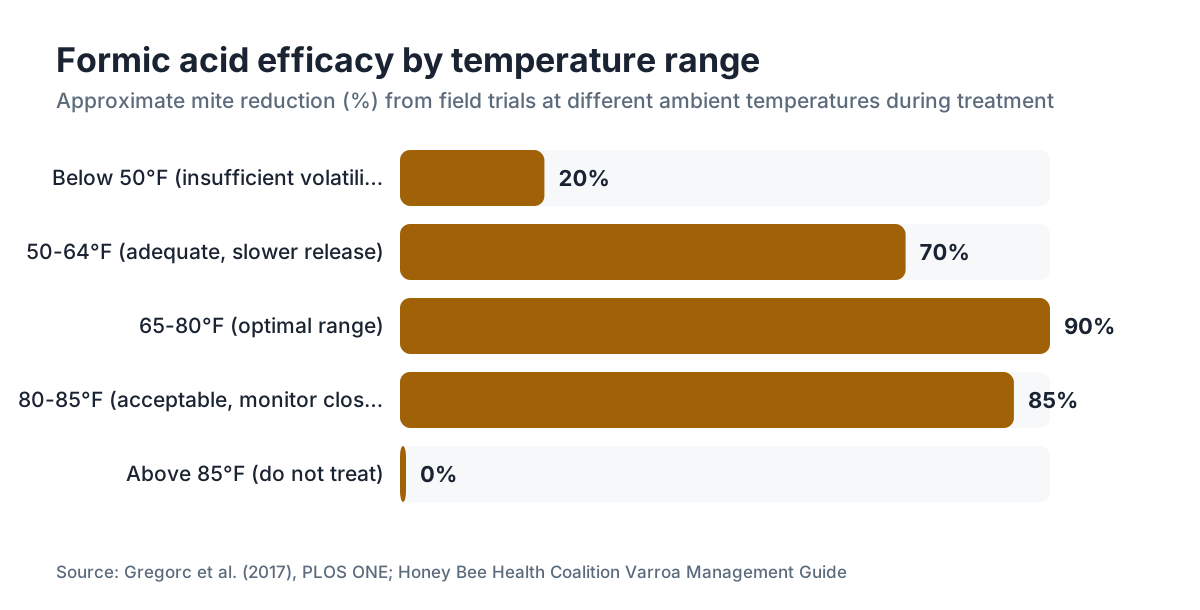
Below 50°F, volatilization slows so much that the vapor concentration inside the hive may never reach lethal levels for mites. You'll burn through your treatment period without adequate mite kill. One study from Canadian field trials found efficacy dropped sharply below 10°C, though that number comes from Canadian products and conditions, so extrapolation to U.S. products should be cautious.
Above 85°F, vapor concentrations can spike high enough to damage queen ovaries, kill open brood, or cause the colony to abscond. The queen damage risk is the most insidious because you may not notice it for weeks, until you realize your queen's brood pattern has gone spotty or she's failing. Several university extension reports on formic acid document queen loss rates of 3-10% in normal conditions, rising sharply when treatments happen during heat events [4].
The practical rule: check a five-day weather forecast. If even one day during the treatment window is forecast above 85°F, wait. In hot climates, cool morning lows don't save you if afternoon highs routinely hit 90°F. The hive interior will exceed the safe range regardless of what your thermometer reads at dawn.
Below is a summary of how temperature affects the treatment:
| Temperature range | Effect on treatment |
|---|---|
| Below 50°F (10°C) | Insufficient volatilization, poor mite kill |
| 50-65°F (10-18°C) | Adequate but slower release, good safety margin |
| 65-80°F (18-27°C) | Optimal range, reliable efficacy and colony tolerance |
| 80-85°F (27-29°C) | Acceptable but monitor closely, reduce ventilation risk |
| Above 85°F (29°C) | Do not treat: queen loss, brood damage, absconding risk |
How effective is formic acid at killing varroa mites?
Efficacy in field studies ranges widely, from around 60% to over 95%, depending on temperature consistency, colony strength, application method, and whether brood is present [1]. That spread sounds discouraging, but the high end is reachable with correct technique.
The Honey Bee Health Coalition's Varroa Management Guide, one of the most practical consensus documents on the subject, notes that formic acid "can be effective under proper temperature conditions and when colonies are managed correctly" and lists it as a Tier 1 organic option for its combination of brood-penetrating ability and honey super compatibility [1].
In a 2017 field study published in PLOS ONE, MAQS-treated colonies showed mite reductions of roughly 90% under favorable temperature conditions [5]. Lower-temperature trials in the same study averaged closer to 70%. The difference was almost entirely down to temperature consistency.
Formic acid does not produce the near-total knock-down you can get with oxalic acid on a broodless colony in winter. That's the trade-off. You gain the ability to treat during brood-rearing at the cost of slightly lower and more variable efficacy. For summer treatments when the hive is full of brood, formic acid is often the best available option regardless of that variability.
Resistance to formic acid has not been documented at a clinically significant level in Varroa destructor populations, which is one reason it stays valuable in rotation with synthetic treatments [6].
Can you treat bees with formic acid while honey supers are on?
Yes. Under the current U.S. EPA label conditions for both Formic Pro and MAQS, treatment while honey supers are present is permitted [2]. This is one of the real advantages of formic acid over amitraz or tau-fluvalinate, both of which require super removal.
The reason honey super presence is allowed comes down to residue. Formic acid occurs naturally in honey and wax. A 2013 study in the Journal of Agricultural and Food Chemistry measured formic acid levels in honey from treated and untreated colonies and found no statistically significant increase in treated honey above natural background levels at labeled doses [7]. That data underpinned the EPA label allowance.
That said, read your current label. Label language can change between product registration cycles, and the specific conditions (maximum temperature, how long before harvest) are defined there, not in a beekeeper blog post including this one.
One practical caveat: if you're treating during a heavy nectar flow with daily temperatures at the top of the allowed range, vapor can push bees to move away from supers temporarily, slowing nectar processing. That's usually a minor and short-lived effect, but it's real.
How do you monitor whether the formic acid treatment worked?
An alcohol wash 48-72 hours after the treatment period ends is the most direct check. Collect roughly 300 adult bees from a brood frame (a half-cup mason jar works well), add 70% isopropyl alcohol, shake for 60 seconds, and count the mites that fall out. Divide mites by bees and multiply by 100 for a percentage [1].
A successful late-summer treatment should bring your mite load from whatever pre-treatment level down to well under 2%, ideally under 1%. If you treated at 6% and end up at 4%, the treatment had poor efficacy. Common causes: temperatures outside the 50-85°F window during the treatment period, weak ventilation, pads not touching the top bars, or a colony so small that vapor didn't circulate properly.
Sticky board counts are a rough corroborating tool. You should see a spike in mite drop in the first 48 hours of a formic acid treatment, then a decline. A large initial spike (50-200+ mites per day in a heavily loaded colony) followed by a rapid drop-off is a sign the treatment is working. Low initial drop from a colony you know was loaded with mites is a warning sign to check your setup.
If your post-treatment wash is still above 3%, re-treat with a different product after the minimum retreat interval, or consider oxalic acid vaporization if you can take the colony broodless. Don't just re-apply formic acid immediately without figuring out why the first application fell short.
Tracking all of this over time is where a structured protocol helps. VarroaVault's free varroa management tools let you log washes, treatments, and temperature data so you can see patterns across seasons.
What can go wrong, and how do you avoid the common mistakes?
Most formic acid failures and most colony injuries come from the same short list of mistakes.
Treating in heat. Already covered, but worth repeating because it's the most common and most damaging error. A weekend beekeeper who checks the Saturday forecast, sees 82°F, and treats, then gets blindsided by a 91°F Tuesday, has a real problem. Check the full treatment-window forecast.
Underdosing a big colony. One pad in a three-deep colony will not produce adequate vapor concentration. Follow the label dosage for colony size.
Overdosing a small colony. Two pads in a four-frame nuc can be lethal or queen-harming. MAQS and Formic Pro both specify reduced doses for smaller colonies. Read the label.
Weak ventilation. Vapor pooling around the pads rather than circulating through the colony means mites in peripheral frames survive. Open the entrance fully. Prop the bottom board or use a screened bottom. Add a shim if the inner cover sits flush on the top bars.
Not confirming the problem first. Formic acid is not maintenance medicine. Treat when your mite count crosses the action threshold, not on a calendar schedule without data. Unnecessary treatments stress bees and cost money.
Skipping PPE because 'it's just pads.' The pads are 68% formic acid. Handle them as the serious chemical they are.
Ignoring queen status after treatment. Do a brood inspection 10-14 days post-treatment. A new spotty pattern or missing eggs can signal queen damage. Catching it early gives you options.
How does formic acid compare to other varroa treatments?
Here's an honest side-by-side of the main treatment categories U.S. beekeepers use.
| Treatment | Penetrates capped brood? | Honey supers allowed? | Temperature limits | Resistance documented? | Approx. cost per hive |
|---|---|---|---|---|---|
| Formic acid (MAQS/Formic Pro) | Yes | Yes (label conditions) | 50-85°F | No | $10-15 |
| Oxalic acid vapor | No | No | Above freezing, best below 50°F | No | $1-3 (plus vaporizer) |
| Oxalic acid dribble | No | No | Above freezing | No | $1-2 |
| Amitraz (Apivar) | No | No (must remove supers) | 50-105°F | Some populations | $8-14 |
| Tau-fluvalinate (Apistan) | No | No | Wide range | Widespread | $8-12 |
| Thymol (Apilife VAR, Apiguard) | Partial | Varies by product | 59-105°F | No | $5-12 |
The short version: formic acid is the go-to summer treatment for brood-rearing colonies when you want to avoid synthetic strips and need brood penetration. Oxalic acid vaporization is more effective per treatment but requires broodless conditions or repeated dosing. Apivar (amitraz) is the highest-efficacy synthetic option where resistance isn't a local concern. Rotating among these categories is sound resistance management [6].
Where can you buy formic acid products for bees, and what do they cost?
Both Formic Pro and MAQS sell through major beekeeping supply retailers in the U.S. and Canada. Single-treatment packs (two pads/strips) are available, as are multi-treatment packages of ten or twenty treatments that cut per-hive cost.
Retail pricing in 2025 (approximate, varies by retailer and pack size):
- MAQS single treatment (2 strips): $13-17
- MAQS 10-pack: $90-110
- Formic Pro single treatment (2 pads): $10-14
- Formic Pro 10-pack: $80-95
You don't need any special permits to buy these in the U.S. They're registered EPA pesticides but available over the counter at beekeeping suppliers. Some states have specific rules about pesticide records, so keep your purchase receipts and treatment logs.
For hobbyists managing one to five hives, buying singles or a small multipack makes sense. Sideline operations with 50+ colonies will find the 10-pack or 20-pack economics much better. Check beekeeping supply companies for current stock and pricing, or look at suppliers offering free shipping on honey bee supply orders if your volume justifies it.
Store unused product in a cool, dry place out of direct sunlight. Both products have a shelf life of roughly 2-3 years from manufacture date when stored correctly. Check the lot expiration before a treatment season.
Frequently asked questions
Can I use formic acid on a nucleus colony or a small hive?
Yes, but use a reduced dose. Both MAQS and Formic Pro label one pad or strip for colonies with fewer than six frames of bees (roughly a five-frame nuc). Two pads in a weak colony can spike vapor to harmful levels and kill or damage the queen. Always assess colony size before deciding on dose, and follow the label exactly.
How long do I leave formic acid pads in the hive?
For Formic Pro, the pads stay in for 14 days, then you remove them. For MAQS (MiteAway Quick Strips), remove the strips after exactly 7 days, even if there is still material remaining. Leaving MAQS strips longer than the label specifies increases queen risk. Write the removal date on your hive record when you place the pads.
Will formic acid kill my queen?
Queen loss is a real risk, documented at 3-10% in normal field conditions and higher during heat events. Risk factors are treating above 85°F, overdosing a small colony, and poor ventilation. Checking brood pattern 10-14 days after treatment lets you catch problems early. Some beekeepers treat after confirming the colony has a laying queen and re-inspect promptly.
Can formic acid be used in winter?
Not practically. The minimum temperature for adequate volatilization is 50°F. Most winter hive temperatures near the cluster drop below this range, and outdoor ambient temperatures in most of North America are well below 50°F in winter. Winter varroa management is typically oxalic acid dribble or vapor on a broodless cluster, not formic acid.
Does formic acid work on mites in capped brood?
Yes. This is the defining advantage of formic acid. The vapor penetrates capped brood cells and kills reproductive mites inside. Roughly 80-90% of the varroa population is under caps during active brood-rearing season, so a brood-penetrating treatment can produce far greater overall mite reduction than a phoretic-only treatment during summer.
How do I know if my formic acid treatment was effective?
Run an alcohol wash on 300 bees from a brood frame 48-72 hours after the treatment ends. Successful late-summer treatment should bring mite load below 2%. You can also track mite drop on a sticky board during treatment: a spike in the first 48 hours followed by a steep decline is a good sign. No improvement means something went wrong with temperature, ventilation, or dose.
Is formic acid safe to use with honey supers on?
Under the current EPA label, yes, both Formic Pro and MAQS can be applied while honey supers are present. Formic acid occurs naturally in honey, and studies have found no significant residue increase in treated honey at labeled doses. Read your current product label for any conditions, and check the minimum pre-harvest interval specified there.
What PPE do I actually need to handle formic acid products?
At minimum: nitrile gloves (at least 6-mil), a half-face respirator with NIOSH-rated organic vapor cartridges, and eye protection. A dust mask or N95 provides no protection against formic acid vapor. Long sleeves and closed shoes are also sensible. The pads contain 68.2% formic acid, which causes skin burns and respiratory damage on contact or inhalation.
Can formic acid cause varroa resistance?
Resistance to formic acid has not been documented in Varroa destructor at a clinically meaningful level. This is one reason researchers consider organic acids a durable part of an integrated resistance management rotation. That said, relying on any single treatment exclusively is poor practice. Rotating formic acid with oxalic acid and, when appropriate, amitraz reduces overall selection pressure.
What is the best time of year to use formic acid for varroa?
Late summer, typically August through early September in most of North America, is the most strategically valuable window. You catch the mite population before it rides into winter on the fat-body bees your colony needs for overwintering. Ambient temperatures usually sit inside the 50-85°F label range, and pulling the last honey super matches treatment timing.
Can I make my own formic acid treatment at home?
In the U.S., homemade formic acid application devices are not legal under FIFRA without a registered label. Bulk formic acid is also extremely hazardous at the concentrations needed for mite control. The commercial pad-based products cost $10-15 per treatment and carry validated efficacy data. Building a DIY applicator is a safety and legal risk that isn't worth it for a $12 product.
How many treatments of formic acid can I do in one season?
The MAQS label in the U.S. allows two consecutive seven-day treatments per colony per season. Formic Pro allows one 14-day treatment, which can be repeated once. Stacking multiple formic acid treatments back-to-back without a break increases queen risk. If your first treatment underperforms, consider switching to a different product class rather than repeating immediately.
Do I need to remove frames or alter the hive before treating with formic acid?
You don't need to remove frames, but you do need to ensure adequate ventilation. Set the entrance reducer fully open, use a screened bottom board or prop the rear of the bottom board slightly, and add a shim or eke if your inner cover sits flush on the top bars. These steps keep vapor circulating through the cluster rather than pooling near the pads.
Can formic acid harm humans if I accidentally inhale it?
Yes. Formic acid vapor is a serious respiratory irritant and can cause chemical burns to the mucous membranes, airways, and lungs at high concentrations. Accidental inhalation of a significant dose warrants immediate fresh air and medical evaluation. This is why an organic vapor respirator is non-negotiable, not optional, during pad handling.
Sources
- Honey Bee Health Coalition, Varroa Management Guide (2022 edition): 3% mite infestation threshold (3 mites per 100 bees) as a general action trigger during brood-rearing season; formic acid listed as a Tier 1 organic option with brood-penetrating capability
- U.S. EPA, pesticide product registrations for MAQS and Formic Pro (EPA Reg. No. 83923-1 and 83923-3): Temperature window of 50-85°F for application; honey super presence permitted under label conditions; 68.2% formic acid concentration; FIFRA label-as-law requirement
- CDC NIOSH, Respirator Selection Logic and Organic Vapor Cartridge Standards: NIOSH OV-rated organic vapor cartridges required for organic acid vapor protection; N95 rated for particulates only, not chemical vapors
- Penn State Extension, Integrated Pest Management for Varroa Mites: Queen loss rates of 3-10% documented under normal formic acid use conditions, rising at temperatures above 85°F
- Gregorc, A. et al. (2017), PLOS ONE, 'Acceptance of different methods for queen introduction and formic acid treatment efficacy in honey bee colonies': MAQS-treated colonies showed approximately 90% mite reduction at favorable temperatures, approximately 70% at lower-temperature conditions in field trials
- Honey Bee Health Coalition, Varroa Management Guide: Resistance Management Section: Resistance to formic acid not documented at clinically significant level in Varroa destructor; rotation among treatment classes recommended to reduce selection pressure
- Journal of Agricultural and Food Chemistry, 2013, 'Formic Acid in Honey: Natural vs. Treatment-Derived Residues': No statistically significant increase in formic acid residue in honey from colonies treated with registered pad-based products at labeled doses compared to untreated controls
- University of Minnesota Extension, Varroa Mite Management for Beekeepers: Formic acid described as the only varroa treatment that penetrates capped brood; alcohol wash methodology for 300-bee sample described
- Michigan State University Extension, Varroa Mite Control Options: Comparison of organic and synthetic varroa treatment options including temperature ranges, super removal requirements, and resistance status
Last updated 2026-07-09