Can you treat bees with oxalic acid in November?
TL;DR
- November is one of the best times to treat with oxalic acid, especially in temperate climates where colonies have gone broodless.
- A single dribble or vaporization of oxalic acid dihydrate kills exposed mites at 90 percent or higher when no capped brood is present.
- Timing the treatment to the broodless window is the biggest factor in whether it works.
Why November is actually one of the best months to treat
Most beekeepers think they've missed the window by November. Often the opposite is true. In USDA hardiness zones 5 through 7, colonies usually reach their natural broodless period somewhere between late October and mid-December, and November lands in the sweet spot for a big chunk of North America [1].
Oxalic acid only kills mites riding on adult bees. It does nothing to mites sealed inside capped brood cells, which is why timing beats almost everything else. A treatment applied while the colony still holds three frames of capped brood might knock out 50 to 60 percent of your mites. The same treatment on a fully broodless colony can hit 90 percent or higher [2].
So if your colony has stopped or nearly stopped rearing brood by the time November arrives, you're in prime position. That's no accident. The broodless window is when varroa concentrate on adult bees with nowhere to hide, and it's when oxalic acid is most lethal to them.
One honest caveat: November conditions swing hard by latitude. A Minnesota colony may be stone broodless by Halloween. A central North Carolina colony may still carry brood patches in mid-November. You have to inspect, or at least know your local climate well enough to make a confident call.
Does oxalic acid actually work in cold November temperatures?
Temperature matters, and the answer depends on your application method.
For oxalic acid dribble (the syrup-based method), the EPA-registered Api-Bioxal label says treatment should happen when temperatures are above 50°F (10°C) [3]. In November, many northern beekeepers see daytime highs that barely touch that mark. You can still dribble on a calm day that reaches 50°F, but if you're consistently below it, dribble turns impractical.
Vaporization (sublimation) is different. The bees don't need to be loosely clustered. The vapor reaches bees even in a tight winter cluster, and the label sets no equivalent temperature floor. Many beekeepers and researchers report effective vaporization well below 50°F, some as low as 20 to 25°F, as long as the entrance stays sealed for the recommended period after treatment [3][4]. That makes vaporization the method of choice for cold November days almost everywhere.
Watch out for one point of confusion. Apivar strips use amitraz, not oxalic acid, and Thymovar is thymol. Those are separate categories from oxalic acid. There are now EPA-approved oxalic acid glycerin sponge and towel products designed for colonies with brood, but those work over weeks of contact and are a different conversation from the classic broodless-window treatment.
Bottom line for November: with a vaporizer, temperature is rarely your limiting factor. Dribbling, wait for a mild day or switch methods.
How do you know if your colony is broodless enough to treat?
"Broodless" doesn't have to mean zero brood cells anywhere. The practical question is whether the mites hiding in capped cells are few enough that a single oxalic acid treatment brings your total load to a safe level before spring buildup.
The Honey Bee Health Coalition's Varroa management guide recommends a treatment threshold of 2 percent (2 mites per 100 bees on an alcohol wash) during the summer active season [2]. In winter, there's less consensus on a hard threshold, but many extension apiculturists recommend treating the broodless period regardless of your current count, because mites packed onto a small overwintering cluster can do exponential damage come January and February.
To check for brood you have two options. First, a quick physical inspection on a warm enough day (above 50°F) to pull a few frames and look. Second, if it's too cold to open up, monitor brood presence indirectly using sticky boards. A pile of wax cappings on a sticky board in October or early November suggests the queen is still laying and workers are still uncapping cells.
A fully broodless colony has no open or capped brood on any frame. The cluster sits on 3 to 6 frames of honey and bees, and when you peek in the top you see only winter bees and stored food. Green light.
If you find scattered capped brood, two moves make sense. Treat now and accept reduced efficacy, then retreat once broodlessness is confirmed. Or wait two to three weeks and recheck. Most northern beekeepers wait if they're within a few weeks of expected broodlessness.
What is the correct oxalic acid dose and method for a November treatment?
The only oxalic acid product registered with the EPA for US honey bee colonies is Api-Bioxal (oxalic acid dihydrate, in powder or solution form depending on the pack) [3]. Do not use raw oxalic acid from hardware or woodworking suppliers. Those products aren't label-approved for bees, and using them is a federal label violation under FIFRA.
For vaporization with Api-Bioxal powder:
- Dose: 1 gram of oxalic acid per brood box (one deep super counts as one brood box)
- Seal the entrance for a minimum of 10 minutes after vaporization
- The label allows up to 3 treatments per year [3]
For dribble with Api-Bioxal syrup:
- Prepare a 3.5% weight-to-volume solution (supplied pre-measured or mixed per label instructions)
- Apply 5 mL per seam of bees (the gaps between frames where bees cluster)
- Maximum of 50 mL per colony total
- One treatment per year with the dribble method [3]
Vaporization or dribble for a November cluster? Most experienced beekeepers favor vaporization. You don't disturb the cluster, you can treat in colder weather, and multiple treatments are allowed. A single vaporization on a broodless colony works well, but if you're unsure about brood status, run two treatments 5 to 7 days apart to catch mites emerging from late-capped cells.
Wear a P100 respirator (or at minimum an OV/P100 combination cartridge respirator), not a dust mask. Oxalic acid vapor is an irritant and a possible carcinogen with repeated exposure [3]. Gloves and eye protection are non-negotiable. This isn't scare-mongering. The risks are well-documented and entirely avoidable with cheap PPE.
For equipment and supplies to run your treatment program, see our guide to beekeeping supply companies.
How effective is oxalic acid compared to other November treatment options?
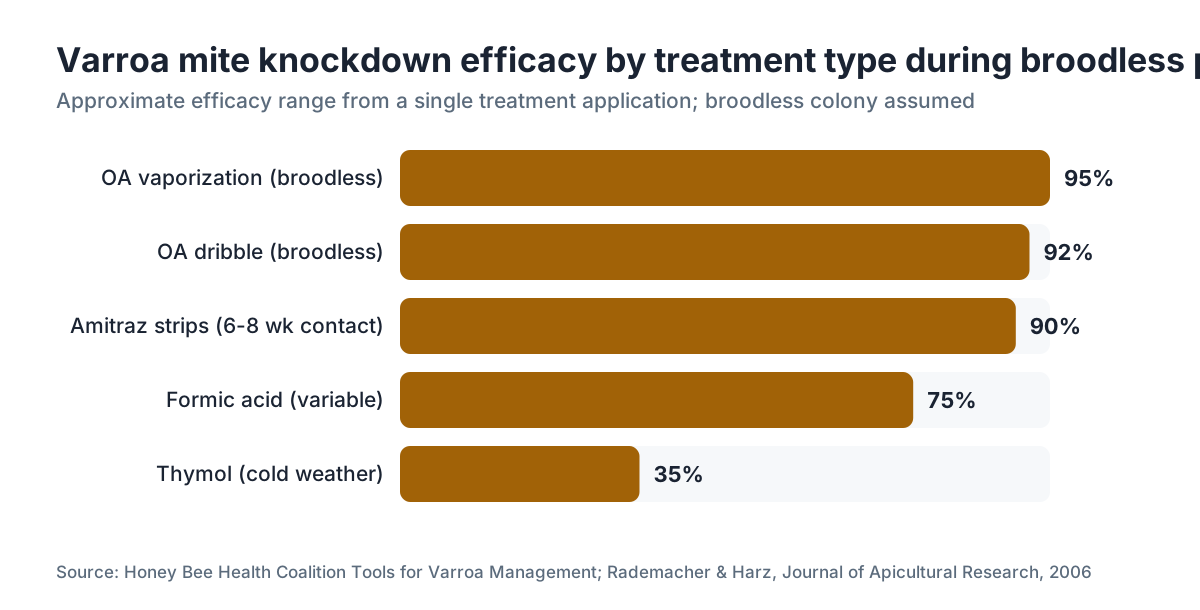
There's no serious competitor to oxalic acid for broodless-period treatment. Amitraz strips (Apivar) need 6 to 8 weeks of contact time and shouldn't stay on through a full winter because of resistance and residue concerns. Formic acid (Formic Pro) has temperature restrictions that make November use risky across most of the US, and formic can hammer a small winter cluster with stress. Thymol products (Apiguard, ApiLifeVar) don't work well below 60°F [4].
Oxalic acid vaporization on a broodless colony is the most efficacious single treatment available, period. A study by Rademacher and Harz published in the Journal of Apicultural Research (2006) found that a single oxalic acid treatment during the broodless period cut mite populations by 90 to 97 percent [5]. No summer treatment reaches that in one application, because brood always shelters a slice of the mite population.
| Treatment | Broodless efficacy | Temperature requirement | Treatments allowed |
|---|---|---|---|
| OA vaporization (Api-Bioxal) | 90-97% | No hard floor on label | Up to 3/year |
| OA dribble (Api-Bioxal) | 90-95% | Above 50°F | 1/year |
| Amitraz strips (Apivar) | 90-95% (needs 6-8 wks) | Above 50°F recommended | 1-2 strips/year |
| Formic acid (Formic Pro) | 60-95% variable | 50-85°F | Per label |
| Thymol (Apiguard) | Low in cold | Above 60°F | 2 per season |
The numbers for non-OA treatments come from their respective EPA labels and the Honey Bee Health Coalition's Varroa management guide [2][3][4].
Is it too late to treat if you find mites high in November?
No, it's not too late. But act immediately.
High mite loads in November mean your overwintering bees are already parasitized and likely carrying deformed wing virus. These are the bees that have to carry the colony to February or March. They need to live 4 to 6 months instead of the normal 6-week summer lifespan. A heavily parasitized winter bee rarely makes it.
The Honey Bee Health Coalition notes that colonies entering winter with mite loads above 2 percent face significantly higher winter mortality [2]. Some extension programs use a 1 percent threshold for late-fall treatment decisions, treating any colony that hits 1 mite per 100 bees in October or November.
If you check mites in November and find 3, 4, or 5 percent, treat that day if you can. A November treatment, even on a colony with a little remaining brood, beats no treatment by a mile. You knock out the majority of mites on adult bees and give those bees a fighting chance at spring.
Don't wait for a perfect broodless window if your numbers are alarming. Treat now, then run a follow-up vaporization in 10 to 14 days to catch mites that were under cappings during the first pass.
Can you treat through the winter cluster, or does the colony need to be active?
Vaporization works straight through a clustered colony. The vapor diffuses through the hive space and reaches bees deep in a tight cluster. You don't break the cluster, move frames, or wait for activity at the entrance.
The protocol is simple. Seal the bottom entrance with foam or a board (leave an upper entrance open for winter ventilation, or seal it briefly during treatment). Insert the vaporizer wand through the bottom entrance. Deliver 1 gram per box. Wait 10 minutes. Remove and unseal. The whole thing takes under 5 minutes of hands-on work.
Cold slows bee metabolism but doesn't stop the treatment from working. European studies run in climates far colder than most of the US show effective mite knockdown from winter vaporization [5]. The cluster doesn't need to be loose or active for the vapor to do its job.
Dribble is a different animal. It needs bees loosely clustered and able to move, which is why the 50°F label requirement exists. Below that, bees pack too tight to spread the treatment or groom the solution off each other. Dribble also puts liquid into the hive during winter, which some beekeepers dislike on moisture grounds. It works. Vaporization is just more practical in cold weather.
You can read more about varroa mites and how they move through a colony across the seasons, which helps explain why the cluster's state matters.
Will a November oxalic acid treatment hurt your bees or the queen?
At label-approved doses, oxalic acid has a very low toxicity profile for adult honey bees and queens. That's one of its main selling points against synthetic miticides.
Queen loss after oxalic acid treatment is something beekeepers report, though the published research is mixed. A study in Apidologie found no significant queen loss tied to oxalic acid vaporization at label doses [6]. Other reports from the beekeeping community suggest repeated or high-dose treatments can stress queens, especially in small winter clusters. The label allows up to 3 vaporizations, and staying inside that limit is your practical guardrail.
Dribble at the correct dose (5 mL per seam, 50 mL maximum) also shows low queen toxicity in controlled conditions. Risk climbs if you overdose, either with a stronger solution or too much volume per colony.
In November the queen is usually in reduced or zero laying mode, which may actually cut her exposure. She's less mobile and no longer the center of dense brood-rearing. Most experienced beekeepers who treat every November report good queen survival through winter.
The safest approach: use label doses, cap vaporization at 3 times per year, and don't stack oxalic acid with other treatments in the same short window without recovery time.
What mite count should trigger a November treatment?
There's no single universal threshold for fall treatment, but two widely cited reference points exist.
The Honey Bee Health Coalition recommends a treatment threshold of 2 percent (2 mites per 100 bees on an alcohol wash) during the active season [2]. For fall, some extension apiculturists drop that to 1 percent because the stakes are higher. Any mite load you carry into winter compounds through January and February on a population that can't rebuild quickly.
Penn State Extension and several other university programs recommend treating all colonies in the fall regardless of mite count, treating the broodless period as a preventive opportunity rather than waiting for a threshold [7]. Their reasoning is clean: treatment costs little, a dead colony costs a lot, and the broodless window is the most effective treatment moment of the year.
I agree with that logic for most hobbyist beekeepers. If you run 2 to 10 hives and the broodless window hits in November, treat them all. An alcohol wash takes 10 minutes, but so does a vaporization, and the vaporization helps no matter what your count reads.
One exception. If you're managing for mite-resistant genetics and monitoring closely, use the data to flag colonies worth propagating versus colonies that need heavier intervention. That's a more advanced approach and beyond a simple yes-or-no treatment call.
Do you need a prescription or registration to buy oxalic acid for bees?
In the United States, Api-Bioxal is an EPA-registered pesticide, and it's available over the counter without a veterinary prescription for hobby quantities. As of 2024, the EPA label for Api-Bioxal does not require a Veterinary Feed Directive or veterinary prescription for standard beekeeping use [3].
You do need to follow the label exactly. Under FIFRA (the Federal Insecticide, Fungicide, and Rodenticide Act), using a registered pesticide in a way inconsistent with its label is a federal violation. That covers unapproved oxalic acid sources, wrong doses, and treating during a honey flow with supers on (which the label prohibits).
Api-Bioxal is widely stocked by beekeeping supply distributors. Prices as of 2024 run roughly $25 to $35 for a 350-gram container, enough for many treatments at 1 gram per box [8]. A quality electric vaporizer runs $150 to $250; simpler models that clip onto a car battery sell for $25 to $60 from various suppliers.
For a full list of suppliers who carry Api-Bioxal and vaporizers, see free shipping honey bee supply companies.
How should you track whether your November treatment actually worked?
Treatment without follow-up monitoring is beekeeping on hope instead of data.
After your November oxalic acid treatment, the best way to confirm efficacy is a sticky board count. Slide a sticky board (a corrugated plastic sheet coated with petroleum jelly or cooking spray) under a screened bottom board for 24 to 72 hours, then count the mite drop. A high drop in the first 24 hours is a good sign: it means the treatment is working and you had mites to kill.
You can't run a reliable alcohol wash on a winter cluster without seriously harming the colony, so sticky boards are the practical winter monitoring tool. A natural (pre-treatment) 24-hour drop above 2 to 3 mites per day in November generally signals significant infestation worth treating [9].
Post-treatment, if the board shows a big drop on days 1 to 3 and then falls near zero, the treatment worked well. If the drop is modest or numbers stay elevated 10 to 14 days later, you probably had more brood present than you thought, and a follow-up vaporization is warranted.
VarroaVault offers free downloadable monitoring logs and a seasonal treatment protocol calculator to help you decide when to retest and whether a second treatment makes sense given your drop numbers and timing. Tracking this year over year also shows how your colonies' mite dynamics shift with your management, which is genuinely useful.
Spring verification matters too. Run an alcohol wash on your first full inspection in March or April. If mites are still low, your November treatment held through winter. If they've already spiked, you likely have an early spring infestation seeded by drifting or robbing from a neighboring untreated colony.
What are the rules about treating with honey supers on?
The Api-Bioxal label is explicit: do not apply when honey supers intended for human consumption are present [3]. In November this is almost never an issue, because supers should already be off after your fall harvest, usually in August or September across most of North America.
If for some reason you have supers on in November (say you're wintering two-story hives with honey in both boxes for cluster food), those boxes are overwintering stores, not honey production. That's a different situation. Practically, most beekeepers pull production supers and leave only the hive bodies with winter stores.
If you're unsure whether a box counts as a production super or a winter store box, the conservative read is to remove it before treating. Comb honey or honey you intend to extract should always be off the hive before any miticide treatment, full stop.
The rule exists because oxalic acid can build up in wax and honey at high doses. Honey naturally carries small amounts of oxalic acid from nectar, but the label's no-super restriction is the legal and practical protection for consumers.
Frequently asked questions
Can I use oxalic acid in November if my colony still has some brood?
Yes, but your efficacy drops significantly. Oxalic acid can't penetrate capped brood cells, so mites sealed inside survive. A single treatment on a colony with scattered capped brood might kill 50 to 70 percent of your mites instead of the 90-plus percent you'd get on a fully broodless colony. Treat now to knock down exposed mites, then run a follow-up vaporization in 10 to 14 days as more mites emerge from the remaining brood.
How many times can you vaporize a colony with oxalic acid in one fall season?
The EPA-registered Api-Bioxal label allows up to 3 vaporization treatments per year. For a November broodless treatment, most experienced beekeepers find 1 treatment does the job on a fully broodless colony, or 2 treatments spaced 5 to 7 days apart if any brood was present. Staying at or under 3 total for the year is both a label requirement and a practical way to avoid stressing the queen.
What temperature is too cold to do an oxalic acid treatment in November?
For vaporization there's no hard label temperature floor, and treatments at 20 to 25°F have been reported as effective because the vapor reaches bees in a tight cluster. For the dribble method, the Api-Bioxal label requires temperatures above 50°F because bees need to be loosely clustered to distribute the treatment. On most cold November days, vaporization is the only practical choice.
Is Api-Bioxal the only oxalic acid product I can legally use on bees in the US?
Yes. As of 2024, Api-Bioxal is the only EPA-registered oxalic acid product approved for use in honey bee colonies in the United States. Using raw oxalic acid from non-beekeeping sources (wood bleach, stone cleaners, etc.) is a FIFRA label violation even if the chemical is identical. The registration exists to ensure consistent purity, dose, and application instructions.
How do I do an oxalic acid dribble treatment in November step by step?
Mix or use pre-measured Api-Bioxal syrup at 3.5% oxalic acid in 1:1 sugar syrup. On a calm day above 50°F, briefly open the hive and find the seams between frames where bees cluster. Apply 5 mL per occupied seam using a syringe or measured dispenser. Do not exceed 50 mL per colony. Close the hive. Wear a P100 respirator, gloves, and eye protection throughout. One dribble treatment is allowed per year.
Can oxalic acid treatment in November harm my queen?
At label-approved doses, published research shows no significant queen loss tied to oxalic acid vaporization. Anecdotal reports of queen loss exist, mostly after overdosing or repeated treatments. Stick to the label: 1 gram per box per vaporization, no more than 3 treatments per year. November queens are usually in low-activity mode, which may cut their exposure. Most beekeepers who treat correctly report good queen survival through winter.
Should I do a mite wash before deciding whether to treat in November?
It's useful but not required. Many extension programs recommend treating all colonies during the broodless window regardless of mite count because the opportunity cost is low and the risk of skipping is high. If you want data, a sticky board count (24 to 72 hours) is safer than an alcohol wash on a small winter cluster. A natural mite drop above 2 to 3 mites per day in late fall generally confirms treatment is warranted.
How long does it take to see mites dying after a November oxalic acid treatment?
Mite drop begins within hours of vaporization and peaks in the first 24 to 48 hours. With a sticky board in place, you'll see a clear spike on day one or two. On a broodless colony with a high mite load, hundreds of dead mites on a sticky board in the first 48 hours isn't unusual. The drop tapers off over 5 to 7 days as the acute effect passes.
Can I treat with oxalic acid in November if I live in a warm climate where colonies don't go broodless?
This is the one situation where November timing loses its edge. In Florida, Hawaii, southern Texas, and similar climates, colonies may never fully stop brood rearing. A single dribble or vaporization will have limited efficacy. Your options are extended-release oxalic acid products designed for use with brood (glycerin-based treatments approved for year-round use) or accepting that you need multiple treatments across a longer window. Check your local extension for region-specific timing.
What safety equipment do I need to vaporize oxalic acid?
Minimum: a NIOSH-approved P100 half-face respirator (not a dust mask, not an N95), nitrile or rubber gloves, and safety glasses or a face shield. Oxalic acid vapor is a respiratory irritant and classified as a possible carcinogen with repeated inhalation exposure. Treat in open air, stand upwind of the hive entrance, and never lean over the hive while the vaporizer is active. The PPE costs under $40 total and is non-negotiable.
Can I leave oxalic acid vaporization plates inside the hive for slow release?
Only if you're using a product specifically labeled for extended-release oxalic acid treatment, such as glycerin-soaked towels or sponge products with their own EPA registration. Standard Api-Bioxal powder vaporization is a point-in-time treatment: you deliver the dose and remove the vaporizer. Leaving a heating element or unregistered material inside the hive is a label violation and a fire risk. Extended-release oxalic acid products are a separate category with their own label requirements.
Will a November treatment protect my colony all the way through winter?
A single well-timed November treatment on a broodless colony sharply cuts the mite population entering winter. Mite reproduction is minimal with little or no brood present, so a 90-plus percent knockdown in November should hold levels low through February or March in most climates. Do an alcohol wash at your first spring inspection to confirm. If mites spike early in spring, consider whether drifting or robbing from neighboring untreated colonies is a factor.
How is oxalic acid vaporization different from the dribble method for winter treatment?
Vaporization heats powdered oxalic acid into a vapor that diffuses through the hive and coats bees, killing mites on contact. The dribble method applies a liquid oxalic acid-sugar syrup directly over clustered bees. Vaporization works at lower temperatures, needs no hive opening, and allows up to 3 treatments per year. Dribble requires above 50°F, one treatment per year, and direct application to bee seams. For November and winter use, vaporization is more practical in most regions.
Sources
- USDA Agricultural Research Service (honey bee research): Broodless periods in temperate North American colonies typically occur late October through mid-December depending on latitude and climate zone
- Honey Bee Health Coalition, Tools for Varroa Management guide: 2 percent mite threshold (2 mites per 100 bees on alcohol wash) recommended for treatment during active season; high fall mite loads correlate with increased winter colony mortality
- EPA, Pesticide Registration (Api-Bioxal oxalic acid dihydrate label, Reg. No. 87243-1): Api-Bioxal label specifies 1 gram per box for vaporization, above 50°F for dribble, maximum 3 vaporization treatments per year, and prohibition on use when honey supers are present
- University of California Agriculture and Natural Resources (bee health resources): Thymol-based treatments not effective below 60°F; formic acid has temperature restrictions that limit November use in most of the US
- Journal of Apicultural Research, Rademacher and Harz (2006), oxalic acid treatment study: Single oxalic acid treatment during the broodless period reduced mite populations by 90 to 97 percent in controlled trials
- Apidologie (journal), queen loss and oxalic acid vaporization studies: No significant queen loss attributable to oxalic acid vaporization at label-approved doses found in study conditions
- Penn State Extension (honey bee and pollinator resources): Penn State Extension recommends treating all colonies during the fall broodless window regardless of mite count, framing it as a preventive opportunity
- Mann Lake Ltd., Api-Bioxal product listing: Api-Bioxal container retail price range approximately $25 to $35 as of 2024 from major beekeeping suppliers
- University of Minnesota Extension (honey bees): Sticky board monitoring recommended as a practical winter mite-tracking tool when alcohol washes would harm the winter cluster; natural drop above 2-3 mites per day in fall indicates significant infestation
- Cornell University, Master Beekeeper Program and pollinator resources: Some extension programs use a 1 percent threshold for late-fall treatment decisions given the higher seasonal stakes of winter colony survival
Last updated 2026-07-09