How to treat bee hives with oxalic acid: the complete guide
TL;DR
- Oxalic acid (OA) is an EPA-registered, organic-approved varroa treatment.
- You can apply it three ways: dribble, vaporization, or extended-release glycerin strips.
- It kills 90 to 97% of phoretic mites on adult bees but never touches mites inside capped brood.
- Broodless colonies get the best results.
- Vaporization coats every comb surface.
- Glycerin strips work across a full brood cycle.
What is oxalic acid and why do beekeepers use it for varroa?
Oxalic acid is a natural organic acid found in rhubarb, spinach, and dozens of other plants. For beekeepers, it's one of the most effective tools against varroa mites, the parasite that drives more managed colony loss than anything else worldwide. The EPA registered oxalic acid dihydrate for use in beehives in the United States in 2015. The USDA National Organic Program allows it in certified organic operations [1][2].
The mechanism is simple. When a mite contacts oxalic acid, the acid wrecks its body chemistry and kills it. The catch defines everything else about treatment: OA only reaches mites riding adult bees, the ones beekeepers call "phoretic." Mites sealed inside capped brood cells are safe from it [3]. Every decision about timing and method comes back to that single limitation.
Oxalic acid doesn't build resistance the way synthetic acaricides like amitraz do. Europe used it widely for nearly two decades before U.S. registration, and there are still no confirmed OA-resistant varroa populations anywhere. That's a real advantage when you're planning a season-long mite calendar.
What are the three application methods and how do they compare?
There are three EPA-registered ways to deliver oxalic acid in the U.S.: dribble (trickle), vaporization (sublimation), and extended-release glycerin strips. Each has a different labor cost, equipment cost, and effectiveness window.
| Method | Equipment cost | Brood present? | Efficacy (phoretic mites) | Colony disruption |
|---|---|---|---|---|
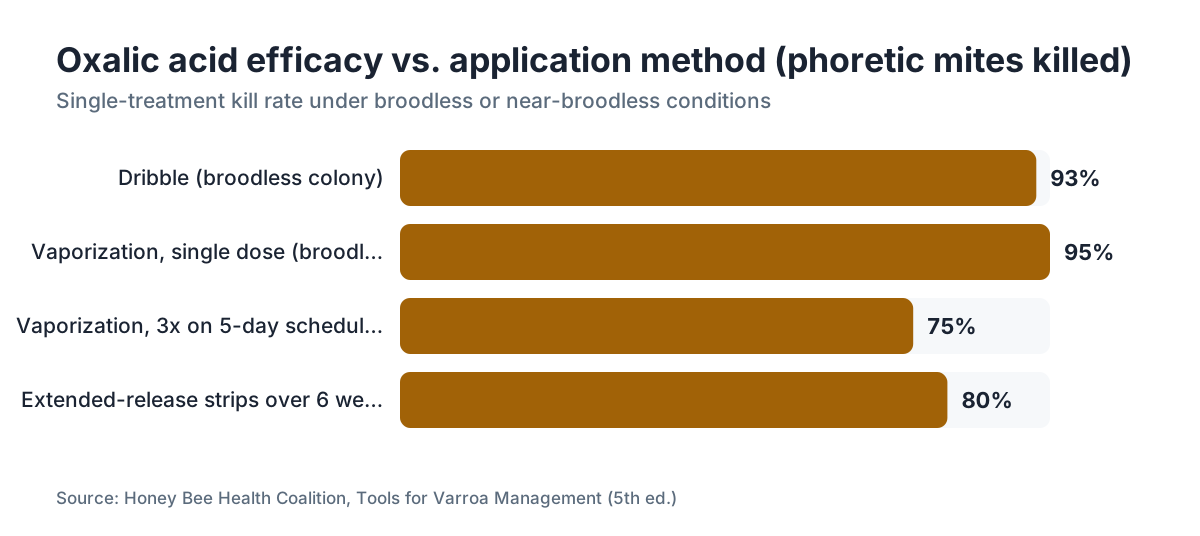
| Dribble / trickle | Under $20 | No (broodless only) | 90 to 97% [3] | Low |
| Vaporization (sublimation) | $200 to $500 for a vaporizer | No (broodless for single treatment) | 90 to 97% per round [3] | Moderate (repeated entry) |
| Extended-release glycerin strips | $10 to $20 per hive | Yes | Comparable over 3 to 6 weeks [4] | Low |
Dribble method. You make a 3.5% oxalic acid solution in 1:1 sugar syrup (sugar to water by weight), then dribble 5 ml per occupied seam of bees, up to 50 ml per colony. It's cheap, it's fast, and it needs no power source. The hard rule: it's registered only for broodless colonies. Using it with brood present wastes product, stresses bees, and misses the mites you most need to hit [1].
Vaporization. A vaporizer (also called a sublimator) heats a measured dose of oxalic acid crystals, typically 1 to 2 grams per the label, until the acid sublimes into a fine particulate that fills the hive. The vapor coats every surface and every bee, which is why it reaches mites the dribble misses in low-traffic corners. Treatments spaced every 5 days can knock down counts even with some brood present, though a true broodless window is still the standard to beat. Seal the entrances briefly during treatment and stay out of the plume [2].
Extended-release glycerin strips. Api-Bioxal is the only EPA-registered oxalic acid product in the U.S. approved for all three methods [1]. The extended-release form suspends OA in glycerin-soaked cellulose strips placed between brood frames. Bees contact the strips, acid transfers to their bodies, and mites die over several weeks. That timeline catches mites emerging from capped cells. This is the method that actually works through an active brood cycle, and for summer it's the better choice when you can't get a broodless period.
My honest take: for winter or late-fall broodless treatment, dribble is hard to beat on cost and simplicity. Any time brood is present, reach for extended-release strips or repeated vaporization.
What is the best time to use oxalic acid on bees?
Timing decides whether an OA treatment works or wastes your afternoon. The best window for a dribble or one-shot vaporization is midwinter, when the queen has stopped laying and the colony is broodless. Across most of the continental U.S., that falls between mid-November and late January, though the exact dates shift with climate [9]. No capped brood means 100% of mites are phoretic. One well-timed treatment then can cut mite populations by 90% or more [3].
The Honey Bee Health Coalition's "Tools for Varroa Management" guide states it plainly: "Oxalic acid treatments are most effective when colonies are broodless, as the treatment does not penetrate capped brood" [11]. That's the framework nearly every extension apiculturist in the U.S. works from.
Summer changes the math. Few colonies in most U.S. climates go broodless in July. If counts are spiking, and above 2 to 3 mites per 100 bees is a common action threshold, waiting for winter isn't a plan. It's a slow-motion deadout. The extended-release glycerin method was registered to fill exactly this gap. Some beekeepers force a broodless window by caging the queen for 24 days before treating, which lets all brood emerge and pushes the mites onto adult bees. It works. It also takes labor and stresses the colony.
Spring is tricky. Colonies build brood fast, so a single spring OA treatment has limited reach. If your counts are low coming out of winter, a spring dribble or vaporization can help. Don't lean on it as your summer strategy. Run mite washes at least four times a year and let the count data drive your calendar instead of a date on the wall.
What safety equipment and precautions do you need?
Oxalic acid is corrosive. That's not scare talk, it's the chemistry, and the EPA label requires specific personal protective equipment (PPE) for each method [1][2].
For the dribble method, the label calls for chemical-resistant gloves, long sleeves, and eye protection. The solution is fairly weak at 3.5%, so splash risk is the main worry.
Vaporization demands the most respect. OA vapor is acutely irritating to your eyes, mucous membranes, and lungs. The label requires a NIOSH-approved particulate respirator rated N95 or higher. Not a dust mask. An actual certified respirator, plus chemical-resistant gloves and eye protection. Stand upwind. Don't lean over the hive during or right after treatment. Wait for the vapor to clear before you open the colony. Nobody who does this regularly wants a lungful of OA vapor [2].
Extended-release strips expose the beekeeper least. Gloves and eye protection are still required when you handle them.
Store OA products cool, dry, and away from children and pets. The pure crystalline material used for vaporization is more hazardous to handle than the ready-to-use dribble solution. Never eat, drink, or smoke while handling any OA product. Wash your hands hard afterward.
One practical note. Some beekeepers buy bulk oxalic acid crystals and mix their own. In the U.S., that's illegal for hive use unless the product carries an EPA registration number. Only Api-Bioxal currently holds that registration for all three methods [1]. Using unregistered material is a label violation and throws out the safety framework the label gives you [8].
How do you do an oxalic acid dribble treatment step by step?
The dribble method is the easiest to learn and the cheapest to run. Here's how to do it right.
What you need. Api-Bioxal or another EPA-registered OA product, warm 1:1 sugar syrup, a graduated syringe or dribble bottle, gloves, eye protection, and a notepad for the date and dose.
Prepare the solution. Mix the OA per the product label. The Api-Bioxal dribble formulation specifies a 3.5% oxalic acid dihydrate solution in 1:1 sugar syrup. Don't guess ratios. Overdosing hurts bees; underdosing misses mites [1].
Pick the day. Treat when bees are clustered but reachable, daytime temperatures above roughly 40°F so they aren't packed too tight, and the colony is broodless. A cold but calm winter afternoon is ideal.
Apply the dose. Pull the cover. Dribble 5 ml of solution per occupied seam of bees, working from one side of the cluster to the other. Get the solution onto as many bees as you can. The registered maximum is 50 ml per colony per treatment, about 10 seams of bees. The dribble label allows one treatment per colony per year.
Record it. Write down the date, colony ID, seams treated, and volume applied. Thirty seconds now saves you if a state inspector or an organic certifier ever asks for treatment records.
Don't retreat. The dribble label allows one treatment per year. Skip the urge to do a second dribble two weeks later "just to be sure." Extra OA solution harms bees and barely moves the needle when brood is absent.
How do you vaporize oxalic acid safely and effectively?
Vaporization gives you the best reach inside a hive, because the vapor gets into spaces the dribble liquid can't. Done right, it's one of the most effective varroa treatments there is.
Equipment. An OA vaporizer (sublimator), a power source (most run on a 12V battery or AC through an inverter), the registered OA product, a respirator (N95 minimum), gloves, eye protection, and something to seal the entrance. Foam plugs or a strip of screen do the job. When you're stocking up, beekeeping supply companies usually carry battery and AC vaporizers alongside Api-Bioxal.
Dose. The Api-Bioxal vaporization label specifies 1 gram of oxalic acid dihydrate per brood box, up to 2 grams for a large double-deep colony. Measure it. Most vaporizers ship with a small measuring spoon; use it [1].
Procedure. Load the measured dose into the vaporizer pan. Seal the entrance with foam or screen. Slide the vaporizer into the entrance or bottom board opening. Apply heat for the time your unit's instructions specify, usually 2 to 3 minutes for electric models. Step back and stay upwind while the vapor spreads inside. Wait at least 10 minutes before you open the hive or pull the entrance seal. Remove the vaporizer carefully. Residual heat lingers.
Treatment schedules. A true broodless colony needs one vaporization treatment. For colonies with brood, three treatments on a 5-day schedule (15 days total) hold mite pressure down. It won't match the clean sweep of treating a broodless colony, but it keeps counts manageable. The Api-Bioxal label permits up to three treatments per episode, no sooner than 5 days apart [1].
Hive configuration. Make sure vapor can reach every box. In a solid-bottom-board hive, accumulation actually helps, but in a tall multi-story stack you need the vapor to climb. Some beekeepers vaporize from the top as well as the bottom for very tall stacks.
How do extended-release oxalic acid strips work, and when should you use them?
The extended-release glycerin method is the newest tool in the OA kit, and it rewrote the math for summer treatments. The strips are cellulose soaked in a glycerin-OA solution. Placed between brood frames, they release acid slowly as bees walk across them and groom one another.
The treatment window runs 4 to 8 weeks, long enough to cover a full brood cycle. Varroa spend about 10 to 12 days reproducing inside a capped cell, so mites protected during week one of treatment emerge later and then meet OA-laden bees, dying before they can breed again.
A 2021 study from the University of Maryland extension program found efficacy comparable to other OA methods across the treatment period when strips were placed correctly and colonies were normal strength [4]. Placement decides the outcome: strips go directly between brood frames, not on the outer edges where bees rarely travel.
This is the method I reach for any time summer counts pass my action threshold and I can't or won't cage the queen. It's undramatic. No respirator, no special timing, and bees tolerate it well. The tradeoff is patience. You wait weeks for results instead of watching a sharp drop in 48 hours the way a clean broodless vaporization gives you.
Building your full-season calendar, the free protocol builder at VarroaVault can slot treatments against your local brood cycle and count data so you're not guessing at timing.
How do you know if your oxalic acid treatment worked?
The only way to know is to measure mite loads before and after. Don't skip it. A treatment can feel like a win because you saw mites on the sticky board and still do almost nothing, and a colony that looks strong can carry a killing mite load in silence.
Alcohol wash is the most accurate way to count phoretic mites [10]. Take roughly 300 adult bees (about half a cup) from the brood nest, drop them in a jar with 70% isopropyl alcohol, shake for 60 seconds, and count the mites that wash out. Divide mites by bees, multiply by 100, and you have mites per 100 bees. A post-treatment count below 1 to 2 per 100 bees means the treatment worked. Above 2 to 3 in summer is the action threshold many extension apiculturists recommend, though the exact number shifts by source and season [3][10].
Run your pre-treatment wash 1 to 3 days before treating. Run the post-treatment wash 3 to 7 days after the last treatment. Compare the two numbers and you get real efficacy in your specific colony. If counts are still high after a broodless OA treatment, the usual reason is that the colony wasn't as broodless as you thought, not that OA failed.
Sticky boards give you a rough directional read, not a reliable count. Use them to spot a dramatic change, never to make a treatment decision.
Are there any restrictions on oxalic acid use, and is a license required?
In the U.S., you must use an EPA-registered product carrying an EPA registration number on the label. As of 2025, Api-Bioxal (EPA Reg. No. 84436-2) is the primary registered oxalic acid product for all three methods in honeybee colonies [1]. Using bulk or unregistered oxalic acid in a hive violates federal pesticide law under FIFRA, the Federal Insecticide, Fungicide, and Rodenticide Act [8].
Some states pile on their own rules. Several require a pesticide applicator license to buy or apply certain agricultural products. Check your state department of agriculture. Many states specifically exempt hobbyist beekeepers from pesticide licensing for products used in their own hives, but this varies and the rules change. Your state apiculture inspector or local extension service is the right place to confirm what applies to you [10].
OA treatments go on honey bee colonies only. The label restricts application when honey supers meant for human consumption are in place, though the exact language has been revised over time. Read your current product label, because that label is the legal document [1].
Certified organic operations can use OA under NOP standards, but verify with your certifier that the specific registered product fits your certification plan [2].
Can you use oxalic acid with honey supers on?
This is one of the most common questions, and the honest answer is that it depends on the method and the current label language, so read your label.
The Api-Bioxal label originally banned use with honey supers present. Later revisions changed some of that. As of the most recent EPA-approved revision, vaporization is permitted with honey supers in place under certain conditions, but the extended-release strip method is not [1]. The dribble method carries its own restrictions.
Labels get revised. The safest move is to download the current Api-Bioxal label straight from the EPA pesticide registration database or the manufacturer before each treatment season. Don't trust instructions from a beekeeping book or a three-year-old forum post. Label language is law, and it changes.
To skip the ambiguity entirely, treat before supers go on in spring or after they come off in late summer. That's the cleanest path, and it lines up well with the broodless-period timing anyway.
What mistakes do beekeepers make with oxalic acid treatments?
Most OA treatments underperform because of execution, not chemistry. The common errors:
Treating with brood present using dribble or single-shot vaporization. This is the big one. If 40% of your mites are inside capped cells, no amount of OA on adult bees fixes your problem. You'll see a partial drop, think you're fine, then watch the colony collapse in fall as those brood-protected mites emerge and breed.
Using unregistered product. Bulk OA crystals from a lab supply company aren't labeled for hive use in the U.S. Beyond the legal issue, the purity and formulation of non-registered material can vary in ways that hurt bees.
Underdosing or overdosing. The registered label exists for a reason. More OA doesn't mean more dead mites. It means more dead bees. Less OA means lower efficacy. Measure.
Skipping the post-treatment wash. You can't tell by looking whether a treatment worked. Count mites before and after, every time.
Treating without PPE for vaporization. OA vapor is not something you want to breathe once, let alone across a beekeeping career. The N95 respirator isn't optional.
Treating instead of monitoring. Some beekeepers treat on a calendar and never check counts. That means under-treating when mites are high and over-treating when they're already low. Count first, treat if warranted, count again.
How does oxalic acid fit into a full-season varroa management plan?
OA works best as one piece of a planned mite year, not a panic move after a colony is already sinking. Here's how experienced beekeepers weave it in.
Late winter and early spring: run your first alcohol wash of the year. Coming out of a well-timed midwinter OA treatment, counts should be low. A spring vaporization or dribble can knock back any mites that survived or arrived through robbing.
Summer: mite pressure peaks here. Monitor every 3 to 4 weeks. If counts pass 2 to 3 mites per 100 bees, move fast. This is when the extended-release strip method or a formic acid product (which does penetrate brood) beats a single OA treatment. If you can spend the labor, caging the queen to force broodlessness followed by OA vaporization is highly effective.
Late summer and early fall: the treatment window that decides colony survival. The bees raised in August and September are your winter bees. If they're reared under a high mite load, you lose the colony by January. A late-July or August treatment, timed to actual counts, often separates a live colony in spring from a deadout.
Midwinter: the classic broodless OA window. Treat every colony, not only the ones that look sick. Silent high-mite colonies are common.
The Honey Bee Health Coalition's "Tools for Varroa Management" (5th edition) lays out a full decision framework with thresholds for each season, and it's free to download [3]. Read it once a year. VarroaVault's treatment protocol tool can build a personalized schedule around your local climate and apiary data.
For a closer look at what varroa does to a colony at the biology level, see our overview of the varroa mite, covering the life cycle, damage mechanisms, and why timing matters so much.
Frequently asked questions
How many times can you treat a hive with oxalic acid per year?
The Api-Bioxal label permits one dribble treatment per year (broodless colonies only), up to three vaporization treatments per episode (no sooner than 5 days apart), and one extended-release strip application per year. Total annual treatments depend on which methods you combine and always need to follow the current label. More treatments don't always mean better results; mite monitoring should drive every decision.
Does oxalic acid kill mites inside capped brood cells?
No. Oxalic acid only kills phoretic mites riding on adult bees. It can't penetrate the wax cappings of brood cells. That's why broodless periods dramatically improve efficacy, and why extended-release strips or repeated vaporizations get used to catch mites as they emerge from brood over several weeks.
What temperature is too cold to use oxalic acid?
For dribble treatment, bees should be loosely clustered and reachable, which usually means daytime temperatures above about 40°F (4°C). If bees are packed too tight to reach, the solution won't contact enough of them. For vaporization, temperature matters less because the vapor disperses through the cluster regardless. Avoid treating in strong wind or heavy rain with any method.
Is oxalic acid safe for bees and honey?
Yes, at label rates. Oxalic acid occurs naturally in honey at low levels. European residue studies found that OA treatment does not raise honey residue meaningfully above naturally occurring background amounts. The EPA registered Api-Bioxal on that safety profile. Overuse above label rates can injure adult bees, so hold to the measured dose.
How long does it take for oxalic acid to kill varroa mites?
Mite mortality from dribble or vaporization starts within hours of contact and is largely done within 24 to 72 hours. You may see a visible drop in sticky board counts within a day or two. Extended-release strips work across 4 to 8 weeks as bees keep contacting the glycerin-OA matrix. Do a follow-up alcohol wash 3 to 7 days after the last OA treatment to verify.
Can you use oxalic acid on a nucleus colony or package?
Yes, with some care. Nucs and packages are often broodless or nearly so right after installation, which makes them excellent candidates for a dribble or vaporization. The dose scales to actual colony size; a small nuc with three frames of bees gets far less than the 50 ml maximum for a full colony. Follow the label's per-seam dosing rather than defaulting to the maximum.
What is the difference between Api-Bioxal and generic oxalic acid?
Api-Bioxal (EPA Reg. No. 84436-2) is the only currently registered oxalic acid product approved for all three application methods in U.S. honeybee colonies. Generic or bulk oxalic acid from lab or farm supply sources lacks EPA registration for hive use, so applying it is a FIFRA violation in the U.S. Outside the U.S., regulations vary; check your country's registration list before buying.
How do I mix the oxalic acid dribble solution correctly?
The Api-Bioxal label specifies a 3.5% oxalic acid dihydrate solution in warm 1:1 sugar syrup (equal parts sugar and water by weight). Follow the label's exact mixing instructions; different formulations may start at different concentrations. Never use hot syrup that could degrade the acid. Mix only what you'll use that day; don't store prepared solution for long periods.
Do I need a license to buy or use oxalic acid on my bees?
In most U.S. states, hobbyist beekeepers can buy and apply Api-Bioxal without a pesticide applicator license, but state rules vary. Some states require registration or licensing for all pesticide applications regardless of scale. Check with your state department of agriculture before purchasing. Many state extension apiculture programs publish a clear summary of local requirements.
Can oxalic acid be used in hot weather or summer?
Yes, but method selection matters. Single dribble or vaporization treatments in summer are far less effective because brood is present. The extended-release glycerin strip method is the right summer choice; it works across multiple weeks and catches mites as they emerge from capped cells. Or cage your queen for 24 days to force a broodless period, then vaporize. Monitor mite counts before and after regardless of season.
What respirator do I need for oxalic acid vaporization?
The Api-Bioxal label and EPA require a NIOSH-approved particulate respirator rated N95 or higher for vaporization. A standard dust mask does not qualify and won't filter OA particulate adequately. Along with the respirator, wear chemical-resistant gloves and eye protection. Stand upwind of the hive and never lean over the entrance during or immediately after treatment.
How do I know if my colony is truly broodless before treating?
Inspect brood frames on a reasonably warm day and look for capped cells with the typical tan or brown wax capping. A truly broodless colony has no capped worker or drone brood anywhere. In most U.S. climates, a natural broodless period of several weeks runs between roughly mid-November and late January, though timing shifts with latitude and winter severity. Confirm it visually before treating.
Will oxalic acid harm my queen?
At label rates, OA does not selectively harm queens. But repeated or excessive treatments above label dose can injure adult bees, the queen included. Hold to registered rates and the number of treatments the label allows. Some beekeepers briefly cage the queen before vaporizing to cut any exposure risk, though the label doesn't require it and it adds labor.
Where can I find the current Api-Bioxal label?
Download the current label directly from the EPA pesticide registration database at epa.gov or from the manufacturer, Véto-Pharma, at their U.S. website. The label is a legal document and supersedes any instructions in books, forum posts, or older beekeeping guides. Check for label revisions at the start of each treatment season, since honey super restrictions and treatment limits have changed in past revisions.
Sources
- EPA, Pesticide Registration (Api-Bioxal, Reg. No. 84436-2): Api-Bioxal is the EPA-registered oxalic acid product for dribble, vaporization, and extended-release use in honeybee colonies in the U.S.; label specifies PPE, dose limits, and honey super restrictions.
- USDA Agricultural Marketing Service, National Organic Program: Oxalic acid is permitted for use in certified organic beekeeping operations under NOP standards.
- Honey Bee Health Coalition, Tools for Varroa Management Guide (5th ed.): OA treatments are most effective when colonies are broodless; efficacy on phoretic mites is 90 to 97%; the guide provides seasonal thresholds and decision frameworks.
- University of Maryland Extension, Honey Bee and Pollinator Program: A 2021 University of Maryland extension study found extended-release oxalic acid glycerin strips gave efficacy comparable to other OA methods across the treatment period when placed correctly in normal-strength colonies.
- University of California Agriculture and Natural Resources: Oxalic acid residue studies in Europe found OA treatment does not significantly raise honey residue levels above naturally occurring background concentrations.
- EPA, Federal Insecticide, Fungicide, and Rodenticide Act (FIFRA): Using unregistered pesticide products in hives is a FIFRA violation; only EPA-registered products may be legally applied.
- Cornell University College of Agriculture and Life Sciences, Pollinator Program: Midwinter broodless period in most of the northeastern U.S. falls between mid-November and late January; this is the recommended window for single-treatment OA application.
- Montana State University Extension: Alcohol wash is described as the most accurate method for counting phoretic varroa; 300 bees per sample is recommended for statistical reliability.
- Honey Bee Health Coalition, Tools for Varroa Management Guide (5th ed.), direct quote: Direct quote: 'Oxalic acid treatments are most effective when colonies are broodless, as the treatment does not penetrate capped brood.'
Last updated 2026-07-09