How to mix oxalic acid with vodka to treat bees (and why you shouldn't)
TL;DR
- Mixing oxalic acid with vodka or any alcohol is not an EPA-registered treatment method and is illegal to use on managed honey bee colonies in the US.
- The three approved oxalic acid methods are dribble (sugar syrup), vaporization, and extended-release glycerin-soaked strips.
- This article explains why the vodka method circulates online, what the label actually says, and which legal options actually work.
Does mixing oxalic acid with vodka actually work on varroa mites?
Let's be honest about why you're asking. You saw a forum post, a YouTube video, or a comment claiming that dissolving oxalic acid dihydrate in vodka or isopropyl alcohol makes a sprayable or dribble-ready varroa treatment that's cheap and easy. The pitch sounds good. Oxalic acid costs almost nothing, vodka is at every liquor store, and the whole thing skips the vaporizer.
Here's the problem. Oxalic acid does kill varroa mites on contact, and it does dissolve in alcohol. Both facts are true. But whether a mixture kills mites effectively in a hive, at what concentration, with what carrier, and whether it hurts the bees along the way are separate questions, and the alcohol formulation has not been tested or approved for that use. Oxalic acid's three registered delivery methods (aqueous dribble, vaporization, and glycerin-based extended-release strips) all use water or glycerin as the carrier, never alcohol [1].
A handful of small informal trials posted online suggest alcohol solutions damage adult bees more than aqueous solutions at similar oxalic acid concentrations. Nobody with peer-reviewed data has shown an alcohol-oxalic acid mix is both effective on mites and safe for bees at a dose you'd actually apply in a colony. That's not a technicality. That's a real gap in the evidence.
Is it legal to mix oxalic acid with vodka and use it on your hives?
No. In the United States, using any pesticide in a way that contradicts its label breaks the Federal Insecticide, Fungicide, and Rodenticide Act (FIFRA), 7 U.S.C. § 136j(a)(2)(G) [2]. The statute makes it unlawful for any person to use a registered pesticide "in a manner inconsistent with its labeling."
The only oxalic acid product with EPA registration for honey bee colonies as of this writing is Api-Bioxal (EPA Reg. No. 84304-4), made by Véto-pharma. The label permits three methods: (1) a drizzle application using a 3.2% oxalic acid solution in sugar syrup applied directly onto bees between frames, (2) vaporization with an approved device, and (3) extended-release application using glycerin-soaked shop towels placed on the bottom board [1][3]. Vodka, rubbing alcohol, or any other alcohol carrier is not on the label. Period.
Some countries run different regulatory systems, and you may find research or guides from the UK, Germany, or New Zealand that mention alternative formulations. Those rules don't apply in the US. Canada requires its own registration through Health Canada's Pest Management Regulatory Agency, and the EU has its own authorization process. If you're outside the US, check your national pesticide authority before doing anything the label doesn't cover.
An off-label mixture could also void your insurance, create liability if a neighbor's bees suffer from drift, and in some states trigger fines during a state apiarist inspection. It's not worth it.
What does the Api-Bioxal label actually say about mixing?
The Api-Bioxal label (the legally binding document, not the package insert) is available through the EPA's pesticide registration system [1]. The approved directions for the drizzle method state: "Apply 5 mL of solution per seam of bees (between frames occupied by bees)." The solution is oxalic acid dihydrate dissolved in a 1:1 sugar syrup by weight, to a final concentration of 3.2% oxalic acid.
The label spells out the mix: dissolve 35 grams of Api-Bioxal in 1 liter of 1:1 sugar syrup (500 g sugar to 500 mL water). That's the only drizzle solution the label authorizes. For vaporization, you use the product as supplied, placing the measured dose into the vaporizer cup. For extended-release, the label instructs saturating cellulose shop towels with a glycerin-oxalic acid solution at a defined ratio.
There is no provision for dissolving oxalic acid in ethanol, vodka, isopropyl alcohol, or any other solvent. The label is the law, not a suggestion.
Where did the vodka and alcohol oxalic acid idea come from?
The alcohol-oxalic acid idea has circulated in hobbyist beekeeping since at least the early 2010s. It seems to trace back to two places.
Some early European research on oxalic acid application tested various carriers, including alcohol solutions, while figuring out how to spread oxalic acid across bee bodies. Parts of that research got shared informally online, stripped of their caveats, and reposted as a recipe.
Then beekeepers frustrated by the cost or fuss of vaporizers started mixing oxalic acid into whatever liquid was handy. Vodka caught on because it's food-grade ethanol, easy to buy, and doesn't require explaining yourself at a chemical supplier. Some beekeepers report that a spray of oxalic acid solution (including alcohol-based ones) applied directly to bees during a package install knocks mites down. Maybe so. But a package install has no brood, no comb, and bees you're going to manage heavily anyway. That's a different scenario from treating a full colony through a brood cycle.
The Honey Bee Health Coalition's Varroa management guide, probably the most-used practical reference for US hobbyists, lists no alcohol-based oxalic acid application as a recognized or recommended method [4]. That tells you where the evidence stands.
What are the three legal oxalic acid treatment methods and how do they compare?
All three EPA-approved methods using Api-Bioxal work. Each has a different use case, cost, and effectiveness window.
| Method | Best for | Brood present? | Cost to start | Mite kill rate (broodless) |
|---|---|---|---|---|
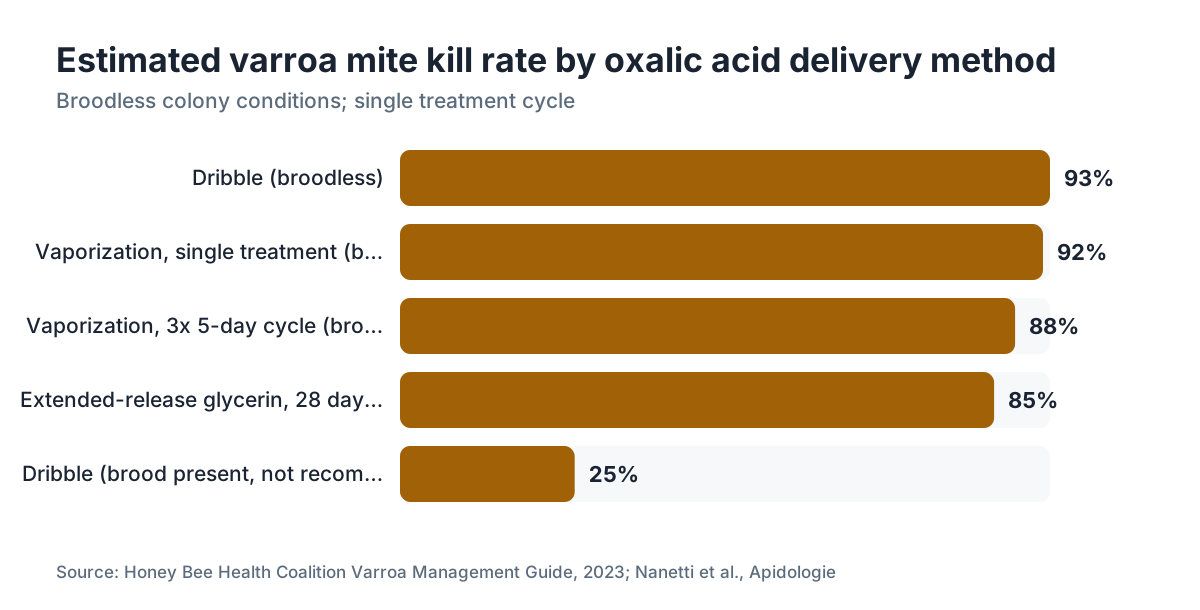
| Dribble (sugar syrup) | Broodless colonies, winter clusters | No | Under $20 (syringe + scale) | 90-95% in studies [5] |
| Vaporization | Any time, most flexible | Yes (repeated treatments) | $150-$300+ (vaporizer) [6] | 90%+ per treatment; requires repeats if brood present |
| Extended-release glycerin strips | When brood is present, single application | Yes | $30-$80 DIY materials | Comparable to multiple vaporizations over 28+ days [7] |
The dribble method costs the least to start and works well in late fall or early winter when colonies are broodless or nearly so. A single dribble treatment on a broodless colony kills mites riding adult bees, but it can't reach mites sealed inside capped brood. That's why it shines in winter and why it needs careful timing the rest of the year.
Vaporization with a device like the Varrox or ProVap delivers vapor that reaches mites on adult bees and pushes into brood cells to some degree, though the mechanism there is less understood than for adult bees. Because mites in capped cells survive each single treatment, you repeat vaporizations every 5 days for at least 3 cycles to catch mites emerging from brood. One vaporization during the brood-present period is not enough.
The extended-release glycerin method (sometimes called OAE) uses shop towels soaked in a glycerin-oxalic acid solution, placed on the bottom board or between frames. Bees walk over and groom through the towel for weeks, picking up oxalic acid and spreading it through the colony. Published research suggests extended-release can match repeated vaporizations for total mite kill over a 28-day period [7]. This is the newest of the three approved methods and the one most beekeepers don't know well.
For a varroa mite infestation already above the action threshold, vaporization or extended-release tends to work better during the summer brood season. Dribble in late fall, after the brood nest contracts, stays one of the most cost-effective protocols a hobbyist can run.
How do you actually mix the Api-Bioxal dribble solution correctly?
This is where precision matters. A kitchen scale that reads to 1 gram is not optional. Oxalic acid is a dicarboxylic acid, and at high concentrations it damages bee trachea, disrupts the midgut, and kills adult bees. You want the 3.2% final solution the label specifies, not something stronger because you eyeballed it.
Step 1. Make your 1:1 sugar syrup first. Dissolve 500 grams of plain white granulated sugar in 500 mL of warm water. Let it cool to room temperature before adding the oxalic acid, because heat speeds up oxalic acid degradation.
Step 2. Weigh out 35 grams of Api-Bioxal (the registered product, not raw oxalic acid from a hardware store). Raw oxalic acid from non-beekeeping sources may have different purity, may carry impurities like iron or chromium, and isn't legal under the Api-Bioxal label anyway, because the label names Api-Bioxal specifically as the registered product.
Step 3. Stir the 35 grams into the cooled 1:1 syrup until fully dissolved. The solution should be clear or very slightly hazy. Label the container with the date, the concentration (3.2% OA), and the word PESTICIDE.
Step 4. Apply 5 mL per occupied bee space (seam between frames) using a syringe or squeeze bottle calibrated in milliliters. The label allows a maximum of 50 mL per colony per treatment.
Step 5. Treat only once per application period per the label. The dribble method is authorized for one treatment per colony per year in broodless conditions.
Wear nitrile gloves, safety glasses, and a dust mask rated N95 or better. Oxalic acid dust and mist irritate the eyes and lungs. Work outdoors or in a ventilated space. Keep the solution off your skin. The EPA requires PPE on the label, and here the legal requirement and plain common sense agree completely.
What PPE do you need to handle oxalic acid safely?
Oxalic acid is a moderately hazardous compound. You don't handle it bare-handed or without eye protection, but typical beekeeping quantities don't call for a hazmat suit either.
For mixing the dribble solution: chemical-resistant gloves (nitrile works for short contact; butyl rubber is better for longer contact), safety glasses or goggles, and clothing that covers arms and legs. Work in a well-ventilated area.
For vaporization: a battery-powered or propane OA vaporizer generates oxalic acid vapor inside the hive body. The main risk to you is inhaling vapor or residual oxalic acid when you open the hive too soon. The Api-Bioxal label requires a fitted respirator with an acid-gas cartridge (more than a dust mask) during vaporization and for at least 12 minutes after inserting the vaporizer. Don't open the hive during treatment. Seal the entrance with foam while the vaporizer runs. Most beekeepers use a half-face respirator with a combination organic vapor and particulate cartridge rated for acid gases [1][3].
For the extended-release glycerin method: PPE for mixing matches the dribble method. The glycerin solution releases oxalic acid slowly, so acute exposure during application is lower, but you still want gloves and eye protection when handling saturated pads.
The National Pesticide Information Center (NPIC), run by Oregon State University, publishes a fact sheet on oxalic acid if you want a full toxicology overview [8].
Can you use raw oxalic acid from the hardware or grocery store instead of Api-Bioxal?
No. This is the other common shortcut online. Oxalic acid sells as wood bleach and deck cleaner (Bar Keepers Friend contains it, and pure oxalic acid sits on most hardware store shelves). It's cheap, around $10 to $15 per pound.
Here's the issue. Under FIFRA, the registered pesticide product for honey bee varroa treatment is Api-Bioxal, EPA Reg. No. 84304-4. That registration covers the specific formulation and purity specs Véto-pharma submitted to the EPA. Using a different source of oxalic acid in your hives means you're applying an unregistered pesticide for a pesticidal purpose, which is illegal regardless of the actual chemistry [2].
Purity is a real concern too. Industrial-grade oxalic acid can carry iron, chromium, or other metal contaminants that could harm bees or taint honey. Api-Bioxal is food-grade and tested for those impurities.
Api-Bioxal usually costs $12 to $25 for a 275-gram packet depending on the supplier, enough to treat many colonies. Buying it from a reputable beekeeping supply company is the legal path and the practical one.
How does oxalic acid affect honey bees and hive products?
Oxalic acid occurs naturally in honey at low levels. The EU's Committee for Medicinal Products for Veterinary Use found no need to set a maximum residue limit for oxalic acid in honey, because background levels in untreated colonies already vary widely (up to around 8-9 mg/kg in some floral honeys) and label-rate treatment doesn't push honey oxalic acid meaningfully above those natural levels [9].
The EPA's registration decision for Api-Bioxal follows similar reasoning: used correctly, oxalic acid treatments leave no honey residues above the natural background. The label still says not to use the dribble method with honey supers in place, because the sugar syrup could adulterate honey. Experienced beekeepers also skip vaporization during a honeyflow or with supers on, though label restrictions here vary by method.
For adult bees, oxalic acid at the labeled concentration is well-tolerated. Push the concentration higher and it damages the digestive system. Larvae and eggs are more sensitive, one reason the dribble method is restricted to broodless conditions: the solution can seep into cells and harm open brood. Vaporization is gentler on brood at normal doses, though repeated treatments carry some accumulated stress.
There's no credible evidence that oxalic acid at label rates causes long-term harm to queen productivity, though some beekeepers report queen loss after aggressive vaporization schedules. If you run 5-day repeat treatments, checking queen status after the cycle ends is reasonable practice.
When should you treat with oxalic acid in your varroa management calendar?
Timing matters as much as method. Oxalic acid works best when mite loads are high and brood is minimal, so the mites have nowhere to hide.
For most northern US beekeepers, the classic dribble window runs mid-October through December, after the queen slows or stops laying and before the winter cluster packs so tight that dribbling into the seams gets impractical. A mite wash before treatment tells you whether you actually need it. The Honey Bee Health Coalition recommends treating if your mite count tops 2 mites per 100 bees (2%) in fall [4]. That's the most-cited action threshold in US beekeeping.
For vaporization, you can treat any time of year, but the protocol shifts. During brood-present conditions, the standard is three treatments 5 days apart. Some beekeepers run a maintenance vaporization once a month in summer, though research support for that exact schedule is thinner than for the 3-treatment brood cycle.
Extended-release glycerin strips cover the entire brood-present season and suit beekeepers who can't commit to three separate apiary visits. You place the strips and let them work over 28 days.
Building a year-round mite management calendar is something the VarroaVault protocol tools can help you structure, especially if you run more than a handful of colonies and need to track treatment timing across an apiary.
Before the season, check your beekeeping supplies list: a scale, syringes, and PPE belong on it alongside whatever treatment method you pick.
What actually happens if you spray bees with an oxalic acid and alcohol mix?
This is the practical outcome question. Say you dissolve oxalic acid in 40% vodka and spray it onto a package of bees during installation. What do you see?
At low concentrations, you might get some mite knockdown and some adult bee mortality. Alcohol itself is toxic to bees above roughly 1-2%, so a 40% ethanol vodka solution applied directly kills bees, and more of them than mites. Some beekeepers who've tried it report heavy bee mortality at higher spray concentrations. Others report almost nothing at a very light misting. The results scatter because nobody has run a controlled trial.
For a package install in a broodless situation, the losses might be acceptable and the knockdown might be real. But you're still applying an unregistered pesticide, still risking unpredictable bee deaths, and still not touching any brood-stage mites, because there is no brood. The legal, available dribble method hits the same goal in that scenario without the guesswork.
For an established colony with brood, spraying bees with any oxalic acid solution, alcohol or otherwise, is unlikely to give you real mite control. Roughly 70-80% of the mite population sits inside capped brood cells during an active brood season [4]. You'd need to reach those cells, and a surface spray can't.
Are there other non-chemical varroa management strategies worth combining with oxalic acid?
Oxalic acid works best as one piece of an integrated approach. Lean on any single treatment long enough and you select for resistance. Mite resistance to oxalic acid isn't a documented widespread problem the way pyrethroid resistance is, but the research community is watching it [10].
Brood breaks, natural (from swarming or queen replacement) or induced (caging the queen for 24-28 days), open a window where every mite is riding adult bees and a dribble or vaporization treatment lands maximum kill. A brood break paired with a single dribble treatment is one of the highest-efficacy varroa strategies available to hobbyists, with some studies reporting 95% or greater mite reduction.
Screened bottom boards give you passive monitoring (count the mite drop) but do little for actual reduction on their own, probably 5-10% at most.
Hygienic behavior lines and VSH (Varroa Sensitive Hygiene) queens add colony-level resistance and slow how fast mite populations rebuild after treatment. These are real tools with published efficacy data, not marketing [11].
For a closer look at the mite itself, the varroa mite coverage here explains how the mite's reproductive cycle drives why brood-present timing differs so sharply from broodless timing.
Frequently asked questions
Can I use hardware store oxalic acid instead of Api-Bioxal for my bees?
No. Under US federal law (FIFRA), you can only use a registered pesticide per its label. Api-Bioxal (EPA Reg. No. 84304-4) is the only oxalic acid product registered for varroa treatment in US honey bee colonies. Hardware store oxalic acid sold as wood bleach is not registered for this use, may contain metal impurities harmful to bees, and using it on hives is illegal regardless of the chemistry involved.
Why do people say vodka and oxalic acid works on varroa?
Oxalic acid does kill varroa on contact, and it does dissolve in alcohol, so the mixture has surface-level logic. Some beekeepers report mite knockdown when spraying packages during installation. But those informal reports aren't controlled trials, the alcohol itself kills bees at 40% concentration, and the method is illegal under US pesticide law. The results people see are real but unpredictable, and the legal, tested alternatives work better.
Is it illegal to use oxalic acid mixed with vodka on bees in the US?
Yes. FIFRA section 12(a)(2)(G) makes it unlawful to use any registered pesticide in a manner inconsistent with its labeling. The Api-Bioxal label, the only registered oxalic acid product for honey bee varroa treatment, specifies aqueous syrup, vaporization, or glycerin-based methods. Any alcohol-based application is off-label and illegal, regardless of the beekeeper's intent or results.
What ratio do I mix Api-Bioxal for the dribble method?
The label calls for 35 grams of Api-Bioxal dissolved in 1 liter of 1:1 sugar syrup (500 g sugar in 500 mL water), producing a 3.2% oxalic acid solution. Apply 5 mL per occupied seam between frames, up to 50 mL per colony per treatment. Use a kitchen scale accurate to 1 gram. Cool the syrup to room temperature before adding the Api-Bioxal.
Can you dribble oxalic acid when there is brood in the hive?
The dribble method is approved for broodless colonies only. Oxalic acid solution can seep into open brood cells and harm larvae. More importantly, dribble does nothing to the roughly 70-80% of mites inside capped brood cells during an active brood season. If your colony has brood, use vaporization (repeated treatments 5 days apart) or the extended-release glycerin method instead.
How many times can you treat with oxalic acid in one season?
The Api-Bioxal label allows one dribble treatment per year per colony. Vaporization can be repeated: the label allows treatments every 5 days for a minimum of 3 treatments during brood-present conditions. The extended-release glycerin method is a single 28-day application. Read the current label for your situation, because treatment counts and intervals are legally binding.
Does oxalic acid contaminate honey?
Oxalic acid occurs naturally in honey. The EU regulatory body found no need for a maximum residue limit because label-rate treatment doesn't raise honey oxalic acid meaningfully above naturally occurring levels. The Api-Bioxal label still says not to apply the dribble method when honey supers are present, because the sugar syrup carrier could adulterate the honey. Remove supers before treating.
What PPE do I need for oxalic acid vaporization?
The Api-Bioxal label requires a fitted respirator with an acid-gas cartridge (more than a dust mask) during vaporization and for at least 12 minutes after inserting the vaporizer. Also wear chemical-resistant gloves and eye protection. Seal the hive entrance with foam during treatment and do not open the hive while the vaporizer runs. A half-face respirator with a combination organic vapor and acid gas cartridge is the standard choice.
What is the mite level threshold that triggers an oxalic acid treatment?
The Honey Bee Health Coalition recommends treating if your mite count exceeds 2 mites per 100 bees (2%) during fall. Summer thresholds usually sit at 2-3% depending on the source. An alcohol wash or sugar roll of a 300-bee sample from the brood nest gives you an accurate count. Always test before treating so you know whether a treatment is actually needed.
Can you treat a package of bees with oxalic acid?
Yes. A package install is a broodless situation, which makes it an ideal window for a dribble treatment. Follow the label: prepare the 3.2% Api-Bioxal syrup solution, apply 5 mL per seam of bees after shaking the package into the hive body. This kills phoretic mites on adult bees before the queen starts laying and before the mite population can build in new brood.
How does the extended-release oxalic acid glycerin method work?
Cellulose shop towels are saturated in a glycerin-oxalic acid solution and placed on the bottom board or between the bottom brood frames. Bees walk across the towel, pick up oxalic acid on their bodies, and spread it through the colony via grooming. The slow release over 28 days means brood-cycle mites emerging from cells get exposed repeatedly. Studies suggest efficacy comparable to a complete 3-treatment vaporization cycle.
What vaporizer should I buy for oxalic acid treatment?
The Varrox and ProVap 110 are the most commonly used models in the US hobbyist market, typically priced between $150 and $300. Battery-powered models are convenient for apiaries without power access. Any vaporizer you use must follow the Api-Bioxal label instructions. Vaporizer choice affects treatment speed and convenience more than efficacy, assuming you follow the correct dose and timing.
Does oxalic acid kill mites inside capped brood cells?
Vaporization penetrates into cells to some degree, but its efficacy on capped-cell mites is lower than on phoretic mites. That's why repeated treatments 5 days apart are necessary during the brood season: each treatment catches mites that have emerged since the last one. Dribble does not reach capped-cell mites at all. Extended-release strips work over the full brood cycle and catch mites as they emerge.
Where can I buy Api-Bioxal?
Api-Bioxal sells through beekeeping supply retailers in the US. Most large suppliers stock it, and some offer it online. A 275-gram packet typically costs $12-$25 depending on the vendor. Buying from a reputable supplier ensures you get the registered product, not a generic substitute. Check that the EPA registration number 84304-4 appears on the package.
Sources
- EPA, Api-Bioxal Product Label (EPA Reg. No. 84304-4): Api-Bioxal is the only EPA-registered oxalic acid product for honey bee varroa treatment; approved methods are dribble, vaporization, and extended-release glycerin; PPE requirements include acid-gas respirator during vaporization
- U.S. Code, 7 U.S.C. § 136j (FIFRA prohibited acts), Cornell LII: FIFRA makes it unlawful to use any registered pesticide in a manner inconsistent with its labeling
- EPA Pesticide Registration, Api-Bioxal registration documents: Api-Bioxal EPA Reg. No. 84304-4 specifies mixing instructions: 35 g Api-Bioxal per 1 liter 1:1 sugar syrup, apply 5 mL per bee seam
- Honey Bee Health Coalition, Varroa Management Guide (2023 edition): HBHC recommends treating if mite count exceeds 2% in fall; 70-80% of mites are in capped brood during active brood season; alcohol-based OA not listed as recognized method
- Nanetti et al., Apidologie, oxalic acid dribble efficacy review: Dribble application of oxalic acid on broodless colonies achieves 90-95% mite kill in controlled studies
- Pennsylvania State University Extension, Varroa Mite Management: Oxalic acid vaporizers for hobbyist beekeeping range from approximately $150 to $300+
- Ritter & Tremolada, and subsequent extended-release OA studies; Apidologie: Extended-release oxalic acid glycerin method achieves comparable total mite kill to repeated vaporizations over a 28-day period
- National Pesticide Information Center (NPIC), Oxalic Acid Fact Sheet (Oregon State University): Oxalic acid is a moderately hazardous compound; fact sheet covers toxicology, PPE, and exposure routes
- European Medicines Agency (EMA), CVMP assessment of oxalic acid for bees: No maximum residue limit needed for oxalic acid in honey; background levels vary up to ~8-9 mg/kg naturally; treatment does not significantly raise honey OA above natural background
- Gregorc & Sampson, Journal of Apicultural Research, OA resistance monitoring: Oxalic acid resistance in varroa mites is not yet a widespread documented problem but is an active area of research concern
- University of California Agriculture and Natural Resources, Bee Health and Varroa: VSH queens and hygienic behavior lines reduce mite population rebuild rates after treatment
- Oregon State University Extension, Oxalic Acid for Varroa Control: Dribble method is authorized once per year per colony per Api-Bioxal label; vaporization can be repeated every 5 days for minimum 3 treatments
Last updated 2026-07-09