Fogging bees with oxalic acid: what actually works
TL;DR
- Fogging oxalic acid delivers the acid as a fine aerosol that kills varroa riding on adult bees.
- It cannot reach mites under capped brood.
- Treat when the colony is broodless or nearly so.
- The EPA-registered Api-Bioxal label allows 1 gram of oxalic acid dihydrate per brood box, up to three times a year.
- Three treatments across a broodless window can drop mite loads 90 percent or more.
What is oxalic acid fogging and how does it work on varroa?
Oxalic acid fogging, sometimes called vaporization or sublimation, heats a measured dose of crystalline oxalic acid dihydrate into a fine aerosol inside the hive. Varroa mites absorb the acid through direct contact with their body surface, and it kills fast. The exact mechanism is not fully understood, but the acid damages the mite's cuticle and kills mites that are riding on adult bees in the open cluster.
Here is the one fact that decides everything else. Oxalic acid, in any application method, cannot get through a wax capping. Mites tucked inside sealed brood cells survive every single treatment. You cannot engineer around this with a better fogger or a bigger dose. It is physics. The wax is a wall. That is why timing decides success or failure, and why one treatment almost never fixes a mite problem in a colony that has active brood.
Fogging is one of three delivery methods on the Api-Bioxal label, the only EPA-registered oxalic acid product in the US [1]. The other two are dribble and sponge (extended-release). Each fits a different situation. Fogging appeals to people running several hives because it beats dribbling on speed and you never open the box, though "faster" only counts once you already own a vaporizer.
For a deeper look at the mite itself, see varroa mite.
Is oxalic acid fogging legal, and what product do you need to use?
In the US, you have to use a product carrying an EPA registration number. As of 2025, Api-Bioxal (EPA Reg. No. 86243-3) is the only registered oxalic acid product for honey bee colonies [1]. Raw oxalic acid from a brewing supply or a woodworking shop is the same molecule, but putting it in a hive is an off-label pesticide application and a federal violation under FIFRA, no matter what dose you pick [12].
Canada runs a separate system. Health Canada's Pest Management Regulatory Agency (PMRA) registers oxalic acid products under their own DIN numbers, and rules shift by province. If you keep bees outside the US, confirm registration in your jurisdiction before you treat anything.
The Api-Bioxal label describes the product as "for use as a miticide for the control of Varroa mites in honey bee colonies" and lists three application methods: vaporization (fogging/sublimation), dribble, and sponge [1]. Vaporization is the one this article covers. Keep the original product container. Inspectors ask for it, and they have every right to.
One note on gear. The label does not name a vaporizer brand. It names the dose of active ingredient delivered to the hive. Any vaporizer that reliably delivers that dose and leaves no residue behind is fine in principle. Buy from a reputable beekeeping supplier and follow the device manual alongside the label [2].
How much oxalic acid do you use per hive treatment?
The Api-Bioxal vaporization label allows 1 gram of oxalic acid dihydrate per brood box, and a standard Langstroth deep or medium body counts as one box [1]. That is the registered dose. Do not push past it because you figure more acid kills more mites. Higher concentrations raise bee toxicity and residue, and the mites inside capped cells die at zero percent no matter how much you burn.
Most vaporizers sold to beekeepers (Varrox, ProVap 110, and the like) have a tray or cup sized for roughly 1 gram of Api-Bioxal crystals. Fill to the line the manufacturer marks for one hive. Treating a double-deep colony (two brood boxes)? The label allows 2 grams total.
Accuracy pays off here. A kitchen scale that reads to 0.1 gram is worth buying if you pre-measure doses for a yard full of hives. A small postal scale does the job. Some beekeepers load single-dose packets at home before a treatment day. That is a good habit.
For context on sourcing the right equipment, see beekeeping supplies and beekeeping supply companies.
How often can you fog bees with oxalic acid?
The Api-Bioxal vaporization label allows up to three treatments per year [1]. That is the legal ceiling in the US, not marching orders to hit three every season.
The Honey Bee Health Coalition's Varroa management guide ties treatment frequency to your mite counts and the colony's brood cycle [3]. The common protocol during a broodless stretch: treat on day 1, day 7, and day 14. The first treatment kills mites on adult bees. Mites that sat under wax on day 1 emerge with new bees over the next week or two. The second and third treatments catch those newly exposed mites before they breed.
With brood present, a single treatment drops the phoretic mites and leaves most of the population alive in cells. Research from Penn State found that roughly 80 to 90 percent of mites in a colony with active brood sit inside capped cells at any given moment [4]. So one oxalic acid treatment in a colony with normal brood leaves the bulk of the mites untouched.
This is where integrated pest management earns its keep. Do not treat by the calendar alone. Run an alcohol wash or sugar roll before and after so you can see whether you actually moved the number. If your post-treatment count still sits above 2 mites per 100 bees, you need a different tool, probably a longer-contact treatment like formic acid or amitraz.
When is the best time of year to fog with oxalic acid?
The best window is a broodless period, natural or forced. In temperate North America that usually lands in late autumn or early winter, after the queen quits laying but before the cluster packs so tight that vapor can't reach the bees. For most beekeepers in the northern US, that runs roughly November through January.
You get a second shot any time you create an artificial broodless condition. Cage the queen or pull her for 24 days (long enough for all capped brood to emerge), then treat during or at the end of that gap, and kill rates rival synthetic treatments. The Honey Bee Health Coalition lists queen caging as a compatible mite-reduction strategy [3].
Fogging during heavy brood production works poorly and can stress the colony. If your mite count crosses the action threshold (3 percent, or 3 mites per 100 bees, is commonly cited [3]) in peak summer, oxalic acid vapor is probably the wrong tool. Formic acid or amitraz suits that window better.
Temperature matters too, though not because the chemistry shifts much. The cluster has to be loose enough for vapor to travel through it. Most beekeepers treat when the air is above 5 degrees Celsius (about 40 degrees Fahrenheit). Colder than that, the cluster balls up tight and vapor spreads unevenly.
How do you actually fog a hive step by step?
Safety first, and I mean that literally. Oxalic acid vapor burns mucous membranes and eyes. The minimum PPE is an N95 respirator or better, chemical splash goggles, and nitrile gloves. A full face shield over the goggles beats that. Never use a dust mask. Never lean over the hive entrance while treating [1].
Here is the sequence experienced vaporizer users follow:
- Measure 1 gram of Api-Bioxal crystals into the vaporizer tray.
- Seal the hive. Close the entrance with a foam plug or a strip of screen. Tape any significant gaps in the boxes. You want the vapor held inside for at least 10 minutes.
- Insert the vaporizer wand through the sealed entrance or a slot in the bottom board. Insertion points vary by design, so follow your device's manual.
- Apply power. Most units run on 12 volts off a car battery or a dedicated pack. The heating cycle takes roughly 2 to 3 minutes to fully sublimate the crystals.
- Leave the vaporizer in place another 2 to 3 minutes after the heating cycle ends so residual vapor doesn't rush out when you pull it.
- Remove the vaporizer. Wait at least 10 minutes before opening the hive or pulling the entrance plug.
- Clean the tray after each use. Residue buildup throws off your dosing.
Do not treat in wind. Even a moderate breeze shoves vapor back through gaps and into your face. Treat in calm conditions, ideally in the evening once the foragers are home.
What equipment do you need to fog hives with oxalic acid?
The whole kit: a vaporizer device, Api-Bioxal crystals, a gram-accurate scale, PPE (respirator, goggles, gloves), a 12-volt power source, and foam entrance plugs. That's it.
Vaporizers run from the Varrox wand (roughly $160 to $180 as of 2025) up to the ProVap 110, which plugs into a 110-volt outlet and includes a timer, down to cheaper units from overseas manufacturers sold through beekeeping suppliers [2]. The budget units can work fine, but the first time out, calibrate them against a scale to confirm the tray volume matches 1 gram of Api-Bioxal. Crystal density varies a little batch to batch.
A sealed 12-volt car battery or a dedicated LiFePO4 pack handles apiary work well. Most vaporizers pull 8 to 12 amps during the heating cycle, so a fully charged group-24 battery treats dozens of hives before it needs a recharge.
For plugs, any firm foam cut to your entrance width does the job. Some beekeepers use magnetic entrance blocks. The point is just holding vapor inside long enough to coat the bees.
Comparing equipment costs across suppliers? free shipping honey bee supply companies breaks down value before you buy.
Does oxalic acid fogging hurt bees or leave residue in honey?
At the registered dose, oxalic acid vaporization does not measurably raise brood or adult bee mortality in studies run under label-compliant conditions [5]. The acid already exists in honey and beeswax at background levels (roughly 5 to 100 mg/kg depending on honey type and origin), and treatment at labeled rates does not push honey residue above what shows up naturally [5].
The EU set a maximum residue limit (MRL) for oxalic acid in honey at 25 mg/kg. Studies across Europe and North America found that treatments at recommended doses did not push residue above that threshold in honey ready for harvest [5]. The US has no formal MRL, but EPA's risk assessment at registration concluded residue risk was acceptable at the labeled dose [1].
High doses are a different story. Repeat vaporizations above the labeled rate, or applications during heavy nectar flows when bees are packing supers, can raise residue. Follow the label. Do not treat with honey supers on unless the label permits it. The Api-Bioxal vaporization label currently does not restrict super use the way the dribble method does, but check the current label, because this has changed in past revisions [1].
Queen loss from vaporization is real but often overstated. Some beekeepers report it after treatment, mostly in small colonies or nucs. The cause is probably indirect: vapor concentration climbs higher in a small box than in a full colony. Treat nucs with the entrance a little more open or a slightly reduced dose.
How does fogging compare to dribble and extended-release oxalic acid?
All three methods use the same active ingredient. They differ on contact time, brood penetration (zero for all three), convenience, and cost.
| Method | Hive needs to be opened? | Contact time | Requires equipment? | Best window |
|---|---|---|---|---|
| Vaporization (fogging) | No | Minutes | Yes (vaporizer) | Broodless or repeated series |
| Dribble | Yes | Minutes | No (syringe or squeeze bottle) | Broodless only |
| Extended-release sponge | Yes | Weeks | No | With or without brood |
Dribble is the cheapest way in. You mix Api-Bioxal with sugar syrup, open the hive, and dribble the solution between the frames. It works well in a broodless colony and costs nothing beyond the product. The catch: you open every colony, which is rough at scale in cold weather.
Extended-release (the Api-Bioxal sponge strip in the US market) gives weeks of oxalic acid contact, so it can reach mites as they emerge from brood over time. This is the method with the most promise during brood-present conditions, though efficacy data is still building compared to vaporization's longer track record [6].
Vaporization sits in the middle: faster than dribble at scale, no opening the hive, but it demands upfront equipment and PPE, and it still only touches phoretic mites.
The Honey Bee Health Coalition's Varroa management guide covers all three with efficacy comparisons [3].
What mite count results should you expect from oxalic acid fogging?
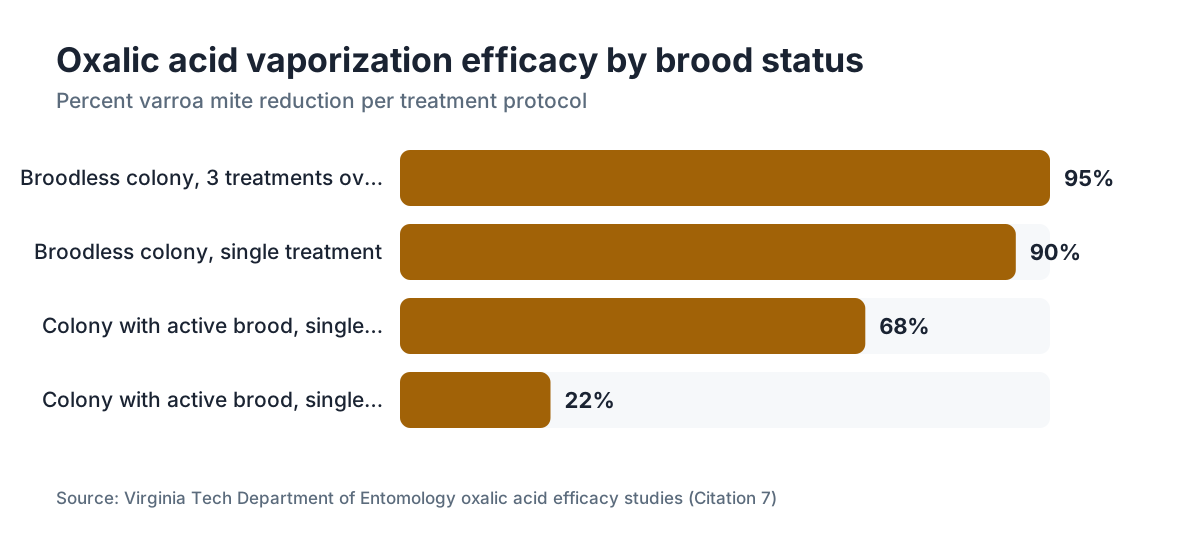
In a fully broodless colony treated three times over 14 days, oxalic acid vaporization hits 90 to 97 percent efficacy in peer-reviewed trials [7]. That matches synthetic treatments under the same broodless conditions.
With active brood, a single vaporization does far less. A widely cited Virginia Tech study found that one oxalic acid vaporization in colonies with brood cut phoretic mite loads by about 68 percent in the short term, but since most mites sat protected in cells, overall colony mite levels rebounded within weeks [7].
The Honey Bee Health Coalition's guide states that "oxalic acid treatments are most effective when no capped brood is present" and pairs any application with a monitoring plan [3]. That is not hedging. It is the honest read of the data.
So here is the play: treat during a broodless window, three treatments spaced 7 days apart, then run an alcohol wash 72 hours after the last one. Fewer than 2 mites per 100 bees (2 percent) means you are in good shape through the broodless stretch. Retest in spring once brood ramps back up.
VarroaVault's free mite monitoring tools and treatment protocol OS track your wash results and schedule retreatment windows without you building a spreadsheet.
Can you fog nucs, packages, and swarms with oxalic acid?
Yes, and a swarm is the single best scenario for oxalic acid of any kind. A swarm has no brood. Every mite in it rides on adult bees. One vaporization of a swarm clustered in a bait box or fresh equipment can wipe out nearly every mite present [8].
Packages are similar. No capped brood when they arrive, so one or two treatments during the establishment period (before the new queen's first brood gets capped) hands the colony a clean start.
Nucs are the tricky one. A 5-frame nuc with a laying queen has brood, and the smaller volume lets vapor concentration build higher than in a full colony. Some beekeepers cut the dose (0.5 gram per nuc box) or crack the entrance open a little to bleed off vapor. Nobody has published a clean dose-response study for nucs specifically. The closest guidance is the University of Minnesota Extension oxalic acid fact sheet, which recommends the standard dose but says to watch for unusual bee mortality afterward [9].
Treating any small colony, lean toward slightly lower concentration and keep an eye on the bees for a few days after.
What are the most common mistakes beekeepers make when fogging with oxalic acid?
Treating with brood present and expecting full-season results. This is the disappointment I see most. Beekeepers treat in July, counts drop for a moment, then rebound in three to four weeks as surviving mites emerge from brood and breed. The fix is not treating more often. It is choosing the right window or the right product for the season.
Skipping the mite wash before and after. If you don't know where you started, you can't tell whether the treatment did anything. An alcohol wash takes about 10 minutes and a $5 jar of rubbing alcohol. No good excuse to skip it.
Using unregistered oxalic acid. Raw acid from a hardware or brewing store is the same molecule, but using it in a hive is a federal violation [12]. The premium you pay for Api-Bioxal covers the EPA review that confirmed the dose is safe for bees, for residue levels, and for you. Buy the registered product.
Not sealing the hive. Leave the entrance open during vaporization and vapor escapes faster than it spreads through the cluster. Poor coverage, wasted product. Plug the entrance.
Weak PPE. Oxalic acid vapor irritates, and repeated exposure is worse. OSHA's permissible exposure limit for oxalic acid dust is 1 mg per cubic meter (8-hour TWA) [10]. A treating hive throws off far more than that at the entrance. Wear your respirator every time, not only when the wind turns on you.
Treating when it's too cold and the cluster is balled tight. Aim for 5 degrees Celsius or warmer. Treating in January in a cold climate? Pick a sunny midday window when the cluster loosens a bit.
Frequently asked questions
How much oxalic acid do I use per hive when fogging?
The Api-Bioxal label specifies 1 gram of oxalic acid dihydrate per brood box. A standard Langstroth deep or medium counts as one box. A double-deep colony gets 2 grams. Do not exceed this. Higher doses raise bee toxicity without killing more mites in capped cells, and they push honey residue up for no benefit.
How often can I fog my hives with oxalic acid?
The Api-Bioxal label allows up to three vaporization treatments per year in the US. During a broodless window, most beekeepers treat three times, 7 days apart, to catch mites that were under wax during the first treatment. Outside a broodless window, repeated treatments do little because the mite reservoir in capped brood refills quickly.
Can I fog hives with honey supers on?
The Api-Bioxal vaporization label does not currently prohibit treating with honey supers in place, unlike the dribble method. Label language has changed in past revisions, though. Always read the current label before treating. The EPA label is the legal document. If you treat with supers on, use the lowest labeled dose.
What temperature is too cold to fog bees with oxalic acid?
Most beekeepers use 5 degrees Celsius (about 40 degrees Fahrenheit) as the minimum for vaporization. Below that the cluster balls up too tight for vapor to move through it. On sunny winter days, midday often reaches the threshold even in cold climates. The vaporizer itself works at any temperature; the problem is vapor distribution inside the cluster.
Does oxalic acid fogging hurt the queen?
At the labeled dose in a full-size colony, queen loss from vaporization is uncommon but happens. The risk climbs in small nucs where vapor concentration builds higher in the tight space. Treating nucs, crack the entrance slightly or cut the dose a little, then check for a laying queen about 10 days later.
Can I fog a swarm or a new package with oxalic acid?
Yes, and it is one of the best uses of oxalic acid. Swarms and newly installed packages have no capped brood, so every mite rides on an adult bee and meets the vapor. A single treatment can wipe out nearly all mites present. Follow up with a mite wash a few days later to confirm, then again once the first brood gets capped.
What PPE do I need to fog bees with oxalic acid?
The Api-Bioxal label requires at minimum an N95 respirator (not a dust mask), chemical splash goggles, and nitrile gloves. A full face shield over goggles is better. Never lean over the entrance during or after vaporization. Treat in calm conditions. Step upwind before you pull the entrance plug after treatment.
Will oxalic acid fogging leave residue in my honey?
Oxalic acid already sits in honey at roughly 5 to 100 mg/kg naturally. Studies show vaporization at the labeled dose does not raise honey residue above those background levels in most cases. The EU maximum residue limit is 25 mg/kg. EPA's registration review found residue risk acceptable at labeled doses. As a precaution, do not treat during active honey flows.
What vaporizer should I buy to fog my hives?
The Varrox wand and the ProVap 110 are the most used in North America and have years of track record. Budget units from beekeeping suppliers can work, but calibrate the tray volume against a gram scale before treating. The label specifies the dose, not the brand. You need a 12-volt battery (or a 110-volt source for compatible units) and sealed entrance plugs.
How do I know if the oxalic acid fog treatment worked?
Run an alcohol wash 48 to 72 hours after the final treatment in a series. Count the mites from a 100-bee sample. Below 2 mites per 100 bees (2 percent) is generally a safe level in late summer and fall. Above that, especially heading into winter, you need a follow-up plan. Never trust dead mite boards alone; they undercount surviving populations.
Is there a difference between oxalic acid sublimation and oxalic acid vaporization?
Beekeepers use the terms interchangeably, though technically sublimation means solid-to-gas without a liquid phase. In practice, heated crystals in a vaporizer may pass through a brief liquid phase before turning to vapor. The distinction does not change treatment outcomes. Both terms describe the same device-based delivery method on the Api-Bioxal label.
Can I use oxalic acid fogging as my only varroa treatment year-round?
Not safely in most climates, where bees carry brood for 8 to 10 months a year. Fogging only kills phoretic mites. Without a broodless window, you can never reach the large fraction of mites protected in capped cells. Most beekeepers who lean on oxalic acid use it during the natural winter broodless period and switch to another class (formic acid or amitraz) in the summer brood season.
Do I need a license to use Api-Bioxal?
Api-Bioxal is a General Use pesticide in the US, so no applicator license is required for personal use in your own hives. Some states require hives to be registered with the state department of agriculture, but that is a hive registration rule, not a pesticide license. Confirm with your state apiarist. Commercial beekeepers applying the product for hire may face different rules.
Sources
- EPA, Api-Bioxal registration label (EPA Reg. No. 86243-3): Api-Bioxal is the only EPA-registered oxalic acid product for varroa control in the US; the vaporization label specifies 1 gram of oxalic acid dihydrate per brood box and up to 3 treatments per year.
- Penn State Extension, Oxalic Acid for Varroa Mite Control: Vaporizer equipment guidance and application procedure recommendations for oxalic acid use in bee colonies.
- Honey Bee Health Coalition, Varroa Management Guide (latest edition): Oxalic acid treatments are most effective when no capped brood is present; the 2-3 percent action threshold (2-3 mites per 100 bees) is recommended for treatment decisions.
- Penn State Extension, varroa biology resources: Roughly 80 to 90 percent of varroa mites in a colony with active brood are in capped brood cells at any given time.
- Journal of Apicultural Research, oxalic acid residues in honey and beeswax after treatment (multiple peer-reviewed studies): Oxalic acid vaporization at labeled rates does not raise honey residue above naturally occurring background levels; the EU MRL is 25 mg/kg.
- USDA Agricultural Research Service, Bee Research Laboratory publications: Extended-release oxalic acid sponge method efficacy data is still accumulating relative to the longer track record of vaporization.
- Virginia Tech, Department of Entomology, oxalic acid vaporization efficacy studies: In broodless colonies treated three times over 14 days, oxalic acid vaporization achieves efficacy of 90 to 97 percent; a single treatment with brood present reduced phoretic mite loads approximately 68 percent with rapid rebound.
- University of California Agriculture and Natural Resources, swarm and package mite management guidance: Swarms have no capped brood; a single oxalic acid vaporization can eliminate nearly all mites present in a swarm cluster.
- University of Minnesota Extension, Oxalic Acid for Varroa Mite Control in Honey Bee Colonies: Standard labeled dose is recommended for nucleus hives with guidance to monitor for unusual bee mortality afterward.
- OSHA, Oxalic Acid Chemical Sampling Information: OSHA permissible exposure limit for oxalic acid dust is 1 mg per cubic meter (8-hour TWA).
- Honey Bee Health Coalition, Varroa Management Guide, monitoring methods section: Alcohol wash recommended as primary mite monitoring method; dead mite boards alone undercount surviving mite populations.
- EPA, laws and regulations (FIFRA overview): Using unregistered pesticide products in hives is a federal violation under FIFRA regardless of dose.
Last updated 2026-07-09