Fogging oxalic acid for bees in New York State: what's legal and how to do it right
TL;DR
- Oxalic acid vaporization (fogging) is legal in New York State for varroa mite control, but only with an EPA-registered product such as Api-Bioxal.
- Commercial and sideliner beekeepers need a New York State pesticide applicator or technician certificate.
- Hobbyists treating their own hives fall under the private applicator category.
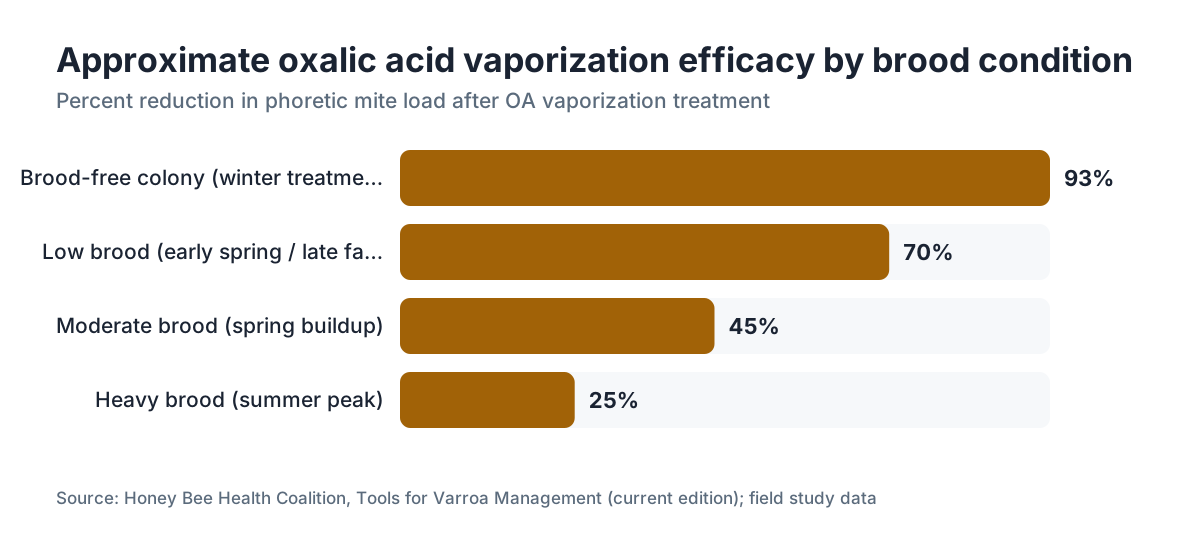
- Brood-free colonies show the best results, with efficacy above 90% in some field studies.
Is fogging (vaporizing) oxalic acid legal in New York State?
Yes. Oxalic acid vaporization is federally legal and fully permitted in New York State, provided you use an EPA-registered product and follow the label exactly. The label is the law under the Federal Insecticide, Fungicide, and Rodenticide Act (FIFRA), 7 U.S.C. § 136 et seq. [1]
The only EPA-registered oxalic acid product approved for vaporization in honey bee hives as of 2025 is Api-Bioxal (EPA Reg. No. 84058-3). Its label authorizes three application methods: trickle, spray, and vaporization. Using an unregistered product, or using Api-Bioxal in a way the label doesn't describe, is a federal and state pesticide violation. This is not a gray area.
New York State pesticide regulations are administered by the New York State Department of Environmental Conservation (NYSDEC) under Environmental Conservation Law Article 33 [2]. NYSDEC defers to the federal EPA registration, so once Api-Bioxal's label allows vaporization, New York allows it. No state-specific supplemental label is required as of this writing.
Products change. Labels change. If you're unsure whether a newer product has received vaporization registration, check the EPA's pesticide registration database directly rather than trusting a retailer's claim. Download the current label from the EPA or the manufacturer before you treat, every season.
Do New York beekeepers need a pesticide license to use an oxalic acid vaporizer?
Yes, and this is the question most beekeepers get wrong. Getting it wrong can cost you a real fine.
Under New York State law, anyone who applies a pesticide to property they don't own, or who applies for hire, needs a commercial pesticide applicator or technician certification from NYSDEC [2]. A hobbyist treating only their own hives on their own property qualifies as a private applicator. Private applicators in New York still have to be certified, but the requirements are lighter than commercial certification.
Sideliner or commercial beekeepers treating hives at multiple locations, or treating other people's hives (including as part of a beekeeping club's shared treatment program), almost certainly need a commercial applicator license in the agricultural pest control category. The exact category assignment has been a point of confusion in New York. Contact NYSDEC's Bureau of Pesticides Management directly to confirm which category applies to your operation [2].
Hobbyist beekeepers treating only their own bees: get the private applicator certification. It requires passing a written exam through Cornell Cooperative Extension or NYSDEC, and it's cheap. Trying to skip it is not worth the risk.
Treating hives at a community garden, a school, or any shared property? You are not a private applicator in that context. You need commercial certification. That's NYSDEC's position and it's not ambiguous.
How does oxalic acid vaporization actually kill varroa mites?
Oxalic acid (OA) is a dicarboxylic acid that occurs naturally in plants like rhubarb and spinach. When vaporized, it sublimates into a fine crystalline aerosol that coats every surface inside the hive, the bees included. Learn more about the biology of the pest you're fighting at our overview of the varroa mite.
Mites pick up the acid through direct contact. The exact kill mechanism isn't fully worked out at the molecular level, but the working understanding is that the acid damages the mite's cuticle and disrupts its physiology. What's well established: OA kills phoretic mites (the ones riding on adult bees) very effectively, and does almost nothing to mites sealed inside brood cells. That single fact shapes every protocol decision you'll make.
A 2016 field study in PLOS ONE reported oxalic acid vaporization efficacy against phoretic mites above 90% in brood-free colonies [3]. In colonies with capped brood, efficacy drops sharply because a large share of the mite population sits protected inside cells. The standard workaround is multiple treatments spaced a few days apart during a brood break, or repeated treatments across a full brood cycle.
The Honey Bee Health Coalition's Tools for Varroa Management guide states that oxalic acid treatments are "most effective when there is little or no capped brood present" [4]. That's not an opinion. It's the biological constraint you're working around every time you fog.
What equipment do you need to vaporize oxalic acid in New York?
You need three things: the registered product (Api-Bioxal), an approved vaporizer, and the personal protective equipment (PPE) named on the label.
The Api-Bioxal label requires, at minimum, a NIOSH-approved half-face respirator with combination acid gas and P100 particulate cartridges, chemical-resistant gloves, and protective eyewear [5]. None of this is optional. Oxalic acid vapor is corrosive to mucous membranes and lung tissue. Beekeepers who skip the respirator because "it's natural" are taking a real health risk.
The most common vaporizers in the U.S. are pan-style units like the Varrox, the ProVap 110, and various battery-powered wands. The label doesn't specify a brand, but it does specify the dose: 1 gram of Api-Bioxal per brood chamber (deep hive body), up to a maximum of 2.5 grams per colony per treatment [5]. Weigh the product on a small scale. Don't eyeball it.
Seal the hive entrance for at least 10 minutes after treatment so the vapor works through the cluster. Foam, a folded towel, or a purpose-built entrance block all work.
Still sorting out your gear? Beekeeping supply companies that stock OA vaporizers include Mann Lake and Dadant along with several regional suppliers. Checking free shipping honey bee supply companies can cut your startup cost if you're buying multiple pieces at once.
Don't treat on windy days. Don't treat near bystanders. Don't re-enter the hive until at least 10 to 15 minutes after treatment. These aren't suggestions. They're label requirements.
When is the best time to use an oxalic acid vaporizer in New York?
New York's four seasons shape this more than most beekeepers realize.
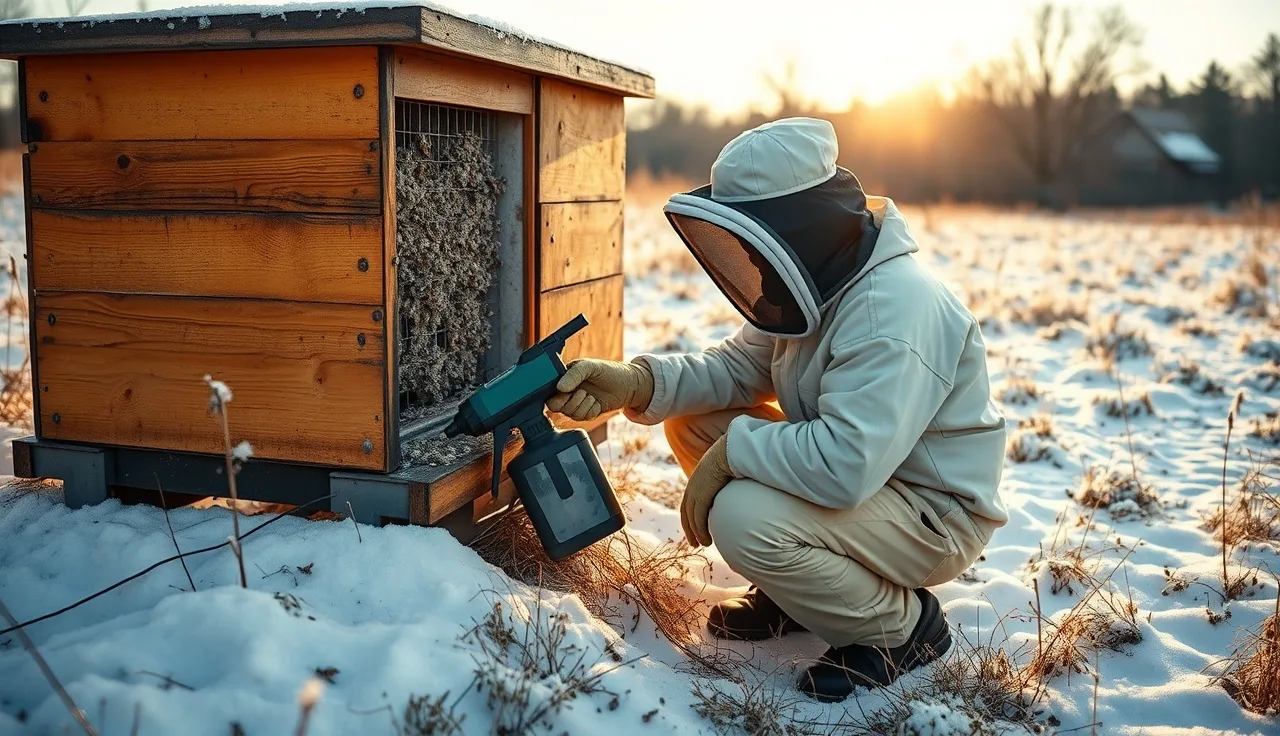
The best treatment window in the Northeast is the brood-free stretch in winter, usually late November through February across most of the state. There's no capped brood then, so every mite in the colony is phoretic and exposed. One vaporization treatment during this window is the most cost-effective and labor-efficient varroa intervention you can do all year. Plenty of experienced New York beekeepers treat once in December or January and watch mite loads stay low into spring.
Outside the brood-free period, you need a different plan. The Api-Bioxal label permits multiple applications; for colonies with brood, Cornell Cooperative Extension recommends a series of treatments spaced roughly 5 days apart, 3 to 5 applications total, to catch mites as they emerge from cells [6].
Spring is the other high-stakes window in New York. Colonies coming out of winter often carry low brood levels in March, which gives you a short stretch where OA vaporization does outsized work before the queen ramps up laying. Treating before the first big pollen flow, typically before dandelion bloom (late April to early May in most of the state), keeps the summer mite buildup from getting a head start.
Don't treat during a honey flow with supers on unless your specific registered product's label allows it. The current Api-Bioxal label requires honey supers to be off during treatment because there's no established tolerance for oxalic acid residues in honey meant for people [5].
Temperature matters too. Vaporization works best when bees are clustered and not flying much, so aim for a cool morning. Bees flying freely during treatment means mites on foragers escape the vapor.
What does a full-season oxalic acid vaporization protocol look like in New York?
There's no single correct protocol, but here's one that reflects current best practice and the biology of varroa in a four-season New York climate.
March (pre-buildup): When the cluster breaks and brood is still minimal, do one vaporization treatment. Recheck with a mite wash 3 to 4 weeks later.
June to July (summer brood-break option): If you can induce a brood break by caging the queen or making a split, treat with OA during that window. Without a brood break, pair OA vaporization with a miticide that reaches mites in capped brood (Apivar or Formic Pro, for example) when mite counts run above threshold.
August to September: The most dangerous period for New York colonies. The mite population peaks, and the winter bees being raised now are the ones that have to survive to April. If a mite wash shows more than 2 mites per 100 bees in August, treat immediately with the most effective option you have. OA vaporization alone under heavy brood may not be enough; check the Honey Bee Health Coalition's decision guide [4].
November to February (winter treatment): Once brood rearing stops, do one vaporization treatment. This is the highest-leverage treatment of the year. Many New York beekeepers treat twice, 7 to 10 days apart, to catch stragglers.
VarroaVault has free mite count tracking tools and protocol templates if you want to map this schedule against your own monitoring data.
The Honey Bee Health Coalition's Tools for Varroa Management guide is the closest thing to a consensus treatment bible in U.S. beekeeping. Download the current version straight from their site [4]. It spells out when OA makes sense as a standalone treatment and when you need something that penetrates capped brood.
How do you measure whether the treatment actually worked?
Treatment without monitoring is guesswork. The two standard methods for measuring mite load in New York are the alcohol wash and the sugar roll. The alcohol wash is more accurate. The sugar roll undercounts, sometimes badly.
For an alcohol wash, collect about 300 bees (roughly half a cup) in a jar, add isopropyl alcohol or windshield washer fluid, shake, and count the mites that float free. Divide mites by bees. Two mites per 100 bees (2%) is the widely cited action threshold during the summer brood-rearing period [4][6]. Some researchers put the economic threshold lower, closer to 1%, in August when winter bee production is on the line.
Treat, then recheck 3 to 4 weeks later. If the mite wash is still above threshold after treatment, your OA vaporization alone isn't keeping up. You probably have more capped brood than you think, or your vaporizer dose was off.
Natural mite drop on a sticky board is a monitoring tool, not an efficacy measurement. It tells you mites are present. It doesn't tell you what percentage of your bees are infested.
After a winter vaporization treatment in a brood-free colony, a post-treatment sticky board count can tell you something useful. A large mite drop in the first 24 to 48 hours means the treatment worked. Almost no drop means either your colony had few mites or the vapor never distributed properly.
What are the safety and environmental rules for oxalic acid use in New York?
Oxalic acid carries lower toxicity than conventional miticides, but it's not harmless. The key safety requirements on the Api-Bioxal label: do not apply around unprotected bystanders; wear the specified respirator and gloves; do not apply while supers intended for human consumption are on the colony; keep children and pets away from the treatment area [5].
For environmental compliance in New York, NYSDEC requires that pesticides not be applied in a way that causes drift onto non-target sites, including waterways [2]. This rarely comes up with OA vaporization since the vapor stays inside the sealed hive, but it's worth knowing.
Dispose of excess Api-Bioxal and clean the spent vaporizer pan per label instructions. Oxalic acid is water-soluble and breaks down fairly quickly in soil, but don't dump concentrated solution into a waterway.
An adverse incident (a neighbor reports illness, you have a health reaction, or you accidentally treat hives at the wrong location) may need to be reported to NYSDEC's Bureau of Pesticides Management [2].
One practical note. If you're running the vaporizer between hives, work outside or in a well-ventilated spot. The heating element stays hot enough to give off residual fumes even after the hive is sealed, and it can scorch anything flammable it touches. Keep it clear of dry grass and hive-tool bags.
How does oxalic acid vaporization compare to other varroa treatments available in New York?
Honest comparison matters here, because no single treatment is right for every situation.
| Treatment | Active Ingredient | Works in Capped Brood? | Honey Super Restriction | Cost per Colony (approx.) | Resistance Documented? |
|---|---|---|---|---|---|
| Api-Bioxal (vaporization) | Oxalic acid | No | Yes, remove supers | $1-3 | No |
| Apivar | Amitraz | Yes | Yes, remove supers | $8-12 | Yes, in some regions |
| Formic Pro / MAQS | Formic acid | Yes (partially) | No (approved with supers) | $12-18 | No |
| HopGuard 3 | Hop beta acids | Limited | No | $5-9 | No |
| Apiguard | Thymol | Limited | Yes, remove supers | $5-8 | No |
Prices above are rough estimates based on retail availability as of 2024-2025. They vary by supplier and quantity.
OA vaporization is the cheapest per-treatment option and has zero documented resistance. Its limit is that it only kills phoretic mites. During peak summer brood, when 70 to 80% of your mite population sits inside capped cells, one OA treatment won't pull you out of trouble fast. That's when formic acid or amitraz products earn their higher price.
For New York's winter brood-free window, OA vaporization is the clear first choice. Cost, efficacy, and the absence of resistance make it hard to beat. The Honey Bee Health Coalition's treatment guide has a detailed comparison matrix with efficacy ratings [4].
Amitraz resistance in Varroa has turned up in some U.S. populations, and the concern is real enough that resistance management (rotating treatment classes rather than leaning on Apivar every time) is standard advice from Cornell Extension [6].
Where can New York beekeepers get certified and find reliable information?
Cornell Cooperative Extension is your main academic resource in New York. Cornell's entomology program publishes beekeeping guidance, including varroa management recommendations for the Northeast [6]. Its honey bee diagnostic services can also help with hive health questions.
For pesticide applicator certification, contact NYSDEC's Bureau of Pesticides Management or take a prep course through your local Cornell Cooperative Extension county office [2]. The exam runs at multiple locations statewide.
The Empire State Honey Producers Association and regional clubs publish treatment and regulatory updates for New York beekeepers, and most run annual conferences with sessions on varroa management. Your county Cornell Cooperative Extension office can point you to the club nearest you.
For equipment and beekeeping supplies specific to OA vaporization, several regional New York suppliers offer local pickup. Buying Api-Bioxal locally matters because you can check the expiration date and confirm you're getting the genuine EPA-registered product, not a gray-market import. Imported oxalic acid products that aren't Api-Bioxal are not legal to use under the Api-Bioxal registration.
If you're building a monitoring and treatment calendar, the free protocol tools at VarroaVault can help you track mite counts, treatment dates, and efficacy across multiple colonies.
Frequently asked questions
Is Api-Bioxal the only oxalic acid product you can legally vaporize in New York?
As of 2025, Api-Bioxal (EPA Reg. No. 84058-3) is the only EPA-registered oxalic acid product with a label specifically authorizing vaporization in honey bee hives in the United States. Using any other oxalic acid, including bulk OA from online or chemical suppliers, violates FIFRA and New York pesticide law. The registration attaches to the labeled product, not to the raw active ingredient.
Can I vaporize oxalic acid in New York while honey supers are on the hive?
No. The current Api-Bioxal label prohibits vaporization when honey supers intended for human consumption are on the colony, because there is no established EPA tolerance for oxalic acid residues in honey. Remove supers before treatment and wait until the vapor fully dissipates before replacing them. This restriction does not apply to beeswax in brood frames.
How many times can I treat a colony with oxalic acid vaporization per year?
The Api-Bioxal label allows multiple applications. Always read the current label before treating, because EPA can revise the language. Cornell Extension recommends 3 to 5 treatments spaced about 5 days apart when brood is present, to catch mites as they emerge from capped cells [6]. During the brood-free winter window, a single treatment usually does the job.
Does fogging oxalic acid hurt the bees or the queen?
At the labeled dose (1 gram of Api-Bioxal per brood chamber, max 2.5 grams per colony), oxalic acid vaporization has low toxicity to adult bees and does not meaningfully harm queens or brood. Overdosing, or treating very small colonies at full dose, can cause some bee mortality. The 2016 PLOS ONE field study reported no significant brood or queen mortality at labeled doses.
What mite count level should trigger treatment in New York?
The most widely cited action threshold is 2 mites per 100 bees (2%) on an alcohol wash during the brood-rearing season, roughly April through September in New York. Some authorities drop this to around 1% in August and September, when winter bees are being raised. The Honey Bee Health Coalition's Tools for Varroa Management guide provides a seasonal threshold chart. Below 2% in summer, check every 30 days.
Do I need to register my hives with New York State to use pesticides on them?
New York does not require hive registration solely to apply pesticides to your own bees. Some counties and municipalities do have local registration or notification rules for keeping bees at all. NYSDEC pesticide applicator certification is the regulatory requirement for using pesticides. Check with your county Cornell Cooperative Extension office for any local hive registration rules beyond the state applicator requirement.
Can I vaporize oxalic acid in a Langstroth hive with multiple boxes?
Yes. The Api-Bioxal label specifies 1 gram per brood chamber, up to a maximum of 2.5 grams per colony total. For a two-deep colony you'd use 2 grams; for three boxes you'd still cap at 2.5 grams. The vaporizer is typically inserted through the sealed entrance. Vapor moves through the cluster by convection, reaching bees in upper boxes when the entrance stays sealed at least 10 minutes.
What respirator do I need for oxalic acid vaporization?
The Api-Bioxal label requires a NIOSH-approved half-face respirator with combination acid gas and P100 particulate cartridges, plus chemical-resistant gloves and eye protection. A dust mask or bee veil alone does not meet this. 3M and Honeywell both make half-face respirators with OV/P100 cartridges, widely sold at hardware stores. Replace the cartridges after 8 to 10 hours of use, or sooner if you smell anything through them.
Does oxalic acid vaporization work in cold weather in New York?
Yes, and winter is actually the ideal season for it. Vaporization works well below freezing because the heating element sublimates the acid regardless of ambient temperature. The cluster itself provides enough warmth to spread the vapor. Most New York beekeepers treat in December or January precisely because the colony is brood-free, which puts every mite in the colony out on the bees and exposed to the vapor.
How long does oxalic acid stay active inside the hive after vaporization?
The crystals that deposit on bees and hive surfaces stay active for a few days, but efficacy falls quickly as the crystals settle and bees clean them off. Most of the mite kill happens in the first 24 to 48 hours. That's why a single treatment does little when capped brood is present: mites emerging later were never exposed. Treatments spaced 5 to 7 days apart make up for it.
Can a hobbyist beekeeper in New York use an oxalic acid vaporizer without any license?
No, not legally. New York requires private applicator certification for hobbyists applying pesticides to their own bees on their own property. The exam runs through NYSDEC or Cornell Cooperative Extension county offices and covers pesticide safety and label compliance. It's not a high bar, but skipping it is a violation of New York Environmental Conservation Law Article 33.
Is oxalic acid vaporization allowed in organic beekeeping operations in New York?
Oxalic acid is on the National Organic Program's National List of allowed substances for livestock pest control (7 CFR § 205.603), so it's permitted in certified organic operations when used as directed. You still have to use the registered product (Api-Bioxal), and your certifier may want extra documentation. Confirm with your certifier before your first treatment season, because rules can vary between certifying agencies.
Where do I report an oxalic acid pesticide incident in New York?
Report adverse pesticide incidents to NYSDEC's Bureau of Pesticides Management. That includes human health effects, suspected bee kills tied to misuse, and drift events. You can also call the National Pesticide Information Center (NPIC) at 1-800-858-7378, which provides guidance on oxalic acid exposure first aid while you reach state authorities.
Sources
- U.S. EPA, Pesticide Registration program (FIFRA): The pesticide label is legally binding under FIFRA; using a product inconsistently with its label is a federal violation.
- New York State Department of Environmental Conservation: NYSDEC administers pesticide applicator certification under Environmental Conservation Law Article 33 and requires certification for both private and commercial applicators in New York.
- Gregorc A et al., PLOS ONE, oxalic acid treatment for Varroa destructor control (2016): Field studies have documented oxalic acid vaporization efficacy exceeding 90% against phoretic mites in brood-free colonies.
- Honey Bee Health Coalition, Tools for Varroa Management guide (current edition): Oxalic acid treatments are most effective when there is little or no capped brood present; the guide provides seasonal thresholds and treatment comparison data.
- EPA, Api-Bioxal pesticide product label (EPA Reg. No. 84058-3): Api-Bioxal label specifies 1 gram per brood chamber, max 2.5 grams per colony per treatment, required PPE including NIOSH respirator with acid gas and P100 cartridges, and prohibits use when honey supers for human consumption are present.
- Cornell University College of Agriculture and Life Sciences, Department of Entomology: Cornell Extension recommends a series of 3 to 5 OA vaporization treatments spaced about 5 days apart when capped brood is present, and cites 2 mites per 100 bees as the summer action threshold.
- USDA Agricultural Marketing Service, National Organic Program, 7 CFR § 205.603 allowed substances list: Oxalic acid is listed as an approved substance for livestock pest control under the National Organic Program, permitting its use in certified organic beekeeping operations.
- National Pesticide Information Center (NPIC), Oregon State University and U.S. EPA: NPIC provides pesticide incident guidance and first aid information for oxalic acid exposures at 1-800-858-7378.
- U.S. Environmental Protection Agency, Pollinator Protection: EPA provides guidance on protecting honey bees during pesticide use and on the registration of hive treatments.
- USDA Agricultural Research Service, Honey Bee Research: USDA ARS conducts research on varroa mite control including oxalic acid and characterizes the biology of the mite's phoretic and reproductive phases.
Last updated 2026-07-09