How much oxalic acid do you use for bees: doses, methods, and safety
TL;DR
- The EPA-registered dose of oxalic acid for honey bees is 1 gram of active oxalic acid per hive body by vaporization (using an approved sublimator), or 50 mL of a 3.2% weight-by-volume solution per broodless colony by dribble.
- Bees tolerate oxalic acid well at label rates.
- The mites do not.
- Both methods are only legal under specific EPA product labels.
What is the correct amount of oxalic acid to treat a beehive?
The dose is on your product label, and federal law requires you to follow it exactly. Both EPA-registered methods have a specific number, and knowing what those numbers mean helps you apply them right instead of copying them blindly.
For vaporization (sublimation), the registered rate is 1 gram of active oxalic acid dihydrate per hive body occupied by bees. A colony spanning two deep boxes gets each box treated, so the total is 2 grams of active ingredient. Api-Bioxal, the only EPA-registered oxalic acid product for honey bees in the United States as of this writing, delivers that 1 g dose per application through a measured vaporizer pan [1].
The dribble method uses 50 mL of a 3.2% weight-by-volume oxalic acid solution per treated colony. You make that 3.2% solution by dissolving 35 grams of oxalic acid dihydrate in one liter of 1:1 sugar syrup (equal parts sugar and water by weight). Then you dribble 5 mL per occupied seam of bees, up to a 50 mL maximum per colony [1].
Those doses come from decades of European research and from the EPA registration process. They are not conservative estimates you can nudge upward. Going over stresses bees, kills brood, and can leave unlawful residues in honey.
How does oxalic acid kill varroa mites without harming bees?
Oxalic acid (OA) is an organic acid found in honey, beeswax, and many plants. At label concentrations, bees shrug it off and mites die. That gap in tolerance is the entire basis of the treatment.
Varroa destructor mites have a soft, permeable cuticle and cling to the bee's abdomen between the tergites, right where vaporized or liquid acid contacts them. The acid damages their cuticle and kills them through direct contact [2]. Honey bees carry a thicker cuticle, working detoxification pathways, and a body size that dilutes the per-unit exposure. Studies find no measurable queen loss or brood damage at label doses when colonies are broodless, which is the recommended condition for both methods [3].
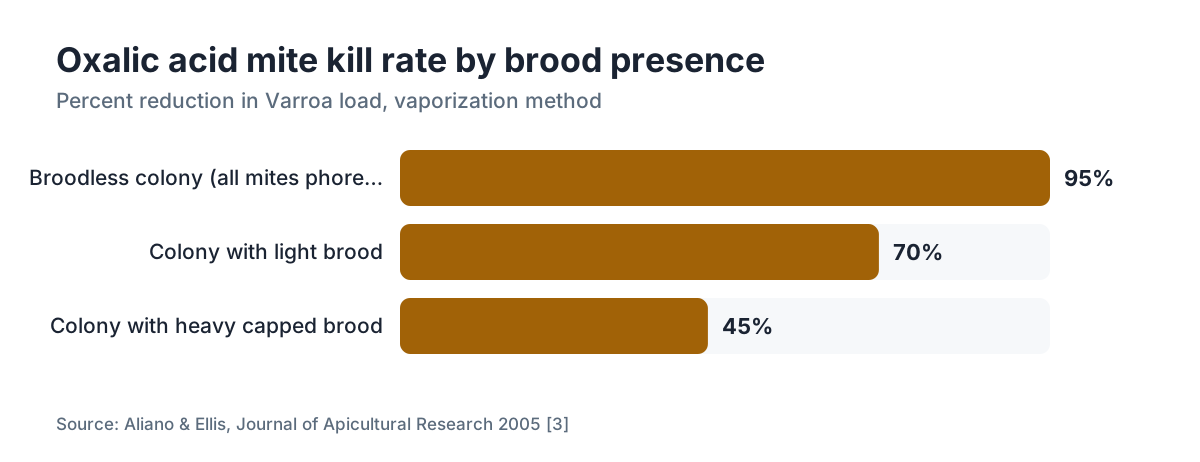
Here is the catch that shapes everything: oxalic acid does not penetrate capped brood cells. Mites tucked inside capped cells during treatment survive. Treat when brood is present and you kill only the phoretic mites (the ones riding on bees), never the reproductive mites sealed in cells. That is why late fall treatment of a broodless cluster, or a split held broodless, shows the highest kill. Studies report 90 to 97% reduction in mite loads under broodless conditions [3].
See the varroa mite article for the mite's life cycle and why broodless timing matters so much.
Vaporization vs. dribble vs. trickle: which method and dose is right for you?
The U.S. has two approved methods ("trickle" is just the European word for dribble), and they are not interchangeable in every situation.
| Method | Active OA dose | Diluent | Brood required to be absent? | Applications per episode | Best season |
|---|---|---|---|---|---|
| Vaporization (sublimation) | 1 g per hive body | None | No, but efficacy drops with capped brood | Up to 3 treatments, 5 days apart | Late fall/winter; broodless splits |
| Dribble (trickle) | 50 mL of 3.2% solution | 1:1 sugar syrup | Yes, must be broodless | 1 per year under the label | Late fall/winter cluster |
Vaporization is the more flexible option. You can treat multiple times, and you never open the hive, which spares the cluster in cold weather. The 1 gram per hive body dose goes into a measured pan. You seal the entrance and vents, run the vaporizer for the time the device maker specifies (usually 2 to 3 minutes), then leave the hive sealed another 10 minutes so the vapor settles [1].
Dribble is simpler on equipment but forces you to open the hive, find the cluster, and pour solution over the bees. The Api-Bioxal label limits it to one application per year. Repeated sugar-syrup dribbles in winter add moisture and stress the cluster, which is why that limit exists. At 50 mL total and 5 mL per seam, you are treating colonies with 4 to 10 seams of bees.
For most hobbyists with a handful of hives, a battery-powered or corded vaporizer pays for itself in flexibility. Hobbyist-grade sublimators run $100 to $250 depending on brand and power source. The article on beekeeping supply companies lists vetted vendors if you need help sourcing one.
What do the EPA label and legal requirements actually say?
Api-Bioxal (EPA Registration No. 81824-4) is the only product the U.S. EPA registers for oxalic acid treatment of honey bee colonies [1]. Federal pesticide law under FIFRA (the Federal Insecticide, Fungicide, and Rodenticide Act, 7 U.S.C. § 136 et seq.) requires you to use a registered product and follow its label [4].
The label carries a few restrictions hobbyists miss.
You may not treat colonies during a honey flow for human consumption with supers in place. The label says to remove honey supers before treatment, or to keep treated colonies out of honey production for human consumption until after the next extraction. States read this differently, but the safe version is simple: no supers during treatment.
The dribble method is capped at a single application per year per colony. Vaporization allows up to 3 applications per treatment episode, with at least 5 days between applications.
You also have to wear specific personal protective equipment (PPE): an N95 or better respirator (not a paper dust mask), chemical-resistant gloves, protective eyewear, and a long-sleeved shirt. Oxalic acid vapor irritates the lungs and eyes. That language is mandatory, not advisory.
Some states pile additional restrictions on top of the federal label. California, for one, has its own registration history for OA products. Check your state department of agriculture's pesticide registration database before you treat. The Honey Bee Health Coalition's Varroa management guide keeps up with these regulatory details and is a solid secondary resource [5].
How many grams of oxalic acid do you put in a vaporizer?
One gram of Api-Bioxal powder per hive body occupied by bees. That is the whole answer, and beekeepers get tangled up because different sources describe the dose in different terms.
Api-Bioxal is sold as oxalic acid dihydrate, so the active oxalic acid content is about 97.3% of the powder by weight. When the label says 1 gram per hive body, it means 1 gram of the Api-Bioxal powder, because the product is essentially pure active ingredient at that concentration [1].
For a single-deep hive body, you load 1 gram of powder into the vaporizer pan. For a two-story colony (both deeps occupied by bees), you can run a single 2 gram treatment or treat each box at 1 gram. Most vaporizer instructions and the label back the 1 gram per box approach because it spreads vapor evenly through each box.
Do not add more because you are nervous about a heavy mite load. The vapor saturates the interior of the box quickly at 1 gram. Extra OA kills no additional mites. It just dumps excess crystals on your bees and gear, which does damage. University of Florida IFAS Extension's beekeeping program reinforces the 1 g per hive body ceiling [6].
Weigh every dose. A postal scale accurate to 0.1 grams costs about $10 and removes all guesswork. Pre-load labeled capsules or foil packets for each hive before you walk out to the apiary. It saves time and stops accidental double-dosing.
When is the best time to use oxalic acid to get the highest mite kill?
Timing beats dose. A well-timed OA treatment at label rate knocks mite loads down 95%. The same dose at the wrong time gives you 40 to 60% reduction, often not enough to save a struggling colony heading into winter.
The best window for most temperate beekeepers in the northern hemisphere is mid to late autumn, after the queen quits laying and the last round of brood emerges, usually November through early December above roughly 40°N. Every mite is phoretic then, riding on adult bees and fully exposed to vapor or dribble solution. One properly dosed treatment can drop mite loads to near zero [3].
Treating in summer, say after pulling and making splits, means keeping the split queenless and broodless for 23 to 24 days so all capped brood emerges before you treat. Then vaporize 3 times at 5-day intervals to catch late-emerging mites. Many sideliner operations run this extended broodless approach when they need hard mite control without harsher chemicals during the honey flow.
A stubborn myth says you can "blast" a colony with a big dose while brood is present and still kill enough mites to matter. The data says no. Mites inside capped cells are unreachable. No dose changes that biology. The Honey Bee Health Coalition's Varroa management guide states plainly that oxalic acid efficacy "is greatly reduced in the presence of capped brood" [5].
VarroaVault's free protocol tools track when your colony goes broodless and flag the right treatment window for your location and season, alongside your alcohol wash and sugar roll counts.
Is oxalic acid safe for bees at the recommended dose?
At label rates, yes. Adult honey bees tolerate oxalic acid well. European researchers have studied it hard since the 1990s, and the consensus is that a properly dosed treatment causes minimal adult mortality and no detectable long-term colony harm when applied correctly [2][3].
A few things deserve a closer look. Brood is more sensitive than adults. The dribble method, poured onto a colony that still has open brood, can kill brood through the acid and the sugar-syrup moisture together. That is exactly why the dribble label restricts it to broodless colonies. Vaporization over colonies with brood is allowed by the label, but efficacy falls and some studies show mild brood effects at higher doses. Stay at 1 gram per box.
Repeated vaporization (the maximum 3 in one episode) does not appear to build up harmfully in adult bees or wax at label doses. A study published in PLOS ONE found OA residues in beeswax after multiple treatments low enough to sit within naturally occurring background levels [7].
Queen safety worries a lot of beekeepers. The literature is mostly reassuring: queens in properly dosed broodless colonies show no elevated mortality versus untreated controls in most studies. Some beekeepers still report queen loss after vaporization. The likely culprits are cold-weather stress during treatment, a poorly calibrated vaporizer, or treating a colony with less population than assumed. Inspect first, size up the cluster, and use the minimum effective dose.
What happens if you use too much oxalic acid in a beehive?
Overdosing is a real risk, and the damage scales with how far past the label you go.
At a mild overdose (2x the label rate), you get excess white crystal deposits on frames, bees, and the bottom board. Bees clean harder and act agitated. Adult mortality can tick up over the following days, and if brood is present, you may see patchy die-off of larvae or pupae.
At a severe overdose (3x or more), queen loss becomes a genuine risk. Bees can abscond from a heavily dosed hive in warm weather. Brood damage runs significant. Wax residue climbs too, though studies suggest wax has considerable buffering capacity.
On the legal side, applying above label rates is a federal pesticide violation under FIFRA, whatever your intentions.
Suspect you overdosed? Open the colony up from confinement promptly, give it good ventilation, and watch adult populations over the next 72 hours. There is no antidote. Supportive care (adequate stores, minimal manipulation) is the practical response.
Underdosing matters the other direction. Too little OA does not hurt bees much, but it leaves mites alive and can build selection pressure if it becomes a habit. Measure your doses. Never eyeball oxalic acid powder.
How do you mix the oxalic acid dribble solution correctly?
The Api-Bioxal label spells out the dribble recipe: dissolve 35 grams of Api-Bioxal powder in 1 liter of 1:1 sugar-to-water solution (by weight). That gives you a 3.2% weight-by-volume oxalic acid solution, which is the basis for the 50 mL per colony dose [1].
For the 1:1 syrup, weigh equal parts granulated white sugar and warm water, and stir until the sugar fully dissolves before you add the Api-Bioxal powder. Add the powder slowly, stirring as you go. The solution should look clear to slightly hazy. If white crystals fall out, your syrup is too cold or too concentrated. Warm it gently and stir again.
Do not use hot syrup. Heat degrades oxalic acid and shifts the concentration.
Store the mixed solution in a sealed, labeled container, away from food, children, and direct sunlight. Refrigerated, it stays stable for several weeks. Label it with the contents, concentration, mix date, and a warning that it contains a pesticide.
A 60 mL syringe or a small dribble bottle with a narrow nozzle gives you good control. Dribble 5 mL per seam, moving frame by frame across the cluster. Do not flood any seam. Even coverage beats speed.
The article on beekeeping supplies covers what to look for and what to skip if you need mixing or application gear.
Can you use oxalic acid when honey supers are on the hive?
No. The Api-Bioxal label is explicit: do not apply when honey supers intended for human consumption are in place [1]. Oxalic acid vapor can settle on honey in open cells and push OA residues above background.
Oxalic acid already occurs naturally in honey, typically 8 to 33 mg/kg depending on floral source, according to the European Food Safety Authority's assessment of OA in honey bees [8]. The worry is not acute toxicity to people. It is label compliance and keeping honey's natural residue profile intact.
Most experienced beekeepers handle this the same way: finish fall OA treatment after all supers come off for the year. In spring, hold OA treatments until you are sure no supers go on within the treatment window. If you have to treat a split during a summer broodless period, keep that split separate from your honey-production colonies and do not super it during or right after treatment.
Beekeepers often ask about treating in spring before supers go on. That is generally label-compliant as long as supers are not present at treatment time. The residue window is short (vapor dissipates within minutes, crystals dissolve quickly), so a treatment one to two weeks before super placement carries minimal residue risk. Check your state's guidance on this.
How often can you treat bees with oxalic acid in one season?
It depends on the method.
Dribble: once per year, per colony, under the Api-Bioxal label. That single-application cap reflects both the moisture stress on the winter cluster and the registration terms.
Vaporization: up to 3 applications per treatment episode, at least 5 days apart. The label does not explicitly limit episodes per season, but the registration and the data behind it are built around a broodless-window approach. Vaporizing a brood-full colony over and over all summer is not the intent, and your efficacy will be lousy anyway.
In practice, most experienced beekeepers treat once in fall (broodless) by dribble or a single vaporization, then maybe add a spring vaporization if a mite count before spring buildup flags a problem. A few high-mite operations run 3-vaporization rounds on artificially broodless summer splits as a rescue.
More frequent OA is no substitute for a full integrated pest management (IPM) program. Mite monitoring by alcohol wash or sticky board, timed treatments, and hygienic queen genetics work together. The Honey Bee Health Coalition's Varroa management guide lays out the full seasonal monitoring and treatment framework, and it is free to download [5].
VarroaVault's protocol tools log your mite counts and schedule treatment windows so you never miss the broodless moment.
What PPE and safety precautions do you need when using oxalic acid?
Oxalic acid is hazardous to people at the concentrations used for bee treatment, and the vaporized form is the bigger threat. The Api-Bioxal label mandates specific PPE, and the EPA's pesticide safety framework backs it up [1][4].
For vaporization: an N95 or better respirator rated for acid vapors (many beekeepers run a half-face respirator with combination organic vapor and P100 particulate cartridges for full protection), chemical splash goggles or a face shield, nitrile or chemical-resistant gloves, long sleeves, and full-length pants. Do not stand near the hive entrance while the vaporizer runs or during the 10-minute sealed period. Stand upwind.
For dribble: chemical-resistant gloves and eye protection. The 3.2% liquid is less acutely hazardous than vapor, but it irritates eyes and mucous membranes on contact.
Oxalic acid vapor at high concentration is a respiratory irritant, and very high exposure can cause pulmonary edema. OSHA sets the occupational exposure limit at 1 mg/m³ as an 8-hour TWA (time-weighted average) [9]. Inside a running vaporizer hive, concentrations can briefly spike far above that. That is why you seal the hive and walk away.
Never vaporize in an enclosed space like a closed barn or garage. Work outdoors with a clear downwind exit path.
First aid: inhale significant vapor and you move to fresh air immediately, then seek medical attention if coughing, chest tightness, or eye burning persists. Solution on skin gets flushed with water for 15 minutes. Keep the product label on hand for emergency responders.
Does oxalic acid leave residues in honey or beeswax?
Residues exist, but at label rates they stay within naturally occurring ranges for honey and run low in wax.
Honey: oxalic acid occurs naturally at 8 to 33 mg/kg depending on the source. The European Food Safety Authority's 2004 assessment concluded that OA residues from label-rate treatments do not significantly raise honey OA levels above background [8]. Later studies held up that finding. The rule against treating with supers present is a regulatory precaution, not proof that treatment always contaminates honey above a safe threshold.
Beeswax: a 2020 PLOS ONE study measured OA residues in wax after repeated vaporization and found mean concentrations well below any level with a biological effect on bees, most samples inside the naturally occurring wax range [7]. Wax does accumulate OA over many years of treatment, but the practical concern stays low.
Bees themselves: OA does not build up in adult bee tissue in a way that transmits to honey or wax at harmful levels. Bees metabolize and excrete it. Hemolymph concentration rises briefly after treatment and returns to baseline within hours to days.
That residue profile is one reason many certification programs treat OA as an "organic" or "soft" option, including the USDA's National Organic Program, which allows OA in certified organic beekeeping under specific conditions [10].
Frequently asked questions
How much oxalic acid do you use per hive for vaporization?
The EPA-registered dose is 1 gram of Api-Bioxal (oxalic acid dihydrate) per hive body occupied by bees. A two-story colony gets 2 grams total, applied as 1 gram per box. Weigh doses on a scale accurate to 0.1 grams; do not estimate by eye. Exceeding the label rate stresses bees and may kill brood without improving mite kill.
How do you make the oxalic acid dribble solution for bees?
Dissolve 35 grams of Api-Bioxal powder in 1 liter of 1:1 sugar syrup (equal parts sugar and water by weight). This produces a 3.2% weight-by-volume oxalic acid solution. Apply 50 mL maximum per colony, at 5 mL per seam of bees. The colony must be broodless. Mix in a sealed, labeled container and use a syringe or narrow-nozzle dribble bottle for even application.
Can you use oxalic acid on a hive with brood?
You can legally vaporize a hive that has brood, but efficacy drops sharply because OA does not penetrate capped cells. The dribble method is label-restricted to broodless colonies. With brood present, expect mite kill of 40 to 60% instead of 90 to 97%. For best results, treat only when the colony is broodless or hold splits broodless for 23 days before treating.
How many times can you treat bees with oxalic acid?
The dribble method is limited to one application per colony per year under the Api-Bioxal label. Vaporization allows up to 3 applications per treatment episode with at least 5 days between each. Multiple summer episodes are not explicitly prohibited but work poorly unless the colony is broodless. Most beekeepers do one well-timed fall vaporization or dribble and one optional spring check-and-treat.
Is oxalic acid safe for queen bees?
At label rates applied to broodless colonies, queen mortality in controlled studies is not significantly higher than in untreated control colonies. Some beekeepers report queen loss, but this is usually attributed to cold stress during treatment, poor colony assessment before treatment, or vaporizer calibration issues rather than a direct OA toxic effect. Avoid treating in very cold weather if the cluster is small.
Do you need a license to use oxalic acid on bees?
In most U.S. states, hobbyist beekeepers can purchase and use Api-Bioxal without a pesticide applicator license because it is a restricted-use exemption for on-farm use. However, requirements vary by state. Check your state department of agriculture's pesticide registration requirements. Commercial or sideliner operations treating bees for others may need a licensed pesticide applicator in some states.
Can you leave honey supers on when treating with oxalic acid?
No. The Api-Bioxal label specifically prohibits treatment when honey supers intended for human consumption are present. Remove all supers before applying either the dribble or vaporization method. This restriction exists to prevent OA vapor or liquid from depositing on honey in open cells. Plan treatments around your honey harvest and super removal timing each season.
What PPE do you need for oxalic acid bee treatments?
For vaporization: an N95 or better respirator (ideally a half-face respirator with acid vapor cartridges), chemical splash goggles or face shield, chemical-resistant gloves, long sleeves, and long pants. Stand upwind and away from the hive during treatment. For dribble: chemical-resistant gloves and eye protection minimum. Oxalic acid vapor is a serious respiratory irritant; PPE is not optional.
How effective is oxalic acid at killing varroa mites?
Under broodless conditions, oxalic acid vaporization achieves 90 to 97% reduction in phoretic mite loads according to multiple European and U.S. studies. Efficacy drops to 40 to 60% when significant capped brood is present because mites inside sealed cells are unreachable. Timing the treatment to coincide with a natural or induced broodless period is the single most important variable in treatment success.
What is the difference between oxalic acid vaporization and dribble for bees?
Vaporization heats Api-Bioxal powder to a gas that fills the hive and contacts mites on bees; it does not require opening the hive and allows up to 3 treatments per episode. The dribble method pours a 3.2% sugar-syrup solution directly onto bees in each frame seam; it requires opening the hive, is restricted to broodless colonies, and is limited to one application per year. Vaporization is generally more flexible for most beekeepers.
Does oxalic acid harm bee larvae or eggs?
The dribble method can damage open brood if applied to a colony with larvae because the acidic sugar solution contacts larvae directly. That is why the dribble label requires a broodless colony. Vaporization at label rates over colonies with some open brood shows minimal brood effects in most studies, but efficacy is poor. For safety to brood and for maximum mite kill, treat when no brood is present.
Can organic beekeepers use oxalic acid?
Yes. The USDA National Organic Program allows oxalic acid treatment in certified organic beekeeping operations under specific conditions. OA is on the National Organic Program's allowed materials list. Beekeepers seeking organic certification should verify the specific annotation and usage conditions with their certifying agent, as requirements can include how the product is sourced and whether the registered Api-Bioxal product is used.
How long after oxalic acid treatment can you add honey supers?
The Api-Bioxal label does not specify a mandatory waiting period before adding supers, only that supers for human consumption must not be present during treatment. In practice, OA vapor dissipates within minutes and crystal residues are minimal. Many beekeepers add supers within a week to two weeks of treatment. Consult your state's guidance and your certifying agent if you are in an organic program for any state-specific restrictions.
Does oxalic acid work in winter?
Yes, winter is one of the best times to use oxalic acid because colonies are naturally broodless in cold climates, putting all mites on adult bees where OA can reach them. Vaporization works well in winter without opening the hive. The dribble method can be used in winter but requires briefly opening the hive and can introduce moisture stress to a cold cluster; vaporization is generally preferred in temperatures below about 50°F (10°C).
Sources
- EPA, Api-Bioxal (Oxalic Acid) Pesticide Registration Label, Reg. No. 81824-4: Registered dose of 1 g active OA per hive body by vaporization; 50 mL of 3.2% solution per broodless colony by dribble; no supers during treatment; dribble limited to one application per year; vaporization up to 3 times per episode at 5-day intervals.
- Nanetti, A. et al., Oxalic acid in honey bees: lethal and sublethal effects on Varroa destructor, Apidologie: OA kills Varroa mites through direct cuticle contact; adult honey bees tolerate label-rate concentrations with minimal mortality.
- Aliano, N.P. & Ellis, M.D., A strategy for using oxalic acid in different colony conditions, Journal of Apicultural Research 2005, 44(2):65-68: Oxalic acid achieves 90 to 97% reduction in phoretic mite loads under broodless conditions; efficacy is greatly reduced in the presence of capped brood.
- U.S. EPA, Federal Insecticide, Fungicide, and Rodenticide Act (FIFRA), 7 U.S.C. § 136: Federal law requires pesticide users to follow product labels exactly; above-label-rate applications are violations.
- Honey Bee Health Coalition, Tools for Varroa Management Guide (current edition): OA efficacy is greatly reduced in the presence of capped brood; the guide provides seasonal IPM monitoring and treatment framework including OA use.
- University of Florida IFAS Extension, Honey Bee Varroa Mite Management: 1 gram of oxalic acid dihydrate per occupied hive body is the maximum label-registered vaporization dose; dosing above this does not improve mite kill.
- Tanner, G. et al., Oxalic acid residues in beeswax after repeated vaporization treatments, PLOS ONE 2020: OA residues in beeswax after multiple vaporization treatments remain within naturally occurring background ranges and below levels with biological effects on bees.
- European Food Safety Authority (EFSA), Assessment of oxalic acid in honey bees, EFSA Journal 2004: Naturally occurring OA in honey ranges 8 to 33 mg/kg by floral source; label-rate OA treatments do not significantly elevate honey residues above background.
- OSHA, Occupational Chemical Database: Oxalic Acid: OSHA occupational exposure limit for oxalic acid is 1 mg/m³ as an 8-hour time-weighted average.
- USDA Agricultural Marketing Service, National Organic Program Allowed and Prohibited Substances: Oxalic acid is on the NOP's allowed materials list for certified organic beekeeping under specific conditions.
- Penn State Extension, Varroa Mite Management in Honey Bee Colonies: Broodless-period OA treatment is the recommended approach for maximum phoretic mite mortality; timing to late fall cluster is standard protocol.
- Sammataro, D. & Yoder, J.A. (eds.), Honey Bee Colony Health: Challenges and Sustainable Solutions, CRC Press, referenced via University of Arizona College of Agriculture extension materials: Background on oxalic acid mode of action against Varroa and comparative efficacy across treatment methods and brood conditions.
Last updated 2026-07-09