Oxalic acid for varroa in Brazil: regulations, research, and real-world use
TL;DR
- Brazil has not approved oxalic acid (OA) as a registered varroa miticide for honey bees as of mid-2025.
- The EU and US both allow OA, including with honey supers in some formulations.
- Brazilian beekeepers work with a narrower toolbox, shaped by Africanized bees that rear brood year-round and a registration pathway through MAPA that no OA product has completed.
What is the regulatory status of oxalic acid for bees in Brazil?
Oxalic acid is not a registered varroa miticide for honey bees in Brazil as of mid-2025. Brazil's Ministry of Agriculture, Livestock and Food Supply (MAPA) controls veterinary drug registrations, including anything used in apiaries. The most recent publicly available MAPA product registry does not list oxalic acid dihydrate as an approved apiary treatment [1].
That doesn't mean Brazilian beekeepers have never heard of it. It means no manufacturer has finished Brazil's registration process for an OA-based apiary product, so using it sits somewhere between extra-label and flat-out illegal under Brazilian agricultural law.
This matters more than the paperwork suggests. Brazil runs one of the largest commercial honey sectors in South America and ships large volumes to the EU and US, both markets with strict residue standards. A single residue violation can shut an export channel overnight, so beekeepers who sell abroad have every reason to stick to registered treatments only.
The contrast with Europe and North America is sharp. The European Union authorized oxalic acid for varroa treatment under Regulation (EU) 2016/1095, and several member states allow its use even with honey supers on for some approved forms [2]. In the US, the EPA registered Api-Bioxal in 2015, then amended the label to permit treatment with honey supers under specific conditions [3]. Brazil hasn't walked that path.
If you're a Brazilian beekeeper hunting for current MAPA-registered varroa treatments, the honest answer is that your registered options run to thymol-based products and a few organic acid formulations. Check MAPA's Compêndio de Produtos Veterinários (CPV) directly, because the registry does update and a summary like this one goes stale [1].
How does oxalic acid actually work against varroa mites?
Oxalic acid kills the mites riding on adult bees, and it does nothing to the ones hidden inside capped brood. That single fact drives everything about how you use it. OA is a naturally occurring dicarboxylic acid found in rhubarb, spinach, and plenty of other plants. Applied to a colony, it kills varroa in the phoretic stage but cannot reach mites reproducing inside sealed cells [4].
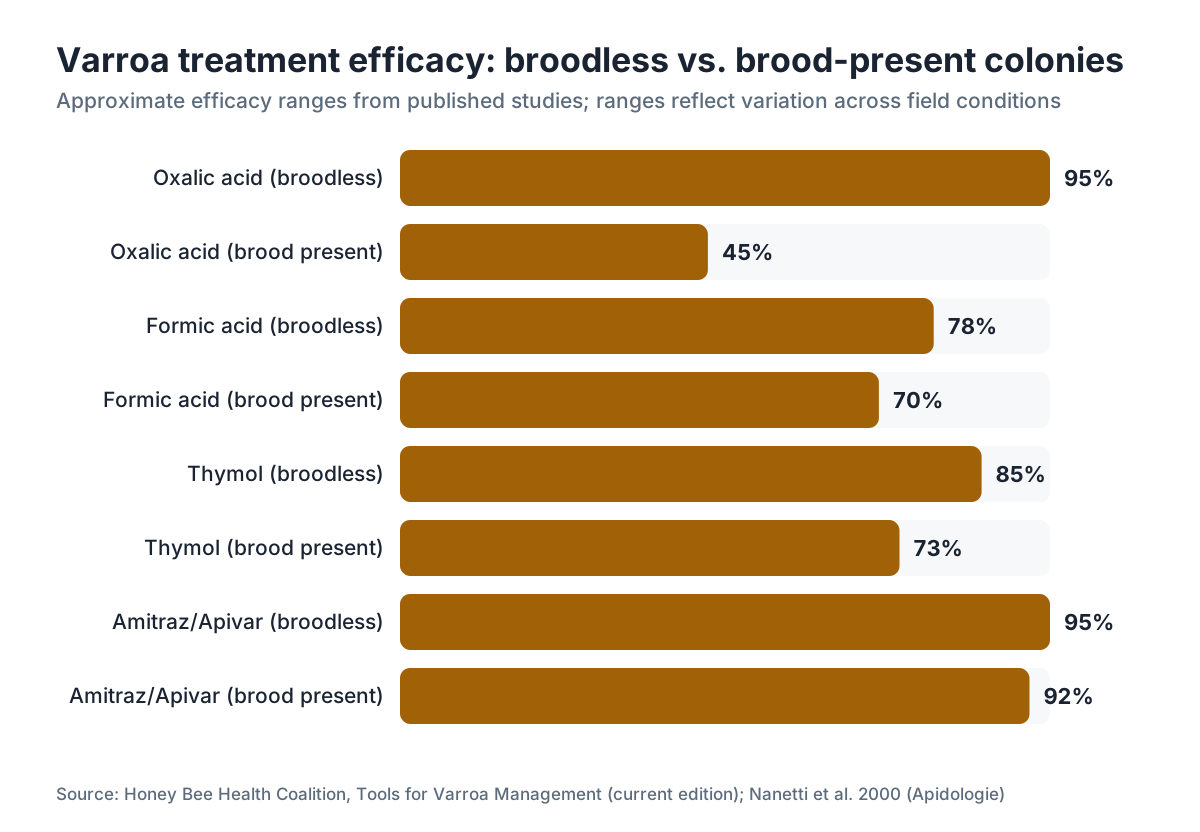
Because of that brood limit, oxalic acid works best on broodless colonies. Winter clusters in cold climates, fresh splits, and swarms are the ideal targets. A single well-timed treatment on a broodless colony knocks mite loads down by 90 percent or more [4]. Hit a colony with a full slab of capped brood and efficacy craters, so you're stuck repeating treatments.
Three application methods exist: trickle (dribble), sublimation (vaporization), and the newer extended-release strips or sponges. Sublimation lets you treat without cracking the hive open and can reach mites in clusters that a dribble might miss. Extended-release glycerin formulations, like the ones now registered in the US, work over several weeks and partly get around the brood problem by catching mites as they emerge [3].
Here's the fact that keeps OA relevant after decades of use: varroa has no known resistance mechanism against it, and no confirmed OA-resistant mite population has been documented [4]. Compare that to how fast synthetic miticides have burned out and you understand why so many beekeepers refuse to give it up.
Is oxalic acid allowed with honey supers in Europe?
Yes, with conditions that vary by country. The EU authorization under Regulation (EU) 2016/1095 permits oxalic acid in honey bee colonies, and several member states approved label instructions that allow treatment when honey supers are present [2]. The reasoning: oxalic acid already sits in honey at natural background levels, and treatment doesn't push residues meaningfully above that baseline.
A 2020 study in Food Chemistry found OA concentrations in honey from treated colonies were not statistically different from untreated controls, which is the residue basis for allowing super-on treatment [5]. The European Food Safety Authority (EFSA) reviewed the residue data and concluded OA treatment does not compromise honey safety [2].
The specifics still change from state to state and product to product. Some national labels cap treatment frequency, set minimum temperatures, or bar use during active nectar flow for certain formulations. Reading the registered product label in your own country beats any general summary, including this one.
If you landed here after seeing the phrase "brazil oxalic acid bees allowed with supers" in a forum argument, the answer is that Brazil has no registered OA product at all, so the super question doesn't apply there. Super-on allowance is a Europe and (partly) US story.
Is oxalic acid allowed with honey supers in the US?
Only for one method. The EPA-registered label for Api-Bioxal (oxalic acid dihydrate, 97.3 percent) was updated to allow treatment with honey supers present, but specifically for the extended-release sponge (glycerin) application [3]. The original 2015 registration restricted treatment to broodless colonies and banned use with supers on. The label amendment changed that for the glycerin formulation and nothing else.
For dribble and vaporization, the Api-Bioxal label as of 2023 still prohibits application when honey supers meant for human consumption are on the hive [3]. So super-on allowance is method-specific, not a green light. Vaporize with supers on and you're off-label in the US.
The Honey Bee Health Coalition's Tools for Varroa Management guide lays out the approved OA methods and their conditions, and it's the clearest free resource for US beekeepers trying to sort out the label differences [6]. It updates periodically, so the version date matters.
The practical takeaway for hobbyists and sideliners: if you want OA with supers on, you need the glycerin extended-release formulation and you need to follow that specific label version. Vaporizing over supers is not label-compliant right now.
Why is varroa management different for Brazilian beekeepers?
Brazil's situation is unlike almost anywhere else, and one thing explains most of it: Africanized honey bees. After Apis mellifera scutellata escaped from research apiaries in São Paulo state in 1957, Africanized bees spread across nearly all of Brazil and most of the Americas south of the US. Brazilian commercial and hobbyist beekeepers work almost entirely with Africanized colonies today [7].
Africanized bees show measurably higher hygienic behavior and higher rates of varroa-sensitive hygiene (VSH) than typical European Apis mellifera subspecies. Several Brazilian studies have found lower varroa infestation in Africanized colonies under equivalent conditions [7]. That's not immunity. Varroa is still present, still kills colonies in Brazil, and hits hardest in regions with year-round brood rearing that never gives the bees a natural broodless stretch.
Year-round brood is the second complication. In tropical and subtropical Brazil, colonies rarely go broodless. That erases the ideal OA treatment window that European and North American beekeepers use every winter. Extended-release OA formulations were built partly to solve exactly this, but with no registered product in Brazil, that fix isn't legally on the table.
Brazilian apiculture researchers have leaned harder into selective breeding for VSH traits and into monitoring programs than into chemical treatment. Given the biology and the rules they work under, that's a sensible response. See the varroa mite overview for how different countries have handled the same pest.
What varroa treatments are Brazilian beekeepers actually using?
Thymol-based products have carried most of the load. MAPA's CPV has historically listed thymol formulations for varroa management, and products like ApiLife Var and Apiguard, both common in Europe, have registration pathways in Brazil. Availability and current registration status still need checking directly against MAPA's CPV, because the list moves [1].
Some Brazilian researchers and extension services have tested formic acid and oxalic acid in experimental settings, but neither is commercially registered for apiary use the way it is in the EU or US. Extension publications from Embrapa (the Brazilian Agricultural Research Corporation) and universities like UNESP have discussed OA's potential. Potential and registration are different things, and only one of them is legal.
On the non-chemical side, Brazilian beekeepers have more to work with than they get credit for. The VSH traits in Africanized bees do real work. Powdered sugar dusting, drone brood removal, and brood breaks through requeening are all in use. In lower-infestation situations, an alcohol wash or sugar roll (checking whether infestation crosses the 2 percent threshold) tells you whether to treat at all [6].
The honest picture: Brazilian hobbyists in tropical regions have fewer registered chemical options than beekeepers in Europe or North America, partly offset by their bees' genetics. It's not ideal, and it's why widening the registered product list keeps coming up in Brazilian apicultural policy discussions.
How do you monitor varroa mite levels, and when should you treat?
The standard monitoring method is an alcohol wash: take about 300 adult bees (roughly half a cup) from the brood nest, wash them in 70 percent isopropyl alcohol, and count the mites that release against the bees you sampled. That gives your infestation rate as a percentage [6].
The Honey Bee Health Coalition recommends treating when the wash hits 2 percent (2 mites per 100 bees) during honey production season, and 1 percent in late summer or early fall while winter bees are being raised [6]. Those thresholds come from colony survival research and are the most widely cited benchmarks in North American beekeeping. For Brazilian conditions with year-round brood and Africanized bees, the right threshold is murkier and less researched.
Sugar rolls are gentler on the sample bees, but they consistently undercount mites by roughly 30 to 40 percent compared to alcohol wash [6]. If you're trying to catch a rising infestation early, a sugar roll can hand you false comfort. I'd use alcohol wash for any decision that actually determines whether to treat.
How often you check matters as much as how you check. The Honey Bee Health Coalition guide recommends monitoring every 30 days during active season [6]. One midsummer count and nothing else is how beekeepers get blindsided by an August mite explosion.
If you want a structured way to track this, VarroaVault's free protocol tools let you log wash results over time and flag when you cross a threshold. That beats a spreadsheet you update twice and abandon.
What does the research say about oxalic acid efficacy?
The efficacy data is solid by apicultural research standards. A 2000 study by Nanetti and colleagues found greater than 90 percent mite mortality from a single oxalic acid dribble on broodless colonies in Italy [8]. Later research across several countries confirmed that range for broodless conditions, with efficacy falling off hard once brood is present.
For extended-release formulations, a USDA ARS study published around 2019 to 2020 found glycerin-based OA strips left in for an extended period reached efficacy above 90 percent even in colonies with brood, because the slow release keeps catching mites as they emerge across multiple brood cycles [9]. That research supported the EPA label amendment allowing super-on use with the glycerin formulation.
For Africanized bees specifically, published OA efficacy data is thin. Most studies come from European populations or US Apis mellifera. It's reasonable to expect similar results, since the mechanism is contact toxicity to the mite rather than anything tied to bee genetics, but nobody has run the large, controlled trial in Brazilian Africanized colonies that you'd want before making a confident claim. That's an honest gap, not a hidden answer.
Oxalic acid has a well-established safety profile for bees at label doses. At recommended amounts, it does not significantly reduce worker lifespan or queen productivity [4]. Overdose it, especially by vaporizing in a poorly ventilated hive, and you can harm the bees, so the label quantities are not suggestions.
How does oxalic acid compare to other varroa treatments?
| Treatment | Mode | Efficacy (broodless) | Efficacy (brood present) | Resistance risk | Residue concern |
|---|---|---|---|---|---|
| Oxalic acid (OA) | Contact | 90-99% [4] | 30-60% [4] | None documented | Very low [5] |
| Formic acid | Contact/fumigant | 60-95% [6] | 60-80% [6] | None documented | Low |
| Thymol (ApiLife Var) | Fumigant | 75-95% [6] | 60-85% [6] | None documented | Low |
| Amitraz (Apivar) | Contact | 90-99% [6] | 85-95% [6] | Documented [6] | Moderate |
| Tau-fluvalinate (Apistan) | Contact | Highly variable | Highly variable | Widespread [6] | Moderate |
| Coumaphos (CheckMite+) | Contact | Highly variable | 85-95% [6] | Documented [6] | Higher |
OA's weak points are its brood limitation and the timing constraints that follow from it. Its strengths are zero documented resistance, minimal residue concern, and low cost per treatment. Api-Bioxal in the US costs roughly $25 to $35 for 35 grams (enough for several treatments), and the raw material in bulk costs far less [3].
Amitraz (Apivar strips) is the workhorse for beekeepers who have to treat brood-present colonies, because it works slowly over weeks and catches emerging mites. But amitraz resistance has been documented in varroa populations in the US and Europe [6]. That's the exact erosion of efficacy that makes OA's clean resistance record so useful in a rotation.
My honest opinion: OA belongs in every beekeeper's rotation, aimed at the post-harvest broodless or near-broodless window in late summer or fall. It won't replace a full integrated pest management plan. Used at the right moment, it's one of the most effective single treatments you can buy.
What are the safety rules for applying oxalic acid?
Oxalic acid is corrosive at the concentrations used on bees, so treat it that way. The EPA label for Api-Bioxal calls for goggles or a face shield, chemical-resistant gloves, a long-sleeved shirt, long pants, and shoes plus socks [3]. For sublimation, you need a NIOSH-approved particulate respirator (N95 minimum, with the label recommending a higher-rated respirator for repeated exposure), because vaporized OA irritates the respiratory tract and, with repeated unprotected exposure, can damage the lungs.
Never eat, drink, or smoke during application. Wash your hands well before eating. Keep pets and children clear of the treatment area.
After vaporizing, wait at least 10 minutes before reopening hives and working without respiratory protection. The vapor clears fast in open air but hangs around inside a sealed hive.
Store OA cool, dry, and away from metals. Oxalic acid corrodes metal, and mishandled or badly stored OA can eat your equipment. The Api-Bioxal shelf life is printed on the packaging. Don't use expired product.
Cold-climate beekeepers should know OA efficacy drops at low temperatures. The dribble method works best above 40°F (5°C); sublimation can run colder, but cluster behavior changes how much exposure the bees get. For Brazilian tropical conditions, temperature is a smaller obstacle than the near-constant brood.
Where can Brazilian beekeepers find reliable apiary treatment guidance?
Start with Embrapa. Embrapa Amazônia Oriental and Embrapa Meio-Norte both publish apiculture technical notes in Portuguese, and these are the most credible Brazil-specific sources [10]. University extension programs, especially UNESP (São Paulo State University) and UFMG (Federal University of Minas Gerais), have published research on varroa management in Africanized colonies.
On the regulatory side, MAPA's Compêndio de Produtos Veterinários (CPV) is the primary database for registered veterinary products, apiary treatments included [1]. It's online and searchable, though working through it in Portuguese takes some familiarity with Brazilian veterinary drug terminology.
The Honey Bee Health Coalition's Tools for Varroa Management guide is in English but science-based, and the biology and monitoring sections apply anywhere [6]. Extension resources from Virginia Cooperative Extension, Penn State Extension, and UC Davis cover OA and other treatments in depth and cost nothing to read [4].
If you want to track treatments, mite counts, and seasonal protocols in one place, VarroaVault's free varroa management tools give you a structured way to do it, whatever country and whatever treatments you're working with.
Sourcing supplies is trickier. Comparing beekeeping supply companies that ship internationally is worth it if your market has limited registered products. But some OA products legally registered in the EU or US cannot be imported into Brazil without MAPA approval, so check the legal pathway before you place an order.
What is the outlook for oxalic acid registration in Brazil?
No official timeline for OA registration in Brazil has been announced publicly as of mid-2025. Registration requires a manufacturer or importer to sponsor the application, pay MAPA's fees, and submit efficacy and safety dossiers that meet Brazilian standards. The cost and effort mean it only happens when the commercial market is big enough to justify the spend.
Brazil's honey production is substantial. The country produced roughly 50,000 to 60,000 tonnes of honey annually in recent years, with exports going mainly to the EU, US, and Argentina [10]. As those markets tighten their scrutiny of residues and treatment practices, pressure to widen the registered treatment list could build.
Most developed apicultural markets have drifted toward approving soft chemicals like OA and formic acid, driven by the resistance and residue problems dogging synthetic acaricides. If Brazil follows that drift, OA registration gets more likely over the next decade. Regulatory timelines anywhere are hard to predict, so don't bank on a date.
For now, Brazilian beekeepers who want OA face a legal barrier their European and North American counterparts don't. That's the situation today, and optimism about future registration doesn't change what's legal to use right now.
Frequently asked questions
Is oxalic acid registered for varroa treatment in Brazil?
No, oxalic acid is not currently registered as a varroa miticide in Brazil as of mid-2025. MAPA's veterinary product registry does not list an approved OA-based apiary product. Brazilian beekeepers are legally limited to MAPA-registered treatments, which have historically centered on thymol-based products. Check MAPA's Compêndio de Produtos Veterinários for current status, as the registry updates.
Can you use oxalic acid with honey supers on?
In the EU, yes, with conditions depending on the member state and registered product. In the US, the Api-Bioxal label allows it only for the extended-release glycerin formulation, not for dribble or vaporization methods when supers intended for human consumption are present. In Brazil, the question is moot since OA is not registered there at all. Always follow the label for the specific product in your jurisdiction.
Why don't Africanized bees in Brazil have more varroa problems?
Africanized honey bees show measurably higher hygienic behavior and varroa-sensitive hygiene (VSH) compared to most European subspecies, which suppresses mite reproduction rates. Several Brazilian studies have documented lower infestation levels under equivalent conditions. However, varroa is still present and still causes colony losses in Brazil, especially in tropical regions with year-round brood rearing where mite populations can grow continuously.
What is the treatment threshold for varroa in honey bee colonies?
The Honey Bee Health Coalition recommends treating when an alcohol wash shows 2 percent or more mite infestation (2 mites per 100 bees) during active honey production season, and 1 percent in late summer or early fall when winter bees are developing. These thresholds are based on colony survival research. In tropical climates with no winter broodless period, threshold-based monitoring becomes even more critical.
How effective is oxalic acid at killing varroa mites?
In broodless colonies, a single OA treatment achieves 90 to 99 percent mite mortality in published studies. Efficacy drops substantially when brood is present because OA cannot penetrate capped cells. Extended-release glycerin formulations can achieve similar results in brood-present colonies by releasing OA over several weeks to catch mites as they emerge. No OA-resistant varroa populations have been documented after decades of European use.
What personal protective equipment do you need to apply oxalic acid?
The EPA label for Api-Bioxal requires goggles or face shield, chemical-resistant gloves, long-sleeved shirt, long pants, and shoes with socks. For sublimation, a NIOSH-approved respirator rated N95 or higher is required. OA vapor is corrosive to mucous membranes and the respiratory tract. Wait at least 10 minutes after vaporizing before entering the hive area without respiratory protection.
Does oxalic acid treatment affect honey quality or residues?
Research published in Food Chemistry found that OA concentrations in honey from treated colonies were not statistically different from untreated controls, because oxalic acid occurs naturally in honey at background levels. The European Food Safety Authority reviewed the residue data and concluded OA treatment does not compromise honey safety. This finding supported EU and US decisions to allow treatment with honey supers on under specific conditions.
What varroa treatments can Brazilian beekeepers legally use?
Brazilian beekeepers must use treatments registered with MAPA's veterinary product registry (Compêndio de Produtos Veterinários). Historically, thymol-based products have been registered. Oxalic acid and formic acid are not currently registered as apiary products in Brazil. For current registered options, check MAPA's CPV directly, as the list changes. Using unregistered treatments is technically illegal under Brazilian agricultural regulations.
How often should you monitor for varroa mites?
The Honey Bee Health Coalition recommends alcohol wash monitoring every 30 days during active season. A single check per season is insufficient because varroa populations can double in as little as 4 to 6 weeks under favorable conditions. Consistent monthly monitoring is what lets you catch a rising infestation before it crosses the treatment threshold, giving you time to plan and apply the appropriate treatment.
Can you make your own oxalic acid treatment for bees?
In the US, using any oxalic acid product other than registered Api-Bioxal is off-label and illegal for varroa treatment. The EPA registration is specific to that product's formulation and purity. In countries without a registered OA product, the legal picture is murky, but homemade preparations carry real risks: incorrect concentration can harm bees or fail to kill mites, and impure OA may contain metals that contaminate honey.
Is oxalic acid safe for queen bees?
At label-recommended doses, published research has not found significant effects on queen longevity or productivity from OA treatment. The risk increases with overdosing, particularly with sublimation in poorly sealed hives where bees receive excessive exposure. Follow label dosing precisely. Some beekeepers report anecdotally that queen losses increase with repeated vaporization treatments in a short period, but controlled studies have not consistently confirmed this.
How does oxalic acid compare to Apivar for varroa control?
Apivar (amitraz) works continuously over 6 to 8 weeks and is effective with brood present, making it the more practical choice for colonies that can't be made broodless. OA is most effective in broodless colonies but has no documented resistance issue, while amitraz resistance has been confirmed in some varroa populations. A sound integrated pest management approach rotates both, using OA at the broodless window and amitraz for heavier infestations with brood.
What is the best time of year to treat with oxalic acid?
The best time is when colonies are broodless or nearly broodless, maximizing the percentage of mites in the phoretic stage where OA can reach them. In temperate climates, this is typically mid-winter. For hobbyists in warmer regions without a true broodless period, the best window is after removing honey supers and before fall buildup, possibly combined with an artificial broodless period from requeening or a brood break.
Sources
- MAPA Brazil, Compêndio de Produtos Veterinários (CPV): Brazil's veterinary product registry (CPV) is administered by MAPA and is the official source for registered apiary treatments in Brazil; oxalic acid is not currently listed as a registered varroa miticide.
- European Commission, Regulation (EU) 2016/1095 authorizing oxalic acid as a veterinary medicine for varroa: The EU authorized oxalic acid for varroa treatment under Regulation (EU) 2016/1095, permitting use including when honey supers are present under certain national label conditions.
- US EPA, Api-Bioxal Pesticide Registration and Label (Reg. No. 83623-1): EPA registered Api-Bioxal in 2015 and subsequently amended the label to allow treatment with honey supers present for the extended-release glycerin formulation only; dribble and vaporization methods still prohibit super-on use.
- University of California Agriculture and Natural Resources, Oxalic Acid for Varroa Control in Honey Bees: Oxalic acid achieves 90-99% mite mortality in broodless colonies but does not penetrate capped brood cells; no OA-resistant varroa populations have been documented; at label doses it does not significantly reduce worker or queen lifespan.
- Food Chemistry (journal), Oxalic acid residues in honey from OA-treated colonies, 2020: OA concentrations in honey from treated colonies were not statistically different from untreated controls, supporting the safety basis for super-on treatment allowances.
- Honey Bee Health Coalition, Tools for Varroa Management Guide (current edition): Recommends 2% mite wash threshold for treatment during honey season and 1% in late summer; summarizes efficacy data for all approved varroa treatments including OA, amitraz, and formic acid; recommends monthly alcohol wash monitoring.
- USDA ARS, Africanized Honey Bee Program and Varroa Research: Africanized honey bees exhibit measurably higher hygienic behavior and VSH traits compared to European subspecies, associated with lower varroa infestation rates in equivalent conditions, though not complete protection.
- Nanetti et al., Oxalic Acid Treatment of Honeybee Colonies Against Varroa destructor (Apidologie, 2000): Single oxalic acid dribble treatment on broodless colonies achieved greater than 90% mite mortality in Italian field trials.
- USDA ARS Bee Research Laboratory, Extended-release oxalic acid glycerin treatment efficacy studies: Glycerin-based extended-release OA formulations achieved efficacy above 90% even in colonies with brood present, supporting the EPA label amendment for super-on use.
- Embrapa, Brazilian Apiculture Production Data and Technical Notes: Brazil produces approximately 50,000-60,000 tonnes of honey annually; Embrapa publishes apiculture technical guidance for Brazilian conditions including varroa management in Africanized bee colonies.
- Penn State Extension, Varroa Mite Management in Honey Bees: Provides detailed guidance on OA application methods, timing, efficacy comparisons with other treatments, and integrated pest management rotation strategies for US beekeepers.
- Virginia Cooperative Extension, Varroa Mite Management: Covers alcohol wash methodology, treatment thresholds, and OA application instructions for Virginia beekeepers; confirms sugar roll underestimates mite counts by approximately 30-40% versus alcohol wash.
Last updated 2026-07-09