Best oxalic acid 12V vaporizer for bees: a practical buyer's guide
TL;DR
- The Varrox Eddy and Mann Lake Pro Vaporizer are the most reliable 12V oxalic acid vaporizers for hobbyists and sideliners.
- Expect to spend $150 to $300.
- Heat-up time, bowl capacity, seal design, and EPA label compliance separate the good units from the junk.
- A single treatment on a broodless colony kills over 90% of mites.
Why does the vaporizer you pick actually matter for mite control?
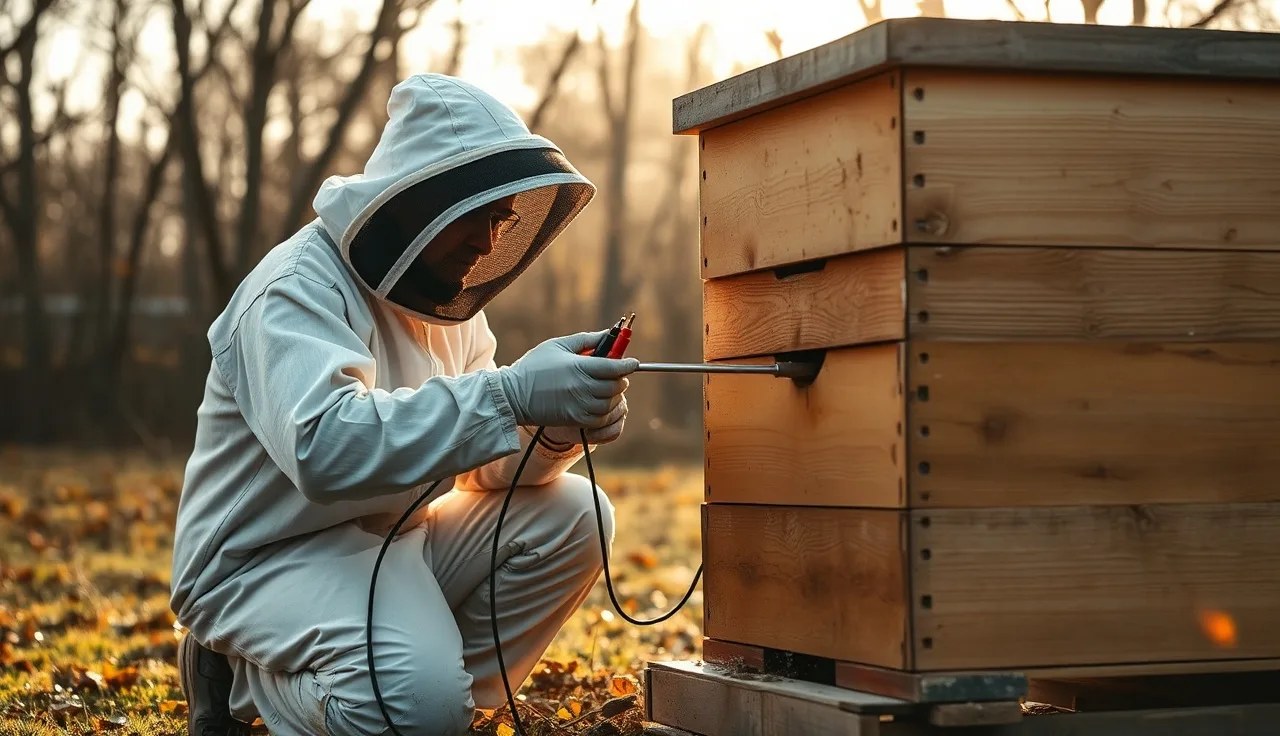
Oxalic acid vapor kills phoretic varroa mites riding on adult bees. It does not touch mites hiding under capped brood. That one biological fact shapes how you use a vaporizer and, honestly, which one is worth buying.
A unit that heats unevenly, dumps its whole dose at once, or leaks vapor before the bowl gets hot gives you sloppy results. The chemistry is fine. The delivery is the problem. The Honey Bee Health Coalition's Varroa Management Guide notes that efficacy depends heavily on getting vapor distributed through the whole hive [1].
A 12V unit runs off a car battery or a dedicated deep-cycle battery. That matters if you're treating in the field with no wall outlet nearby. Most sideliners hitting 20 to 100 hives in a session run a dedicated battery and recharge overnight. The draw on most 12V vaporizers is 8 to 15 amps for 2 to 3 minutes per hive, so a 35 amp-hour battery covers roughly 10 to 15 treatments before the voltage sags enough to hurt performance.
A good vaporizer gives you repeatable, documentable mite kills. A bad one wastes your oxalic acid, your time, and eventually your colonies.
What oxalic acid products are legally approved for vaporization in the US?
Only oxalic acid dihydrate formulations registered with the EPA under Section 3 of FIFRA are legal to vaporize in the United States [8]. The two main registered products are Api-Bioxal (EPA Reg. No. 84031-3) and, since 2022, a generic OA product sold by several suppliers. The label is the law. If your OA product's label doesn't list vaporization as an approved method, you can't legally use it that way.
Api-Bioxal's label specifies 1 gram of oxalic acid dihydrate per brood box, with no more than one treatment per year when brood is present, or up to three treatments at 7-day intervals when no brood is present [2]. Read the current label every season, because the EPA does update it.
The EPA's 2015 approval of Api-Bioxal for vaporization ended the dribble-only era. The Honey Bee Health Coalition's guidance, updated in 2022, calls vaporization the highest-efficacy OA delivery method when applied to broodless colonies [1].
Whatever vaporizer you buy, it has to heat exactly 1 gram of OA per application to stay label-compliant. Most commercial 12V units ship with a spoon calibrated for 1 gram of Api-Bioxal. Check that yours does.
What are the best 12V oxalic acid vaporizers available right now?
Here's an honest rundown of the units you'll actually find in stock at US suppliers. Prices reflect mid-2025 retail and will drift.
| Vaporizer | Price (approx.) | Heat-up time | Bowl material | Cord length | Notes |
|---|---|---|---|---|---|
| Varrox Eddy (Heilyser) | $270 to $300 | ~2 min | Stainless/aluminum | 6 ft | Swiss-made, fan-assisted distribution, the most consistent unit I've seen cited |
| Mann Lake Pro Vaporizer | $150 to $175 | ~2.5 min | Cast aluminum | 5 ft | Budget-friendly, no fan, simple probe design |
| Blythewood Bee Company ProVap 110 (12V version) | $180 to $220 | ~2.5 min | Stainless | 6 ft | Well-liked in the US hobbyist crowd; Blythewood also sells the commercial ProVap 110 for 110V AC |
| Generic import vaporizer (BeeHive.com and others) | $80 to $130 | ~3 min | Aluminum | 4 ft | Works, but QC swings batch to batch; buyer beware |
| ApiVap (Beeologics) | $220 to $260 | ~2 min | Stainless | 6 ft | Popular with sideliners; digital timer built in |
The Varrox Eddy gets more consistent endorsements from university extension programs than any other unit I've seen cited [3]. It costs real money, but it heats evenly, the fan pushes vapor into the cluster better than passive units do, and the seal fits Langstroth bottoms well.
Treating fewer than 30 hives and counting every dollar? The Mann Lake Pro Vaporizer is a fine starting point. It's a simple probe style, meaning you slide it through the entrance or a bottom board opening. It works if you're diligent about sealing gaps with a towel.
The Blythewood ProVap 110 runs on 110V AC and aims at larger operations with generator access. Blythewood also makes a 12V version. Both have a following, and the company's support is genuinely responsive, which matters when something goes wrong mid-season.
For where to buy, check our guide to beekeeping supply companies and look for vendors that post current EPA label compliance info on their product pages.
What features separate a great 12V vaporizer from a mediocre one?
Heat-up time and temperature consistency top the list. You want a unit that reaches the sublimation temperature of oxalic acid (around 157°C, or 315°F) reliably and holds it long enough to fully vaporize your 1-gram dose without leaving wet residue in the bowl [4]. Residue means incomplete vaporization, which means lower efficacy and slow acid damage to the bowl.
Bowl material matters. Cast aluminum and stainless steel both work. Cheap stamped aluminum warps with repeated heating and cooling. Check the bowl thickness on any unit you're eyeing. If the vendor doesn't list it, ask.
The seal between the vaporizer probe and your hive entrance matters more than most beginners realize. Vapor escaping the entrance before it circulates through the cluster is vapor that kills nothing. Good sealing can be the difference between 85% and 95%-plus mite kill [1]. Some units include an integrated entrance plug. Others leave you stuffing a shop towel in the gap. I prefer integrated seals.
Cord length and cable gauge decide whether you can reach hives without dragging the battery every few feet. Six feet of 10-gauge cable is comfortable. Four feet of 14-gauge causes voltage drop and longer heat-up times when your battery isn't topped off.
Ease of cleaning is the last one. OA residue builds up in the bowl over time. Removable bowls take seconds to clean. Welded-in, oddly shaped bowls are a pain.
How do you actually use a 12V vaporizer safely and effectively?
Safety comes first, because oxalic acid vapor is a serious respiratory and eye irritant. The EPA label requires a NIOSH-approved respirator rated for acid gases (an OV/P100 combination cartridge respirator, not a dust mask) and splash-proof goggles [2]. Chemical-resistant gloves are smart too. This is non-negotiable. Nobody thinks they'll inhale the vapor until they do.
Step-by-step for a broodless treatment:
- Close all hive entrances and seal any large gaps. A folded towel at the bottom board entrance works if your vaporizer has no built-in seal.
- Measure exactly 1 gram of Api-Bioxal (or your registered OA product) with the calibrated spoon that came with your unit.
- Load the bowl. Connect to your 12V battery. Most units use alligator clips; polarity matters, so follow the wiring diagram on the unit.
- Time the heat cycle per the vaporizer's instructions, usually 2 to 3 minutes for the vapor to form and distribute.
- Leave the hive sealed at least 10 minutes after the cycle ends. Vapor needs time to reach every bee in the cluster.
- Pull the vaporizer, unseal entrances, and log the treatment: date, hive ID, product lot number, and mite wash counts before and after.
For multiple brood boxes, move the probe to each box or use a fan-assisted unit that pushes vapor up through the stack. Oregon State University Extension recommends confirming that vapor visibly enters all hive bodies before you move on [3].
You'll find a protocol template and mite wash calculator on VarroaVault's free varroa mite tools page, which pairs well with a treatment log.
How many treatments do you need, and when should you treat?
Timing decides everything with oxalic acid vaporization. The Honey Bee Health Coalition recommends treating broodless colonies in late fall or early winter, when temperatures sit consistently below 50°F and the colony has naturally stopped raising brood [1]. One well-executed treatment of a broodless colony can knock down over 95% of mites.
If brood is present, you need a series of treatments to catch mites as they emerge from capped cells. The Api-Bioxal label allows up to three treatments at 7-day intervals when brood is present [2]. Even three won't match one broodless treatment, because you're always chasing mites cycling in and out of the brood.
Some beekeepers force broodlessness by caging the queen for about 24 days in spring or fall, then treating once. It's common among sideliners who need consistent results across many hives. More management time, fewer chemical inputs.
The University of Minnesota Bee Lab's research points to treating in late August or September in northern states, to protect the long-lived winter bees from high mite loads before they emerge [5]. Winter bees exposed to heavy mite loads early in life die sooner and drive spring dwindling.
Counting mites before and after treatment is the only way to know if your vaporizer and protocol actually work. A 3% or higher mite wash before winter is a red flag no matter what you treated with [1].
Is a 12V vaporizer better than a 110V model for a small operation?
It depends entirely on your setup. A 12V unit runs anywhere there's a battery. No generator, no extension cord logistics, no outlet hunting. For hives spread across multiple yards, 12V is simpler and more portable.
A 110V unit like the Blythewood ProVap 110 heats faster, handles high-volume sessions without voltage sag, and often costs less per treatment at scale because the unit outlasts several battery cycles. If you already run a generator for other farm equipment, the 110V option is worth a serious look.
The Blythewood ProVap 110 has a good name in the commercial sideline space and runs around $180 to $230 for the 110V version. It's a no-frills workhorse.
A hobbyist with 5 to 15 hives and no generator should get a 12V unit. A sideline operation of 50-plus hives with steady yard access and a generator might do better economically with 110V. For everything in between, the honest answer is that either works.
How much does a 12V oxalic acid vaporizer cost, and what's the total cost of treatment?
The vaporizer itself runs $80 to $300 depending on brand and features (see the table above). Plan to replace heating elements every 2 to 4 years with heavy use; elements run $30 to $60.
Api-Bioxal costs about $35 to $50 for a 35-gram packet, which is 35 treatments at 1 gram each. That's roughly $1 to $1.50 per treatment in product cost [6]. A 12V deep-cycle battery good enough for field use costs $60 to $100 and lasts several seasons.
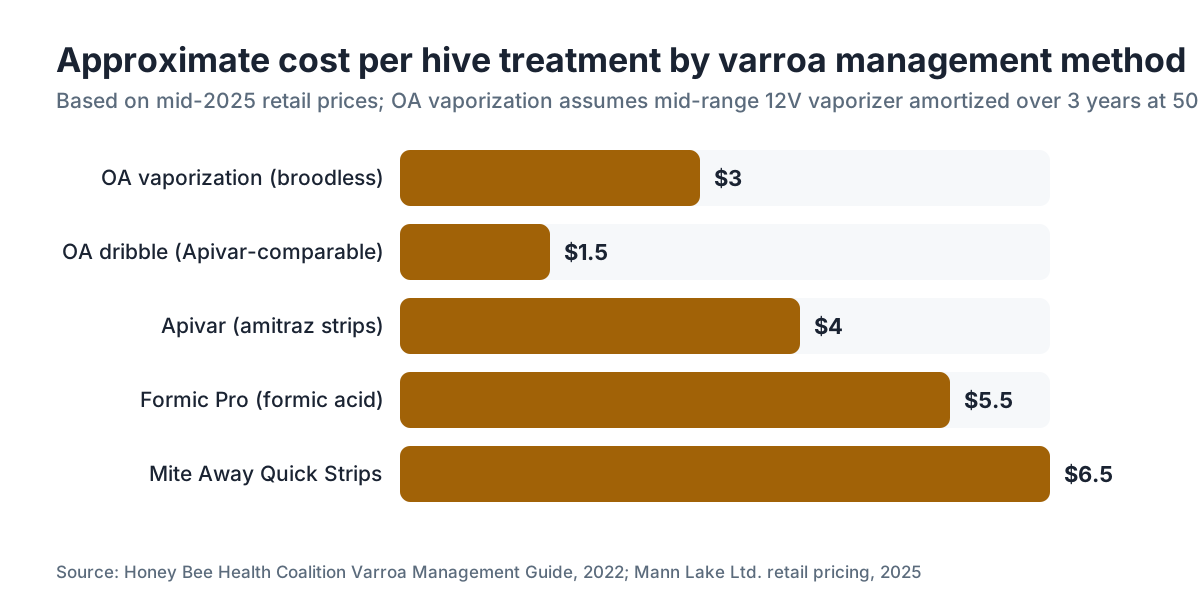
Here's the math on total cost per treatment over three years, assuming a mid-range vaporizer ($200) and 50 hive-treatments per year:
- Vaporizer amortized: $200 / 3 years / 50 treatments = $1.33 per treatment
- Api-Bioxal: $1.25 per treatment
- Battery amortized: under $0.20
- Total: roughly $2.75 to $3.00 per hive treatment
For comparison, Apivar strips run about $3.50 to $4.50 per hive per treatment and need a 6 to 8 week contact period. Oxalic acid vaporization, especially for broodless winter treatments, is one of the cheapest effective varroa tools a hobbyist can buy [1].
If you want to compare shipping costs across vendors, our free shipping honey bee supply companies guide lists vendors with free shipping thresholds, which can change the math on a single vaporizer purchase.
What are common vaporizer problems and how do you fix them?
The most common issue is incomplete vaporization. You heat the unit, wait, open the hive, and find wet OA crystals still in the bowl. Usually that means low battery voltage. Check your battery with a multimeter before a session. You want 12.4V or higher at rest. Below 12V, most vaporizers won't heat fast enough.
Second most common: vapor leaking out the entrance before it distributes. Seal better. Use a dedicated entrance block, a folded microfiber towel, or foam weatherstripping cut to fit. This matters double on hives with bottom-screen boards. Close the sticky board insert or tape cardboard underneath.
Bowl corrosion from repeated acid exposure is real. After every session, heat the empty bowl for 30 seconds to burn off residue, let it cool, then brush lightly with a stiff wire brush. Skip the water. Water causes more corrosion.
Alligator clip connections that corrode or loosen cause intermittent heating. Clean the battery terminals and clips with a wire brush before each session. A failing connection mid-treatment means incomplete mite kill, and you may never know it happened.
If your vaporizer keeps underperforming even with a fresh battery and clean connections, test it at home with a cheap oven thermometer near the bowl. You should see real heat within 90 seconds.
Are there safety and legal requirements you need to know before buying?
Yes, and skipping them is a real mistake. Federal law (FIFRA) requires you to use only EPA-registered oxalic acid products, follow the label's dosage and application instructions exactly, and wear the PPE listed on the label [8]. For Api-Bioxal vaporization, that's a full-face respirator with acid gas/P100 cartridges, chemical-resistant gloves, and eye protection.
Some states require a pesticide applicator license or registration to vaporize oxalic acid even on your own colonies. California, for one, requires a Qualified Applicator License or a Restricted Materials Permit for certain uses. Check with your state department of agriculture before you treat. The National Pesticide Information Center (NPIC) at Oregon State University keeps state-by-state guidance [7].
Keep a treatment log: date, hive ID, product EPA registration number, lot number, amount applied, applicator name. If you ever face a colony loss or an inspection, that log protects you.
Store Api-Bioxal cool and dry, away from children. Unopened, it lasts about 3 years. Once opened, use it within a season.
Never treat colonies inside a building or enclosed structure. Oxalic acid vapor in a confined space is a serious inhalation hazard. Outdoors or well-ventilated open structures only.
Which vaporizer would I actually buy, and what's my honest recommendation?
If I had 5 to 30 hives and was buying my first vaporizer today, I'd spend the $270 to $300 on the Varrox Eddy. The fan-assisted distribution beats passive probe units, and the build quality means I'm not swapping heating elements every 18 months. It's a tool, not a consumable.
On a tight budget, the Mann Lake Pro Vaporizer at $150 to $175 is a legitimate pick. It works. It's not fancy. No fan, so you need to be careful about sealing the hive and waiting long enough afterward. Beekeepers have run it successfully for years.
Sideliners running 50-plus hives, especially with a generator, should look at the ProVap 110 from Blythewood Bee Company or a similar 110V commercial unit. Higher, steadier heat output pays off when you're treating hive after hive for hours.
VarroaVault's free protocol tools (mite wash calculators, treatment scheduling templates) are worth using alongside any vaporizer you pick. Getting the hardware right is half the job. The protocol is the other half.
Here's the truth: varroa management is the single biggest factor in colony survival for most beekeepers. If you want the full biology of what you're fighting, the varroa mite overview on this site is solid grounding before you treat.
Frequently asked questions
Can I use any oxalic acid in a 12V vaporizer, or does it have to be Api-Bioxal?
In the US, you must use an EPA-registered oxalic acid product with vaporization listed as an approved application method on the label. Api-Bioxal (EPA Reg. No. 84031-3) is the most widely available registered product. Generic OA registered after 2022 may also be legal; check that vaporization appears explicitly on the label. Industrial or food-grade OA not registered under FIFRA is not legal to use, even in a registered vaporizer.
How long does a 12V battery last when vaporizing multiple hives?
A fully charged 35 amp-hour 12V battery handles roughly 10 to 15 hive treatments before voltage drops enough to affect performance, assuming 2 to 3 minutes per hive at 8 to 12 amp draw. A larger 55 to 100 Ah deep-cycle battery extends that to 20 to 40 treatments. Watch voltage with a multimeter; below 12.0V, heat-up times climb and you risk incomplete vaporization and weaker mite kill.
What's the difference between the Varrox Eddy and a standard probe-style vaporizer?
The Varrox Eddy has a small built-in fan that blows vapor from the bowl up through the hive body, improving distribution into the cluster and between boxes. Standard probe vaporizers rely on passive vapor diffusion from the heat source alone. In practice, the fan makes a measurable difference on multi-box colonies or when bees cluster tightly in winter. It's the main reason the Eddy costs roughly $100 more than comparable probe units.
How do I know if my oxalic acid treatment actually worked?
Run a mite wash (alcohol wash or sugar roll) on a 300-bee sample 48 to 72 hours after treatment and compare to your pre-treatment count. A well-executed broodless vaporization should cut mite load by 90 to 97%. If you see less than 80% reduction, check your sealing, battery voltage, and whether brood was actually absent. The Honey Bee Health Coalition's Varroa Management Guide has a free mite-counting protocol.
Is vaporizing safer for bees than Apivar strips or formic acid?
Oxalic acid vaporization, applied per label, has low bee toxicity at the label dose. It doesn't leave harmful wax residues at recommended rates, per EPA review data. Formic acid can cause brood loss and queen death at high temperatures. Apivar (amitraz) leaves wax residues with longer-term accumulation concerns. No treatment is risk-free, but OA vaporization has one of the better bee-safety profiles when used correctly.
Can you vaporize oxalic acid in a hive with honey supers on?
The Api-Bioxal label prohibits vaporization when honey supers intended for human consumption are present. Remove supers before treating and wait to replace them until the vapor has fully dissipated, which takes at least a few hours. Treating with supers on is a label violation and could leave OA residues in harvestable honey above the EPA tolerance level of 900 ppb.
How often should I replace the heating element in my 12V vaporizer?
Most manufacturers recommend inspecting the element every 50 to 100 uses and replacing it when you see pitting, thinning, or uneven heating. In practice, a hobbyist treating 5 to 15 hives a few times per year may get 3 to 5 years from an element. Sideliners doing hundreds of treatments a year may replace elements yearly. Replacement elements for most major brands cost $30 to $60 and come from the manufacturer or beekeeping supply vendors.
Do I need a pesticide license to use an oxalic acid vaporizer?
It depends on your state. Federally, you can use EPA-registered pesticides on your own property without a license for personal use, but some states add requirements, especially for OA vaporization, which some classify as a restricted-use application method. California is one example where licensing or permitting may apply. Check with your state department of agriculture or the National Pesticide Information Center (npic.orst.edu) before treating.
What PPE do I actually need when vaporizing oxalic acid?
The Api-Bioxal label requires a NIOSH-approved respirator with acid gas and P100 particulate cartridges (not a dust mask), chemical-resistant gloves, and protective eyewear. A full-face respirator that combines eye protection and cartridge filtration is the most practical choice. Inhaling oxalic acid vapor causes respiratory irritation and possible long-term lung damage. This is one of the few beekeeping safety steps where cutting corners carries a real personal health cost.
Can I vaporize in cold weather, and does temperature affect efficacy?
Yes, and cold weather is often ideal. Oxalic acid vaporization works best on broodless colonies, which usually happen in fall and winter when temperatures drop below 50°F. Cold doesn't hurt vaporizer performance as long as your battery is charged. Sealed, clustered colonies may actually hold vapor longer in cold conditions, which can improve contact time with phoretic mites on adult bees.
What's the best 12V vaporizer for someone treating only 5 to 10 hives?
At that scale, the Mann Lake Pro Vaporizer ($150 to $175) is a practical, honest choice. It's simple, it works, and parts are easy to find. If your budget allows and you want better vapor distribution plus a longer service life, the Varrox Eddy is worth the $270 to $300 even at small scale. Avoid the cheapest import units under $100; quality control problems lead to inconsistent treatments and inconsistent mite kills.
How does the Blythewood Bee Company ProVap 110 compare to 12V options?
The Blythewood ProVap 110 is a 110V AC unit built for higher-volume operations. It heats faster and more consistently than most 12V units because battery voltage never limits it. Sideliners rate it well. For a hobbyist without generator access, a 12V unit is more practical. For operations over 30 to 50 hives with power access, the ProVap 110's steady performance and durability are worth weighing against 12V options.
How do I treat a two-story hive with a 12V vaporizer?
For a standard two-box Langstroth hive, most beekeepers insert the vaporizer into the bottom entrance, seal the entrance and any gaps, and let vapor rise naturally through both boxes. A fan-assisted unit like the Varrox Eddy works better here because it actively pushes vapor upward. You can also treat each box separately by temporarily splitting the hive bodies, though that's more disruptive to the colony and adds time.
Sources
- Honey Bee Health Coalition, Varroa Management Guide (2022 edition): Vaporization is the highest-efficacy OA delivery method when applied to broodless colonies; efficacy depends heavily on adequate vapor distribution; 3% or higher mite wash before winter is a red flag; OA vaporization cost-effectiveness comparison
- EPA, Api-Bioxal Product Label (EPA Reg. No. 84031-3): Api-Bioxal label specifies 1 gram OA dihydrate per brood box, up to one treatment per year with brood present, up to three treatments at 7-day intervals broodless; PPE requirements for vaporization; prohibition on treating with honey supers present
- Oregon State University Extension, Honey Bee Health Resources: Varrox Eddy endorsement in university extension context; recommendation to verify vapor enters all hive bodies before moving on
- Pennsylvania State University Extension, Varroa Mite Management: Oxalic acid sublimation temperature approximately 157°C (315°F); incomplete vaporization leaves wet residue and reduces efficacy
- University of Minnesota Bee Lab, Varroa Management Recommendations: Treating in late August or September in northern states protects long-lived winter bees from high mite loads; winter bees with high early-life mite exposure have shorter lifespans
- Mann Lake Ltd., Api-Bioxal 35g Product Listing: Api-Bioxal 35-gram packet pricing approximately $35, $50 retail, yielding 35 one-gram treatments
- National Pesticide Information Center (NPIC), Oregon State University: State-by-state pesticide applicator licensing requirements; California licensing/permitting for OA vaporization
- US EPA, FIFRA Section 3 Registration Requirements: Federal law requires only EPA-registered OA products with vaporization on the label may be legally vaporized; label is the law under FIFRA
- USDA AMS, National Honey Report and Bee Health Data: Context for colony loss rates and varroa as primary driver of US colony losses
- Bee Informed Partnership, Colony Loss Survey 2023 to 2024: Varroa management treatment type and frequency data from national beekeeper survey; treatment efficacy benchmarks
Last updated 2026-07-09