Varroa mite: the complete guide to what it is and how to fight it
TL;DR
- Varroa destructor is a parasitic mite that feeds on developing and adult honey bees, spreading viruses that collapse colonies.
- Untreated, most colonies die within 1 to 3 years.
- Effective management pairs alcohol-wash monitoring (act at 2 mites per 100 bees) with oxalic acid, formic acid, or synthetic miticides, timed to the colony's brood cycle.
What exactly is a varroa mite?
Varroa destructor is an external parasitic mite that can only reproduce inside a honey bee colony. It's visible to the naked eye, roughly 1.1 mm wide and 1.6 mm long, reddish-brown, and shaped like a flattened oval. If you've ever seen a tiny crab-like speck clinging to the thorax of a bee, you've seen one [1].
The mite originated in Asia on Apis cerana, the eastern honey bee, which evolved alongside it over millions of years and has behavioral defenses like grooming and hygienic brood removal that keep populations in check. When Varroa jumped to Apis mellifera, the western honey bee, sometime in the mid-20th century, it found a host with almost no natural resistance. The first confirmed detection in the United States came in 1987 [2].
Today Varroa is present on every continent except Australia. Every hobbyist and beekeeping species enthusiast keeping Apis mellifera colonies anywhere in the continental U.S. is managing it, whether they know it or not.
The mite's scientific name changed in 2000. For decades it was called Varroa jacobsoni, but researchers found that the bee-collapsing strain is a distinct species. The correct name is Varroa destructor, which is bleak and accurate.
What do varroa mites feed on?
Varroa mites feed mostly on the fat body tissue of honey bees, not blood. For a long time the textbook answer was "bee blood (hemolymph)," but a 2019 study from the University of Florida rewrote that. Ramsey et al. found that Varroa primarily feeds on the fat body, an organ that handles energy storage, immune function, detoxification, and the production of vitellogenin, a protein tied to brood nutrition and worker longevity [3].
This explains why varroa-infested bees are so wrecked. A bee that has had fat body tissue consumed is immunosuppressed, shorter-lived, and less able to feed larvae. The mite doesn't take a blood meal and leave. It causes lasting organ damage.
Outside a capped cell, phoretic mites (mites riding adult bees between reproductive cycles) keep feeding on the same bee or move to other adults. A single mite on an adult bee feeds continuously during this phoretic phase, which lasts roughly 4 to 13 days depending on brood availability [4].
Feeding is also the main way bee viruses spread. Deformed Wing Virus (DWV) is the most damaging, causing bees to emerge with shriveled, useless wings. Varroa doesn't create DWV, but it injects the virus straight into bee tissue and amplifies viral loads to levels that would rarely happen otherwise. A colony with high mite loads almost always has a massive DWV problem.
How do varroa mites reproduce and why does that matter for treatment?
Understanding the reproductive cycle is the whole game. You can't time treatments intelligently without knowing this.
A mated foundress mite enters a bee larva's cell just before capping, about 20 hours before the cell is sealed. She hides under the larval food. Once the cell is capped, she begins laying eggs on the larva itself, using it as both a feeding platform and a nursery. The first egg is usually unfertilized and develops into a male. The rest are fertilized females. The male mates with his sisters inside the cell before they emerge with the bee [4].
Worker brood cells stay capped for about 12 days. In that time, a foundress can produce 1 to 2 reproductive daughters. Drone brood cells stay capped for about 14 to 15 days, which gives the mite more time and a higher reproductive rate. A single foundress in drone brood can produce 2 to 3 reproductive daughters. That's why colonies raising lots of drones show mite population spikes, and why some management strategies use drone brood removal as a trap.
Here's the implication that matters. A large fraction of mites at any given time sit inside capped cells where most treatments can't reach them. Oxalic acid, for example, kills phoretic mites but has almost no effect on mites in capped brood. That's why oxalic acid works best during a broodless period, and why formic acid (which penetrates cappings to some degree) is useful during the brood season [5].
A colony with a moderate spring infestation can reach catastrophic levels by late summer if left alone. Mite populations can double every 4 to 6 weeks during peak brood season. That's not an exaggeration. It's the math of exponential growth with a short generation time.
Where are varroa mites found geographically and inside the hive?
Varroa destructor is found across all of North America, Europe, Asia, Africa, and South America. The only major holdout is Australia, along with a handful of isolated island populations [1]. In the U.S., USDA APHIS confirms it is established in all 48 contiguous states and Hawaii [2]. If you keep bees in the continental U.S., your hives have varroa or will soon.
Inside the hive, mites concentrate where brood is densest. During brood season, roughly 80 to 90 percent of the mite population sits inside capped cells at any given moment, mostly in worker brood but disproportionately in drone brood [4]. The remaining 10 to 20 percent are phoretic, riding adult bees.
Phoretic mites prefer younger nurse bees over foragers, because nurse bees stay in constant contact with open brood and offer more chances to enter cells. So the center of the brood nest, where nurses cluster, is where mite density on adult bees runs highest.
Mites spread between colonies several ways: drifting bees and drones carrying mites to neighboring hives, swarms, the beekeeper moving frames between colonies, and robbing where bees from one colony raid another. A beekeeper two miles away who doesn't treat is a reinfestation source for everyone nearby. That's one reason regional beekeeper associations push collective management programs.
How do you monitor varroa mite levels?
You cannot manage what you don't measure. Monitoring is the step most hobbyists skip, and it's why they lose colonies in September without understanding why.
The two standard monitoring methods are the alcohol wash and the sugar roll. The Honey Bee Health Coalition, whose treatment guidelines are the closest thing the U.S. has to an industry standard, recommends the alcohol wash as more accurate [5]. You collect roughly 300 bees (about half a cup) from the brood nest area, drop them in alcohol, shake to dislodge mites, and count the mites through a mesh. Your infestation rate is mites per 100 bees.
The action threshold the Coalition recommends is 2 mites per 100 bees during the honey production season and 2 per 100 going into fall, when you're rearing the long-lived winter bees. Some researchers argue the threshold should drop lower in late summer given how fast populations grow [5].
Sugar rolls are less accurate because sugar doesn't kill mites, and some escape before you count. They're fine for a quick field check but shouldn't replace alcohol washes for treatment decisions.
The USDA and most state extension services recommend monitoring every 30 days during brood season. Monthly counts let you see the population curve before it gets away from you. One count in spring and one in fall is not enough.
Eyeballing bees for mites is not a monitoring method. By the time you can casually spot mites on bees during a normal inspection, you almost certainly have a serious infestation. Count. Use numbers.
What are the varroa mite treatment options and how do they compare?
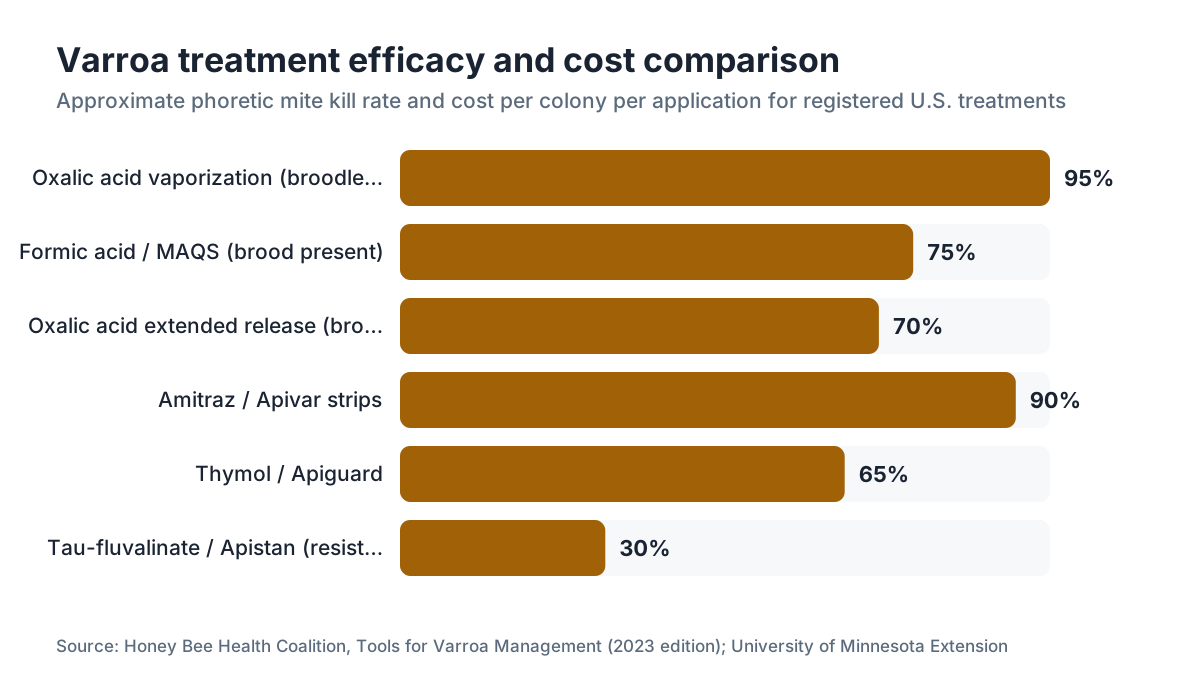
Four main categories of registered varroa treatments are available in the U.S.: oxalic acid, formic acid, thymol, and synthetic acaricides (amitraz and fluvalinate/coumaphos). Each has a different mechanism, temperature range, brood penetration, and resistance profile [6].
Here's a real comparison:
| Treatment | Active Ingredient | Brood Penetration | Temp Range | Approx. Cost per Colony | Resistance Reported |
|---|---|---|---|---|---|
| Oxalic Acid (dribble/vaporization) | Oxalic acid | No (phoretic only) | Below 50°F best (vaporization); 40-80°F (dribble) | $0.50-$2 | None confirmed |
| Api-Bioxal (OA extended release) | Oxalic acid + glycerin | Limited | 50-85°F | $5-$10 | None confirmed |
| Mite Away Quick Strips (MAQS) | Formic acid | Yes (limited) | 50-85°F | $10-$14 | None confirmed |
| ApiLife VAR / Apiguard | Thymol | Minimal | 65-95°F | $5-$12 | None confirmed |
| Apivar | Amitraz | No | 50-85°F | $8-$16 | Reported in some regions |
| Apistan / CheckMite+ | Tau-fluvalinate / Coumaphos | No | Various | $6-$14 | Widespread |
Prices above are rough ranges as of 2024-2025. They vary by supplier and order size [6][7].
Oxalic acid vaporization (using a registered vaporizer with Api-Bioxal) is the approach most widely recommended for broodless or near-broodless periods. It leaves no residue in wax, mites have shown no resistance, and phoretic mite kill often runs above 90 percent in broodless conditions [5]. The extended-release oxalic acid strips (Api-Bioxal in glycerin, applied to frames) work during the brood season because they release slowly over 4 to 6 weeks, hitting mites as they emerge from cells.
Formic acid (MAQS or Formic Pro) is the only organic option that reaches mites under cappings, which makes it valuable in late summer when you want to treat without pulling honey supers. It's temperature-sensitive and can cause brood loss and queen loss if used carelessly above 85°F.
Amitraz (Apivar strips) is highly effective and easy to use, but resistance has been documented in some European and North American populations, so rotate away from it periodically [8]. It also can't be used with honey supers on.
Fluvalinate and coumaphos resistance is widespread enough that most current guidance treats those products as last resorts or drops them entirely [5].
For a practical 2024 protocol, most U.S. extension apiculturists recommend something like this: an oxalic acid vaporization or extended-release treatment in spring once mites cross the action threshold, a formic acid or amitraz treatment in late summer (around the time goldenrod blooms), and an oxalic acid dribble or vaporization in late fall or early winter when the colony is broodless. Three treatment windows per year, using different modes of action to slow resistance [5][9].
The Norroa varroa mite treatment system is one commercial protocol that sequences treatments by brood cycle timing. Norroa varroa mite treatment cost runs roughly $30 to $50 per colony per year depending on products chosen, which fits the broader range for a full integrated program. There isn't independent peer-reviewed efficacy data on Norroa specifically as a branded protocol. Judge any system by which registered active ingredients it uses and whether the timing fits your colony's brood cycle.
What do varroa mites hate? (Conditions and substances that harm them)
Varroa mites are vulnerable to a narrower set of conditions than people expect, mostly because they live inside a warm, humid, protected space.
Acids kill them. Both oxalic acid and formic acid are naturally occurring organic acids toxic to mites at concentrations bees can tolerate, given the right temperature and duration. The mites' respiratory and integumentary systems are more sensitive to these compounds than bee tissue is, which is the basis of selective efficacy [5].
Heat is lethal above roughly 40 to 42°C (104 to 108°F). Bees can take temperatures up to about 44°C briefly. Some experimental thermal treatment devices exploit this gap, heating the hive space to kill mites. Results are inconsistent in real colony conditions, and the equipment costs a lot. Not a mainstream recommendation yet, but the biology is real.
Thymol, a natural compound from thyme oil, disrupts mite respiration. It's the active ingredient in Apiguard and ApiLife VAR. It works best in warm weather (65 to 95°F) and loses effect in cool conditions [6].
Hygienic behavior in the bees themselves is what varroa hates most at a colony level. Bees with the VSH (Varroa Sensitive Hygiene) trait detect and pull infested pupae from capped cells, breaking the mite's reproductive cycle. Colonies bred for VSH or hygienic behavior can push mite populations down to low levels without chemical treatment. The catch is that VSH stock is hard to hold onto in open-mating environments where drones from non-hygienic colonies dominate [10].
Broodless periods are the mite's worst-case scenario. With no capped cells available, mites can't reproduce, and every mite is phoretic and exposed to organic acid treatments. That's why many beekeepers force a broodless period by caging the queen for 24 to 25 days in late summer, then treating with oxalic acid. The colony takes a short-term population hit, but the mite reset can be dramatic.
What eats varroa mites? Natural predators and biological control
Honest answer: nothing useful eats varroa mites in a practical, deployable way right now.
Several small arthropods and fungi parasitize or prey on varroa in the lab. The predatory mite Stratiolaelaps scimitus (formerly Hypoaspis miles) has been studied and does eat varroa mites, but it lives in soil and debris and doesn't work inside a hive at the rates needed to control a real infestation [11]. It's not a registered varroa treatment in the U.S.
Certain entomopathogenic fungi, including Metarhizium anisopliae strains, have shown efficacy against varroa in lab trials. Field results have been inconsistent. There are no EPA-registered fungal biocontrol products for varroa as of 2025.
The closest thing to natural biological control is the bee's own behavior: grooming and hygienic brood removal. Bees with strong grooming behavior bite and damage mites they detect on nestmates. Some strains, particularly africanized honey bees, show high grooming rates and lower varroa levels than European bees, which is one reason africanized colonies survive without beekeeper intervention in tropical regions. Breeding these traits into manageable European stock is an active research area [10].
So biological control of varroa is a promising research direction, not a current management option for working beekeepers. Treat your colonies with registered products. Don't wait for a predator to save you.
How to manage varroa mites: building a full-season protocol
A real varroa management plan has four parts: regular monitoring, treatment timed to the mite life cycle and brood state, rotation of active ingredients to slow resistance, and a fall priority on keeping mite loads low during winter bee rearing.
The fall window decides whether your colony survives winter. Winter bees are reared in August and September. If mite loads are high during that window, the bees that emerge to overwinter have compromised fat bodies, shortened lifespans, and high viral loads. Those bees die before spring. The colony crashes in January or February and the beekeeper blames the winter. It was the August mites.
A workable annual framework for most temperate U.S. climates:
Early spring (March to April): Do an alcohol wash once daytime temps stay above 50°F and brood is expanding. At or above 2 mites per 100, treat. Oxalic acid extended-release strips or formic acid are the best options here since you may want to add honey supers in a few weeks.
Late spring to midsummer (May to July): Monitor monthly. If counts stay below threshold, no treatment needed. Consider a drone comb trap as a supplemental mechanical method: insert a frame of drone-sized foundation, let the bees draw and fill it, cap it, then remove it before emergence. Mites preferentially enter drone brood, so you physically pull them out of the colony [9].
Late summer (July to August, before fall buildup): Your most important treatment window. Treat regardless of mite count if you're in a high-pressure region, or treat immediately if the count is at or above threshold. Formic acid (MAQS or Formic Pro) works here because you can treat with honey supers on, which matters during a late-season honey flow. Amitraz (Apivar) is also highly effective if you're willing to pull supers. Target mite levels below 1 per 100 before September.
Late fall (November to December): If your colony has gone broodless or near-broodless, an oxalic acid vaporization or dribble is fast, cheap, and highly effective. Even if you treated in August, fall reinfestation from robbing or drifting can push counts back up. A quick OA treatment in November costs almost nothing and buys real insurance [5].
For beekeepers running multiple hives, a simple log of monthly counts per colony is worth more than any single treatment. You'll see patterns: which colonies spike early, which stay clean, which need a new queen from breeder stock with better hygienic behavior. Tools like those at VarroaVault can structure that monitoring log and flag colonies nearing the treatment threshold without you building your own spreadsheet.
One note on splits and swarms: when a colony swarms or you make a split, the new colony may have a temporary broodless period. That's an excellent low-stress chance for an oxalic acid treatment. Don't waste it.
How serious is varroa infestation if you do nothing?
Fatal. That's the honest one-word answer.
Feral (unmanaged) honey bee colonies in North America typically collapse within 1 to 3 years of establishment unless they sit in a region with frequent broodless periods (high-altitude or very cold climates that interrupt reproduction), happen to carry high-hygiene genetics, or keep recolonizing from managed apiaries nearby [1].
The USDA estimates that varroa, combined with the viruses it vectors, is the leading identifiable cause of colony loss in the United States [2]. Annual colony loss surveys by the Bee Informed Partnership have shown total annual losses between 40 and 50 percent across all management types in recent years, with varroa a primary or contributing factor in most cases [12].
The mite doesn't just weaken bees. It creates a feedback loop. High mite loads produce high DWV loads. DWV bees die young. Colony population falls. Forager ratio rises. Less brood gets cared for. More bees get infested. The colony can collapse within a few weeks once this spiral starts, often right as temperatures drop in fall and there's no time to recover.
Beekeepers who treat sometimes lose colonies too, usually because they treated too late, used a product that didn't reach mites in brood, or got reinfested from neighboring colonies. But untreated colonies face near-certain death within a few years at best. Treatment isn't optional. It's the cost of keeping Apis mellifera anywhere varroa is established.
What are the current EPA-registered varroa treatments and are they legal to use?
In the U.S., every varroa treatment applied to managed bee colonies must be an EPA-registered pesticide, and you must follow the label. The label is federal law under FIFRA (Federal Insecticide, Fungicide, and Rodenticide Act) [13]. That matters practically because it affects when you can treat relative to honey supers, which colonies you can treat, and what personal protective equipment you need.
Registered products as of 2025 include:
Api-Bioxal (oxalic acid dihydrate, Véto-pharma): registered for vaporization, dribble, and extended-release (sponge applicator) methods. The extended-release format needs a specific application device.
Mite Away Quick Strips / Formic Pro (formic acid, NOD Apiary Products): can be used with honey supers on if you follow label directions; temperature limits apply.
Apiguard / ApiLife VAR (thymol, various): must be used without honey supers; temperature-dependent.
Apivar (amitraz, Véto-pharma): strip treatment, no honey supers, 42 to 56 day contact time.
Apistan (tau-fluvalinate) and CheckMite+ (coumaphos): still registered but rarely recommended due to widespread resistance and residue concerns [8].
Some state departments of agriculture also require beekeepers buying oxalic acid products for vaporization to complete a one-time pesticide applicator certification or registration. Check your state's department of agriculture website for current rules. California, for example, has historically required a specific license category for OA vaporization [14].
If you're sourcing beekeeping supplies through supply companies, buy only products with intact EPA registration labels, and be skeptical of unlabeled oxalic acid sold for "wood cleaning" uses as a workaround. Applying non-registered formulations to food-producing animals is illegal and could hurt honey marketability.
For a list of vetted suppliers who stock registered treatment products, beekeeping supply companies that specialize in apiculture are your best starting point.
What does varroa treatment actually cost per year?
This is a real question for sideliners running 20 to 50 colonies, where treatment costs shape the economics of honey production.
For a single colony using an integrated approach (one formic acid treatment in late summer, one oxalic acid vaporization in fall, one spring treatment as needed), a rough annual cost is $15 to $40 per colony depending on which products you use and whether you already own a vaporizer [6][7].
A quality oxalic acid vaporizer is a one-time capital cost of roughly $100 to $300 (basic electric models vs. battery-powered wands). Amortized over 20 colonies for 5 years, that's $1 to $3 per colony per year. For a single-hive hobbyist, the vaporizer cost dominates and the math looks less favorable, though vaporization is still worth it for colony survival.
The Honey Bee Health Coalition's "Tools for Varroa Management" guide notes that treatment costs are small next to the cost of colony replacement, which runs $150 to $250 for a package or nucleus colony [5]. Losing a colony to varroa because you skipped a $10 treatment is an expensive mistake.
For specific norroa varroa mite treatment cost comparisons, or other branded protocol systems, request a per-colony breakdown from the supplier and compare the active ingredients against generic equivalents, since the chemistry is identical. Most branded systems are packaged generic treatments with protocol guidance.
VarroaVault's free tools include a treatment cost calculator and a monitoring log template to track per-colony annual spend across your apiary. Worth using before you commit to a particular product rotation.
Frequently asked questions
What do varroa mites feed on?
Varroa mites feed primarily on the fat body tissue of honey bees, more than hemolymph (bee blood) as older sources stated. A 2019 University of Florida study by Ramsey et al. confirmed fat body as the primary feeding site. This organ handles immune function and energy storage, which explains why infested bees are shorter-lived and immunosuppressed even after the mite is gone.
What do varroa mites hate?
Varroa mites are killed by organic acids (oxalic acid, formic acid), thymol-based compounds, and temperatures above roughly 40 to 42°C. They also cannot reproduce during broodless periods, which is why induced broodlessness followed by oxalic acid treatment is one of the most effective techniques. Bees with VSH (Varroa Sensitive Hygiene) genetics actively remove infested capped cells, which mites strongly select against.
What eats varroa mites?
No natural predator currently provides practical control in managed hives. The predatory mite Stratiolaelaps scimitus consumes varroa in lab conditions but isn't effective inside colonies at field scale. Some entomopathogenic fungi show promise in research but have no EPA-registered products as of 2025. The bees' own grooming and hygienic behaviors are the most realistic biological suppression tool available today.
Where are varroa mites found?
Varroa destructor is established on every continent except Australia and a handful of isolated island populations. In the United States, USDA APHIS confirms it is present in all 48 contiguous states and Hawaii. Inside a hive, 80 to 90 percent of mites at any time are inside capped brood cells, concentrated in the densest part of the brood nest, with the remainder riding adult nurse bees.
How to manage varroa mites effectively?
Effective management requires regular alcohol-wash monitoring (monthly during brood season), treating at the 2-mites-per-100-bees threshold, rotating treatment active ingredients to reduce resistance, and prioritizing late-summer treatment before winter bees are reared. Organic acids (oxalic and formic) are the current backbone of most U.S. protocols. The Honey Bee Health Coalition's free guide is the most widely cited reference for U.S. beekeepers.
When is the best time to treat for varroa mites?
The most critical treatment window is late summer, typically July through August, before the colony rears the long-lived bees that must survive winter. A second treatment in late fall or early winter, when the colony is broodless, is highly effective with oxalic acid. A spring treatment is warranted if mite counts hit the action threshold before honey supers go on. Three treatment windows per year is standard for managed colonies in temperate climates.
Can you treat varroa mites with honey supers on?
Formic acid products (MAQS and Formic Pro) are labeled for use with honey supers in place, within specific temperature limits. Oxalic acid, amitraz (Apivar), and thymol-based products require honey supers to be removed before treatment. Always read the EPA label for the specific product you're using; the label requirements are legally binding under FIFRA.
What is the action threshold for varroa treatment?
The Honey Bee Health Coalition recommends treating when alcohol wash results reach 2 mites per 100 bees during the active season and especially before fall. Some extension services suggest a lower threshold of 1 per 100 in August because mite populations grow exponentially and what looks borderline in early August can be catastrophic by September when winter bees are being reared.
Does oxalic acid kill varroa mites in capped brood?
Standard oxalic acid dribble or vaporization does not penetrate capped cells effectively. It kills phoretic mites on adult bees only. The extended-release formulation (oxalic acid in glycerin on sponge strips, sold as Api-Bioxal extended release) releases slowly over 4 to 6 weeks and reaches some mites as they emerge from cells, providing meaningful brood-season efficacy. Broodless-period vaporization remains the most effective OA application.
How fast do varroa mite populations grow?
Varroa populations can double every 4 to 6 weeks during peak brood season in a productive colony. A count of 1 mite per 100 bees in June can exceed the critical threshold by August without any treatment. This exponential growth rate is why monthly monitoring matters; a colony that looks fine in May can be in collapse territory by September if mite reproduction goes unchecked.
What is the best varroa mite treatment for 2024?
There's no single best treatment because the right choice depends on season, temperature, brood state, and whether honey supers are on. Most U.S. extension apiculturists favor oxalic acid vaporization for broodless periods and formic acid (MAQS or Formic Pro) or extended-release oxalic acid for brood-season treatment. Amitraz (Apivar) is highly effective but carries some resistance risk. Rotate active ingredients seasonally to slow resistance development.
Is varroa mite resistance to treatments a real problem?
Yes, for certain products. Resistance to tau-fluvalinate (Apistan) and coumaphos (CheckMite+) is widespread globally and makes those products largely ineffective in many apiaries. Amitraz (Apivar) resistance has been confirmed in some European and North American populations and is worth monitoring. Organic acids (oxalic acid, formic acid) and thymol have shown no confirmed resistance to date, which is one reason they dominate current recommended protocols.
Do I need a license to use oxalic acid vaporization for varroa?
In most U.S. states, no special license is required beyond general pesticide applicator registration in some jurisdictions. California has historically required specific certification for OA vaporization. Requirements vary by state; check your state department of agriculture website. Regardless of state requirements, using Api-Bioxal (the only EPA-registered OA product) exactly as labeled is a federal legal requirement under FIFRA.
How do varroa mites spread between hives?
The main routes are drifting bees (bees that accidentally enter the wrong hive), drifting drones (which are accepted by nearly all colonies), robbing behavior during dearth, and beekeeper practices like moving frames or equipment between colonies. Swarms carry mites with them. A heavily infested collapsing colony can release hundreds of robber bees carrying mites into neighboring hives, making it a source of rapid reinfestation for the whole apiary.
Sources
- USDA Agricultural Research Service, Varroa destructor overview: Varroa destructor physical description, origin on Apis cerana, and global distribution
- Ramsey et al., PNAS 2019, 'Varroa destructor feeds primarily on honey bee fat body tissue': Varroa mites primarily feed on fat body tissue rather than hemolymph, causing immunosuppression and shortened bee lifespan
- NC State University Apiculture Program, Varroa Mite Biology: Varroa reproductive cycle: foundress enters cell before capping, male-first egg laying, drone brood advantage, 80-90% of mites in capped cells
- Honey Bee Health Coalition, Tools for Varroa Management Guide (current edition): Alcohol wash as most accurate monitoring method, 2 mites per 100 action threshold, oxalic acid efficacy in broodless periods, treatment timing recommendations
- University of Minnesota Extension, Varroa Mite Management in Minnesota: Registered varroa treatment products, active ingredients, temperature ranges, and approximate cost ranges per colony
- Penn State Extension, Varroa Mite Treatment Options: Per-colony treatment cost estimates for oxalic acid and formic acid products; vaporizer capital cost range
- Milani N., Apidologie 1999, 'The resistance of Varroa jacobsoni Oud. to acaricides': Widespread resistance to tau-fluvalinate and coumaphos documented; amitraz resistance emerging in some populations
- UC Davis Honey Bee Research Facility, Varroa Management Protocols: Drone comb trapping as supplemental mechanical varroa management; annual three-window treatment framework
- USDA ARS Bee Research Laboratory, Varroa Sensitive Hygiene (VSH) breeding program: VSH trait description, hygienic brood removal as mite suppression mechanism, limitations of VSH maintenance in open-mating environments
- University of Florida IFAS Extension, Varroa Mite Biological Control Research: Stratiolaelaps scimitus laboratory efficacy against varroa; no EPA-registered fungal biocontrol products for varroa as of 2025
- Bee Informed Partnership, Annual Colony Loss Survey 2022-2023: Annual colony loss rates of 40-50% in recent surveys; varroa as primary contributing factor in majority of losses
- EPA, Federal Insecticide, Fungicide, and Rodenticide Act (FIFRA) pesticide registration requirements: All varroa treatments applied to colonies must be EPA-registered; label is federal law under FIFRA
- California Department of Pesticide Regulation, Pesticide Use Requirements for Beekeepers: California state-level certification or registration requirements for oxalic acid vaporization application
Last updated 2026-07-09