Best time of day to treat bees with oxalic acid
TL;DR
- Treat bees with oxalic acid in the early morning or late evening, when foragers are home and temperatures sit between 40°F and 59°F.
- For vaporization, broodless conditions matter far more than the hour.
- Dribble and spray also work best on broodless hives.
- A single vaporizer treatment kills roughly 90% of phoretic mites; repeating every 5 days for 3 rounds catches the ones brood was hiding.
Why does time of day actually matter for oxalic acid treatment?
More bees in the hive means more mites get hit. That's the short answer. Oxalic acid, whether you vaporize it, dribble it, or spray it, only kills phoretic mites riding on adult bees. It does nothing to mites capped inside brood cells. So your job is simple: expose as many mite-carrying bees as you can, all at once.
Foragers leave the hive from about sunrise onward and file back before dark. At midday on a warm day, a big chunk of the adult population is out flying. Treat right then and a good slice of your mite load walks back into a hive where the oxalic acid has already dissipated, completely untouched.
Treat at dawn (before the first flight) or after dusk (once the last forager is home) and the whole colony stays inside. That's the logic. Everything else, temperature ranges, brood status, seasonal timing, stacks on top of this one idea.
What is the best time of day for oxalic acid vaporization?
For vaporization (OAV), treat in the early morning before foragers head out, or in the evening once they've all returned. Most beekeepers pick early morning because the air is usually still cool enough and the bees are calm.
The EPA-registered label for Api-Bioxal (the only oxalic acid product registered for use in the US) does not name an exact hour, but it does require outdoor temperatures of at least 40°F at the time of treatment [1]. Temperatures above 60°F work, but they pull more foragers out, which cuts against you. The window most extension programs point to is 40°F to 59°F, early morning, when bees cluster tightly and foragers stay put.
One practical note. Vaporization fills the hive with oxalic acid gas, and bees have to walk through that cloud to pick up a dose. A clustered colony packs all those bees into a tight space, which drives up contact. That's the other reason cold mornings beat warm afternoons.
Don't treat in rain or high wind. Both disturb the bees and let the gas escape before it does any good. Seal the entrance with a foam plug for at least 10 minutes after vaporizing, which is what the Api-Bioxal label requires [1].
Does time of day matter more or less than brood status?
Brood status matters more. Full stop.
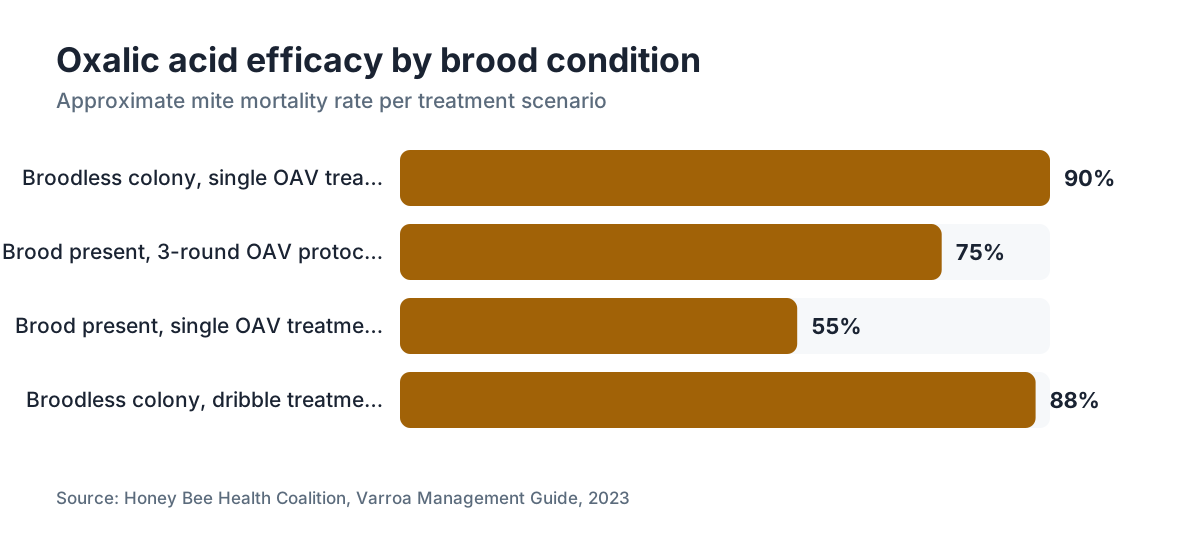
A dribble or vaporization treatment on a colony with capped brood kills the phoretic mites it touches, but mites sheltered inside cells emerge, breed, and rebound within weeks. Research summarized in the Honey Bee Health Coalition's Varroa Management Guide puts single-application efficacy near 90% under broodless conditions, which is why winter treatment, when colonies are naturally broodless, hits so hard [2].
Time of day is a second-order tweak. Treating at 6 a.m. in December with no brood present beats treating at 6 a.m. in July with capped brood on every frame, every time. If you're running a summer treatment during a brood break (induced or natural), then yes, getting foragers home by treating at dawn or dusk tightens your numbers.
So rank it this way: brood status first, season second, time of day third.
When is the best season or time of year to use oxalic acid?
Late fall through early spring is oxalic acid's season. In the northern hemisphere that usually means November through February, when colonies in most climates carry little or no capped brood [2]. A colony that has been broodless for at least 24 days (roughly two mite reproductive cycles) is the target you want.
The Honey Bee Health Coalition recommends treating in late fall after brood rearing stops, before the winter cluster locks in, and calls it the highest-return intervention of the year [2]. Beekeepers in warmer climates (USDA hardiness zones 8 and up) often have brood year-round and can't count on natural broodlessness. They either induce a brood break or run repeated vaporization over several rounds.
For the varroa mite management picture, knowing when natural broodlessness hits your specific climate beats any universal calendar. Track your own colony's brood cycles and treat off that, not off a date on a chart.
Spring treatments, right before the main nectar flow, are legitimate if mite loads run high, but efficacy slides because colonies are cranking out brood fast.
How much oxalic acid should you use per treatment?
The registered Api-Bioxal label sets the dose, and US law requires you to follow it [1].
For vaporization: 1 gram of Api-Bioxal per hive body (Langstroth deep). A two-story colony gets 2 grams, weighed on a small gram scale. Don't eyeball it. Too little cuts efficacy; too much stresses the bees without killing more mites.
For dribble (trickle) application: a 3.2% oxalic acid solution (35 grams of oxalic acid dihydrate dissolved in 1 liter of 1:1 sugar syrup). Apply 5 mL per seam of bees, up to 50 mL per colony. A colony covering 10 seams gets the full 50 mL maximum [1].
For spray (on package bees or swarms): the same 3.2% solution, applied at 10 mL per pound of bees, up to 40 mL per package.
These figures come straight off the Api-Bioxal label filed with the EPA. Using unregistered oxalic acid (wood bleach, for example) is illegal for bee treatment in the US and carries residue risks the registered product is built to avoid [1].
For supplies, beekeeping supply companies that stock Api-Bioxal should also carry calibrated gram scales, which you'll need to hit these doses.
How often can you treat bees with oxalic acid?
The Api-Bioxal label allows a maximum of 2 dribble treatments per year, and up to 3 vaporization treatments per brood break [1]. What you actually do depends on your method and your brood status.
For a true broodless winter treatment: one vaporization is usually enough, especially when you land the 90% efficacy the research supports [2]. Some beekeepers run two applications 7 days apart in winter to sweep up any late-emerging mites.
For a summer brood-break treatment: the Honey Bee Health Coalition recommends 3 vaporizations spaced every 5 days when brood is present or freshly removed [2]. That cadence lets you catch mites that were locked in cells during the first round as they emerge. Three rounds at 5-day intervals covers roughly one full mite reproductive cycle.
For a purely broodless colony: one treatment, or two spaced 7 days apart, is the common call. More than that won't move efficacy much and can wear on the queen.
One rule holds no matter what. Don't treat during a nectar flow with honey supers for human consumption on the hive. Api-Bioxal requires supers off during treatment [1].
VarroaVault's free treatment protocol tools can help you build a calendar matched to your local brood cycle and mite thresholds, so you're not guessing at when to run repeated rounds.
How to treat bees with an oxalic acid vaporizer: step-by-step
Here's how to run a vaporization treatment the right way.
Before you start: Confirm the colony is queenright, pull the honey supers, and check that outdoor temperature is at least 40°F. Get a mite count with an alcohol wash or sugar roll first. If you're under 2 mites per 100 bees in winter, treatment may not be worth it [2].
Gear: Wear a properly fitted N95 or higher respirator (oxalic acid vapor is a serious respiratory irritant), nitrile gloves, eye protection, and your veil. This is non-negotiable.
Step 1: Weigh out the correct dose (1 gram per hive body) into the vaporizer pan.
Step 2: Seal the hive entrance with a foam plug or screen.
Step 3: Insert the vaporizer wand through the bottom entrance or a small opening, following your specific vaporizer's instructions.
Step 4: Connect to your battery (most vaporizers run on a 12V battery) and heat for the time your vaporizer's manufacturer specifies, usually 2.5 to 3 minutes.
Step 5: Wait at least 10 minutes before pulling the entrance plug or reopening the hive. The Api-Bioxal label sets this minimum contact time [1].
Step 6: Record the treatment date, dose, and colony ID. You need this for both label compliance and for tracking efficacy against your follow-up counts.
Run a follow-up alcohol wash 48 to 72 hours after treatment to check mite drop (a heavy natural drop confirms the treatment reached mites). Wash again 2 to 3 weeks later to confirm the colony hasn't rebounded.
Is temperature more important than time of day?
Temperature and time of day are tied together, but if you can only optimize one, temperature wins. It comes down to cluster behavior. Below roughly 50°F, bees cluster tight and almost no foragers fly anyway, so the hour barely matters. From 55°F to 65°F, bees move around and foragers may be out, so treating early morning gives you an edge.
Above 65°F, field bees work most of the day. Treating at dawn still helps, but the payoff is smaller than just waiting for a cooler stretch or a brood break.
The Api-Bioxal label's 40°F floor is real: below that, bees won't move through the gas cloud well and contact drops [1]. There's no labeled upper limit, but most extension programs advise staying below 60°F for best results. Penn State Extension's apiculture program, for one, recommends treating when bees are clustered for exactly this reason [3].
Dribble treatments care about temperature too, but differently. Very cold temperatures (below 40°F) stress bees that get wet with solution and can't thermoregulate. Keep dribble in the 40°F to 60°F range as well.
Can you treat with oxalic acid when there is brood present?
You can, but efficacy drops hard. Mites capped with brood during treatment survive and re-emerge. Research cited in the Honey Bee Health Coalition's guide shows single-treatment efficacy falling from about 90% (broodless) to as low as 50% to 60% when significant capped brood is present [2].
The repeated-vaporization protocol (3 treatments, 5 days apart) exists to work around this. Each round catches mites that emerged from cells since the last one. Even then, you won't touch broodless efficacy, because new mites keep entering cells between treatments.
Some beekeepers force the issue by caging the queen for 24 days before treating. It's labor-heavy, but it turns a mediocre summer treatment into a high-efficacy one. Worth it if your mite load is climbing into summer.
One more thing. The Api-Bioxal label permits treatment with brood present, but it doesn't change the dose or method for that case. Follow the label either way [1].
What mite level should trigger treatment, and how do you confirm it worked?
The widely cited action threshold is 2 mites per 100 bees (2%) during the summer brood-rearing season, and some researchers recommend treating at any detectable level during winter prep [2]. The Honey Bee Health Coalition's Varroa Management Guide lays out these thresholds and is free to download [2].
An alcohol wash is the gold standard for an accurate pre-treatment count [9]. Sticky boards give you a rough trend, not a reliable percentage. Sugar roll is gentler on bees but a touch less accurate than an alcohol wash.
Recount 2 to 3 weeks after treatment. A good treatment should pull a 2% load below 1%. If you're still above 2% three weeks out, one of three things happened: the treatment didn't reach enough bees (bad timing or a leaky hive seal), brood was shielding mites, or you're getting reinfested from neighboring colonies.
High reinfestation is common where beekeeping is dense. If you're treating right and counts keep climbing, robbing and drift from nearby hives is the likely culprit, and no amount of time-of-day tuning will fix it.
Comparison: dribble vs. vaporization vs. spray for timing and frequency
Each oxalic acid delivery method comes with its own timing rules and best use. Here's how they line up.
| Method | Brood requirement | Treatments allowed (label) | Best time of day | Temperature range |
|---|---|---|---|---|
| Vaporization (OAV) | Broodless preferred; brood OK with 3-round protocol | 3 per brood break | Early morning or evening | 40°F to 59°F |
| Dribble (trickle) | Broodless required for good efficacy | 2 per year | Early morning or evening | 40°F to 60°F |
| Spray | Package bees or swarms only | 1 per package | Any (bees in package) | Above 40°F |
Vaporization is the most flexible method and the one most beekeepers use for in-hive work. Dribble costs less (no vaporizer hardware) and works well for a single winter treatment. Spray is only for packages and swarms, never established hives [1].
For beekeeping supplies you'll want regardless of method: a calibrated gram scale, a respirator rated for acid vapors, and nitrile gloves.
Common mistakes that ruin oxalic acid treatments regardless of timing
Timing is one piece. These mistakes cancel it out.
Using unregistered product. Wood bleach and lab-grade oxalic acid are not approved for bee treatment in the US. Api-Bioxal is the only legal option, and it's formulated to the right concentration [1].
Skipping the respirator. Oxalic acid vapor does real lung damage. The safety data sheet and the label both require respiratory protection [7]. This isn't optional.
Not sealing the entrance. The hive has to hold vapor for at least 10 minutes. Gaps around the plug, or a screened bottom board left open, let vapor escape and gut your contact time.
Leaning on sticky boards for counts. Sticky board drop tells you mites exist. It won't give you a percentage of infestation, which is what drives the treatment decision. Wash before and after.
Treating once and calling it done. Even a clean broodless winter treatment leaves a small residual mite population. Monitor again in early spring, because that remnant can explode as the colony ramps up brood.
For a solid grip on what you're fighting, the varroa mite overview walks through the mite's life cycle, which makes all the timing logic above click into place.
Where do I get reliable protocols and tools for oxalic acid timing?
Start with the Honey Bee Health Coalition's Varroa Management Guide. It's free, reviewed, and updated regularly [2]. It covers threshold levels, seasonal timing, and method-specific protocols.
Your state extension service is the other strong resource. Penn State Extension apiculture [3], the University of Minnesota Bee Lab [4], and University of Florida IFAS Extension [5] all publish free, evidence-based guidance tuned to different climates.
The Api-Bioxal label itself is a legal document, more than packaging. Read it. It's filed with the EPA and available through their pesticide registration database [1].
Want a structured treatment calendar built around your local climate and brood cycle? VarroaVault's free protocol tools (at varroavault.com) are set up for exactly this kind of seasonal planning. They won't replace a mite wash, but they'll help you set treatment windows so you're not scrambling at the last minute.
Frequently asked questions
Can I treat bees with oxalic acid in the middle of the day?
You can, but it's not ideal. At midday, especially above 55°F, a big share of forager bees are out of the hive. Those bees carry mites that never meet the treatment. Early morning before first flight, or late evening after foragers return, keeps the whole colony inside and maxes out mite contact. In winter, when bees aren't flying, midday treatments are fine.
How often should I treat bees with oxalic acid vaporizer?
For a broodless winter treatment, one to two vaporizations spaced 7 days apart is usually enough. When brood is present, the Api-Bioxal label allows up to 3 treatments per brood break, spaced every 5 days. This 3-round protocol catches mites that were protected in capped cells during the first treatment. More than 3 rounds doesn't improve efficacy and can stress the queen.
Does oxalic acid treatment work with the honey supers on?
No. The Api-Bioxal label requires that honey supers meant for human consumption come off before treatment. Oxalic acid can contaminate honey in the supers. Residue in harvested honey is a legal and food safety issue, not a preference. Pull your supers, treat, then wait at least the period the label specifies before putting supers back on.
What temperature is too cold or too hot for oxalic acid vaporization?
The Api-Bioxal label sets the minimum at 40°F. Below that, bees cluster too tightly to move through the vapor cloud and efficacy drops. There's no labeled upper limit, but most extension programs recommend staying below 60°F, because warmer air means more foragers flying and less of the colony reached. The 40°F to 59°F range is the practical target.
How do I know if my oxalic acid treatment worked?
Do an alcohol wash 2 to 3 weeks after treatment and compare it to your pre-treatment count. A good treatment under broodless conditions should cut mite load by roughly 90%. If you're still above 2 mites per 100 bees, the treatment may not have reached the full colony, brood may have shielded mites, or reinfestation from neighboring hives is happening. Sticky board counts aren't reliable enough to confirm efficacy.
How much Api-Bioxal do I use per hive?
For vaporization, 1 gram per hive body (Langstroth deep). A two-story colony needs 2 grams, weighed on a gram scale. For dribble, a 3.2% solution applied at 5 mL per seam of bees, up to 50 mL per colony. These doses come straight from the registered Api-Bioxal EPA label. Don't estimate by eye; wrong dosing either drops efficacy or stresses bees for nothing.
Can I treat bees with oxalic acid when brood is present?
Yes, but efficacy drops to roughly 50 to 60%, versus about 90% under broodless conditions, because mites capped with brood survive. The repeated-vaporization protocol (3 treatments, 5 days apart) is built for this and improves total mite knockdown. If mite pressure is high and it's summer, consider inducing a brood break by caging the queen before treating.
Is morning or evening better for oxalic acid dribble treatment?
Both work. The key is that foragers are inside. Early morning before first flight is a bit easier to schedule, and temperatures are usually still in the ideal 40°F to 60°F range. Evening works well too, especially in warmer climates where daytime is too hot. Dribble also needs broodless conditions for best efficacy, so season matters more than the exact hour.
How many times per year can I use oxalic acid on my hives?
The Api-Bioxal label allows a maximum of 2 dribble treatments per year and up to 3 vaporization treatments per brood break. The number of brood breaks per year isn't capped outright, but you're practically limited by natural broodless periods or induced breaks. Most beekeepers do one major treatment in late fall or winter, plus one or two targeted summer treatments if mite loads exceed threshold.
Do I need a special respirator for oxalic acid vaporization?
Yes. A standard dust mask won't cut it. Oxalic acid vapor calls for a respirator rated for acid vapors, at minimum an N95 with an organic vapor cartridge, or a half-face respirator with P100 and acid gas cartridges. The Api-Bioxal label mandates respiratory protection during vaporization. Repeated exposure without protection has been tied to respiratory damage, so this is a real risk, not bureaucratic caution.
Why isn't my oxalic acid treatment reducing mite counts?
The usual reasons: treating with brood present (mites survive in capped cells), poor hive sealing during vaporization (vapor escapes before enough contact time), foragers absent during treatment, wrong dosing, or reinfestation from neighboring colonies. Work through each one. If brood was present, run the 3-round protocol. If reinfestation is the problem, no treatment timing solves it without also dealing with the source colonies.
What is the correct way to treat a package of bees with oxalic acid?
Packages and swarms get treated by spray, not vaporization or dribble. Mix the 3.2% oxalic acid solution (same concentration as the dribble method) and spray 10 mL per pound of bees, up to a 40 mL maximum, directly onto the package cluster. Do this when bees are calm, in cooler temperatures above 40°F. It's a one-time treatment; packages go into a hive afterward, and normal protocols take over.
Can oxalic acid harm the queen?
Oxalic acid at labeled doses shows a low rate of queen loss in most studies, but it's not zero. Over-treating (exceeding label doses or treating too often) raises queen stress. Winter clusters with a small population and a recently mated queen run slightly more sensitive. Stick to label doses, don't exceed the allowed frequency, and watch egg laying in the weeks after treatment to confirm the queen is still productive.
Should I treat new packages or swarms for varroa with oxalic acid?
Yes, and the timing is excellent: fresh packages and swarms have no capped brood, so every mite is phoretic and reachable. This is one of the highest-efficacy moments to treat. Use the spray method for packages, one application at 10 mL per pound of bees. After installation, once brood is established, shift to your normal monitoring and treatment calendar.
Sources
- EPA, Api-Bioxal Pesticide Registration (Reg. No. 84436-1): Api-Bioxal label requirements: dose (1 g per hive body for OAV, 3.2% solution for dribble/spray), minimum 10-minute contact time, 40°F minimum temperature, honey supers must be removed, maximum treatment frequencies.
- Honey Bee Health Coalition, Varroa Management Guide (2023 edition): Single OAV treatment efficacy approximately 90% under broodless conditions; 3-treatment protocol for brood-present colonies; 2 mites per 100 bees summer action threshold; late-fall treatment recommendation.
- Penn State Extension, Varroa Mite Management in Honey Bees: Recommendation to treat when bees are clustered for best oxalic acid vapor contact; temperature guidance for OAV application.
- University of Minnesota Bee Lab, Varroa Mite Management: Guidance on seasonal timing of oxalic acid treatments and brood-break protocols for northern climates.
- University of Florida IFAS Extension, Varroa Mite Control in Honey Bee Colonies: Oxalic acid treatment protocols for warm climates where broodlessness is less predictable; year-round brood management considerations.
- USDA Agricultural Research Service, Varroa Mite Research: Oxalic acid phoretic mite mortality data and efficacy comparisons across delivery methods.
- National Pesticide Information Center, Oxalic Acid General Fact Sheet: Oxalic acid respiratory hazard information and PPE requirements for applicators.
- Journal of Economic Entomology, Gregorc & Ellis (2011), 'The mode of action of oxalic acid on Varroa destructor': Oxalic acid contact mechanism on phoretic mites and why mites inside capped brood are not killed.
- Oregon State University Extension, Integrated Pest Management for Varroa: Alcohol wash methodology as gold standard for mite count and threshold-based treatment decisions.
- North Carolina State University Apiculture Program, Oxalic Acid Vaporization Protocol: Step-by-step OAV best practices including hive sealing, battery setup, and post-treatment monitoring for efficacy confirmation.
Last updated 2026-07-09