Applying oxalic acid to bees: the complete treatment guide
TL;DR
- Oxalic acid kills varroa mites riding on adult bees.
- At label doses it does not kill honey bees.
- Three EPA-registered methods exist: dribble, vaporization, and extended-release glycerin strips.
- Dribble works only in broodless colonies.
- Vaporization and strips work with brood present.
- A single broodless-period treatment can hit over 90% mite kill.
What is oxalic acid and why do beekeepers use it on bees?
Oxalic acid is a plant acid. You find it in rhubarb, spinach, and even in honey itself at low levels. Beekeepers use it to kill varroa mites, the parasite that has wrecked honey bee colonies around the world since it spread in the 1980s. The Honey Bee Health Coalition calls varroa "the greatest single driver of honey bee colony losses globally," and oxalic acid is one of the few effective low-residue weapons against it. [1]
The mechanism is simple. Varroa breathe through pores in their exoskeleton, and oxalic acid wrecks their physiology on contact. Bees are far larger with different physiology, so they shrug off the acid at label concentrations. Here's the catch that decides everything: oxalic acid only kills mites riding on adult bees. Mites sealed inside capped brood cells never touch it. That single fact explains why timing and method matter more than anything else you do.
In the United States, oxalic acid products for bee use are registered with the EPA. The main registered products are Api-Bioxal (Véto-pharma) and generic oxalic acid dihydrate products approved under the same registration. Homemade or off-label formulations are illegal, and they carry real safety and residue risks. Skip them. [2]
Does oxalic acid kill bees, or just varroa mites?
At label doses, oxalic acid does not kill healthy bees. That's the honest answer to the question new beekeepers ask most. Trials from the USDA ARS Beltsville Bee Lab and university programs show dribble and vaporization at recommended doses cause bee mortality no higher than the handling stress of the treatment itself. [3]
But it's an acid, and dose is the whole story. Overdose and you will kill bees. The Api-Bioxal label sets 1 gram of oxalic acid dihydrate per hive body for vaporization and 50 mL of a 3.2% solution per broodless colony for dribble. Go past those numbers and you damage the cluster. Tiny clusters and colonies already sick from disease are more fragile.
Here's a nuance that trips people up. Bees loaded with varroa are already breaking down inside. Treat that colony and you may see dead bees in the days after, and it looks like the acid did it. Usually it didn't. Those are mite-damaged bees that were going to die anyway. That's not a reason to hold off. It's a reason to treat earlier, before the mite load climbs high enough to produce that pile of casualties.
So the direct answer to the follow-up: yes, you can kill bees with oxalic acid by overdosing or misapplying it. At label doses, done right, you won't.
What are the three EPA-registered methods for applying oxalic acid?
The Api-Bioxal label covers three application methods. Each has its own gear, timing rules, and efficacy. [2]
Dribble (trickle) method
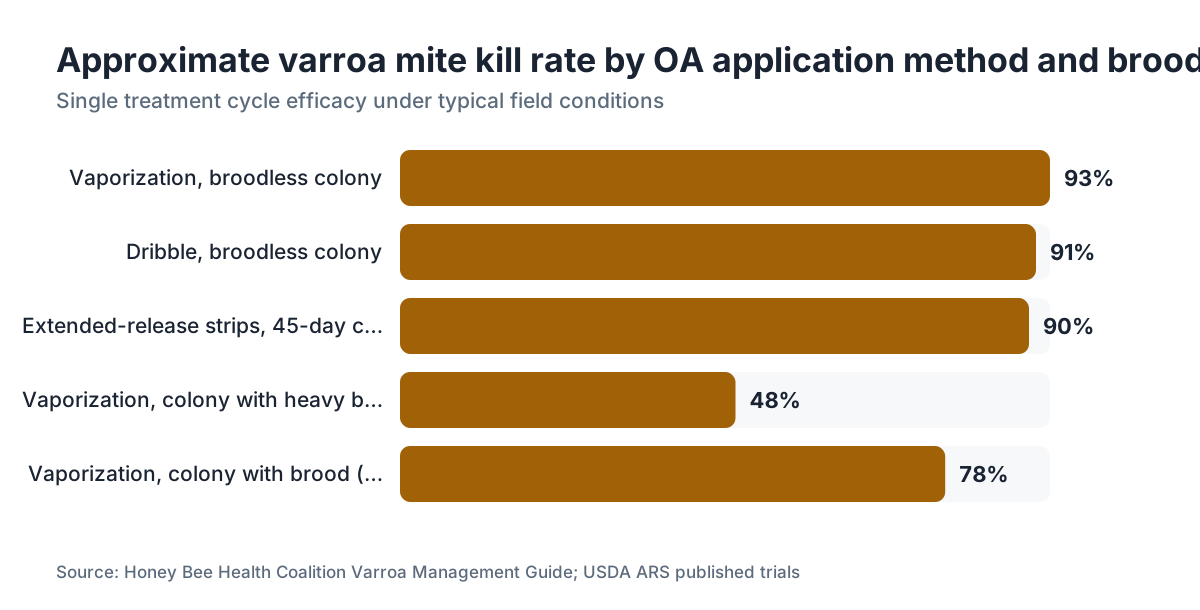
You dissolve oxalic acid dihydrate in 1:1 sugar syrup to make a 3.2% solution, then dribble 5 mL per seam of bees, up to 50 mL per colony. Bees groom each other and spread the acid through the cluster. This works only in a broodless colony because it touches phoretic mites and nothing else. When the colony is truly broodless, kill rates run 90 to 95% in one shot. The gear is cheap: a syringe, a mixing container, the solution. [4]
Vaporization (sublimation) method
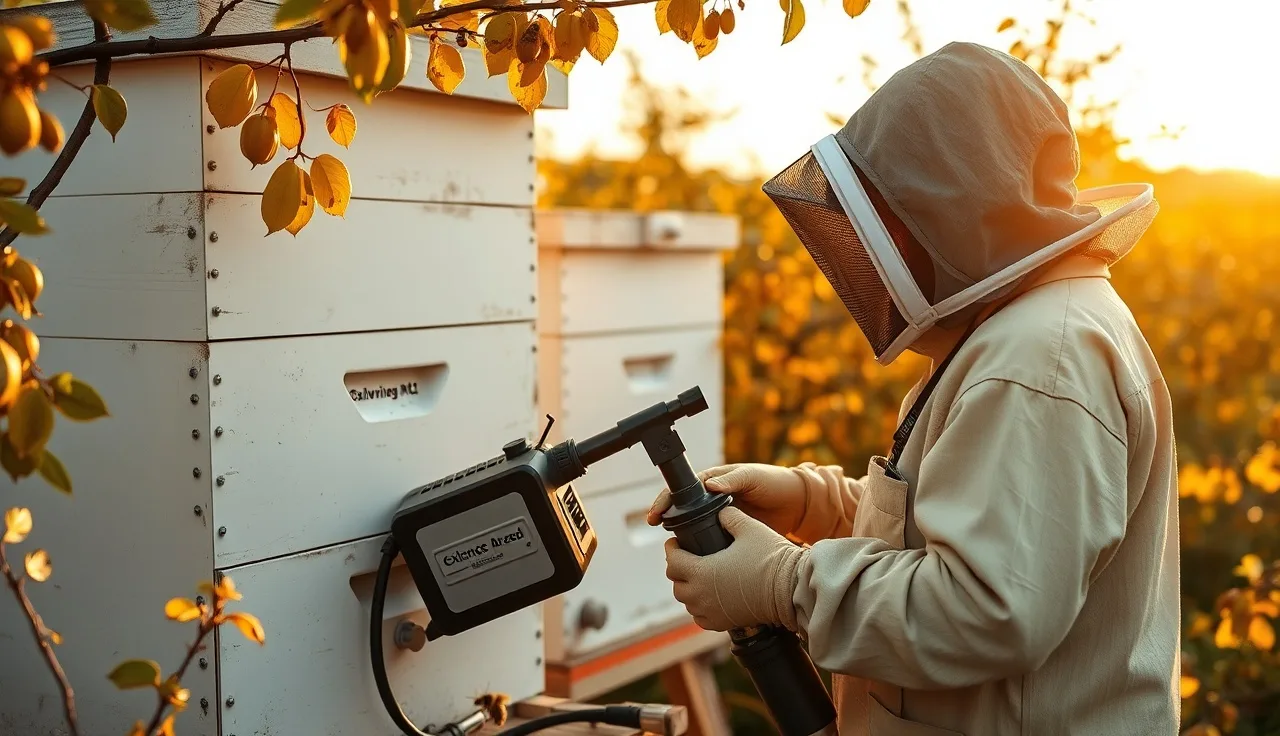
You heat 1 gram of oxalic acid dihydrate crystals per hive body in a vaporizer until they turn to gas. The vapor fills the hive and coats every surface, bees included. The label allows up to three treatments, 5 days apart, per broodless period. Most hobbyists and sideliners have switched to this because it's fast per hive and reaches all the boxes without cracking the lid. In a broodless hive it hits dribble-level numbers. With brood present, a single treatment is weak. You need repeated treatments across a full brood cycle (roughly 21 days) to knock the mite population down. [5]
Extended-release (glycerin-soaked strips) method
This is the newest registered method. Cardboard strips soaked in a glycerin and oxalic acid solution sit in the hive for a long stretch (45 days on current label guidance). Bees chew and walk across them, pick up the acid, and spread it around. Because exposure is continuous, this method works with brood present and catches mites as they emerge from cells. Trials show efficacy close to synthetic miticides when strips stay in for the full window. The tradeoff is the six-week commitment and the discomfort some feel about leaving material in the hive that long.
| Method | Brood present? | Applications per broodless period | Typical mite kill (broodless) | Equipment cost (approx.) |
|---|---|---|---|---|
| Dribble | No | 1 | 90-95% | Under $10 |
| Vaporization | Yes (reduced efficacy) | Up to 3 | 90%+ if broodless | $70-$200+ |
| Extended-release strips | Yes | 1 treatment (45 days) | 90%+ over full period | Low per treatment |
Efficacy figures come from published trial data referenced in the Honey Bee Health Coalition Varroa Management Guide. Your results shift with colony conditions. [1]
When is the best time to apply oxalic acid to a hive?
Timing makes or breaks an oxalic acid treatment. The strongest window for dribble or vaporization is a broodless period, natural or induced. Across most of the continental US that means winter, when the queen has stopped laying, usually December through early February at northern latitudes. A colony broodless for at least 12 to 14 days (long enough for any capped brood to hatch out) gives you a clean shot at nearly every mite in one pass. [6]
Want to treat in the active season without forcing a broodless gap? Extended-release strips are the practical choice. The steady low-level exposure picks off mites as they crawl out of brood cells over the 45-day window.
Another move is caging the queen or making a split to open a temporary broodless period mid-season, then treating. It works. It also takes planning and a decent hand at colony management. The Honey Bee Health Coalition's Varroa Management Guide walks through it. [1]
The worst time for a dribble treatment is a strong nectar flow. The thin syrup can ferment in the humidity, and the treatment stress competes with heavy forager traffic. Vaporizing during a flow is fine. Check your local extension service for recommended seasonal windows, because timing in Georgia looks nothing like timing in Minnesota. [7]
How do you actually apply oxalic acid: step-by-step for each method?
Dribble method steps
- Confirm the colony is broodless. Inspect at least 10 days after you last saw capped brood.
- Mix the solution: 35 grams oxalic acid dihydrate in 1 liter of 1:1 sugar syrup. That makes the 3.2% solution on the Api-Bioxal label.
- Load a syringe with 5 mL for each seam of bees you can see.
- Pull the inner cover and dribble the solution straight over the seams of bees. Aim for the bees, not the comb. Don't drench them.
- Put the covers back. Leave the hive shut for 2 to 3 days.
- One application per broodless period. Don't repeat. Repeat dribbles stress bees and raise mortality. [2]
Vaporization method steps
- Put on a fitted respirator rated for organic vapors and acid gases (OV/AG cartridges, not a dust mask). Oxalic acid vapor is a respiratory irritant and the EPA label requires this protection. Wear goggles too.
- Seal all hive entrances before you load the vaporizer, so vapor stays inside.
- Load 1 gram of oxalic acid dihydrate per hive body into the vaporizer pan.
- Slide the vaporizer through the bottom entrance and run the heating cycle per the manufacturer's instructions (usually 2.5 to 3 minutes until the crystals fully sublimate).
- Keep the entrance sealed at least 10 minutes after the cycle ends.
- Repeat at 5-day intervals if the colony has brood, up to three times per broodless period.
Extended-release strips
Follow the specific product label for placement and dose. Most call for placing strips against the cluster, usually between frames in the brood nest. Leave them the full labeled period, currently 45 days for registered products.
Wear nitrile gloves with any method, on top of the recommended respiratory protection. Oxalic acid irritates skin and mucous membranes even at beekeeping concentrations.
What safety gear do you need when applying oxalic acid to bees?
The EPA label is blunt about this, and it's not a place to cut corners. [2]
For vaporization: a NIOSH-approved respirator with organic vapor and acid gas cartridges (often labeled OV/AG, sometimes with a P100 filter combined). A plain N95 dust mask does nothing against oxalic acid vapor. Add chemical splash goggles (not safety glasses with open sides), chemical-resistant gloves, and a long-sleeved shirt. Some beekeepers throw on a Tyvek suit or dedicated work clothes they wash separately.
For dribble: gloves and eye protection are the floor. The dribble solution is lower concentration and the exposure less acute than vapor, but splashing 3.2% oxalic acid into your eyes is genuinely bad.
Vaporizing across dozens of hives on the regular? Buy a fitted half-face respirator, not a disposable one. Fit is what keeps the vapor out. OSHA publishes free guidance on respirator selection and fit testing under its Respiratory Protection Standard, 29 CFR 1910.134. [8]
Treat outdoors or somewhere well ventilated. Never vaporize inside a closed structure unless it has mechanical ventilation you trust. Keep an eyewash station close, or at least a big bottle of clean water. Oxalic acid vapor in a confined space can reach levels that cause real respiratory damage.
How effective is oxalic acid compared to other varroa treatments?
In a broodless colony, oxalic acid vaporization and dribble are among the best tools you have. USDA ARS and university trials land at 90 to 95%+ mite kill under broodless conditions, on par with amitraz (Apivar) and often ahead of single-application pyrethroid strips. [3]
The big edge is residue. Oxalic acid doesn't build up in wax at levels that matter. Studies measuring it in wax and honey find treated colonies barely above background, because oxalic acid occurs naturally in honey and breaks down fast. That's why beekeepers chasing clean hive products keep reaching for it.
Where it falls apart is a colony packed with brood and mites. A single summer vaporization on a hive with 8 frames of capped brood might kill only 40 to 50% of the mite population, because most mites are sealed away and untouchable. That's not control. For mid-season blowups, experienced beekeepers switch to extended-release strips or rotate to amitraz, then finish with oxalic acid during the winter broodless window.
The Honey Bee Health Coalition recommends treating any colony above a 2% mite wash during brood rearing and above 1% heading into winter. [1] Oxalic acid gets you to those numbers when the timing is right. It's no substitute for knowing your mite load before you pick a treatment.
How often can you apply oxalic acid, and can you use it too much?
The Api-Bioxal label allows up to three vaporization treatments per broodless period, at least 5 days apart. Dribble is one treatment per broodless period. Extended-release strips get one placement per cycle (45 days). These are legal limits, not friendly suggestions. [2]
There's a biological reason to respect them too. University trials show repeat dribble applications in one season raise bee mortality without matching gains in mite control, because after the first treatment the mite load is already low and you're mostly stressing bees. Three vaporizations on a broodless colony do beat one, but the second and third add less than the first.
Leaving extended-release strips past the labeled window hasn't been studied much for bee toxicity, so stick to the label.
The takeaway is simple. Oxalic acid works as part of a seasonal plan, not as a panic button you mash every week. Hitting 5% mite loads in August? Weekly oxalic acid is not the fix. You need a faster treatment like Apivar, then a follow-up oxalic acid pass during the winter broodless period.
You can find protocol templates and seasonal treatment calendars through tools at VarroaVault, which offers free varroa planning resources built around your local conditions.
Can you apply oxalic acid to a hive with honey supers on?
No. The Api-Bioxal label does not permit dribble or vaporization while honey supers meant for human consumption sit on the hive. Pull the supers first. [2]
The reason is caution, not proven residue danger. Study after study finds oxalic acid in honey from treated colonies isn't meaningfully different from untreated controls, because it's a natural honey component and treatment adds little against normal variation. But the label says no supers, and legal compliance means following the label. Full stop.
Extended-release strip products may label this differently. Read the specific product label before you treat.
Practically: winter treatments happen with the supers off anyway. Running mid-season extended-release strips? Check your product's label, and call your state apiarist's office if anything is unclear. [9]
What do you need to buy to get started with oxalic acid treatments?
For dribble, the list is short and cheap. Api-Bioxal or a registered oxalic acid dihydrate product, a mixing container, a syringe or dribble applicator, gloves, and eye protection. The oxalic acid itself runs roughly $20 to $30 for enough to treat dozens of colonies.
For vaporization, the vaporizer is the real cost. Battery units that run off a cordless drill battery or a 12V car battery go from about $70 to $150 for models that hold up. Propane-heated wand vaporizers sit at the low end. The Varrox and Oxalic Pro models have solid reputations in the hobby, though quality varies across this market and spending more doesn't always buy better results. Add the respirator: a proper half-face unit with OV/AG cartridges runs $30 to $60 for the body, plus cartridge costs.
Extended-release strips you buy by the pack. Unit cost varies by brand.
A good place to compare gear is the page on beekeeping supply companies and free shipping honey bee supply companies, which lists vendors carrying registered oxalic acid products and vaporizers.
Buy this before any of it: a good mite monitoring setup. An alcohol wash is the most accurate field method. You need a counting jar or a mason jar, a mite wash kit, and 70% rubbing alcohol. There's no point buying oxalic acid if you can't measure your mite load before and after treatment.
How do you know if your oxalic acid treatment actually worked?
You measure. There's no other way. Run an alcohol wash or sugar roll before treatment to set your baseline, then repeat the wash 48 to 72 hours after treatment for vaporization, or 5 to 7 days after for dribble or strips. Compare the counts.
A good treatment in a broodless colony drops the mite load below 1% (fewer than 1 mite per 100 bees). Still seeing 2% or higher after a well-timed treatment? Either the colony had brood you missed, your application was incomplete, or mites are pouring in from neighboring hives.
Some beekeepers count mite drop on sticky boards after vaporization. A big drop in the first 24 to 48 hours says the treatment reached a lot of mites. But sticky board counts are harder to normalize and less precise than an alcohol wash for judging efficacy.
The University of Minnesota Extension has a detailed guide on running alcohol washes and reading the results. [6] The Honey Bee Health Coalition's Varroa Management Guide includes threshold tables for when to treat and what post-treatment counts are acceptable. [1]
If you treated in winter and can't open the hive without chilling the cluster, wait until early spring for the post-treatment wash. A late-winter count below 1% going into spring is a good sign the treatment did its job.
Are there situations where oxalic acid is not the right choice?
Yes. Oxalic acid is not a universal answer to varroa, and pretending it is would mislead you.
In a colony with heavy brood and a fast-climbing mite load, oxalic acid alone is too slow. Seeing 5% or higher mite washes in July with 8 to 10 frames of capped brood? A single vaporization won't solve it fast enough to save the colony. Apivar (amitraz) or Formic Pro (formic acid) will do far more in a shorter window.
Small or brand-new packages and splits are more sensitive to the stress. A 2-frame nuc that just got a new queen doesn't need a dribble on top of everything else. Let the colony settle and monitor instead.
Oxalic acid also ignores everything but varroa. If the colony is fighting American foulbrood, sacbrood, or heavy small hive beetle pressure, a mite treatment is necessary but nowhere near sufficient. Kill the varroa, but don't mistake a clean mite count for a clean bill of health.
One piece of good news: oxalic acid resistance is not documented in varroa the way resistance to coumaphos and fluvalinate is. As of 2024 the scientific consensus is that oxalic acid resistance is not a field concern. Monitoring after treatment is still the only honest way to confirm that in your own apiary.
Frequently asked questions
Can I apply oxalic acid in winter without opening the hive?
Yes, and it's a big reason vaporization won over as the winter method. You slide the vaporizer wand through the bottom entrance, seal the entrances briefly, and run the sublimation cycle without pulling a single box or disturbing the cluster. The vapor spreads on its own. That makes it workable in cold weather, when opening the hive would chill or stress the bees.
How long does it take for oxalic acid to kill varroa mites after treatment?
Mite death after vaporization starts within hours. The biggest sticky-board drop usually shows in the first 24 to 48 hours. After a dribble, peak mite drop runs across the first 3 to 5 days as bees spread the acid through the cluster. Full efficacy in a broodless colony is generally settled within a week of the final application.
Does oxalic acid leave residues in honey?
Studies find oxalic acid treatment causes only slight increases in honey levels, which vary naturally to begin with. A 2015 paper in the Journal of Apicultural Research found oxalic acid in honey from treated colonies stayed within the natural range seen in untreated colonies. Even so, the Api-Bioxal label bans treatment while honey supers meant for human consumption are on the hive. Follow the label regardless of the residue data.
What strength oxalic acid solution do I mix for the dribble method?
The Api-Bioxal label specifies a 3.2% oxalic acid dihydrate solution, made by dissolving 35 grams of oxalic acid dihydrate in 1 liter of 1:1 sugar syrup (equal parts sugar and water by weight). Apply 5 mL per seam of bees, up to 50 mL per colony. Don't bump the concentration higher. Stronger solutions raise bee mortality without improving mite kill.
Is oxalic acid safe to use in an organic beekeeping operation?
Oxalic acid is approved for USDA-certified organic operations as a varroa treatment. It appears on the National Organic Program's National List of Allowed and Prohibited Substances. Use the EPA-registered product (Api-Bioxal or equivalent) and follow the label. Keep your application records for certification, and check with your certifier for any extra documentation it wants.
How many grams of oxalic acid do you use per hive when vaporizing?
The Api-Bioxal label specifies 1 gram of oxalic acid dihydrate per hive body treated. A standard 2-box Langstroth colony gets 2 grams total. Don't load more; higher doses raise the risk of bee mortality. A nuc or single-box colony gets 1 gram. The label allows up to three treatments per broodless period, each at least 5 days apart.
Can I use oxalic acid on a hive that still has some capped brood?
You can, but efficacy tanks. Oxalic acid only kills phoretic mites on adult bees; mites sealed in capped brood are untouched. With even a few frames of capped brood, a single vaporization might kill only 40 to 60% of the total mite population. For brood-present situations, extended-release glycerin strips or repeated vaporizations across a full brood cycle (21 days) work far better than a single pass.
What respirator do I need for oxalic acid vaporization?
You need a NIOSH-approved respirator with organic vapor and acid gas cartridges, often labeled OV/AG. A plain N95 dust mask or surgical mask does not protect against oxalic acid vapor. A fitted half-face elastomeric respirator with OV/AG combination cartridges is the minimum for regular use. Pair it with chemical splash goggles, not open-sided safety glasses. The Api-Bioxal label requires this, more than recommends it.
How do I treat a swarm or newly caught package with oxalic acid?
A swarm or package stays naturally broodless for the first 8 to 10 days after hiving, which makes it an ideal window for a single dribble or vaporization. Treat within that window before the queen starts laying and brood gets capped. One treatment during this broodless gap can slash the mite load before the colony's first full brood cycle. Check mite levels first; a small swarm may have a low load that doesn't justify the stress.
Does temperature affect oxalic acid treatment effectiveness?
Temperature matters for the bees more than the chemistry. Oxalic acid sublimates around 157 degrees Celsius regardless of ambient air. But in very cold weather (below roughly 40 degrees F), the cluster tightens and vapor may not reach bees on outer seams. For dribble, cold slows bee movement and the spread of the acid. Most beekeepers aim for above 40 to 45 degrees F for dribble and above freezing for vaporization.
How many times a year can I treat my hives with oxalic acid?
The Api-Bioxal label allows multiple treatment cycles per year, but each cycle is capped: three vaporizations or one dribble per broodless period, or one extended-release strip placement per 45-day cycle. In practice, most beekeepers run one main winter treatment during the natural broodless period and may add strips in summer if mite loads climb. The label states no annual maximum, but repeat treatments raise bee stress with diminishing returns.
What is the difference between Api-Bioxal and generic oxalic acid?
Api-Bioxal is the brand-name EPA-registered oxalic acid product from Véto-pharma. Generic oxalic acid dihydrate sold for beekeeping uses the same active ingredient and is legal if it carries its own EPA registration for honey bees. Unregistered oxalic acid (wood bleach, cleaning products) is not labeled for bees, may carry different purity or additives, and using it on a colony is a federal pesticide violation. Stick to registered products.
Will oxalic acid harm bee larvae or the queen?
At label doses, open larvae aren't significantly harmed, and queen mortality from a properly applied treatment is low. Overdosing or repeat dribble applications can raise mortality of larvae and adults, queen included. Some beekeepers report higher queen loss after aggressive repeat treatments. Follow label doses strictly, and go a little easier on a colony with a recently introduced or recently mated queen.
What mite count threshold should trigger an oxalic acid treatment?
The Honey Bee Health Coalition recommends treating when an alcohol wash shows 2 or more mites per 100 bees (2%) during brood rearing, and 1 or more per 100 bees (1%) heading into winter. At those levels, ongoing infestation damages the colony more than the treatment does. Below them in a healthy colony, monitor and wait for the natural broodless period to apply oxalic acid at its strongest.
Sources
- Honey Bee Health Coalition, Varroa Management Guide (latest edition): Varroa as greatest driver of colony losses globally; 2% and 1% mite wash treatment thresholds; OA efficacy comparisons
- EPA, Api-Bioxal Product Label (Registration No. 86604-1): Label-specified doses: 1g OA per hive body for vaporization, 50 mL of 3.2% solution for dribble; no honey supers; required PPE including OV/AG respirator; 3 vaporizations per broodless period maximum
- USDA ARS Beltsville Bee Research Lab, oxalic acid efficacy publications: OA at label doses causes low bee mortality comparable to handling stress; 90%+ mite kill in broodless conditions
- Pennsylvania State University Extension, Varroa Mite Management: Dribble method instructions: 3.2% OA solution, 5 mL per seam, one application per broodless period; 90-95% efficacy in broodless colonies
- University of California Agriculture and Natural Resources, Bee Health: Vaporization method efficacy and comparison to dribble; repeated vaporizations during brood cycle for mid-season control
- University of Minnesota Extension, Varroa Mite Monitoring and Treatment: Alcohol wash procedures and post-treatment threshold interpretation; recommended seasonal treatment windows by latitude
- University of Georgia Cooperative Extension, Honey Bee Varroa Management: Regional variation in treatment timing; seasonal considerations for southern vs northern apiaries
- OSHA, Respiratory Protection Standard (29 CFR 1910.134): Respirator selection, fit testing requirements, and cartridge type guidance for acid gas exposures
- USDA National Organic Program, National List of Allowed and Prohibited Substances: Oxalic acid listed as allowed substance for organic livestock (bee) pest management
- Journal of Apicultural Research, OA residues in honey study (published 2015): OA concentrations in honey from treated colonies were within the natural range found in untreated colonies
- Ohio State University Extension, Integrated Pest Management for Varroa: Comparison of OA to synthetic miticides; rotation strategies for resistance management; extended-release strip efficacy data
Last updated 2026-07-09